
Lipstick is one of the most powerful tools in a makeup routine—capable of transforming a look with a single swipe. Yet, even the most vibrant, carefully applied lip color can quickly lose its precision, creeping into fine lines around the mouth and blurring beyond the natural lip line. This phenomenon, commonly known as “lipstick bleed” or “feathering,” frustrates makeup lovers and professionals alike. The issue isn’t just about appearance; it reflects deeper concerns about skin texture, product formulation, and application technique. Understanding the science behind lipstick migration and mastering methods to prevent it allows for a polished, lasting result that enhances facial symmetry and confidence.
The Science Behind Lipstick Bleeding
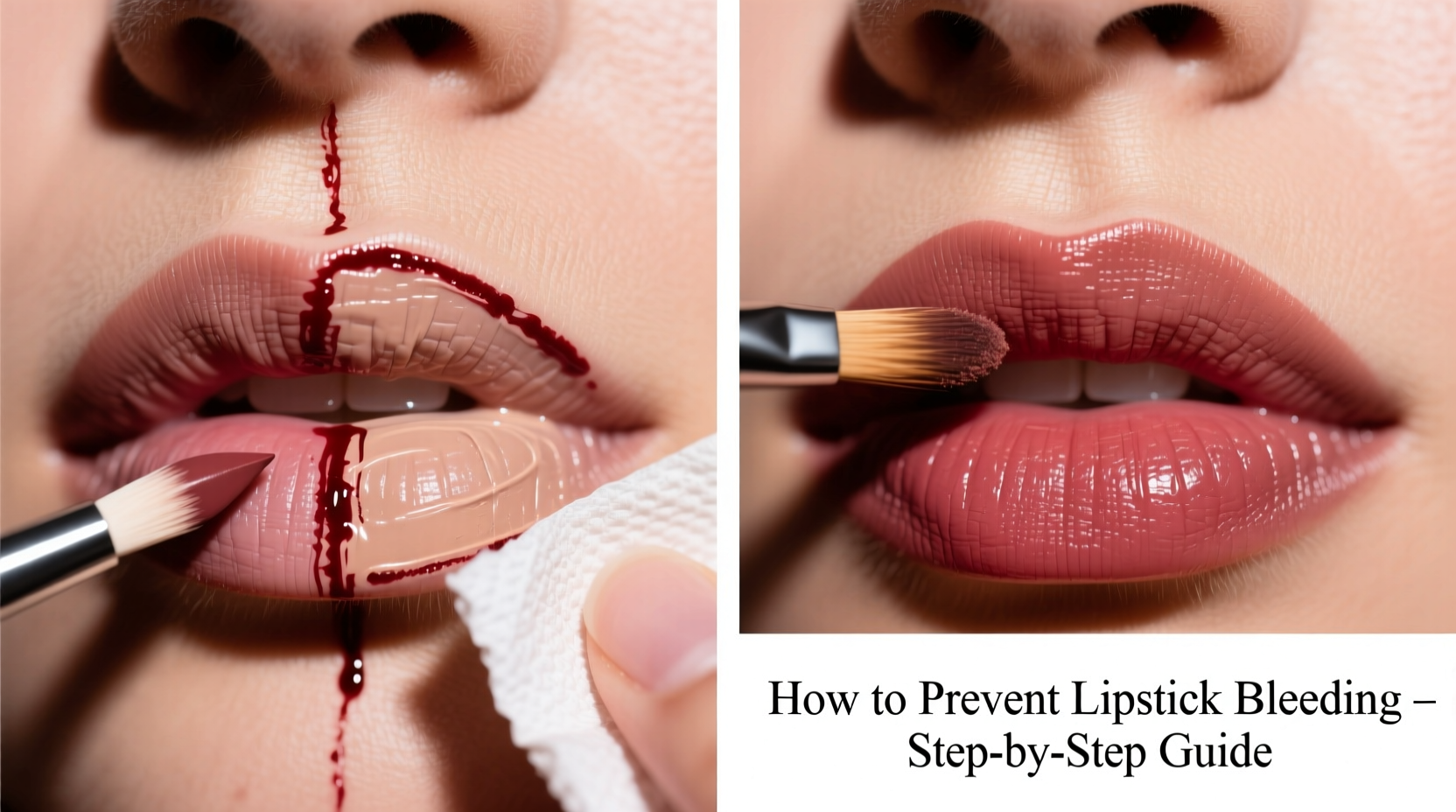
Lipstick bleeding occurs when pigment migrates from the lip surface into the surrounding skin, particularly along vertical lines above the upper lip and at the corners of the mouth. These fine lines act like tiny channels, drawing in softer, oil-based formulas through capillary action. As we age, collagen and elastin decline, making these lines more pronounced and creating ideal pathways for color to seep in. Even younger individuals with naturally textured lips or dryness may experience this effect, especially with high-shine or creamy lipsticks.
The structure of the lip area also contributes. Unlike other facial skin, the perioral region has thinner tissue, fewer sebaceous glands, and constant movement from speaking, eating, and facial expressions. This dynamic environment causes products to shift over time. Additionally, many lipsticks contain emollients such as castor oil, shea butter, or silicones that enhance comfort but increase slip—making them more prone to spreading beyond their intended boundary.
“Lipstick bleeding isn’t always a sign of poor application—it’s often a mismatch between formula texture and skin condition.” — Dr. Lena Park, Cosmetic Dermatologist
Key Factors That Cause Feathering
Several interrelated factors determine whether your lipstick stays put or fades into fine lines:
- Skin Texture: Deepened lip lines, dehydration, or lack of exfoliation create grooves where pigment accumulates.
- Lipstick Formula: Glossy, liquid, or moisturizing balms tend to migrate more than matte or long-wear options.
- Application Technique: Skipping lip liner or applying too much product increases the risk of feathering.
- Environmental Exposure: Sun damage accelerates collagen loss, deepening lines and weakening skin integrity.
- Facial Movements: Frequent talking, drinking, or smiling redistributes soft formulas across the lip border.
Step-by-Step Guide to Lock Lipstick in Place
Preventing lipstick bleed requires a strategic approach that combines skincare, priming, and precise application. Follow this timeline for a sharp, smudge-free finish that lasts all day.
- Exfoliate (Night Before or Morning Of): Use a soft toothbrush or gentle scrub to remove dead skin cells. Over-exfoliating can cause irritation, so limit this to 2–3 times weekly.
- Hydrate & Soothe: Apply a nourishing balm and allow it to absorb for 5 minutes. Blot excess to avoid greasiness under makeup.
- Prime the Area: Dab a small amount of concealer or dedicated lip primer on the perimeter of the lips to create a barrier against migration.
- Define with Liner: Choose a lip liner that matches your lipstick or is slightly darker. Start at the cupid’s bow and trace outward, extending just slightly beyond your natural lip line for fullness.
- Fill Lips Completely: Use the liner to fill in the entire lip surface. This creates an adhesive base that helps the lipstick adhere evenly.
- Apply Lipstick Precisely: Use a brush for control, especially with bold or dark shades. Layer thin coats rather than one thick application.
- Blot & Set: Press a tissue between your lips, then dust translucent powder lightly over the top layer using a cotton swab around the edges.
- Final Touch-Up: Reapply a second thin coat if needed and re-blur any softened lines with a clean concealer brush.
Do’s and Don’ts: A Quick Reference Table
| Do’s | Don’ts |
|---|---|
| Use a waxy lip liner to build a barrier along the lip edge. | Avoid skipping liner, even with matte lipsticks. |
| Opt for transfer-proof formulas like liquid mattes or stain-based products. | Don’t apply balm right before lipstick; it creates slip and promotes bleeding. |
| Set with powder using a precision tool like a cotton bud. | Never rub or drag concealer over freshly applied color—it lifts pigment. |
| Treat fine lines early with retinoids or hyaluronic acid serums. | Don’t use heavy foundation on lips—it interferes with adhesion. |
Real Example: How Sarah Fixed Her Smudging Issue
Sarah, a 42-year-old marketing executive, loved wearing deep berry lipsticks for client meetings. But by mid-morning, her lipstick would feather into the lines above her upper lip, requiring constant touch-ups. She assumed it was due to the formula until she consulted a makeup artist during a photoshoot. After examining her routine, the artist noticed Sarah applied lip balm immediately before lipstick and used a glossy formula without liner.
The solution was simple: Sarah switched to a matte liquid lipstick, began using a matching pencil to outline and fill her lips, and replaced her pre-lipstick balm with an overnight hydration treatment. Within days, her lipstick stayed crisp for eight hours—even through coffee breaks and video calls. The change wasn’t in the product alone but in the sequence and preparation.
Expert-Backed Tips to Prevent Migration
Professional makeup artists and dermatologists agree that longevity begins with preparation. Here are several advanced strategies to keep color locked in place:
- Incorporate Retinoids: Nightly use of prescription or OTC retinoids improves skin turnover and reduces the depth of perioral lines over time.
- Try Hyaluronic Injections: For pronounced lines, dermal fillers can plump the area and reduce creasing. Results typically last 6–12 months.
- Choose Long-Wear Formulas Wisely: Look for keywords like “transfer-proof,” “crease-resistant,” or “all-day wear.” Brands like NARS, Huda Beauty, and Maybelline offer effective options.
- Use Concealer as a Shield: After lining, apply a small amount of waterproof concealer just outside the lip line with a fine brush to block stray pigment.
- Carry a Precision Corrector: Keep a pointed concealer brush and travel-sized corrector for quick fixes during the day.
Essential Checklist: How to Stop Lipstick From Bleeding
Follow this checklist every time you apply lipstick for optimal results:
- Exfoliate lips gently (1–2 times per week).
- Apply hydrating balm and let it absorb. <3>Blot off excess moisture.
- Prime lips with concealer or dedicated base.
- Outline with a long-wearing lip pencil.
- Fill in entire lip area with liner.
- Apply lipstick with a brush for precision.
- Blot once, then set edges with translucent powder.
- Reapply a second sheer layer if desired.
- Keep a cleanup kit handy: concealer, brush, and mirror.
Frequently Asked Questions
Does lip liner really prevent bleeding?
Yes—especially when used correctly. A waxy, pigmented liner acts as a physical barrier that blocks softer lipstick formulas from migrating. For best results, choose a liner that matches your lipstick or is one shade deeper, and always fill in the lips completely to create an even base.
Can skincare help reduce lipstick feathering?
Absolutely. Daily use of topical treatments like retinol, peptides, and hyaluronic acid can improve lip contour and reduce the visibility of fine lines. Sunscreen is equally important—UV exposure accelerates aging around the mouth, worsening texture over time.
Are there specific lipsticks designed to resist bleeding?
Yes. Many brands now formulate “crease-proof” or “long-stay” lipsticks specifically engineered to resist migration. These often feature polymer-rich bases that dry down to a flexible film, adhering tightly to the lip surface. Look for terms like “liquid matte,” “stain,” or “kiss-proof” on packaging.
Conclusion: Master Your Makeup with Confidence
Lipstick bleeding into fine lines is not inevitable—it’s a solvable challenge rooted in preparation, product choice, and technique. By understanding the role of skin health, embracing proper application steps, and using targeted tools like liners and primers, anyone can achieve a crisp, enduring lip look. Whether you prefer subtle nudes or dramatic reds, the key lies in consistency and attention to detail. Small adjustments in your routine can lead to dramatic improvements in both appearance and confidence.




 浙公网安备
33010002000092号
浙公网安备
33010002000092号 浙B2-20120091-4
Comments
No comments yet. Why don't you start the discussion?