
For millennia, humans have gazed at the stars, pondered their place in the cosmos, and asked one of the most enduring questions: Why do we exist? Unlike other species that act primarily on instinct, humans possess self-awareness, moral reasoning, and a deep curiosity about meaning. This search for purpose transcends religion, science, and philosophy, shaping civilizations and individual lives alike. While no single answer satisfies all, examining the question from multiple angles reveals insights into who we are—and perhaps, what we could become.
The Scientific Perspective: Evolution and Cosmic Chance
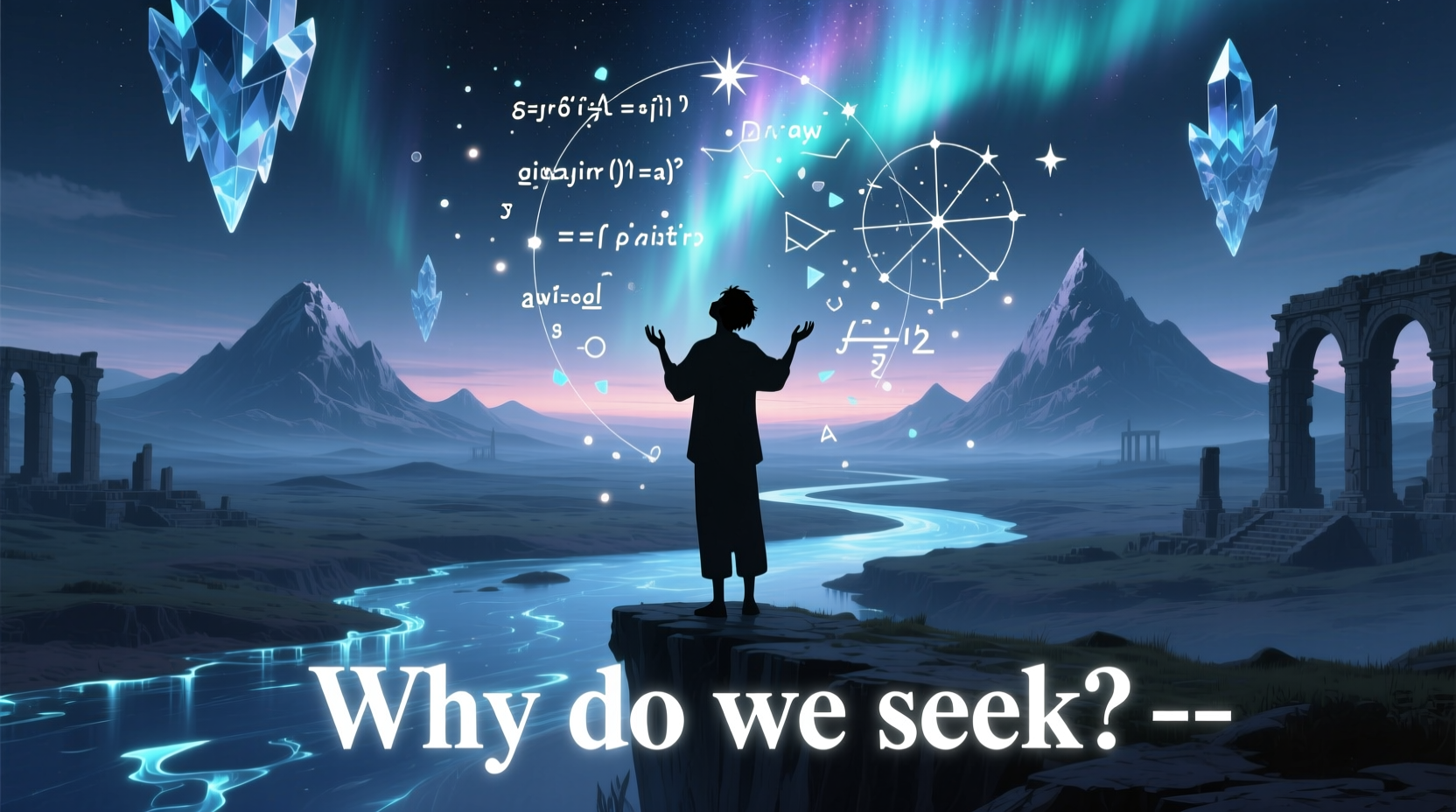
From a biological standpoint, human existence is the result of evolutionary processes spanning billions of years. Life emerged from simple organic compounds, gradually developing complexity through natural selection. Homo sapiens evolved as a species adapted to survive, reproduce, and thrive in diverse environments. In this view, our existence isn't preordained but accidental—a product of cosmic and genetic probabilities.
Astronomically, Earth occupies a narrow \"habitable zone\" around the Sun, where conditions allowed life to flourish. The emergence of intelligent life may be exceedingly rare in the universe. As physicist Enrico Fermi famously questioned, if intelligent life is common, where is everyone? This paradox suggests that while life may arise under certain conditions, conscious, reflective beings like humans might be outliers.
Philosophical Frameworks: Searching for Meaning
Philosophers have long debated whether life has intrinsic purpose or if meaning is something we create. Existentialists like Jean-Paul Sartre argued that existence precedes essence—humans are born without predefined purpose and must forge their own meaning through choices and actions. In contrast, thinkers such as Aristotle believed in teleology: that everything has a natural end or function. For humans, he proposed *eudaimonia*—flourishing through virtue and reason—as our highest purpose.
Immanuel Kant introduced a moral dimension, suggesting that humanity's purpose lies in acting according to duty and universal ethical laws. He stated, “Two things fill the mind with ever new and increasing admiration and awe… the starry heavens above me and the moral law within me.” This internal compass, Kant believed, elevates humans beyond mere biological entities.
“Man is nothing else but what he makes of himself.” — Jean-Paul Sartre
Religious and Spiritual Interpretations
Most world religions offer definitive answers to humanity’s purpose, often rooted in divine creation. In Christianity, humans are made in the image of God (Imago Dei) and tasked with stewardship over creation, love for others, and relationship with the divine. Islam teaches that life is a test, and humans exist to worship Allah and live righteously. Hinduism presents a cyclical view—souls evolve through reincarnation toward moksha, or liberation from suffering. Buddhism, while less focused on a creator, emphasizes enlightenment and compassion as ultimate aims.
These traditions provide structured narratives that give comfort, direction, and community. They frame existence not as random but as part of a grand design or spiritual journey. Even among non-believers, many adopt secular versions of these values—service, love, growth—suggesting a shared human intuition about meaningful living.
A Comparative Overview of Purpose Across Traditions
| Tradition | Purpose of Humanity | Path to Fulfillment |
|---|---|---|
| Christianity | Love God and neighbor; steward Earth | Through faith, grace, and good works |
| Islam | Worship Allah and uphold justice | Submission to divine will and righteous deeds |
| Hinduism | Realize unity with Brahman; fulfill dharma | Yoga, devotion, knowledge, karma |
| Buddhism | End suffering; attain enlightenment | Eightfold Path, mindfulness, compassion |
| Existentialism | Create personal meaning | Authentic choice and responsibility |
Humanity’s Role in the Future: Stewards, Creators, or Transcenders?
As technological advancement accelerates, the question of purpose evolves. With artificial intelligence, genetic engineering, and space exploration, humans are no longer passive products of nature but active shapers of future life. Some futurists, like Yuval Noah Harari, suggest that Homo sapiens may eventually be replaced or augmented by post-human forms—raising ethical and existential concerns about what comes next.
In this context, purpose may shift from survival to transcendence. Are we here to preserve life on Earth? To spread consciousness across the cosmos? To create art, knowledge, and connection that outlast us? Carl Sagan once said, “We are a way for the cosmos to know itself.” This poetic idea suggests that human consciousness allows the universe to reflect upon its own existence—an extraordinary role, even if accidental in origin.
A Real-Life Example: Viktor Frankl’s Search for Meaning
Neurologist and Holocaust survivor Viktor Frankl endured unimaginable suffering in Nazi concentration camps. Yet, he observed that those who retained a sense of purpose—whether reuniting with family, completing work, or helping others—were more likely to survive. His experiences led him to develop logotherapy, a psychological approach centered on the \"will to meaning.\"
In his seminal book *Man’s Search for Meaning*, Frankl wrote: “Everything can be taken from a man but one thing: the last of the human freedoms—to choose one’s attitude in any given set of circumstances.” His life illustrates that even in the absence of clear answers, the pursuit of purpose can sustain us through darkness.
“Those who have a 'why' to live can bear almost any 'how'.” — Friedrich Nietzsche (popularized by Frankl)
Building a Personal and Collective Purpose: A Practical Guide
While grand theories offer insight, purpose is ultimately lived day to day. Here is a step-by-step framework to help clarify your role in the larger human story:
- Reflect on Core Values: Identify what matters most—truth, love, creativity, justice, connection.
- Assess Your Strengths: What are you naturally good at? How can you use them to contribute?
- Engage with Community: Purpose grows through relationships. Volunteer, mentor, listen.
- Set Meaningful Goals: Not just career milestones, but projects that align with deeper values.
- Embrace Growth Through Challenge: Setbacks often reveal hidden purposes. Learn from them.
- Contribute Beyond Yourself: Leave something behind—a lesson, a legacy, a moment of kindness.
Action Checklist: Cultivating a Purpose-Driven Life
- Keep a journal to explore your thoughts on meaning
- Volunteer monthly for a cause you care about
- Have deep conversations about purpose with friends or mentors
- Limit time spent on passive consumption (e.g., endless scrolling)
- Practice gratitude and mindfulness to stay present
Frequently Asked Questions
Can life have meaning if there’s no higher power?
Yes. Many atheists and agnostics find deep purpose in relationships, creativity, service, and the pursuit of knowledge. Meaning doesn’t require divine origin—it can emerge from human experience and connection.
Is humanity’s purpose the same for everyone?
No. While there may be shared themes—love, growth, contribution—each person’s path is unique. Purpose is both collective and deeply personal.
What if I feel purposeless?
That feeling is common and often temporary. It can be a sign of transition or unmet needs. Exploring new experiences, seeking therapy, or serving others can reignite a sense of direction.
Conclusion: Embracing the Question
The question of why mankind exists may never have a final answer—and perhaps that’s as it should be. The search itself shapes who we are. Whether guided by faith, reason, emotion, or imagination, our attempts to understand purpose drive art, science, ethics, and connection. Rather than seeking certainty, we might instead embrace curiosity, compassion, and courage as companions on the journey.
Humanity’s greatest potential may not lie in discovering a single reason for being, but in creating countless reasons to keep going—to learn, to heal, to wonder, and to care. In asking “Why do we exist?” we affirm our capacity to care about the answer. And in that act, we begin to live purposefully.




 浙公网安备
33010002000092号
浙公网安备
33010002000092号 浙B2-20120091-4
Comments
No comments yet. Why don't you start the discussion?