
Mascara is a staple in most makeup routines, adding volume, length, and definition to lashes. Yet, few beauty frustrations rival the sight of dark streaks beneath the eyes by midday. Smudging doesn’t just look messy—it can signal deeper issues with product choice, application technique, or skin chemistry. Understanding why mascara migrates from lashes to under-eye circles is the first step toward flawless, long-lasting wear. More importantly, knowing how to prevent it empowers you to maintain a polished look from morning meetings to evening events.
The Science Behind Mascara Smudging
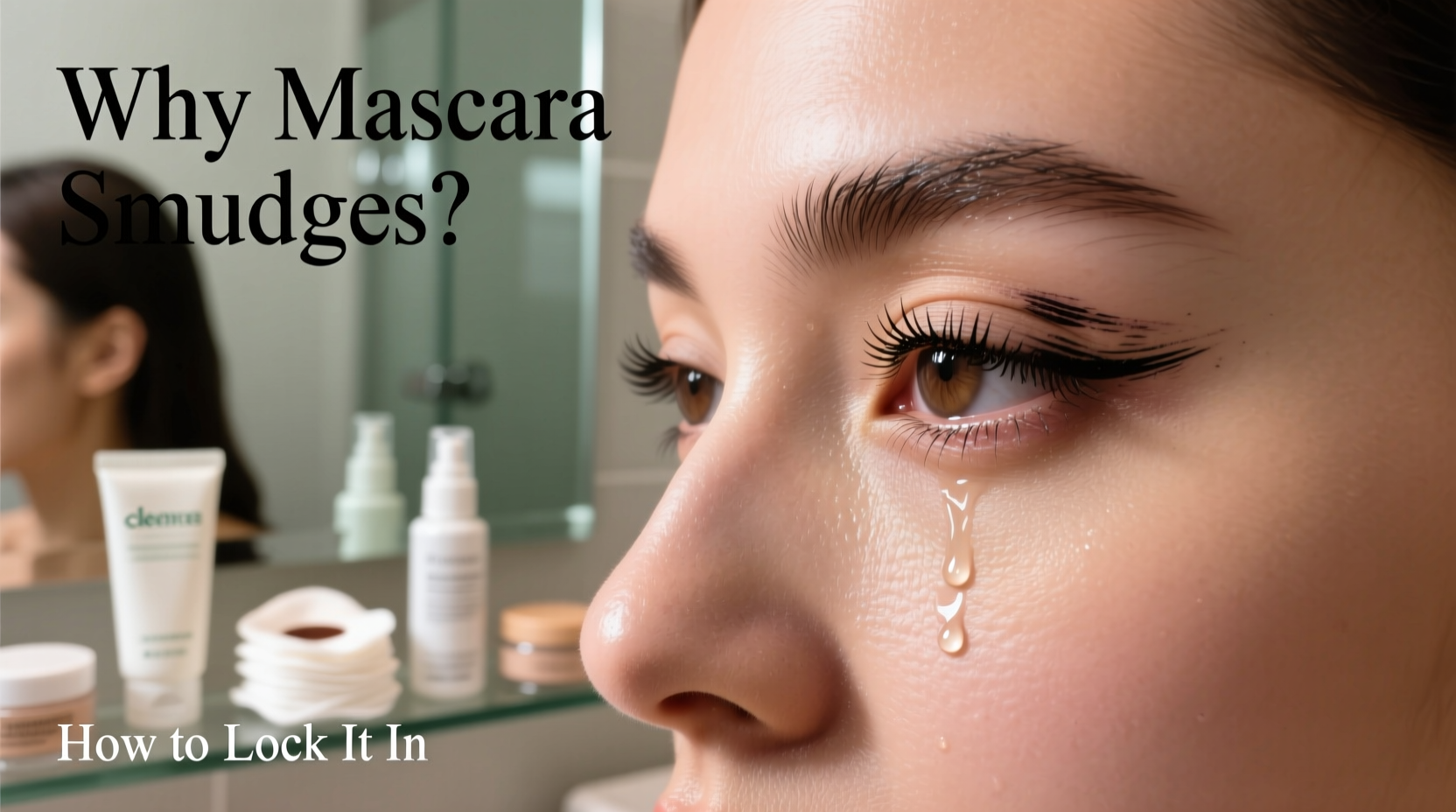
Smudging isn’t random; it’s the result of specific physical and biological factors. The delicate skin under the eyes is thinner and more prone to oil secretion than other facial areas. This region also hosts active sweat glands. When combined with environmental humidity or body heat, these conditions create an ideal environment for makeup breakdown.
Mascara formulas vary widely—some are water-based, others wax-heavy or oil-infused. Waterproof mascaras contain polymers that resist moisture but may still transfer due to friction or excess sebum. The real culprit often lies in the interaction between your skin’s natural oils (sebum) and the mascara’s ingredients. Sebum acts like a solvent, softening the mascara film on lashes and allowing pigment to migrate downward as tiny particles settle into fine lines or pores.
Additionally, blinking causes constant movement. Over thousands of blinks per day, even slight friction can dislodge pigment, especially if the mascara hasn’t fully set or lacks proper adhesion.
“Mascara smudging is rarely about poor quality alone—it's usually a mismatch between formula, skin type, and application method.” — Dr. Lena Torres, Cosmetic Chemist & Formulation Expert
Common Causes of Under-Eye Mascara Transfer
- Oily eyelids and under-eye area: Excess sebum breaks down mascara bonds.
- Humid environments: Heat and moisture accelerate product degradation.
- Incompatible primer or moisturizer: Silicone-heavy or oily eye creams repel makeup.
- Over-application: Too many coats increase flaking and transfer risk.
- Poor lash prep: Dirty or oily lashes prevent proper mascara adhesion.
- Frequent touching or rubbing: Physical contact transfers pigment instantly.
- Using expired mascara: Old formulas dry out, crack, and shed pigment.
How to Lock Mascara in Place: A Step-by-Step Guide
Preventing smudging requires a strategic approach—not just relying on “waterproof” labels. Follow this timeline-tested routine for maximum staying power.
- Cleanse and prep lashes thoroughly. Use an oil-free micellar water or gentle cleanser to remove any residue, sunscreen, or leftover makeup. Oily residue prevents proper mascara bonding.
- Apply a mattifying eye primer. Choose a lightweight, silicone-based primer designed for the eye area. Apply a thin layer along the upper and lower lash lines to create a barrier against oil.
- Set with translucent powder. Using a small brush, lightly dust translucent setting powder over the under-eye area and along the base of the upper lashes. This absorbs excess moisture and creates a dry canvas.
- Choose the right mascara formula. For oily lids, opt for tubing mascaras or long-wear waterproof versions. Avoid creamy or oil-enriched formulas unless your skin is very dry.
- Wiggle the wand at the base of lashes. Start application by wiggling the brush at the lash roots to deposit product where smudging begins. Build upward with fewer coats on the tips.
- Let the first coat dry completely. Wait 60–90 seconds before applying a second coat. Rushing layers leads to clumping and instability.
- Seal with a lash-setting spray or clear gel. Lightly mist a lash-setting spray or apply a clear tubing mascara topcoat to lock fibers in place.
- Avoid touching eyes throughout the day. Train yourself not to rub or rest your hands near your face—this is the leading cause of immediate transfer.
Do’s and Don’ts: What Works (and What Doesn’t)
| Do | Don’t |
|---|---|
| Use a dedicated eye primer before mascara | Apply heavy moisturizer directly under lashes before makeup |
| Blot under-eyes gently with tissue after priming | |
| Use a clean spoolie to separate lashes post-application | Rub eyes to adjust smudges—this worsens transfer |
| Carry blotting papers for midday touch-ups | Skip patch testing new products near eyes |
| Store mascara upright in a cool, dry place | Share mascara—risk of bacterial infection increases smudging via irritation |
Product Recommendations Based on Skin Type
No single mascara works universally. Your success depends on matching the formula to your skin’s behavior.
- Oily/Combination Skin: Try tubing mascaras like Kosas Airbrahma Mega Volume + Lash Serum or Thrive Causemetics Liquid Lash Extension Fiber System. These form polymer tubes around each lash, resisting oil and wiping away cleanly without residue.
- Dry/Sensitive Skin: Opt for hydrating yet long-wearing formulas such as Glossier Lash Slick or Ilia Limitless Lash, which combine conditioning agents with flexible hold.
- Very Humid Climates: Reach for intensely waterproof options like Lancôme Hypnôse Drama Waterproof or Maybelline Lash Sensational Washable Waterproof.
- All-Day Wear Needs: Layer a clear fiber gel base (e.g., Anastasia Beverly Hills Clear Brow Gel) with a pigmented topcoat for structural reinforcement.
Real-World Case: The Office Worker’s Dilemma
Sarah, a project manager in Miami, struggled daily with mascara stains on her blouse by noon. Despite using “waterproof” brands, she experienced consistent smudging. After consulting a dermatologist, she learned her under-eye moisturizer contained dimethicone—a silicone that created a slippery surface beneath her makeup.
She switched to an oil-free, mattifying eye gel (The Ordinary Caffeine Solution 5% + EGCG), applied it 10 minutes before makeup, then used a primer and tubing mascara. She also began blotting her under-eyes midday with folded tissue instead of reapplying concealer.
Result: Within a week, smudging dropped by 90%. Her confidence improved, and she no longer carried spare shirts to work.
Expert-Backed Tips for Long-Lasting Lash Definition
“Tubing mascaras are game-changers for chronic smudgers. They don’t dissolve in oil—they lift off like plastic sleeves when removed.” — Renée Chen, Celebrity Makeup Artist
- Prime both upper and lower lash lines. Most people forget the lower lashes contribute significantly to under-eye shadowing.
- Use a flat, angled brush to apply concealer precisely. After mascara, carefully correct any fallout or faint shadows without disturbing the lash line.
- Curl lashes before applying any product. Curled lashes stay farther from the under-eye zone, reducing contact and transfer.
- Try the ‘tightline’ trick. Applying a thin layer of waterproof pencil or gel liner directly to the upper waterline helps anchor mascara and reduces flaking.
- Keep tools clean. A dirty mascara wand introduces bacteria and clumps, increasing shedding.
FAQ: Common Questions About Mascara Smudging
Why does my mascara smudge only under one eye?
This asymmetry often results from sleeping habits. If you consistently sleep on one side, friction from the pillow can break down mascara overnight. It may also reflect uneven oil production or differences in skincare absorption.
Can I fix smudging without removing all my eye makeup?
Yes. Gently roll a cotton swab wrapped in tissue around the affected area. Then, use a pointed concealer brush to apply a tiny amount of creamy concealer to neutralize the stain. Finish with a light dusting of translucent powder.
Are tubing mascaras better than waterproof ones?
For most smudge-prone individuals, yes. Tubing mascaras encapsulate each lash in a flexible polymer film that resists oil, sweat, and tears. Unlike traditional waterproof mascaras—which rely on heavy waxes and require harsh removers—tubing formulas wash off easily with warm water and are gentler on lashes.
Final Checklist: Smudge-Free Mascara Routine
- Remove all traces of oil and residue from eyelids and lashes
- Apply oil-free eye cream and wait 5 minutes to absorb
- Use a mattifying eye primer on upper and lower lash lines
- Dust lightly with translucent powder
- Curl lashes
- Apply tubing or long-wear waterproof mascara in thin, even layers
- Wait 90 seconds between coats
- Seal with a lash-setting spray or clear topcoat
- Blot under-eyes gently if needed
- Carry blotting papers and a mini concealer for touch-ups
Conclusion: Take Control of Your Look
Smudged mascara doesn’t have to be inevitable. With the right knowledge, products, and habits, you can enjoy sharp, defined lashes from sunrise to sunset. The key lies in understanding your skin’s unique needs and treating mascara application as part of a holistic eye-care routine—not an isolated step. Whether you battle oily lids, humid weather, or sensitive skin, solutions exist that balance performance with comfort.




 浙公网安备
33010002000092号
浙公网安备
33010002000092号 浙B2-20120091-4
Comments
No comments yet. Why don't you start the discussion?