
It happens to nearly everyone: a few opening notes of a song from decades ago flood the mind with vivid recollections—your bedroom wallpaper, the smell of rain on summer pavement, your best friend’s laugh. Music from childhood doesn’t just remind us of the past; it transports us there. Unlike other sensory cues, melodies seem uniquely capable of unlocking deeply buried emotions and experiences. This phenomenon isn’t mere coincidence—it’s rooted in neuroscience, psychology, and the formative nature of early life.
The connection between childhood music and memory is both universal and intensely personal. Whether it was the lullaby your parent sang, the theme song of your favorite cartoon, or the pop hit blasting from a boombox at a middle school dance, these sounds become woven into the fabric of who you are. But why do they hold such enduring power? And what can we learn from this emotional resonance?
The Science Behind Sound and Memory Formation
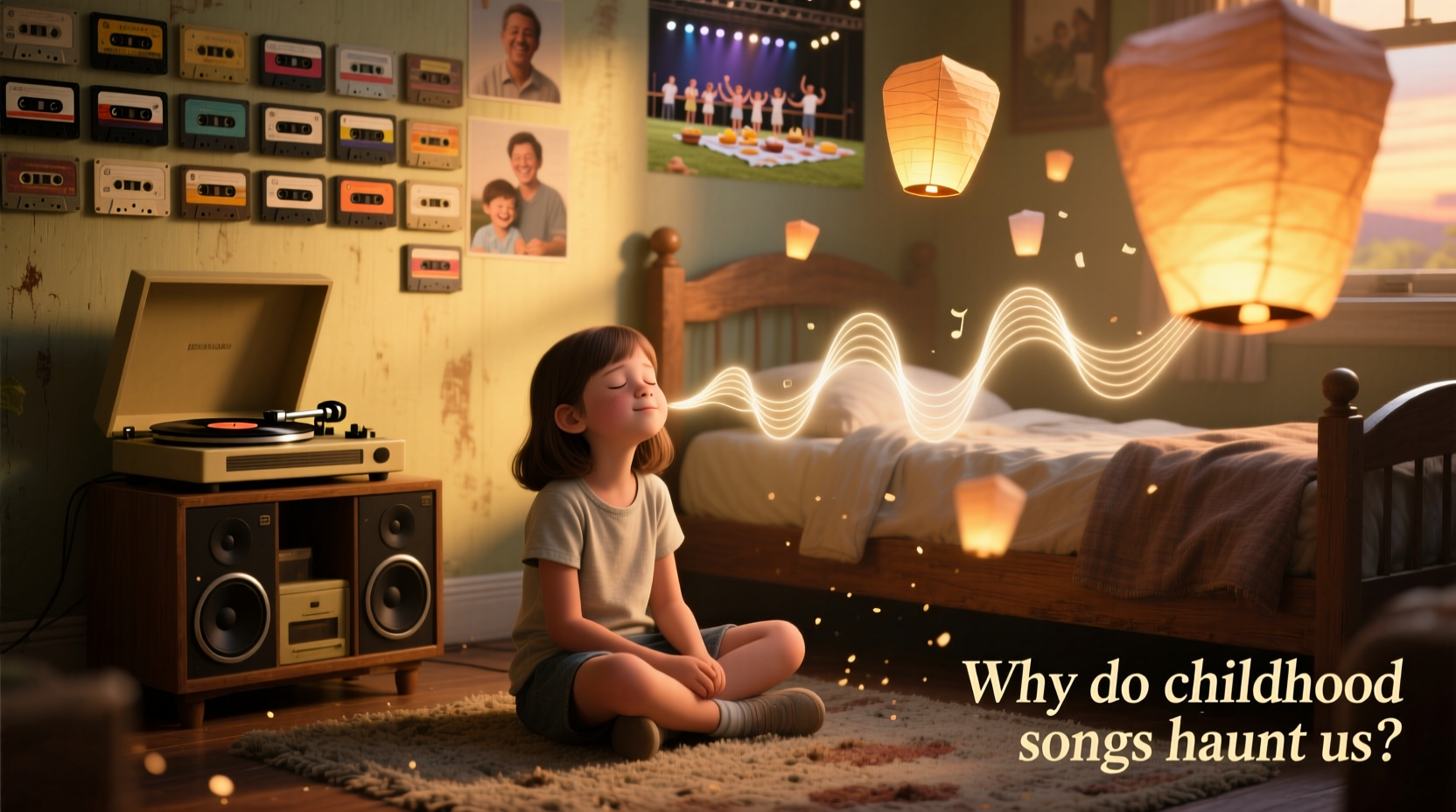
The human brain treats music differently than most stimuli. It activates multiple regions simultaneously—the auditory cortex for processing sound, the hippocampus for memory consolidation, the amygdala for emotional response, and even motor areas when rhythm compels movement. During childhood, when the brain is rapidly developing, repeated exposure to music strengthens neural pathways in ways that last a lifetime.
Neuroscientist Dr. Aniruddh Patel explains:
“Music engages the brain more broadly than almost any other human activity. In early development, when synaptic pruning is at its peak, frequently heard songs get hardwired into long-term memory networks.”This means that a tune played repeatedly during ages 5 to 12 may become neurologically entrenched, making it easier to recall decades later—even if other details from that time have faded.
Additionally, the period known as “the reminiscence bump” plays a critical role. Research shows that people form the majority of their lasting autobiographical memories between ages 10 and 30, with a concentration around adolescence. Because music is often tied to identity formation during these years—first loves, friendships, rebellion, self-expression—songs become mental bookmarks for pivotal moments.
Emotional Conditioning and Associative Learning
From infancy, music is linked with emotional experiences. Lullabies soothe distress, nursery rhymes bring joy, and school assemblies use patriotic songs to evoke pride. These early associations create what psychologists call “emotional conditioning”—a learned response where a stimulus (music) becomes inseparable from a feeling (comfort, excitement, sadness).
This conditioning deepens during childhood because young minds lack cognitive filters. Children absorb environmental input without skepticism, allowing music to imprint directly onto emotional memory. A study published in *Psychology of Music* found that participants could identify the emotional tone of a song by age 4, and by age 8, they began linking specific tracks to personal events.
Consider a child who listens to a particular album every summer while visiting grandparents. Over several years, the music becomes part of the sensory environment—linked to the scent of pine trees, the taste of lemonade, and the warmth of family interaction. When that same song plays years later, the brain reconstructs the entire scene through a process called “pattern completion,” retrieving not just the melody but the full emotional context.
The Role of Repetition and Cultural Immersion
Repetition is a cornerstone of childhood learning—and music is no exception. Kids listen to favorite songs hundreds of times, whether through cassette tapes, radio play, or digital playlists. This repetition reinforces memory encoding far beyond casual adult listening habits.
In the 1980s and 1990s, children often experienced shared musical culture through limited channels: school assemblies, Saturday morning cartoons, and family car rides. This created collective sonic landscapes. For example, nearly every American child in the late ’90s heard Britney Spears’ “…Baby One More Time” within months of its release. That widespread exposure, combined with high repetition, turned certain songs into generational touchstones.
Today’s fragmented media landscape makes such universal experiences rarer, but individual immersion remains powerful. A child obsessed with a single Disney soundtrack, for instance, may replay it daily for weeks, embedding lyrics and melodies into procedural memory—the same system used for riding a bike or tying shoelaces.
| Era | Common Music Sources | Repetition Level | Cultural Reach |
|---|---|---|---|
| 1970s–1980s | Radio, vinyl records, school programs | Moderate to high | High (shared national hits) |
| 1990s–2000s | Cassette tapes, CDs, MTV, Walkmans | Very high (portable devices) | High (global pop dominance) |
| 2010s–Present | Streaming, YouTube, smart speakers | Variable (algorithm-driven) | Fragmented (personalized playlists) |
The table illustrates how access to music has evolved, but the core mechanism—repetition leading to deep encoding—remains unchanged. Even in an age of endless choice, the songs we return to again and again during youth gain privileged status in our memory architecture.
How Childhood Music Shapes Identity and Belonging
Beyond memory and emotion, childhood music contributes to identity formation. Songs heard during formative years help define a person’s sense of self, cultural belonging, and social group affiliation. A child raised in a bilingual household might associate Spanish-language lullabies with intimacy and safety, while English pop songs represent independence and peer connection.
Music also serves as a social glue. Singing the national anthem at school, dancing to the latest hit at a birthday party, or chanting lyrics with siblings in the backseat—all reinforce a sense of belonging. These shared sonic rituals become internalized, so that hearing the music later evokes not only personal memories but also a feeling of being part of something larger.
“We don’t just remember the music—we remember who we were when we heard it.” — Dr. Lena Torres, Developmental Psychologist
This quote captures the essence of musical nostalgia: it’s not merely about the song, but about the version of ourselves we were at the time. A teenager who listened to angsty rock during a turbulent home life may feel a surge of both pain and empowerment when revisiting those tracks as an adult. The music becomes a mirror reflecting past struggles, resilience, and growth.
Practical Applications: Using Childhood Music Mindfully
Understanding the power of childhood music allows us to harness it intentionally—for healing, reflection, and connection. Here are actionable ways to engage with nostalgic music in a meaningful way:
- Create memory playlists for specific life chapters (e.g., “Age 8–10,” “Middle School Years”) to explore how music shaped different phases.
- Use music therapeutically during stressful times—familiar tunes can reduce anxiety by activating feelings of safety and continuity.
- Share songs with younger generations to pass on cultural or family stories embedded in music.
- Journal after listening to old favorites—note what memories surface and how your current self interprets them.
- Curate intergenerational playlists with family members to bridge emotional gaps and deepen relationships.
Mini Case Study: Reconnecting Through a Forgotten Melody
Sarah, a 42-year-old teacher from Oregon, hadn’t thought about the song “Circle of Life” from *The Lion King* in over 25 years. While driving her daughter to a school play, the track came on a classic Disney playlist. Instantly, tears welled up. She remembered watching the film with her younger brother the week before he moved away for college—a moment she had emotionally suppressed for years.
That evening, Sarah called her brother for the first time in months. They talked for two hours, reminiscing not just about the movie, but about their childhood bond. The music acted as an emotional key, unlocking a conversation that had been stalled by time and distance. For Sarah, the experience wasn’t just about remembering—it was about reconnecting.
FAQ: Common Questions About Music and Memory
Why do some songs bring back memories while others don’t?
Not all music becomes memorable. Songs that trigger strong recall are usually tied to emotionally charged events, repeated frequently, or associated with identity milestones (first love, loss, achievement). Neutral background music rarely forms lasting links.
Can music from childhood help with dementia or memory loss?
Yes. Numerous studies show that familiar music from a patient’s youth can improve mood, reduce agitation, and even spark brief moments of clarity in individuals with Alzheimer’s disease. Programs like “Music & Memory” use personalized playlists to support cognitive and emotional well-being.
Is it normal to feel sad when hearing childhood songs?
Absolutely. Nostalgia often blends joy and melancholy. Feeling wistful when hearing an old song reflects awareness of time’s passage and personal change. This bittersweet emotion is psychologically healthy and can foster gratitude for past experiences.
Step-by-Step Guide: Building a Reflective Nostalgia Playlist
Creating a playlist centered on childhood music can be a powerful act of self-exploration. Follow these steps:
- Identify key life stages: Break down your childhood into segments (ages 3–6, 7–10, 11–13, etc.).
- List songs from each stage: Think of lullabies, TV themes, school performances, family road trips, and popular hits you knew.
- Add context notes: For each song, write down where you heard it, who was with you, and what you felt.
- Organize chronologically: Arrange the playlist in order to simulate a journey through time.
- Listen mindfully: Play the list in a quiet space, journaling responses as memories emerge.
- Reflect and share: Consider discussing the experience with a trusted friend or therapist.
Conclusion: Embrace the Echoes of Your Past
Music from childhood is more than entertainment—it’s a living archive of who we were and how we became who we are. Its ability to trigger vivid memories and deep emotions isn’t random; it’s the result of biology, timing, and emotional significance converging during our most impressionable years. By understanding this connection, we gain insight into our inner world and the invisible threads that bind us to our past.
These musical echoes deserve more than passive nostalgia. They invite reflection, healing, and connection. Whether you’re revisiting a lullaby sung by a now-departed grandparent or laughing at the lyrics of a silly playground chant, let these sounds remind you of your journey. Honor them. Explore them. Share them.




 浙公网安备
33010002000092号
浙公网安备
33010002000092号 浙B2-20120091-4
Comments
No comments yet. Why don't you start the discussion?