
Sometimes, a single chord progression or a soaring vocal line sends a shiver down your spine. Your arms prickle with goosebumps. You feel a sudden warmth in your chest or a lump in your throat. This isn’t just appreciation—it’s a visceral, physical reaction to music. These \"chills\" are more than a fleeting sensation; they’re a window into how deeply music can influence our biology and emotions. Scientists have long studied this phenomenon, and what they’ve discovered reveals a complex interplay between sound, memory, expectation, and neurochemistry.
Whether it’s the climax of a symphony, the drop in an electronic track, or a nostalgic lyric from childhood, music-induced chills are surprisingly common. Research suggests that up to 90% of people experience them at some point. But why do they happen? And why do certain songs trigger them consistently while others fall flat? The answers lie not just in the music itself, but in the listener’s mind, body, and past.
The Neuroscience Behind Musical Chills
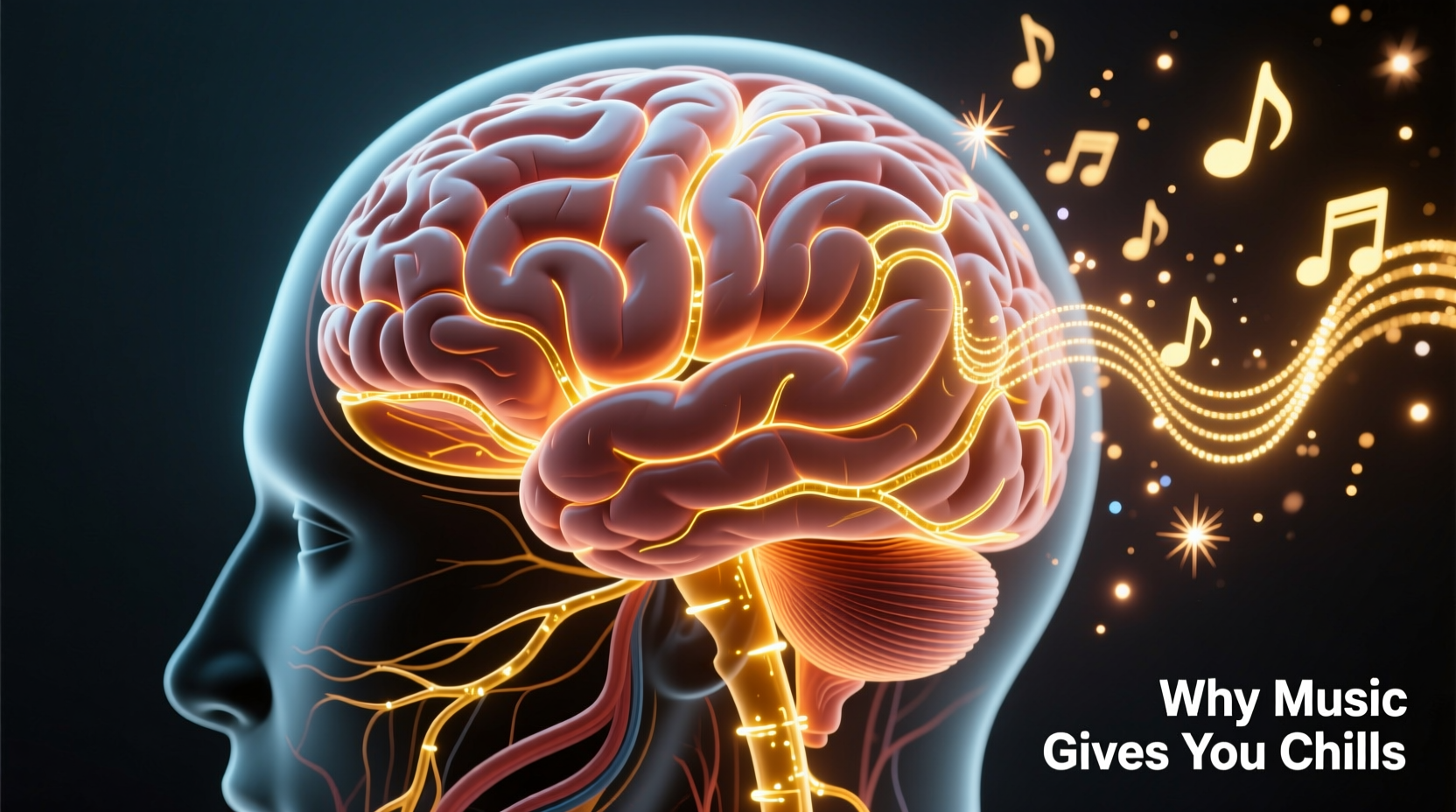
When music gives you chills, your brain is doing far more than simply processing sound. Functional MRI studies show that emotionally powerful music activates regions associated with reward, emotion, and arousal—particularly the nucleus accumbens, amygdala, and prefrontal cortex. These areas are part of the brain’s limbic system, which governs feelings and motivation.
The key player in this process is dopamine, a neurotransmitter linked to pleasure, anticipation, and reinforcement. Dopamine release spikes not only when a rewarding moment in music occurs (like a satisfying resolution), but also in the seconds *before* it happens—when the brain predicts something beautiful is about to unfold.
“Music hijacks the brain’s reward system in much the same way as food, sex, or even drugs. The anticipation and fulfillment of musical patterns can produce measurable surges in dopamine.” — Dr. Valorie Salimpoor, Cognitive Neuroscientist, McGill University
This predictive mechanism explains why familiar songs often induce stronger chills. Your brain knows what’s coming and builds tension in anticipation. When the expected moment arrives—say, the final chorus or a dramatic key change—the release triggers a physiological cascade: pupils dilate, heart rate increases, skin conductance rises, and yes, you get chills.
Pyschological Triggers: Why Some Songs Move Us More Than Others
Not all music produces chills. Certain structural elements make a song more likely to provoke a strong emotional response:
- Dynamic shifts – Sudden changes in volume, tempo, or instrumentation create surprise and intensity.
- Harmonic surprises – Unexpected chords or modulations disrupt expectations in a pleasing way.
- Vocal expressiveness – Raw, emotive singing (especially with vibrato or breathiness) enhances perceived sincerity.
- Personal associations – A song tied to a pivotal life event—first love, loss, triumph—carries emotional weight beyond its notes.
These features work together to create what researchers call “musical frisson”—a French term meaning aesthetic chills. Frisson is not passive listening; it’s an active engagement where the brain oscillates between prediction and surprise, safety and vulnerability.
Who Is More Likely to Experience Music-Induced Chills?
While most people report experiencing chills from music at least occasionally, some are far more prone than others. Personality plays a significant role. Studies link frequent chills to higher scores in “openness to experience,” one of the Big Five personality traits. People high in openness tend to appreciate art, imagination, and emotional depth more intensely.
Additionally, individuals who are more empathetic or introspective often report stronger reactions. They may be more attuned to subtle emotional cues in music, treating it not just as sound, but as a form of communication or storytelling.
Interestingly, musical training doesn’t necessarily increase the likelihood of chills—but it may change their timing. Musicians sometimes report chills during technically impressive passages, whereas non-musicians respond more to lyrical or melodic climaxes.
Factors That Influence Susceptibility to Musical Chills
| Factor | Increases Likelihood? | Notes |
|---|---|---|
| Openness to experience | Yes | Strongest psychological predictor |
| Empathy levels | Yes | Higher emotional resonance with lyrics and tone |
| Musical training | Somewhat | Shifts focus to technical brilliance vs. emotional peaks |
| Familiarity with song | Yes | Allows for anticipation and memory recall |
| Listening environment | Yes | Quiet, focused settings enhance immersion |
A Real Moment: How One Song Changed a Listener’s Perspective
Lena, a 34-year-old teacher from Portland, had always enjoyed music casually—until she heard Jeff Buckley’s rendition of “Hallelujah” during a solo drive at dusk. She describes the moment vividly: “The sky was turning purple, rain tapping lightly on the windshield. I’d heard the song before, but this time, when he hit that high note in the third verse, I felt my scalp tighten. My hands went cold. I had to pull over because I couldn’t see through tears.”
For Lena, the experience wasn’t just emotional—it was transformative. “It made me realize how much feeling could be packed into sound. After that, I started listening more intentionally. I noticed nuances in phrasing, dynamics, silence. It changed how I engage with art altogether.”
Her story illustrates how context—mood, environment, and internal state—can amplify music’s impact. The song hadn’t changed, but her receptivity had. Moments like these often become anchor points in memory, forever linked to the physical sensation of chills.
How to Cultivate Deeper Musical Experiences (And Maybe Trigger More Chills)
You can’t force chills—but you can create conditions where they’re more likely to occur. Here’s a practical guide to deepen your connection with music and potentially invite those spine-tingling moments more often.
- Listen actively, not passively. Put on headphones, close your eyes, and focus entirely on one element—melody, bassline, or vocal texture. Avoid multitasking.
- Explore unfamiliar genres. Novelty primes the brain for surprise. Try neoclassical, ambient, or global folk traditions to expand your emotional palette.
- Revisit meaningful tracks mindfully. Play a song tied to a powerful memory and reflect on why it resonates. Journaling afterward can help unpack the emotions.
- Pay attention to build-ups. Notice how tension is created—through rising pitch, increasing tempo, or layering instruments—and how it resolves.
- Create chill playlists. Curate a collection of songs that reliably move you. Use them during reflective times—morning coffee, evening walks, or meditation.
Checklist: Optimize Your Listening for Emotional Impact
- ✅ Eliminate distractions (phone, TV, background noise)
- ✅ Use over-ear headphones or quality speakers
- ✅ Choose a calm, uninterrupted time of day
- ✅ Focus on one song at a time
- ✅ Allow yourself to feel without judgment
- ✅ Reflect afterward: What moved you? Where did you feel it?
Frequently Asked Questions
Can everyone experience music-induced chills?
No—not everyone does, and that’s normal. Estimates suggest 55–90% of people experience them, depending on personality, cultural exposure, and listening habits. Lack of chills doesn’t mean you’re less emotional or less appreciative of music.
Are chills a sign of being “moved” or just a reflex?
They’re both. While chills are a physiological reflex (part of the autonomic nervous system), they’re tightly linked to subjective feelings of awe, nostalgia, or transcendence. The body’s reaction often mirrors the depth of the emotional experience.
Why do some songs stop giving me chills after repeated listens?
Familiarity can reduce surprise, weakening the brain’s anticipatory response. However, some songs maintain their power over time, especially if they’re tied to enduring personal meaning. Occasionally revisiting a song after a break can restore its emotional freshness.
The Last Note: Embracing the Mystery of Musical Emotion
Science has illuminated much about why music gives us chills—the dopamine surges, the neural pathways, the role of memory and expectation. Yet, there remains something ineffable about the experience. No equation can fully capture why a particular phrase at a particular moment cracks something open inside us.
Perhaps the beauty lies in that mystery. Music doesn’t need to be fully understood to be profoundly felt. The next time chills ripple down your arms, don’t rush to analyze it. Instead, lean into it. Let the wave pass through you. In that instant, you’re not just hearing music—you’re living inside it.




 浙公网安备
33010002000092号
浙公网安备
33010002000092号 浙B2-20120091-4
Comments
No comments yet. Why don't you start the discussion?