
It happens to millions of people every day: a familiar chord progression plays, a voice rises in intensity, or a sudden silence breaks into a soaring melody—and suddenly, goosebumps ripple across your skin. You feel a shiver run down your spine, your hair stands on end, and for a moment, time seems to pause. These visceral reactions aren’t just poetic metaphors; they’re measurable physiological events rooted in neuroscience, psychology, and evolutionary biology. Understanding why music gives you chills reveals not only how deeply sound affects us but also how our brains are wired to respond to art, memory, and emotion.
The Physiology of Musical Chills
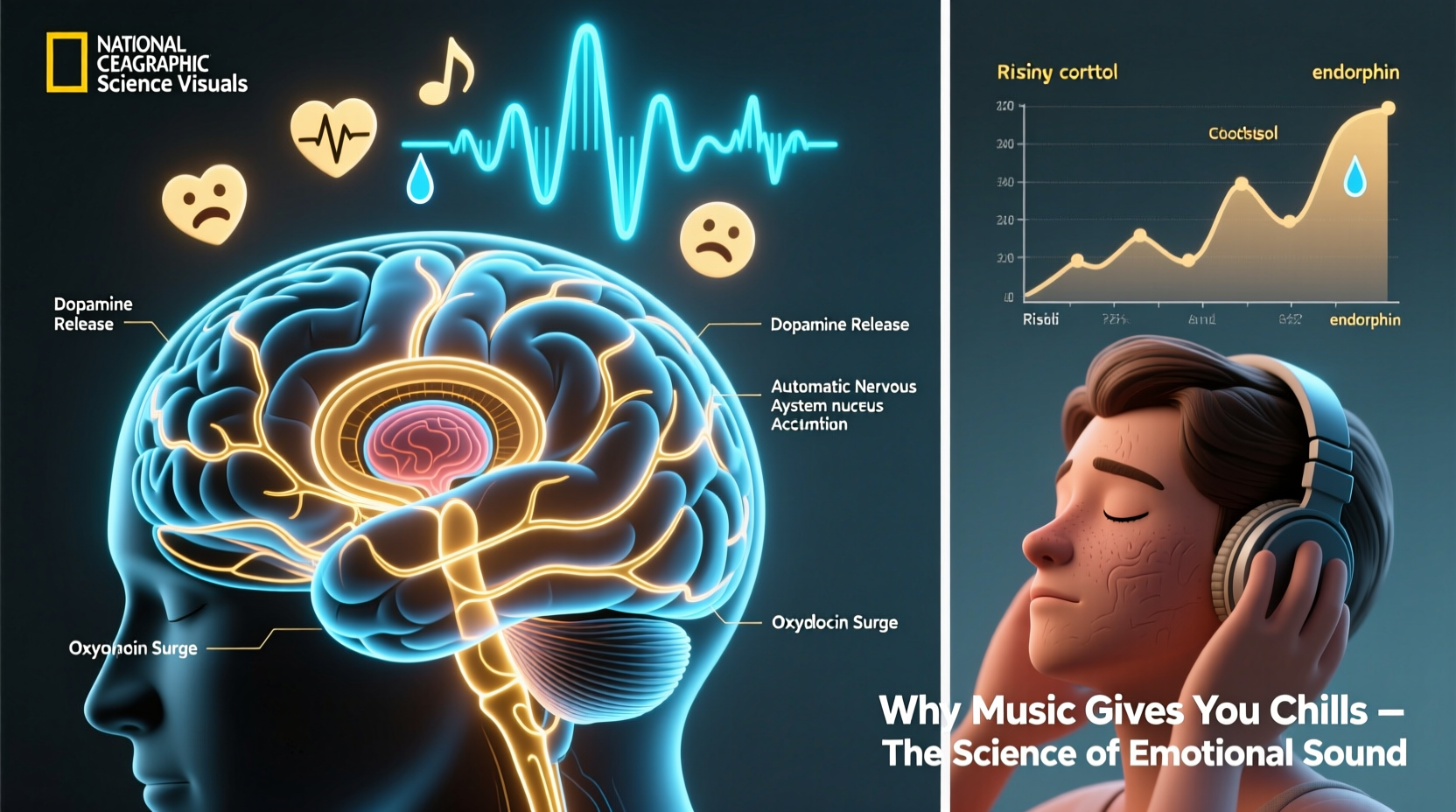
Musical chills—also known as frisson (from the French word for \"shiver\")—are real, documented phenomena that occur when emotionally powerful music triggers a cascade of neurological and autonomic responses. Studies using functional MRI (fMRI) and electroencephalography (EEG) have shown that these moments activate multiple regions of the brain simultaneously, particularly those linked to reward, emotion, and memory.
When chills occur, the body experiences:
- A spike in dopamine release in the nucleus accumbens, a key component of the brain’s reward system
- Increased activity in the amygdala, which processes emotional significance
- Activation of the prefrontal cortex, involved in expectation and prediction
- Changes in heart rate, skin conductance, and respiration
This combination creates a full-body experience—not unlike the response to food, sex, or even addictive substances. In fact, research from McGill University found that the same neural pathways activated by drugs like cocaine are engaged when people listen to intensely pleasurable music.
Why Some People Experience Chills More Than Others
Not everyone experiences musical chills. Estimates suggest between 55% and 86% of people report them at some point, depending on the study and cultural context. What determines who feels them—and how intensely?
Personality traits play a significant role. Research published in the journal Social Cognitive and Affective Neuroscience found that individuals high in “openness to experience,” one of the Big Five personality traits, are far more likely to experience frisson. This trait includes appreciation for art, imagination, curiosity, and emotional depth—all qualities that enhance sensitivity to subtle musical cues.
Additionally, cognitive engagement matters. Listeners who actively anticipate musical developments—such as a delayed resolution or an offbeat entrance—are more prone to chills. The brain rewards accurate predictions with dopamine surges, but it also responds powerfully to surprise—especially when it resolves satisfyingly.
“Music that walks the line between predictability and surprise is most likely to induce chills. It’s the sweet spot of expectation and violation.” — Dr. Valorie Salimpoor, Neuroscientist, McGill University
Biological and Environmental Influences
Beyond personality, several factors influence susceptibility:
- Hearing acuity: Subtle timbral changes or layered harmonies may be missed if auditory processing is impaired.
- Emotional state: People are more likely to experience chills when already in a reflective or emotionally receptive mindset.
- Cultural exposure: Familiarity with a genre increases the ability to detect nuanced patterns and emotional intent.
- Personal history: Music tied to strong memories—first love, loss, triumph—can amplify physiological responses.
The Role of Memory and Emotion in Sound Perception
Music doesn’t exist in a vacuum. When we hear a song, our brain doesn’t just process pitch and rhythm—it retrieves associated memories, emotions, and contexts. This is why a track from your teenage years might evoke tears or euphoria decades later.
The hippocampus, responsible for long-term memory formation, works closely with the auditory cortex and limbic system. When a familiar melody plays, the brain reconstructs not just the notes, but the environment, feelings, and even scents linked to past listening experiences. This phenomenon explains why certain songs can instantly transport you back in time.
In one study, participants reported stronger chills when listening to music they hadn’t heard in years compared to recently played tracks—even if both were equally enjoyable. The element of rediscovery intensified the emotional impact.
How Emotional Resonance Amplifies Physical Response
Emotional resonance occurs when music mirrors internal states or expresses feelings too complex for words. A minor key might reflect sadness, while a swelling orchestral climax can mimic triumph. When this alignment happens, the listener feels “seen” by the music, triggering empathy and deep engagement.
This is especially true in vocal music. The human voice carries unique emotional cues—timbre, vibrato, breath control—that signal vulnerability, strength, or longing. Singers like Adele, Jeff Buckley, or Leonard Cohen are frequently cited in chill-inducing performances because their delivery conveys raw authenticity.
| Musical Element | Emotional Effect | Chill Likelihood |
|---|---|---|
| Sudden dynamic shift (e.g., quiet to loud) | Surprise, tension release | High |
| Harmonic resolution (e.g., V-I cadence) | Satisfaction, closure | Medium-High |
| Vocal break or rasp | Authenticity, vulnerability | High |
| Familiar melody from youth | Nostalgia, personal connection | Very High |
| Complex polyrhythms | Cognitive engagement | Low-Medium |
Step-by-Step: How to Increase Your Chances of Experiencing Musical Chills
While you can’t force chills on demand, you can create conditions that make them more likely. Here’s a practical timeline to deepen your emotional responsiveness to music:
- Choose the right environment (5 minutes): Eliminate distractions. Use headphones in a quiet space where you won’t be interrupted. High-quality audio enhances subtle textures.
- Select emotionally charged music (10 minutes): Pick songs known for dramatic arcs—film scores, live recordings, or pieces with dynamic contrasts. Examples: “Hoppipolla” by Sigur Rós, “Adagio for Strings” by Barber, or “Fix You” by Coldplay.
- Engage cognitively (during playback): Focus on what’s happening musically. Notice when instruments enter, how harmonies shift, or where the vocalist takes a breath. Active listening increases neural engagement.
- Reflect on personal associations (after listening): Journal briefly about any memories or emotions that surfaced. This strengthens the link between music and meaning over time.
- Repeat with variation (ongoing): Revisit the same piece after days or weeks. Note whether chills occur at the same moments—or new ones emerge.
Real Example: A Case Study in Musical Frisson
Consider Mark, a 34-year-old teacher who hadn’t listened to Radiohead’s “Exit Music (For a Film)” since college. At the time, he was going through a painful breakup and played the song on repeat. Years later, while driving home during a rainstorm, the song came on shuffle. As Thom Yorke’s voice climbed toward the explosive final minute, Mark felt a wave of heat rise up his neck, followed by intense chills and tears.
What happened neurologically? His brain recognized the melody, triggering hippocampal recall of the original emotional context. The amygdala flagged the memory as significant, while the nucleus accumbens released dopamine in response to both the music’s structure and the bittersweet familiarity. The cold rain outside mirrored the mood of the song, creating sensory congruence that deepened immersion.
This wasn’t just nostalgia—it was a full psychophysiological reactivation of a past self, mediated through sound.
Expert Insights on the Evolutionary Purpose of Musical Emotion
Why did humans evolve to respond so powerfully to abstract patterns of sound? Some researchers argue that music served social bonding functions in early communities—synchronizing movement, reinforcing group identity, and expressing shared values.
“Music may be one of the oldest forms of emotional communication. Before language was precise, rhythm and melody helped convey intent, soothe infants, and strengthen alliances.” — Dr. Joseph Carroll, Evolutionary Literary Scholar, University of Missouri–St. Louis
Others suggest that musical sensitivity could have been a fitness indicator—much like a peacock’s tail. Individuals capable of producing or appreciating complex music may have signaled intelligence, creativity, and emotional stability, making them more attractive mates.
While these theories remain debated, one thing is clear: the capacity to be moved by music appears to be deeply embedded in human nature. Infants respond to lullabies before they understand language. Patients with advanced dementia often react to familiar songs when they no longer recognize family members. Music accesses parts of the mind that resist decay.
Checklist: Optimize Your Listening for Emotional Impact
Use this checklist to create ideal conditions for experiencing deep musical responses:
- ✅ Listen with focused attention, not as background noise
- ✅ Use high-fidelity headphones or speakers
- ✅ Choose pieces with dynamic range and emotional build-up
- ✅ Avoid multitasking or screen use during listening
- ✅ Experiment with different genres to expand emotional palette
- ✅ Revisit meaningful tracks after long intervals
- ✅ Pair music with reflection or journaling to deepen connection
FAQ: Common Questions About Musical Chills
Can everyone experience musical chills?
No—not everyone does. Studies estimate that up to 40% of people rarely or never feel chills from music. This can depend on personality, auditory processing, emotional openness, and life experiences. Lack of chills doesn’t mean someone lacks musical appreciation; it may simply reflect differences in neurology or expression.
Are musical chills a sign of being “sensitive”?
They can be, but not exclusively. While people high in empathy and openness are more likely to experience frisson, sensitivity manifests in many ways. Some deeply empathetic individuals may respond emotionally without physical symptoms. Chills are one measurable indicator of emotional engagement, not the only one.
Can I train myself to feel more chills?
You can increase the likelihood by refining your listening habits. Learning basic music theory helps you anticipate and appreciate structural nuances. Exploring diverse genres expands your emotional vocabulary. Over time, deeper engagement can lead to more frequent and intense responses—even if they didn’t occur naturally before.
Conclusion: Harness the Power of Music to Move You
Musical chills are more than fleeting thrills—they’re windows into the profound relationship between sound, brain, and soul. They reveal how music bypasses logic to touch something primal and enduring within us. Whether triggered by a symphony’s crescendo, a whispered lyric, or a childhood melody, these moments remind us of our capacity for wonder, sorrow, joy, and connection.
Understanding the science behind emotional sound reactions empowers you to cultivate richer listening experiences. By creating space for presence, exploring music intentionally, and honoring the memories it unlocks, you invite more of those transcendent moments into daily life. Music doesn’t just accompany emotion—it can generate it.




 浙公网安备
33010002000092号
浙公网安备
33010002000092号 浙B2-20120091-4
Comments
No comments yet. Why don't you start the discussion?