
Somewhere between a whisper in a quiet melody and a thunderous orchestral swell, millions of listeners experience an unmistakable physical reaction: goosebumps, shivers down the spine, a sudden catch in the breath. This phenomenon—known scientifically as *frisson*—is more than just a fleeting bodily response. It’s a complex interplay of neurology, emotion, and auditory perception that reveals how deeply music is wired into the human experience.
Frisson, derived from the French word for \"shiver,\" affects roughly 50% to 80% of people, depending on personality, musical sensitivity, and context. While not everyone experiences it, those who do often describe it as one of the most intense emotional responses to art. But what exactly triggers these chills? And why does music, in particular, have such a profound effect on our nervous system?
The Neurological Mechanics of Musical Chills
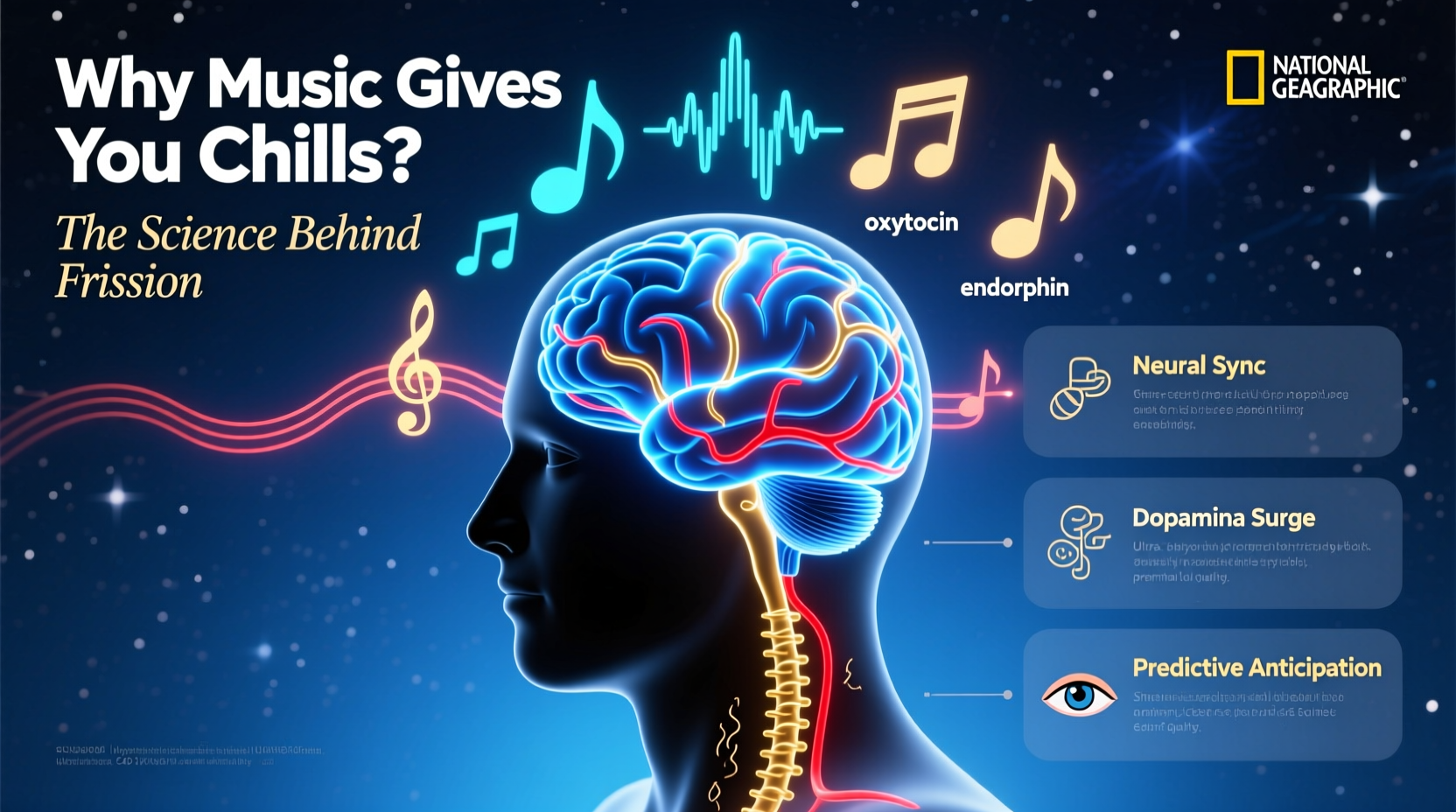
When a piece of music evokes frisson, it sets off a cascade of neurological events. Functional MRI studies show that moments of peak emotional intensity in music activate several key areas of the brain associated with reward, emotion, and anticipation.
The nucleus accumbens—a central hub in the brain's reward circuitry—lights up during frisson episodes. This region is rich in dopamine receptors and is also activated by food, sex, and addictive substances. When a surprising modulation, a delayed resolution, or a sudden harmonic shift occurs in music, the brain releases dopamine in anticipation and then again upon resolution, creating a pleasurable “rush.”
Simultaneously, the amygdala processes the emotional weight of the sound, while the prefrontal cortex evaluates expectations. If the music deviates slightly from what the brain predicts—such as a singer hitting a note just outside standard tuning or a chord progression taking an unexpected turn—the discrepancy can amplify emotional arousal, increasing the likelihood of frisson.
The Role of Expectation and Surprise
One of the most consistent triggers of frisson is the violation of musical expectations. The brain constantly anticipates what comes next in a melody based on cultural exposure, tonal patterns, and learned structures. When music subtly subverts these expectations—through dynamics, timbre, harmony, or timing—it creates tension and release.
For example:
- A sudden drop in volume after a loud passage (like in Max Richter’s “On the Nature of Daylight”) can induce chills through contrast.
- A vocal run that ascends unexpectedly (think Whitney Houston’s rendition of “I Will Always Love You”) plays with pitch expectation.
- A delayed cadence in classical music (as in Samuel Barber’s “Adagio for Strings”) prolongs emotional tension before resolution.
This balance between predictability and surprise is crucial. Too much predictability becomes boring; too much unpredictability feels chaotic. The sweet spot—what researchers call “sweet anticipation”—maximizes emotional engagement and increases the probability of frisson.
Personality Traits Linked to Frisson Sensitivity
Not everyone experiences frisson equally. Research conducted at Harvard and Wesleyan University has shown that individuals who score high on the personality trait of *Openness to Experience* are significantly more likely to report musical chills.
People high in openness tend to:
- Seek out novel and complex stimuli
- Engage deeply with art and aesthetics
- Possess strong imaginative and introspective tendencies
These traits make them more attuned to subtle shifts in music and more willing to immerse themselves emotionally in auditory experiences. They’re also more likely to listen to music for emotional regulation—using songs to reflect, process, or intensify feelings—which further increases their susceptibility to frisson.
“Frisson isn’t just about the music—it’s about the listener’s mindset. People who are open, reflective, and emotionally available are far more likely to ‘ride the wave’ of a musical moment.” — Dr. Laura Mitchell, Cognitive Psychologist, McGill University
Physiological Responses During Frisson
Frisson isn’t purely psychological—it produces measurable physiological changes. Studies using skin conductance monitors have demonstrated that during a chill-inducing moment, the body exhibits signs of mild autonomic arousal similar to fear or excitement, even though the emotion felt is typically positive.
Key physical responses include:
- Piloerection: Hair standing on end (goosebumps), caused by contraction of tiny muscles at the base of hair follicles.
- Increased heart rate: A brief spike in cardiac activity, usually lasting 5–15 seconds.
- Changes in respiration: Shallow breathing or breath-holding during intense passages.
- Galvanic skin response: Elevated sweat gland activity, indicating emotional arousal.
Interestingly, these reactions mirror evolutionary mechanisms tied to vigilance—our ancestors may have developed piloerection to appear larger when threatened. In modern contexts, however, the same pathway is co-opted by art, transforming a survival reflex into an aesthetic one.
Environmental and Contextual Triggers
While the music itself is central, external factors heavily influence whether frisson occurs. These contextual elements shape attention, emotional receptivity, and sensory immersion.
| Factor | Enhances Frisson? | Explanation |
|---|---|---|
| High-fidelity audio | Yes | Crisp sound reproduction preserves nuances like vibrato and reverb that trigger chills. |
| Headphones vs. speakers | Headphones (usually) | Immersive stereo imaging increases intimacy and spatial detail. |
| Listening alone | Often | Fewer distractions allow deeper emotional engagement. |
| Live performances | Strongly | Visual cues, shared energy, and acoustic richness amplify impact. |
| Emotional state | Yes | Feeling nostalgic, sad, or reflective lowers the threshold for frisson. |
For instance, hearing a song tied to a personal memory—like a first dance or a farewell—can dramatically increase the chances of experiencing chills. The brain links the auditory stimulus with past emotional states, effectively “priming” the limbic system for a stronger reaction.
Mini Case Study: The Power of Live Music
Sophia, a 34-year-old teacher from Portland, had never experienced frisson until she attended a live performance of Sigur Rós. She described the moment during the song “Festival,” when the crescendo built over seven minutes and the lead singer’s falsetto pierced through a wall of distortion: “My arms broke out in goosebumps. I wasn’t crying, but my chest felt tight. I looked around and saw others visibly trembling. It was like we were all sharing the same nervous system.”
This case illustrates how live environments—with their visual drama, communal energy, and acoustic depth—can unlock frisson in ways recordings sometimes cannot. The combination of prolonged build-up, atmospheric lighting, and collective silence created the perfect conditions for a transcendent auditory experience.
How to Increase Your Chances of Experiencing Frisson
While you can’t force frisson on demand, certain practices can increase its frequency and intensity. Think of it like training your emotional ear—the more you engage with music mindfully, the more receptive your nervous system becomes.
Step-by-Step Guide to Cultivating Frisson
- Choose emotionally resonant music: Focus on pieces with dynamic contrasts, expressive vocals, or layered harmonies (e.g., Arvo Pärt, Radiohead, Nina Simone).
- Optimize your environment: Eliminate distractions. Use noise-canceling headphones in a dark, quiet room.
- Listen actively: Close your eyes. Focus on specific instruments or vocal inflections. Anticipate where the music is going.
- Engage memory: Pair music with meaningful memories or visualize scenes that evoke deep emotion.
- Experiment with live experiences: Attend concerts, especially intimate venues where acoustics and atmosphere enhance immersion.
- Track your responses: Note when chills occur—time stamp the moment in the song and reflect on your mental state.
Common Misconceptions About Frisson
Despite growing scientific interest, several myths persist about musical chills:
- Myth: Only classical or “serious” music causes frisson.
Reality: Pop, metal, electronic, and hip-hop can all trigger chills. What matters is emotional salience, not genre. - Myth: Everyone should experience frisson.
Reality: Up to 20% of people rarely or never feel it—and that’s normal. It doesn’t indicate lower emotional intelligence. - Myth: Frisson means the music is “better.”
Reality: It reflects personal resonance, not objective quality. Two people can hear the same piece and react very differently.
FAQ
Can frisson be triggered by non-musical sounds?
Yes. Some people report chills from nature sounds (waves crashing, wind howling), powerful speeches, or film scores. The key is emotional arousal combined with sensory contrast.
Is frisson related to ASMR?
They share similarities—both involve tingling sensations and auditory triggers—but differ fundamentally. ASMR is typically calming and repetitive, while frisson is intense, transient, and tied to emotional peaks.
Does age affect frisson sensitivity?
Not directly. However, younger listeners may report more frequent chills due to heightened emotional reactivity and greater music consumption. Older adults often experience frisson linked to nostalgia.
Checklist: Create the Ideal Conditions for Frisson
- ✅ Choose a song known for emotional intensity
- ✅ Use high-quality headphones or speakers
- ✅ Find a quiet, distraction-free space
- ✅ Listen with full attention (no multitasking)
- ✅ Allow yourself to be emotionally vulnerable
- ✅ Reflect afterward: What part gave you chills? Why?
Conclusion: Embrace the Chill
Frisson is one of the most exquisite intersections of biology and beauty—a moment when art bypasses rational thought and speaks directly to the nervous system. It reminds us that music is not merely entertainment but a primal language capable of triggering ancient pathways of emotion and reward.
Whether you're a lifelong chills-seeker or someone curious about why others react so strongly to certain songs, understanding the science behind frisson deepens appreciation for the power of sound. The next time a melody sends a shiver down your spine, don’t brush it off. Lean into it. That chill is your brain and body synchronizing with something profoundly human.




 浙公网安备
33010002000092号
浙公网安备
33010002000092号 浙B2-20120091-4
Comments
No comments yet. Why don't you start the discussion?