
Many people notice a subtle but powerful shift in how music feels after dark. A familiar song seems richer, deeper, or more emotionally resonant when played late at night. This isn’t just nostalgia or mood—it’s rooted in neuroscience, auditory perception, and environmental acoustics. The human brain processes sound differently under low-stimulation conditions, and nighttime offers a unique sensory landscape that enhances our experience of music. From reduced background noise to altered neural activity, multiple factors converge to make nighttime listening feel more immersive and emotionally intense.
The Quiet Advantage: How Silence Amplifies Sound
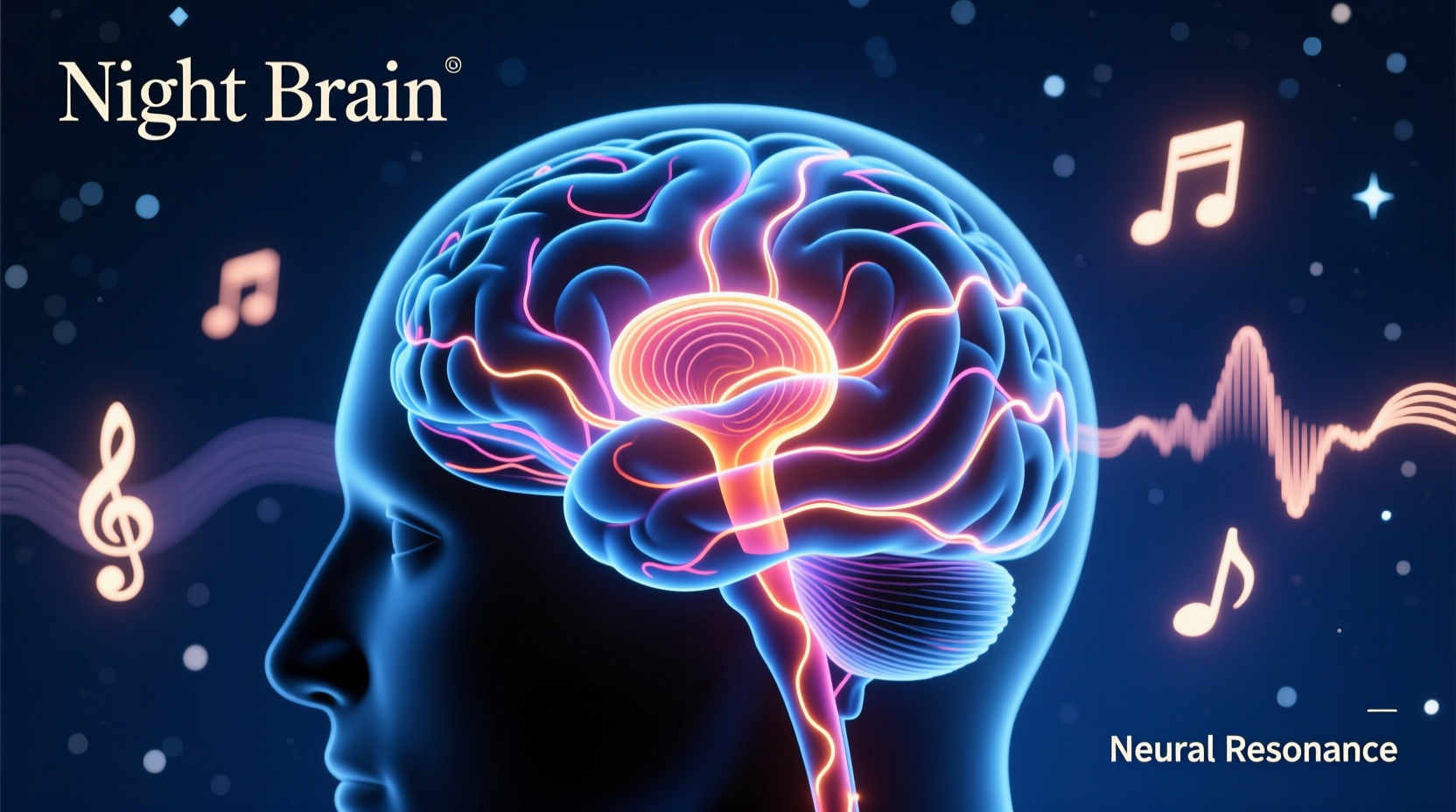
One of the most immediate reasons music feels better at night is the dramatic drop in ambient noise. During the day, urban environments buzz with traffic, conversations, HVAC systems, and electronic hums—all creating a constant layer of auditory clutter known as “noise pollution.” At night, especially between 10 PM and 6 AM, this background fades significantly.
This reduction allows the auditory cortex to process sound with greater clarity. Without competing stimuli, your brain can focus on subtle nuances in music—reverb tails, layered harmonies, and dynamic shifts—that might go unnoticed during the day.
Acoustic engineers often refer to this phenomenon as an improved signal-to-noise ratio. In simpler terms, music becomes the dominant auditory signal, allowing for deeper immersion. This clarity doesn’t just improve technical appreciation—it also heightens emotional engagement. You're not just hearing the notes; you're feeling them.
Brainwave Shifts: Neural Processing at Night
As daylight fades, so do the rhythms of your brain. During waking hours, the brain operates primarily in beta and alpha wave states—associated with alertness, problem-solving, and active thinking. But as evening approaches and melatonin levels rise, brain activity begins to shift toward theta waves, which dominate during relaxation, light sleep, and meditative states.
Theta waves are closely linked to creativity, introspection, and emotional processing. When you listen to music in this state, your brain is more receptive to abstract patterns and emotional cues within the sound. A melancholic melody may evoke stronger feelings of longing; an uplifting track might induce a sense of euphoria. This neurochemical environment makes music feel more profound—not because the audio has changed, but because your brain is interpreting it differently.
“During relaxed states, particularly at night, the brain's default mode network becomes more active. This network is tied to self-referential thought and emotional resonance—key components in how we connect with music.” — Dr. Lena Torres, Cognitive Neuroscientist, University of Edinburgh
In addition, dopamine release in response to pleasurable music appears to be modulated by circadian rhythms. Studies suggest that reward pathways in the brain may be more sensitive in the evening, amplifying the enjoyment derived from favorite songs. This biological priming turns nighttime into a natural peak period for musical appreciation.
Sensory Deprivation and Auditory Focus
With darkness comes reduced visual input. As sight diminishes, the brain compensates by enhancing other senses—a phenomenon known as cross-modal plasticity. In low-light conditions, auditory processing centers become more active, effectively turning up the volume on what you hear.
This sensory recalibration means that even at the same decibel level, music can seem fuller, more spatially detailed, and emotionally charged at night. Stereo imaging improves perceptually; you might suddenly notice instruments panned to one side or delicate background textures that were previously masked.
Consider this real-world example:
Mini Case Study: The Late-Night Listener
Jamal, a graphic designer in Chicago, typically listens to instrumental jazz during his commute. While he enjoys the music, he admits it often blends into the background. One night, unable to sleep, he put on the same playlist through over-ear headphones in complete darkness. To his surprise, he heard details he’d never noticed before—the brushwork on the snare drum, the subtle bassline variations, the breath-like pauses between phrases. He described the experience as “like seeing a high-definition version of something I thought I already knew.”
This anecdote reflects a common pattern: reduced sensory competition enables deeper auditory engagement. It’s not just about volume or equipment quality—it’s about cognitive availability.
Emotional Resonance and Psychological Context
Nighttime is inherently introspective. Social demands fade, screens dim, and the mind turns inward. This psychological shift creates fertile ground for emotional depth in music. Songs that reference loneliness, love, loss, or longing resonate more powerfully when listened to in solitude, especially during quiet hours.
Psychologists refer to this as “contextual congruence”—when the internal state aligns with the external stimulus. A ballad about heartbreak hits harder when you’re lying awake reflecting on personal experiences. An ambient track feels more expansive when played in a dark room with no distractions.
Moreover, nighttime lowers inhibitions. People are less guarded emotionally, making them more open to vulnerability through art. Music acts as both mirror and catalyst—reflecting inner thoughts while prompting further reflection. This feedback loop intensifies the listening experience, transforming passive playback into active emotional journeying.
Checklist: Optimize Your Nighttime Listening Experience
- Dim or turn off lights to reduce visual stimulation
- Use high-quality headphones or speakers in a quiet room
- Avoid multitasking—listen with full attention
- Choose music intentionally based on mood or desired effect
- Experiment with binaural beats or spatial audio formats
- Limit screen use before listening to ease mental transition
- Breathe deeply and relax muscles to enhance focus
Environmental vs. Biological Factors: A Comparative Overview
While both external and internal elements contribute to enhanced nighttime music perception, their roles differ in mechanism and impact. The table below breaks down key factors:
| Factor | Type | Effect on Music Perception | Controllable? |
|---|---|---|---|
| Ambient Noise Level | Environmental | Higher clarity, better detail retrieval | Yes (via location/time choice) |
| Light Levels | Environmental | Enhanced auditory focus via sensory shift | Yes |
| Brainwave Activity (Theta Increase) | Biological | Greater emotional depth and introspection | Limited (influenced by routine) |
| Dopamine Sensitivity | Biological | Increased pleasure response to music | Limited |
| Emotional Availability | Psychological | Stronger connection to lyrical/content themes | Partially (via mindfulness) |
| Background Distractions (e.g., notifications) | Behavioral | Reduces immersion and attention span | Yes |
This comparison shows that while some factors like brain chemistry follow natural rhythms, others—such as noise control and lighting—are within your control. By manipulating the environmental levers, you can partially recreate the “nighttime advantage” even during daytime sessions.
Practical Guide: Creating a Nighttime Listening Ritual
To fully harness the benefits of nocturnal music perception, consider establishing a structured listening ritual. Follow these steps to maximize depth and enjoyment:
- Set the Time: Choose a consistent window (e.g., 9:30–10:30 PM) when external noise is minimal and your mind is winding down.
- Prepare the Space: Turn off bright lights, close windows to block street noise, and remove potential interruptions (phones on silent).
- Select Intentionally: Pick an album or playlist with thematic coherence—avoid shuffled tracks that disrupt flow.
- Use Quality Audio Gear: Invest in noise-isolating headphones or well-positioned speakers for accurate sound reproduction.
- Engage Mindfully: Sit or lie comfortably, close your eyes, and focus solely on the music. Let memories, images, or emotions arise without judgment.
- Reflect Afterward: Journal briefly about what stood out—lyrics, instrumentation, mood shifts—to deepen retention and insight.
- Repeat Weekly: Consistency trains the brain to enter a receptive state more easily over time.
Over weeks, this practice can transform casual listening into a form of sonic meditation—one that leverages the brain’s natural nighttime tendencies for maximum emotional and aesthetic payoff.
Frequently Asked Questions
Does music actually sound different at night, or is it just perception?
The physical properties of sound don’t change, but perception does. Reduced noise, enhanced auditory focus, and altered brain states create a genuinely different listening experience. So while the audio file remains identical, your brain processes it with greater depth and emotional salience—making it *feel* objectively better.
Can I replicate the nighttime effect during the day?
Yes, to some extent. Use noise-canceling headphones, lower lighting, and practice mindful listening in a quiet space. Avoiding multitasking and reducing visual input can mimic the sensory conditions of nighttime, though circadian influences on brain chemistry remain harder to duplicate.
Is there a risk of poor sleep if I listen to music at night?
Potentially. While calming music can aid relaxation, stimulating genres (e.g., high-tempo rock, intense EDM) or loud volumes may interfere with falling asleep. If using music as a pre-sleep ritual, opt for slow tempos (60–80 BPM), minimal lyrics, and gradually decreasing volume. Avoid headphones that cause discomfort when lying down.
Conclusion: Tune Into the Night
The magic of music at night isn’t mystical—it’s neurological, acoustic, and psychological. In the stillness of evening, your brain enters a state uniquely suited to deep listening. Silence sharpens clarity, darkness heightens focus, and your inner world opens up to emotional resonance. These conditions don’t just make music sound better—they allow you to experience it more completely.
Understanding the science behind this phenomenon empowers you to design intentional listening experiences, whether for relaxation, inspiration, or self-exploration. Don’t let great music play in the background of a noisy day. Seek the quiet hours. Dim the lights. Press play. And rediscover what your favorite songs truly sound like when your brain is ready to listen.




 浙公网安备
33010002000092号
浙公网安备
33010002000092号 浙B2-20120091-4
Comments
No comments yet. Why don't you start the discussion?