
It happens to nearly everyone: a song from childhood plays unexpectedly, and suddenly you're transported—not just mentally, but emotionally—back to a moment long past. The smell of summer grass, the warmth of a first love, or the quiet comfort of your parents' kitchen on a rainy Sunday. Music has a unique ability to unlock vivid, emotionally charged memories in ways that few other stimuli can match. But what lies beneath this phenomenon? Why does a melody have the power to pull us into the depths of our past with such precision and intensity?
The answer is rooted in neuroscience. Decades of research reveal that music doesn’t just entertain—it engages multiple regions of the brain simultaneously, forming powerful associative networks between sound, emotion, and memory. When we hear a familiar tune, it doesn’t merely activate our auditory cortex; it lights up areas involved in emotion, self-reflection, and even motor control. This intricate web of neural activity explains why music is so effective at triggering nostalgia—a bittersweet longing for the past that often feels both comforting and melancholic.
The Brain’s Soundtrack: How Music Activates Memory Networks
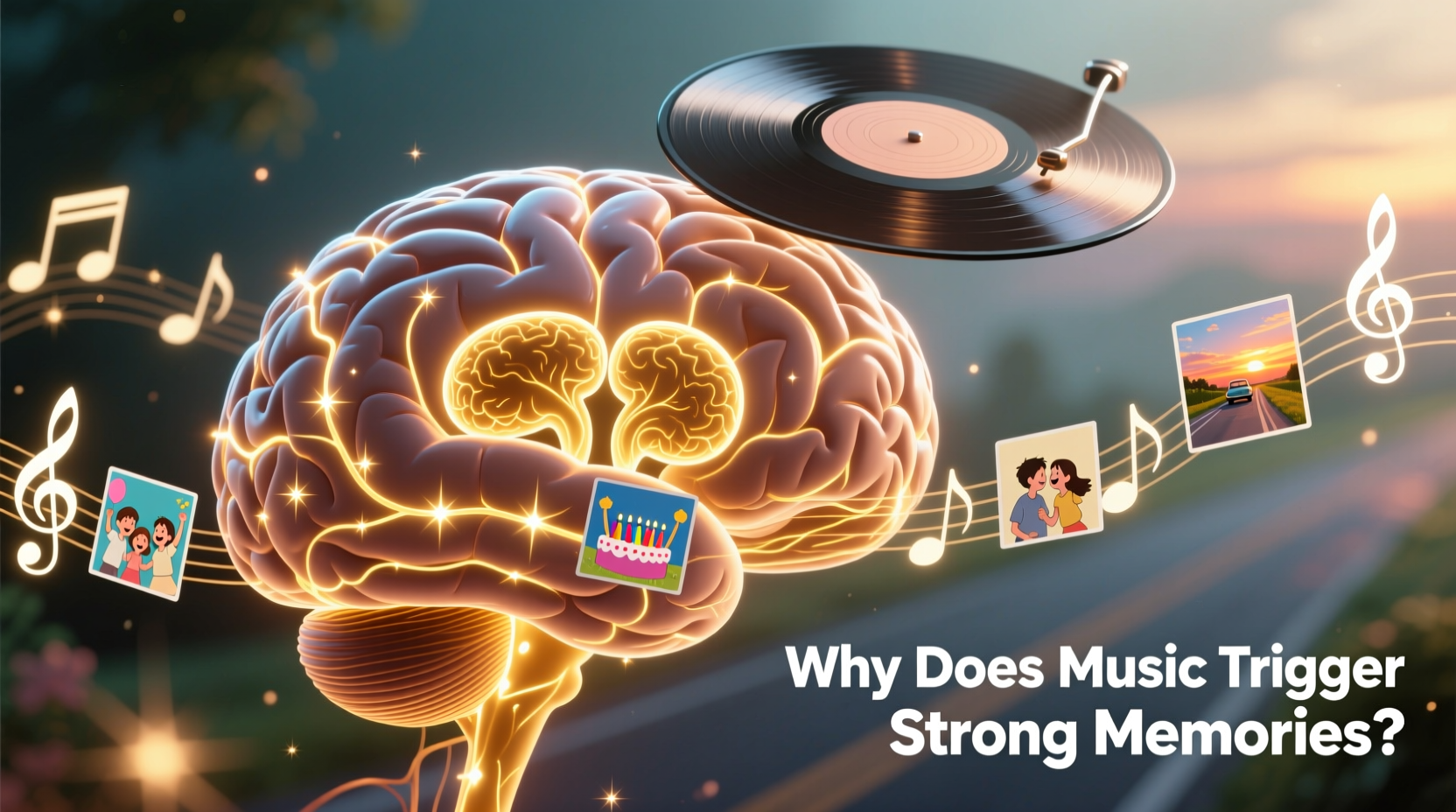
When a note enters the ear, it travels through the cochlea and into the auditory cortex, where pitch, rhythm, and timbre are processed. But music processing doesn’t stop there. Unlike most sensory inputs, music activates a distributed network across the brain, including the hippocampus (critical for memory formation), the amygdala (central to emotional processing), and the prefrontal cortex (involved in decision-making and self-awareness).
The hippocampus, especially, plays a pivotal role in linking music to autobiographical memories. It acts as a kind of indexing system, storing contextual details about when and where experiences occurred. When a familiar song plays, the brain retrieves not just the melody but also the time, place, and emotional state associated with it. This process is known as “episodic memory retrieval,” and music is one of the most potent triggers for it.
Neuroimaging studies using fMRI have shown that listening to personally meaningful music produces stronger activation in the medial prefrontal cortex—a region linked to self-referential thought—than unfamiliar music. This suggests that music doesn’t just remind us of events; it reconnects us with our sense of self during those moments. As Dr. Petr Janata, cognitive neuroscientist at UC Davis, explains:
“Music serves as a powerful catalyst for autobiographical memory because it's tied to specific times in our lives when our identities were being formed. The medial prefrontal cortex appears to act as a hub, linking the sound of music with the emotions and memories of our past.” — Dr. Petr Janata, Cognitive Neuroscientist
The Emotional Resonance: Why Nostalgia Feels So Real
Nostalgia is more than mere recollection—it’s an emotional experience. And music amplifies this by directly stimulating the limbic system, the brain’s emotional command center. The amygdala, in particular, helps encode the emotional significance of memories. When paired with music, emotionally charged events become “tagged” with sonic cues, making them easier to retrieve later.
This is why hearing a wedding song might bring tears, or a high school anthem can spark sudden joy. The brain isn’t just replaying a memory—it’s re-experiencing the feeling. Functional MRI scans show that music-evoked nostalgia correlates with increased blood flow in both the amygdala and the nucleus accumbens, a key node in the brain’s reward circuitry. In essence, nostalgic music feels good because it literally rewards the brain.
Interestingly, this effect is strongest with music from adolescence and early adulthood—a period psychologists call the “reminiscence bump.” Between the ages of 10 and 30, people form the majority of their enduring self-defining memories. Music heard during this window becomes deeply embedded in identity, which is why a song from your teenage years can feel more emotionally resonant than one from last year.
Music, Memory, and Mental Health: Therapeutic Applications
The link between music and memory isn’t just a curiosity—it has real clinical value. In patients with Alzheimer’s disease and other forms of dementia, musical memory often remains intact long after other cognitive functions decline. Even individuals who can no longer recognize family members may still sing along to songs from their youth.
This resilience is due to the way music is stored in the brain. While declarative memories (facts and events) rely heavily on the hippocampus—which deteriorates early in Alzheimer’s—musical memories are distributed across multiple regions, including the cerebellum and basal ganglia, which are more resistant to degeneration. This allows melodies and lyrics to persist, acting as lifelines to the self.
Music therapy is now a standard intervention in dementia care. Programs like “Music & Memory” provide personalized playlists to patients, leading to documented improvements in mood, social engagement, and even verbal recall. One study published in *The Journal of Prevention of Alzheimer’s Disease* found that regular exposure to personalized music reduced agitation in dementia patients by up to 60%.
Mini Case Study: Henry’s Transformation
One of the most compelling examples is Henry, a man with advanced dementia featured in the documentary *Alive Inside*. For years, Henry was largely nonverbal and withdrawn. When researchers played him music from his youth—specifically Cab Calloway jazz records—something remarkable happened. He began singing, tapping his feet, and speaking clearly about his past. “The music opens my mind,” he said. “It gives me a part of myself back.”
Henry’s response illustrates how music bypasses damaged neural pathways to access deeply preserved memories and emotions. His case, replicated in countless others, underscores music’s role not just as entertainment, but as a neurological anchor to identity.
The Science of Musical Triggers: What Makes a Song Memorable?
Not all music evokes nostalgia equally. Certain qualities make a song more likely to become a lasting memory trigger:
- Familiarity: Songs we’ve heard repeatedly are more likely to be encoded with rich contextual detail.
- Emotional Salience: Music tied to intense experiences—first love, loss, achievement—forms stronger memory links.
- Personal Relevance: Lyrics that reflect our beliefs or life stage enhance connection.
- Contextual Repetition: Hearing a song during a recurring event (commute, workout, party) strengthens its association.
A 2015 study in *Memory & Cognition* found that participants were significantly more likely to report nostalgic feelings when music was encountered in social settings during formative years. The combination of emotional arousal, social bonding, and repetition creates what neuroscientists call a “memory engram”—a stable neural trace that can be reactivated decades later.
| Factor | Impact on Memory Trigger | Example |
|---|---|---|
| Familiarity | High – repeated exposure strengthens encoding | Hearing a hit song daily on the radio |
| Emotional Intensity | Very High – strong emotions deepen memory | First dance at a wedding |
| Social Context | Moderate to High – shared experiences amplify recall | Singing along with friends at a concert |
| Life Stage | Very High – peak during adolescence/early adulthood | Prom songs from high school |
| Lyric Personalization | Moderate – relatable lyrics increase attachment | A breakup song during a painful split |
How to Harness Music for Positive Memory Recall
Understanding the neuroscience of music and memory isn’t just academic—it offers practical tools for enhancing well-being. Whether you want to reconnect with joyful moments, support a loved one with memory challenges, or simply enrich your daily life, intentional use of music can be transformative.
- Curate Time-Based Playlists: Organize music by life stages (e.g., “Age 15–18,” “College Years,” “First Job”). These serve as audio time capsules.
- Pair Music with Mindfulness: Listen actively, without distraction. Reflect on where you were, who you were with, and how you felt.
- Use Music to Improve Mood: When feeling low, play songs linked to positive memories. This can boost serotonin and reduce stress.
- Share Musical Memories: Talk with family or friends about songs that matter. This reinforces memory and deepens relationships.
- Introduce Music Early in Aging Care: For older adults, begin personalized playlists before cognitive decline sets in.
Checklist: Building a Nostalgia-Powered Playlist
- ☐ Identify 3 major life periods you’d like to revisit
- ☐ List 5 songs from each period that carry emotional weight
- ☐ Include tracks tied to specific events (graduation, road trip, etc.)
- ☐ Add songs shared with important people (partner, parent, best friend)
- ☐ Test the playlist and journal your emotional responses
- ☐ Update quarterly with new meaningful additions
Frequently Asked Questions
Why do some songs trigger memories while others don’t?
Memories are more likely to be triggered by songs that were present during emotionally significant or highly repetitive experiences. The brain prioritizes information tied to survival, emotion, and identity—music that intersects with these domains becomes a stronger memory cue.
Can unfamiliar music evoke nostalgia?
Rarely in the same way. However, certain musical elements—like a vintage production style or lyrical theme—can create a “vicarious nostalgia,” where listeners feel nostalgic for eras they didn’t experience. This is common with modern songs imitating 80s synth-pop or 60s Motown.
Is nostalgia good for mental health?
Yes, when balanced. Research shows nostalgia enhances self-continuity, increases social connectedness, and buffers against loneliness. However, excessive rumination on the past without present engagement can contribute to depressive states.
Conclusion: Reclaim Your Past, One Note at a Time
Music is more than art—it’s a neurological time machine. Rooted in the complex interplay between sound, emotion, and memory, it grants us rare access to the person we once were. The science is clear: melodies bypass the filters of time and cognition, delivering us straight to the heart of lived experience.
Whether you’re seeking comfort, clarity, or connection, consider the power of a well-chosen song. Create playlists with intention. Share them with loved ones. Use them to reflect, heal, and remember. In a world that moves too fast, music offers a sanctuary where the past remains alive, vibrant, and within reach.




 浙公网安备
33010002000092号
浙公网安备
33010002000092号 浙B2-20120091-4
Comments
No comments yet. Why don't you start the discussion?