
It’s frustrating when your air conditioner hums along, circulating air, yet fails to lower the temperature in your home. The unit is running—so it must be working, right? Not necessarily. A running AC that doesn’t cool is a sign of underlying mechanical or maintenance problems. Ignoring this issue can lead to higher energy bills, increased wear on components, and even system failure. Understanding why your AC runs but doesn’t cool allows you to take timely action, whether through DIY fixes or professional service.
This guide breaks down the most common reasons behind inadequate cooling, offers actionable troubleshooting steps, and helps you determine when it's time to call an HVAC technician. From clogged filters to refrigerant leaks, we’ll explore each potential culprit with clarity and precision.
1. Air Filter Is Clogged or Dirty
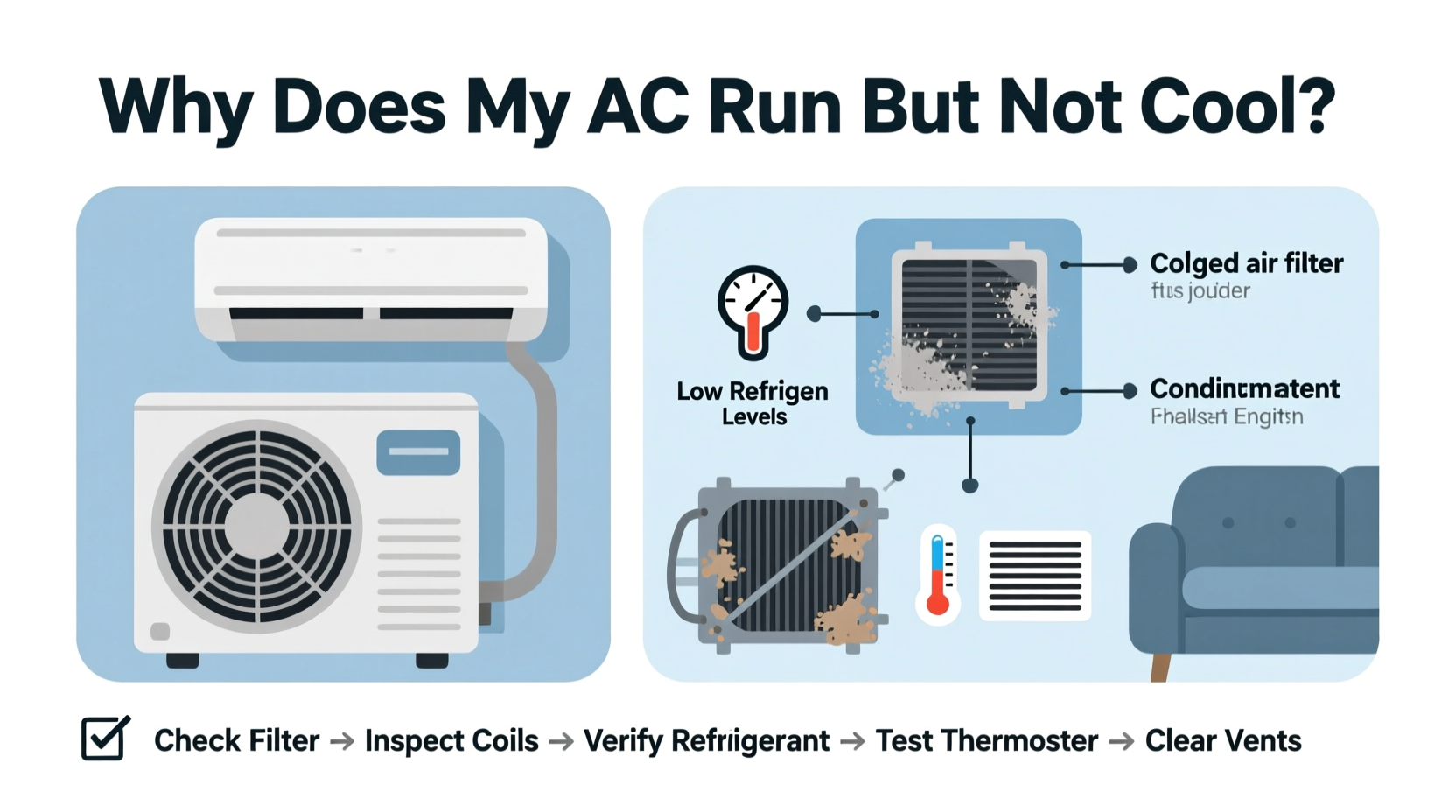
One of the simplest—and most overlooked—reasons your AC runs without cooling is a dirty air filter. The filter traps dust, pet dander, and airborne particles, but over time, it becomes saturated. When airflow is restricted, the evaporator coil can't absorb heat efficiently, reducing cooling capacity.
A severely blocked filter forces the blower motor to work harder, increasing energy use and potentially causing the system to freeze up. Ice buildup on the indoor coil further prevents heat exchange, rendering the system ineffective despite continuous operation.
Check your filter first whenever cooling performance drops. Hold it up to the light—if you can't see through it, it needs replacing. Installing a clean filter often restores noticeable cooling within hours.
2. Low Refrigerant Levels or Leaks
Refrigerant is the lifeblood of your cooling system. It absorbs heat from indoor air and releases it outside. If refrigerant levels are low due to a leak or improper charging, the system cannot transfer heat effectively, resulting in warm air blowing from vents.
Symptoms of low refrigerant include:
- Weak airflow that feels lukewarm
- Hissing or bubbling noises near refrigerant lines
- Frost or ice on copper lines or the indoor unit
- Higher humidity indoors despite AC running
Unlike oil in a car, refrigerant isn’t consumed during operation—it circulates in a closed loop. A drop in pressure indicates a leak, which must be repaired by a licensed technician. Simply adding more refrigerant (“topping off”) without fixing the leak is illegal under EPA regulations and only a temporary fix.
“Refrigerant leaks compromise efficiency and can damage the compressor if ignored. Early detection saves thousands in repair costs.” — Carlos Mendez, HVAC Technician with 15 years of field experience
3. Frozen Evaporator Coil
An evaporator coil that has frozen over will stop absorbing heat, leading to no cooling output. This commonly occurs after prolonged runtime with poor airflow or low refrigerant.
The freezing process starts when warm indoor air passes over the cold coil. If airflow is insufficient—due to a dirty filter, blocked ducts, or a failing blower fan—the coil temperature drops below freezing, causing moisture to form ice. As ice accumulates, it insulates the coil, halting heat absorption entirely.
How to Thaw a Frozen Coil
- Turn off the cooling function at the thermostat but leave the fan running to help melt ice.
- For faster results, switch the system to \"fan only\" mode. Do not attempt to chip away ice manually.
- Wait 4–6 hours for full defrosting. Place towels around the indoor unit to catch dripping water.
- Once thawed, replace the air filter and inspect ductwork for obstructions.
- If the problem returns within days, suspect refrigerant issues or blower malfunction.
4. Thermostat Settings and Calibration Issues
Before assuming a mechanical fault, verify your thermostat settings. Incorrect configurations can make it seem like the AC isn’t cooling when it simply isn’t operating as expected.
Common thermostat mistakes include:
- Set to “On” instead of “Auto”—causing the fan to run continuously regardless of cooling need.
- Temperature set too high, so the system doesn’t activate long enough to cool the space.
- Faulty sensors or inaccurate calibration, leading to incorrect readings.
- Battery failure in wireless thermostats, disrupting communication with the AC unit.
To test accuracy, place a calibrated thermometer next to the thermostat. If there’s a discrepancy greater than 2°F, recalibrate or replace the unit. Smart thermostats offer diagnostic features and alerts for system anomalies, making them valuable upgrades.
| Thermostat Setting | Expected Behavior | Red Flag |
|---|---|---|
| Fan: Auto / Cool: On | Fan runs only during cooling cycles | Fan runs nonstop—check setting |
| Cool Setpoint: 72°F | AC activates when room exceeds 72°F | No activation above 75°F—possible sensor issue |
| Batteries: Low | Intermittent display or signal loss | System unresponsive—replace batteries |
5. Outdoor Unit Obstruction or Condenser Problems
The outdoor condenser unit plays a critical role in releasing absorbed heat. If obstructed by debris, dirt, or poor airflow, it cannot dissipate heat efficiently, causing the entire system to underperform.
Common outdoor unit issues include:
- Surrounding vegetation or trash blocking airflow
- Dirt-coated fins reducing heat exchange
- Failing compressor or faulty capacitor
- Fan motor not spinning or rotating slowly
Inspect the unit monthly during peak season. Clear leaves, grass clippings, and objects within a two-foot radius. Gently hose down the fins (with power off) to remove grime. Bent fins can be straightened with a fin comb, improving airflow.
A non-functioning condenser fan may stem from a blown capacitor—a frequent failure point. If the outdoor fan doesn’t start but you hear a humming sound, the capacitor likely needs replacement. While DIY replacement is possible, handling electrical components safely requires expertise.
Mini Case Study: The Overgrown Bush Dilemma
A homeowner in Phoenix reported their AC ran constantly but kept the house at 82°F despite a setting of 74°F. After checking filters and thermostat settings, a technician inspected the outdoor unit—completely surrounded by overgrown shrubs. With only six inches of clearance, the condenser couldn’t expel heat. Trimming back the foliage and cleaning the coil restored full cooling capacity within 30 minutes. The fix cost nothing but time and effort, highlighting how simple oversights can mimic major failures.
DIY Checklist: Troubleshooting Steps Before Calling a Pro
Before scheduling a service call, complete this checklist to rule out common, fixable issues:
- Check thermostat settings: Ensure it’s set to “Cool” and the temperature is lower than the current room reading.
- Replace or clean the air filter: Install a new one if dirty.
- Inspect outdoor unit: Confirm it’s free of debris and the fan is spinning when the system runs.
- Listen for unusual sounds: Hissing (refrigerant leak), clicking (electrical issue), or grinding (motor failure).
- Look for ice buildup: If present, turn off cooling and allow thawing before further diagnosis.
- Verify circuit breakers: Check both indoor and outdoor disconnect switches haven’t tripped.
- Test airflow: Hold a piece of tissue near a vent—if it doesn’t flutter, duct blockage or blower issues may exist.
If all items check out and cooling remains inadequate, contact a licensed HVAC technician. Persistent issues often require tools like manifold gauges, voltage testers, and refrigerant recovery equipment.
Frequently Asked Questions
Why is my AC running but only blowing warm air?
This typically points to low refrigerant, a frozen evaporator coil, or a malfunctioning compressor. First, check the filter and thermostat. If those are fine, a refrigerant leak or electrical issue is likely and requires professional diagnosis.
Can a dirty condenser coil cause no cooling?
Yes. A dirty outdoor coil reduces heat dissipation, forcing the system to work harder and cool less effectively. Regular cleaning improves efficiency and prevents overheating shutdowns.
How long should it take for my AC to cool the house?
Under normal conditions, a properly sized AC should lower indoor temperature by about 15–20°F over three hours. For example, from 85°F down to 70°F. Faster cooling may indicate short cycling; slower results suggest inefficiency or sizing issues.
Conclusion: Act Now to Restore Comfort and Efficiency
An air conditioner that runs but doesn’t cool is more than just uncomfortable—it signals inefficiency that wastes energy and strains your system. Addressing the root cause early prevents minor issues from escalating into costly repairs. Simple maintenance like changing filters, clearing outdoor units, and verifying thermostat settings resolves many cooling problems without professional help.
However, when refrigerant leaks, electrical faults, or compressor issues arise, trust certified technicians with the right tools and training. Routine annual maintenance—not just emergency fixes—keeps your system running smoothly for years.




 浙公网安备
33010002000092号
浙公网安备
33010002000092号 浙B2-20120091-4
Comments
No comments yet. Why don't you start the discussion?