
A blinking orange light on your Alexa device can be puzzling—especially if it appears without warning. Unlike the familiar blue or green indicators, orange isn’t a standard status color in Amazon’s official LED guide. Yet many users report their Echo devices flashing orange under certain conditions. This behavior often signals a software update in progress, but it can also point to connectivity issues or hardware anomalies. More importantly, constant or unexpected lighting can disrupt sleep, privacy, or home aesthetics, especially in bedrooms or quiet spaces.
Understanding why your Alexa blinks orange—and knowing how to manage or disable the light discreetly—is essential for maintaining both functionality and comfort. This guide breaks down the technical causes, offers practical troubleshooting steps, and provides subtle solutions that preserve your device’s utility while minimizing visual distractions.
What Does an Orange Light on Alexa Mean?
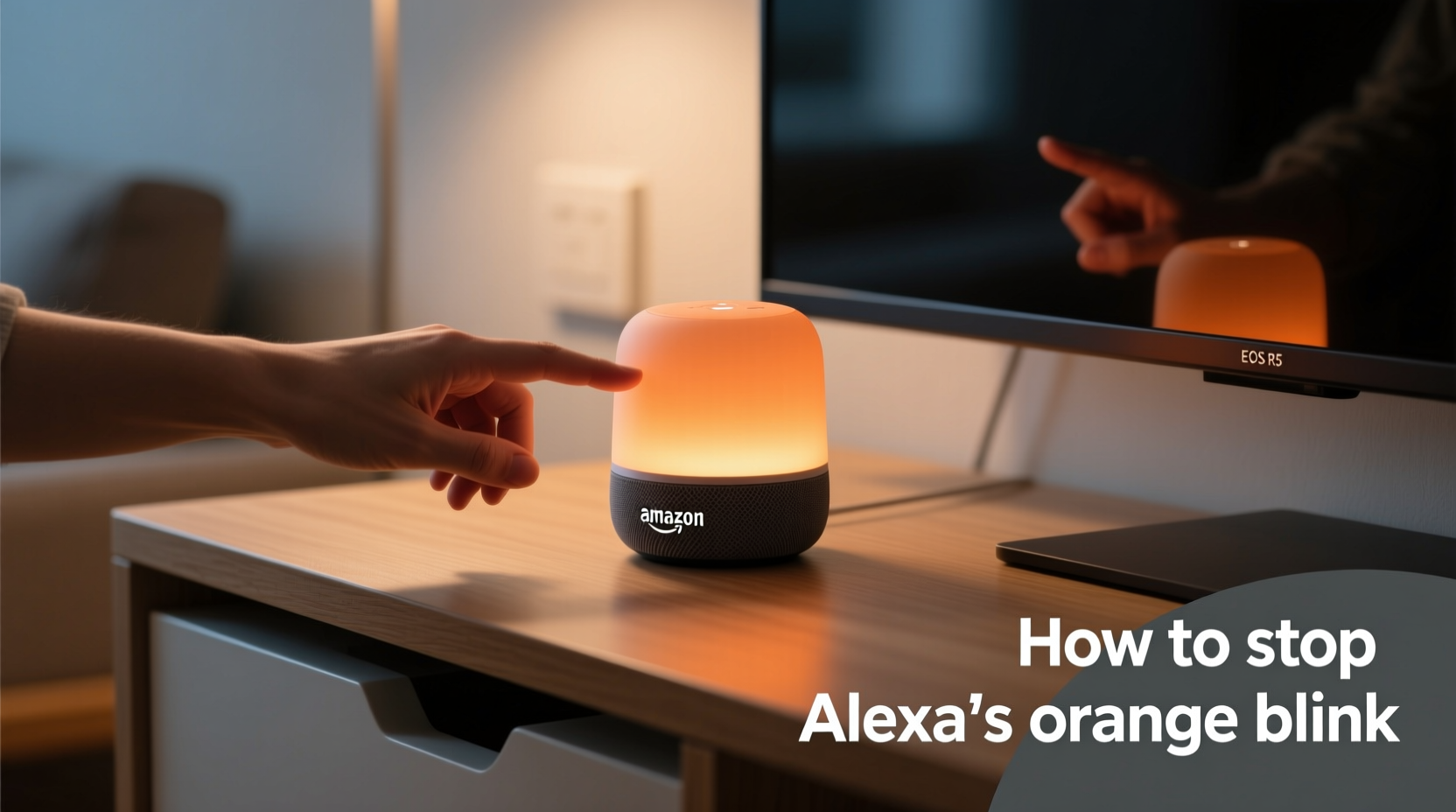
Amazon does not officially list orange as a primary indicator color for Alexa-enabled devices. The standard LED behaviors are:
- Blue: Listening or responding to a voice command
- Green: Incoming call or Drop In request
- Yellow: Notifications or reminders
- Purple: Device is muted or experiencing setup issues
- Red: Microphone is off
So where does orange come into play? In practice, users have observed a pulsing or rotating orange glow during specific background processes. The most commonly confirmed cause is a firmware or software update in progress. During this phase, the device downloads and installs new system files, which may result in a temporary shift in LED color due to internal diagnostics or transitional states in the light ring logic.
Other possible triggers include:
- Wi-Fi reconnection attempts after network instability
- Failed boot sequences requiring recovery mode
- Rare firmware bugs affecting LED output
- Third-party skills or routines misusing visual feedback
“While not documented by Amazon, intermittent orange pulses are typically benign and linked to background updates. However, persistent cycling may indicate deeper sync issues.” — Jordan Lee, Smart Home Systems Engineer at IoT Review Labs
Step-by-Step: Diagnosing the Cause of the Orange Blink
Before attempting to disable or alter the light, confirm what’s triggering it. Follow this diagnostic sequence to isolate the root cause:
- Observe the pattern: Is the orange light pulsing slowly, flashing rapidly, or rotating? A slow pulse usually indicates updating; rapid flickering may suggest connection failure.
- Check your Wi-Fi: Ensure your router is online and the Echo is within range. Restart your modem if needed.
- Open the Alexa app: Navigate to Devices > Echo & Alexa > [Your Device] > Device Health. Look for error messages or pending updates.
- Listen for audio cues: After rebooting, Alexa often announces “Updating” or “Restarting,” confirming the software process.
- Wait 10–15 minutes: Most updates complete within this window. If the orange light persists beyond 30 minutes, proceed to reset.
- Perform a soft reset: Unplug the device for 30 seconds, then plug it back in. Watch for normal blue startup sequence.
If the orange blink returns immediately after reboot and no update is listed in the app, consider a factory reset through the Alexa app under Device Settings > Reset to Factory Defaults.
How to Stop the Orange Light Discreetly (Without Losing Functionality)
Some users prefer a minimalist smart home experience—where technology works efficiently but stays visually unobtrusive. Whether you're using Alexa in a bedroom, nursery, or meditation space, constant LED activity can be intrusive. Fortunately, there are several discreet methods to suppress or mask the orange blink without disabling core features.
Method 1: Use Do Not Disturb Mode
Enabling Do Not Disturb (DND) mode silences all visual notifications, including yellow rings for alerts and any anomalous orange pulses. Voice commands still work, and alarms will trigger sound—but lights remain off.
To activate DND:
- Voice command: “Alexa, turn on Do Not Disturb”
- Alexa app: Go to Devices > Echo & Alexa > Select Device > Do Not Disturb > Toggle On
- Schedule it: Set automatic DND hours (e.g., 10 PM to 7 AM)
Method 2: Disable All LED Indicators
For maximum discretion, you can disable the entire light ring. This setting turns off all visual feedback—blue, green, yellow, and any irregular colors like orange.
In the Alexa app:
- Navigate to Settings > Device Settings
- Select your Echo device
- Tap Light Ring or LED Settings
- Toggle off “Enable Light Responses”
Note: You’ll lose visual confirmation of wake words and calls, so ensure volume is adequate for audio feedback.
Method 3: Physical Light Diffusion
If you want to keep some ambient awareness without harsh glows, use passive diffusion techniques:
- Place the device inside a semi-opaque fabric cover designed for Echo units
- Position it behind a frosted glass shelf or decorative screen
- Use a 3D-printed diffuser cap that scatters light evenly
These methods soften the intensity of any blinking—including orange—without blocking microphone input or speaker output.
Method 4: Schedule Quiet Hours with Routines
Create a routine that automatically disables lights at night and restores them in the morning.
Example routine setup:
- When: Time-based – Every day at 9:30 PM
- Then: Turn on Do Not Disturb + Dim Light Ring to 10%
Reverse the action at 7:00 AM to restore full functionality.
Do’s and Don’ts When Managing Alexa Lights
| Do’s | Don’ts |
|---|---|
| Use Do Not Disturb during sleep hours | Ignore prolonged orange blinking lasting over 45 minutes |
| Schedule automatic light dimming | Block vents or microphones when covering the device |
| Check for firmware updates monthly | Manually disconnect power mid-update |
| Test microphone function after disabling lights | Assume all orange lights mean malfunction |
| Use third-party apps only from trusted sources | Install unauthorized firmware modifications |
Real Example: Managing Alexa in a Shared Bedroom
Sophie, a graphic designer from Portland, installed an Echo Dot in her bedroom to manage morning alarms and weather briefings. She began noticing a faint orange pulse around 2 AM every few days. At first, she assumed it was a glitch, but after checking the app, she discovered automatic updates were occurring overnight.
The light wasn’t bright, but it disrupted her partner’s sleep. Instead of turning off Alexa entirely, Sophie created a routine: “From 9 PM to 7 AM, enable Do Not Disturb and disable light responses.” She also set up a separate Echo in the kitchen to handle nighttime delivery notifications, ensuring important alerts weren’t missed.
This balanced approach eliminated disruptive lighting while preserving Alexa’s utility. Within a week, both partners reported improved sleep quality—proving that small adjustments can yield significant lifestyle benefits.
Frequently Asked Questions
Is an orange light on Alexa dangerous?
No, an orange blink is not inherently dangerous. It typically indicates a software update or temporary system state. However, if accompanied by overheating, unusual noises, or failure to respond, contact Amazon Support.
Can I permanently disable the Alexa light ring?
Yes. Through the Alexa app, you can disable the light ring entirely under Device Settings > Light Ring > Off. Note that you’ll lose visual feedback for calls, timers, and voice detection.
Why does my Alexa blink orange after a restart?
After rebooting, Alexa may enter a brief update or calibration phase. An orange pulse during this time is normal and should resolve within 10–15 minutes. If it continues, check for connectivity issues or perform a factory reset.
Expert Insight: Balancing Automation and Ambient Comfort
As smart homes evolve, user expectations are shifting—from mere functionality to seamless integration. Visibility of device activity plays a crucial role in this transition.
“The future of home tech isn’t just about what devices do, but how they behave in shared human spaces. Subtle, context-aware design—like adaptive lighting—will define next-gen usability.” — Dr. Lena Patel, Human-Computer Interaction Researcher, MIT Media Lab
This principle applies directly to managing Alexa’s lights. Rather than fighting unintended behaviors like orange blinks, users benefit more from proactive settings management that aligns automation with personal comfort.
Final Checklist: Resolve and Prevent Orange Blinking
- ✅ Confirm whether the orange light is part of a software update
- ✅ Check Wi-Fi stability and signal strength near the device
- ✅ Run a test reboot and observe startup behavior
- ✅ Disable light responses via the Alexa app if discretion is priority
- ✅ Enable Do Not Disturb during sensitive hours (e.g., sleeping, working)
- ✅ Schedule regular maintenance checks for firmware updates
- ✅ Consider relocating the device if environmental factors interfere with performance
Conclusion
An orange-blinking Alexa doesn’t have to be a mystery or a nuisance. With the right understanding and tools, you can diagnose the cause quickly and take subtle, effective action to maintain both performance and peace. Whether through smart app settings, scheduled routines, or thoughtful placement, controlling visual feedback empowers you to enjoy voice assistance without sensory overload.




 浙公网安备
33010002000092号
浙公网安备
33010002000092号 浙B2-20120091-4
Comments
No comments yet. Why don't you start the discussion?