
Waking up in the middle of the night with a tingling, lifeless arm is a common experience—so common that many dismiss it as normal. But what exactly causes your arm to “fall asleep” while you’re resting? The answer lies in how your body manages nerves, blood flow, and posture during sleep. Understanding the role of pressure points can help you prevent discomfort and protect long-term nerve health.
This article breaks down the physiology behind arm numbness during sleep, explains key pressure points involved, and provides practical strategies to reduce or eliminate the problem. Whether it happens occasionally or nightly, this guide offers science-backed insights to keep your limbs feeling alive—and your sleep undisturbed.
The Science Behind \"Falling Asleep\": Nerves Under Pressure
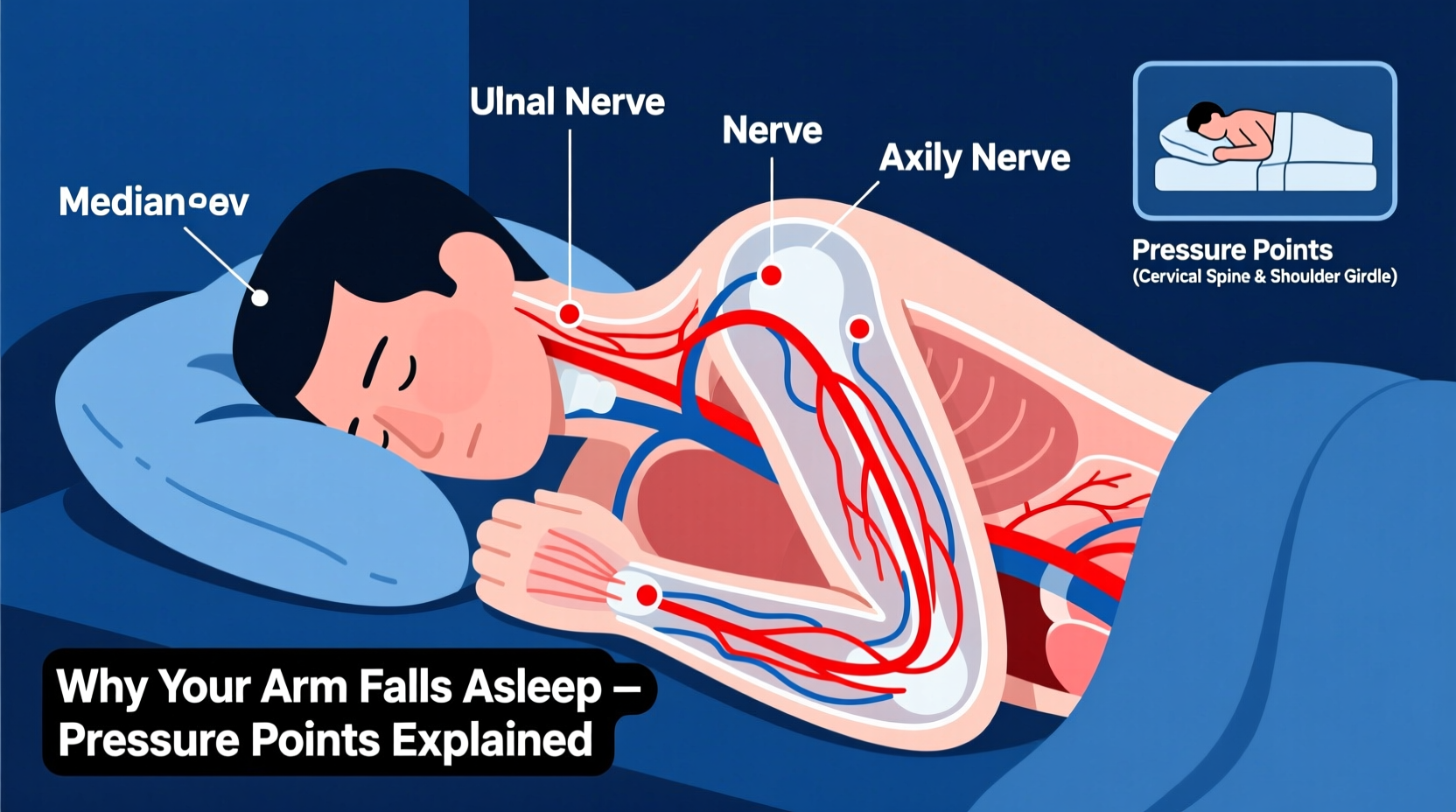
When we say an arm “falls asleep,” we’re describing a temporary loss of sensation, often accompanied by tingling (paresthesia), weakness, or even a burning sensation. This phenomenon isn’t about the limb literally going to sleep—it’s a neurological response to physical compression.
Nerves act like communication cables between your brain and body. When pressure builds on a nerve pathway—especially over prolonged periods—its ability to transmit signals becomes impaired. The brachial plexus, a network of nerves running from your spinal cord through your neck and into your arms, is particularly vulnerable during certain sleeping positions.
Compression doesn’t just affect nerves. Blood vessels can also be squeezed, reducing circulation. While brief reductions in blood flow are usually harmless, sustained pressure can compound nerve irritation. However, it's typically the nerve compression—not lack of blood—that causes the familiar “pins and needles” sensation.
“Nerve compression during sleep is one of the most frequent causes of transient paresthesia. Most cases resolve quickly, but repeated episodes may signal poor sleep ergonomics.” — Dr. Alan Reyes, Neurologist and Sleep Specialist
Key Pressure Points That Cause Arm Numbness
Certain anatomical locations are more prone to compression due to their position and structure. Here are the most common pressure points responsible for arm numbness during sleep:
- Brachial Plexus (Neck/Shoulder Junction): Located where nerves exit the cervical spine and travel into the arm. Sleeping with your head tilted sharply or arm trapped under your body can compress this bundle.
- Ulnar Nerve (Funny Bone): Runs along the inner elbow. Bending your elbow tightly or resting your arm against a hard surface (like the edge of a mattress) can pinch this nerve, leading to numbness in the ring and little fingers.
- Median Nerve (Wrist Area): Passes through the carpal tunnel. Excessive wrist flexion during sleep—common when hands curl inward—can irritate this nerve, mimicking early carpal tunnel symptoms.
- Radial Nerve (Upper Arm): Travels along the back of the upper arm and can be compressed if you lie directly on your arm for extended periods.
These nerves don't work in isolation. A single awkward sleeping posture can compress multiple pathways at once, which is why some people wake up with widespread arm dysfunction—not just isolated finger tingling.
Common Sleeping Positions That Trigger Nerve Compression
Your choice of sleep posture plays a major role in whether your arms stay comfortable all night. Some positions naturally place more strain on nerve pathways than others.
| Sleep Position | Risk Level | Why It Causes Numbness |
|---|---|---|
| Fetal Position (Arms Curled In) | High | Tight arm and wrist flexion compresses the median and ulnar nerves. |
| Sleeping on Your Arm | Very High | Direct pressure on the brachial plexus and radial nerve cuts off nerve signaling. |
| Stomach Sleeping with Arms Above Head | Moderate | Overhead arm positioning stretches and compresses nerves in the shoulder. |
| Back Sleeping with Arms Relaxed at Sides | Low | Minimal nerve strain; ideal for preventing compression. |
| Side Sleeping with Proper Support | Low-Moderate | Safe if arms are supported; risky if arm is pinned beneath the body. |
The fetal position, though popular for its comfort, is a leading cause of nocturnal arm numbness. Similarly, falling asleep on the couch with your arm draped over the backrest or tucked under your pillow creates high-risk scenarios for nerve impingement.
How Long Does It Take for a Nerve to Recover?
Most episodes of arm numbness resolve within seconds to minutes after changing position. The recovery timeline depends on the duration and intensity of compression.
A mild pinch might interrupt nerve signals briefly, causing immediate tingling upon release—this is the body’s way of “rebooting” neural communication. More prolonged pressure (e.g., lying on your arm for 30+ minutes) may result in temporary muscle weakness or a sense of heaviness lasting several minutes.
In rare cases, chronic compression—such as nightly numbness over months or years—can lead to persistent nerve irritation or even minor nerve damage. Symptoms like ongoing weakness, reduced grip strength, or daytime tingling should prompt medical evaluation.
“Occasional arm numbness is normal. But if you’re waking up with numbness more than twice a week, it’s time to reassess your sleep setup.” — Dr. Lena Patel, Physical Therapist and Posture Consultant
Step-by-Step Guide to Prevent Arm Numbness During Sleep
Preventing nighttime arm numbness doesn’t require drastic changes. Small adjustments to your sleep habits and environment can make a significant difference. Follow these steps to reduce nerve compression risks:
- Evaluate Your Sleeping Position: Identify whether you’re a stomach, side, or back sleeper. Side and stomach sleepers are most at risk for arm compression.
- Adjust Arm Placement: Avoid sleeping with your arms above your head or folded tightly against your chest. Keep them relaxed at your sides or slightly forward.
- Use Supportive Pillows: Place a pillow between your arms if you sleep on your side. For back sleepers, a small pillow under the upper arm can prevent it from drifting inward and compressing nerves.
- Choose the Right Mattress Firmness: A mattress that’s too soft may allow your arm to sink into a compressed position. Medium-firm surfaces provide better support.
- Stretch Before Bed: Gentle neck and shoulder stretches improve circulation and reduce muscle tension that could indirectly compress nerves.
- Avoid Alcohol Before Bed: Alcohol relaxes muscles excessively, increasing the likelihood of slumping into awkward postures during sleep.
- Check Your Pillow Height: A pillow that’s too high or too low alters neck alignment, potentially straining the brachial plexus.
Checklist: Nightly Routine to Prevent Numbness
- ✅ Perform 5 minutes of light shoulder and neck stretches before bed
- ✅ Ensure pillows support neutral spine and arm alignment
- ✅ Avoid falling asleep in chairs or on sofas where arm positioning is uncontrolled
- ✅ Limit alcohol consumption within 3 hours of bedtime
- ✅ Change positions if you feel tingling start—don’t wait until full numbness sets in
- ✅ Replace old mattresses showing signs of sagging (typically after 7–10 years)
Real Example: How Sarah Fixed Her Chronic Morning Numbness
Sarah, a 34-year-old graphic designer, began experiencing frequent numbness in her left arm and hand. She’d wake up unable to grip her coffee cup, with sharp tingling radiating from her elbow to her pinky finger. Initially, she assumed it was stress-related, but when the issue persisted for weeks, she consulted a physical therapist.
After reviewing her sleep habits, the therapist noted that Sarah slept on her left side with her left arm tucked beneath her torso—a classic case of ulnar nerve compression. She also used a thick pillow that elevated her head unnaturally, straining her neck.
The solution was straightforward: Sarah switched to a thinner pillow, started using a body pillow to prevent rolling onto her arm, and practiced shoulder rolls before bed. Within two weeks, her morning numbness disappeared entirely.
Sarah’s case highlights how simple biomechanical fixes can resolve what feels like a complex medical issue. Often, the root cause isn’t disease—but habit.
When to See a Doctor
While occasional arm numbness is normal, recurring or worsening symptoms may indicate underlying conditions such as:
- Cervical radiculopathy (pinched nerve in the neck)
- Thoracic outlet syndrome (compression of nerves/blood vessels between neck and shoulder)
- Diabetes-related neuropathy
- Early-stage carpal tunnel syndrome
Seek medical advice if you experience any of the following:
- Numbness that persists beyond 10–15 minutes after waking
- Weakness in the hand or difficulty holding objects
- Pain radiating from the neck down the arm
- Daytime tingling without obvious cause
- Loss of coordination or fine motor skills
A neurologist or orthopedic specialist can perform tests such as electromyography (EMG) or nerve conduction studies to assess nerve function and determine if intervention is needed.
Frequently Asked Questions
Can sleeping on my arm cause permanent damage?
Short-term compression is unlikely to cause permanent harm. However, habitual nerve compression over months or years may lead to chronic irritation or neuritis. Consistent numbness should not be ignored, as it can contribute to long-term nerve sensitivity or dysfunction.
Why do only my fingers tingle, not my whole arm?
Nerve distribution explains this pattern. The ulnar nerve controls sensation in the pinky and part of the ring finger, so compression at the elbow causes localized tingling there. Similarly, median nerve issues affect the thumb and first three fingers. The specific area impacted helps pinpoint the compressed nerve.
Is arm numbness during sleep related to heart problems?
Typically, no. Heart-related arm pain (often linked to cardiac events) presents differently: it usually involves dull pressure, occurs during activity or stress, and is often accompanied by chest pain, shortness of breath, or nausea. Numbness from sleeping is positional, resolves quickly, and lacks systemic symptoms. However, if you have cardiovascular risk factors and experience unusual arm sensations, consult a doctor to rule out concerns.
Conclusion: Take Control of Your Sleep Comfort
Arm numbness during sleep is more than just a minor annoyance—it’s a signal from your body that something in your sleep posture needs adjustment. By understanding the role of pressure points and how nerves respond to compression, you gain the power to make meaningful changes.
Simple habits—like repositioning your arms, upgrading your pillow, or stretching before bed—can prevent hundreds of uncomfortable awakenings over the course of a year. Don’t wait for symptoms to worsen. Start tonight by paying attention to how your arms rest and making small, sustainable improvements.




 浙公网安备
33010002000092号
浙公网安备
33010002000092号 浙B2-20120091-4
Comments
No comments yet. Why don't you start the discussion?