
It starts as a festive moment: the tree is up, lights are twinkling, ornaments are in place. But after a few hours, an acrid, chemical odor begins to fill the room—reminiscent of overheated plastic or burning insulation. If you've ever turned on your artificial Christmas tree only to be met with this unsettling smell, you're not alone. Thousands of households report similar experiences each holiday season. The good news? This issue is both explainable and fixable. Understanding the root causes and knowing how to respond can protect your home, your family, and your holiday spirit.
What Causes the Burnt Plastic Smell?
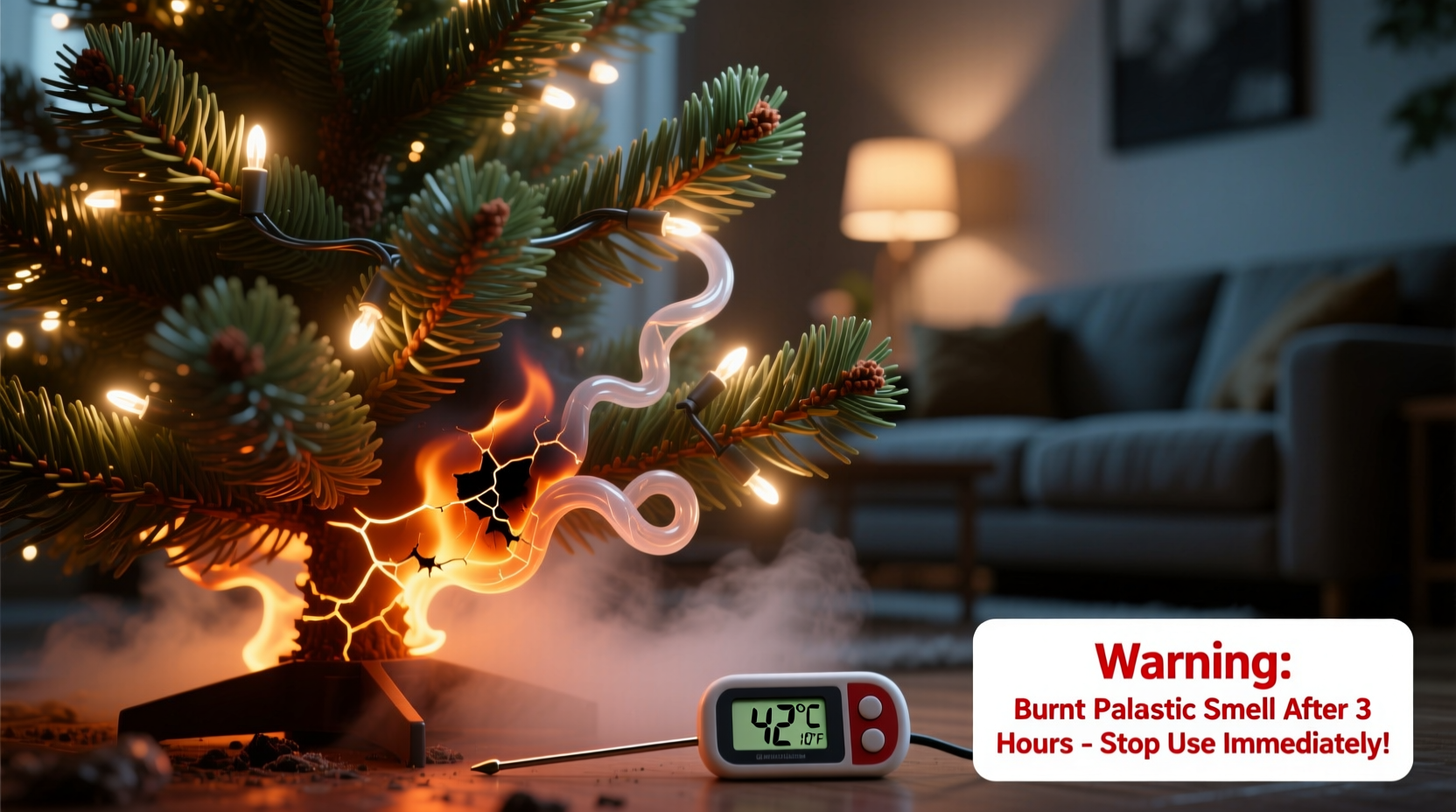
The most common source of the burnt plastic odor from an artificial Christmas tree lies in the interaction between heat and synthetic materials. Most artificial trees are made from polyvinyl chloride (PVC), a durable but heat-sensitive plastic. When exposed to prolonged heat—especially from older or poorly designed string lights—the PVC needles, branches, or wire frame can begin to degrade, releasing volatile organic compounds (VOCs) that produce a sharp, unpleasant smell.
This isn’t just a matter of comfort. In extreme cases, sustained overheating can pose fire hazards or trigger respiratory irritation, particularly in individuals with asthma or chemical sensitivities. The smell often intensifies after three to four hours because that’s when cumulative heat exposure reaches a threshold where off-gassing becomes noticeable.
Additional contributing factors include:
- Low-quality LED or incandescent lights – Some budget-friendly light sets lack proper insulation or emit excessive heat, especially if bundled tightly around branches.
- Dust accumulation – Dust on lights or tree surfaces can burn when heated, producing a smoky, charred odor.
- Poor ventilation – Trees placed near heat vents, radiators, or in enclosed corners trap warm air, accelerating material breakdown.
- Age and storage conditions – Trees stored in hot attics or damp basements may have already begun degrading before use.
How Heat and Materials Interact: A Closer Look
To understand why your tree smells like it's burning, it helps to know how modern artificial trees are constructed. Most are made from PVC-coated steel wire frames with molded plastic tips designed to mimic pine needles. While PVC is flame-retardant under normal conditions, it begins to soften at around 140°F (60°C) and can release hydrogen chloride gas when heated beyond 200°F (93°C). Although household lights rarely reach these temperatures, localized hotspots—especially from clustered bulbs or damaged wiring—can create micro-environments where degradation occurs.
Incandescent mini-lights are especially problematic. Despite their small size, they can emit surface temperatures over 150°F. When wrapped too densely or left on continuously, they act like tiny heaters pressed against plastic foliage. Even many \"cool-burning\" LEDs aren't immune—some lower-tier models still generate significant heat at the base of the bulb or circuit board.
“Many consumers don’t realize that even 'safe' lights can become hazardous when combined with flammable or heat-sensitive materials over time.” — Dr. Alan Reeves, Electrical Safety Engineer, National Fire Protection Association (NFPA)
Immediate Steps to Stop the Smell and Prevent Damage
If your tree has already started emitting a burnt odor, take action immediately. Do not ignore it as “just part of the holidays.” Follow this step-by-step guide to eliminate the hazard and restore safety.
- Turn off and unplug all lights – Immediately disconnect the power source. Allow the tree to cool completely before handling.
- Inspect every inch of the light strands – Look for darkened sockets, warped plastic, exposed wires, or areas where lights touch branches directly.
- Remove any lights showing damage – Discard or replace faulty strings. Never tape over cracked insulation.
- Clean the tree thoroughly – Use a dry microfiber cloth to remove dust buildup from branches and trunk. Avoid water, which can corrode internal wiring.
- Re-evaluate light placement – Ensure no bulbs are pressed tightly against foliage. Maintain at least half an inch of clearance.
- Test with shorter intervals – Reconnect lights and run for only 30 minutes. Monitor for odor recurrence.
- Improve room ventilation – Open a nearby window briefly or use an air purifier to clear residual VOCs.
When to Replace the Tree or Lights
Not all damage is reversible. If you notice any of the following, discontinue use:
- Visible browning or warping of branch tips
- Peeling coating on metal branches
- Recurring smoke-like smell even after cleaning
- Tree purchased more than 10 years ago
Manufacturers typically recommend replacing artificial trees every 7–10 years due to material fatigue and outdated safety standards.
Choosing Safer Lighting: What to Buy and What to Avoid
Prevention starts with smart lighting choices. Not all Christmas lights are created equal. The table below compares common lighting types based on heat output, energy efficiency, and compatibility with artificial trees.
| Type | Heat Output | Energy Use | Safety Rating | Best For Artificial Trees? |
|---|---|---|---|---|
| Traditional Incandescent | High (150–180°F) | High | Low | No – high risk of melting plastic |
| Budget LED (unbranded) | Moderate (warm base) | Low | Moderate | Caution – check for certifications |
| Premium LED (UL-listed) | Very Low (<85°F) | Very Low | High | Yes – safest option |
| Fairy Wire Lights (battery) | Negligible | Medium (batteries) | High | Yes – ideal for close contact |
Always look for lights certified by Underwriters Laboratories (UL) or ETL. These indicate the product has passed rigorous safety testing for heat resistance, electrical stability, and fire risk.
Real-Life Case: The Johnson Family Incident
In December 2022, the Johnson family in Columbus, Ohio, noticed a faint chemical smell coming from their 8-foot pre-lit artificial tree about two hours after turning it on. Assuming it was “just the new tree smell,” they ignored it. By the third evening, the odor had grown stronger, and their youngest child began coughing at night. Concerned, they unplugged the tree and called an electrician.
The inspection revealed that one strand of incandescent lights had a short in the third socket, causing it to overheat. The adjacent PVC branches showed visible softening and a dark ring around the bulb. The electrician confirmed that continued use could have led to ignition or toxic fume buildup. The family replaced the lights with UL-certified LEDs and reported the original product to the Consumer Product Safety Commission (CPSC).
This case underscores a critical point: what seems like a minor nuisance can escalate into a serious health and safety issue. Early detection and proactive response saved the Johnsons from potential disaster.
Long-Term Prevention and Maintenance Checklist
To keep your artificial tree safe and odor-free year after year, follow this comprehensive checklist:
- ✅ Inspect lights annually for wear, corrosion, or melting
- ✅ Clean tree with a dry cloth before and after each season
- ✅ Store tree in a breathable fabric bag (not plastic)
- ✅ Keep away from heat sources like radiators or space heaters
- ✅ Use a timer to limit light operation to 6–8 hours per day
- ✅ Rotate light strands each year to prevent hotspot fatigue
- ✅ Replace any tree older than 10 years, regardless of appearance
- ✅ Choose LED lights labeled “cool-touch” and “UL-listed”
“The safest Christmas tree is one that’s well-maintained, properly lit, and monitored. Don’t assume ‘if it worked last year, it’s fine this year.’” — Fire Marshal Linda Cho, U.S. Consumer Product Safety Commission
FAQ: Common Questions About Tree Odors and Safety
Is the burnt plastic smell dangerous?
Yes, prolonged exposure to off-gassed chemicals from overheated plastics can irritate the eyes, nose, and throat. In sensitive individuals, it may trigger headaches or breathing difficulties. While brief exposure is unlikely to cause lasting harm, consistent or strong odors should be treated as a warning sign.
Can I fix the smell without replacing the tree?
If the odor stops after cleaning and switching to cooler lights, and no physical damage is visible, you may continue using the tree cautiously. However, if the smell returns or worsens, retire the tree. No holiday decoration is worth compromising indoor air quality.
Are pre-lit trees more likely to overheat?
Pre-lit trees carry higher risk because the lights are permanently wired and often embedded in dense foliage, reducing airflow. Additionally, manufacturers may use lower-grade wiring to cut costs. Always verify the light type (LED vs. incandescent) and check reviews for reports of overheating before purchase.
Conclusion: Protect Your Home and Holiday Joy
A burnt plastic smell from your artificial Christmas tree isn’t normal—and it shouldn’t be ignored. It’s a signal that heat, materials, and possibly faulty wiring are interacting in unsafe ways. With thoughtful maintenance, informed lighting choices, and vigilance, you can enjoy a beautiful, safe, and truly festive display.
Your holiday traditions deserve more than a gamble with safety. Take action today: inspect your lights, clean your tree, upgrade to certified LEDs, and share this knowledge with friends and family. A joyful season starts with peace of mind.




 浙公网安备
33010002000092号
浙公网安备
33010002000092号 浙B2-20120091-4
Comments
No comments yet. Why don't you start the discussion?