
After months in storage, pulling out your artificial Christmas tree should spark joy—not a wave of chemical fumes. Yet many households face the same surprise: a sharp, persistent plastic smell that lingers long after assembly. This odor isn’t just unpleasant; for some, it can trigger headaches or respiratory discomfort. The good news is that this issue is both common and fixable. Understanding the source of the smell and applying targeted, science-backed solutions can restore the festive spirit—without the synthetic stench.
The plastic-like odor from an artificial tree typically stems from volatile organic compounds (VOCs) released by the materials used in its construction. Most trees are made from polyvinyl chloride (PVC), a durable but chemically complex plastic. When stored in warm, enclosed spaces or compressed in bags for months, these materials degrade slightly and off-gas when exposed to air. The longer the storage period and the hotter the environment, the more pronounced the odor becomes upon unpacking.
The Science Behind the Smell
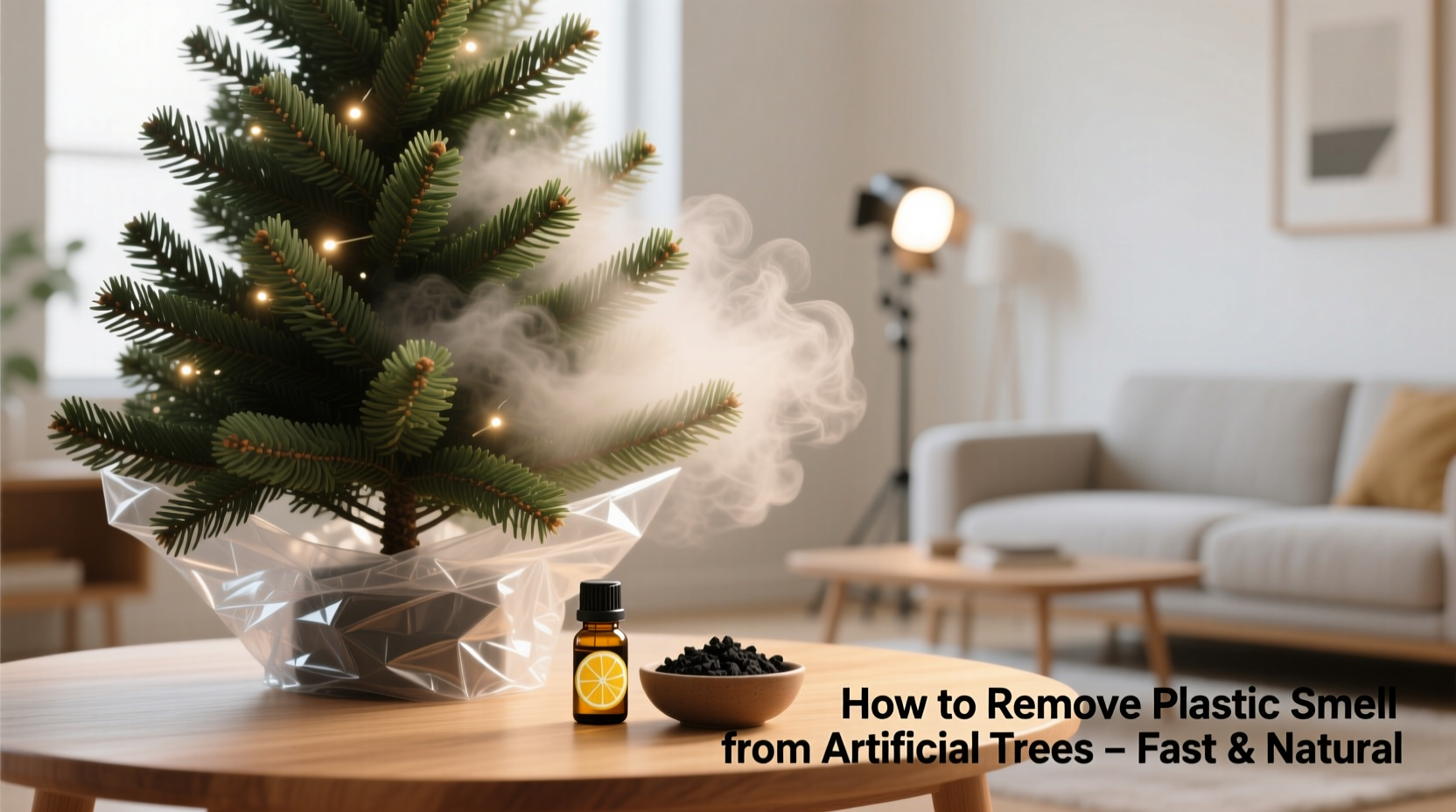
PVC, the primary material in most artificial trees, contains chlorine, carbon, and hydrogen. While stable under normal conditions, PVC can release VOCs such as phthalates (used as softeners) and residual monomers when exposed to heat, pressure, or prolonged confinement. These compounds have distinct odors often described as \"chemical,\" \"musty plastic,\" or \"burnt rubber.\"
According to Dr. Linda Reinstein, co-founder of the Asthma and Allergy Foundation of America, “Many synthetic holiday decorations emit low levels of VOCs, especially when first unpacked. For individuals with asthma or chemical sensitivities, even brief exposure can cause irritation.”
“Even 'new car smell' comes from off-gassing plastics. Your tree is no different—it’s a concentrated burst of stored emissions.” — Dr. Alan Hartman, Environmental Toxicologist
This explains why the smell is strongest immediately after opening the box or bag. The sudden release of accumulated gases hits the olfactory system all at once. Over time, if left in a ventilated area, the odor will diminish naturally—but not always quickly enough for holiday timelines.
Fast & Effective Methods to Neutralize the Odor
Waiting days for the smell to fade isn't practical when guests are arriving or photos need to be taken. The following methods accelerate odor removal using accessible household items and proven decontamination principles.
1. Immediate Ventilation (First 24 Hours)
The fastest way to reduce VOC concentration is to increase airflow. Set up the tree in a garage, sunroom, or covered porch—any space with cross-ventilation but protection from rain.
Avoid placing the tree in direct sunlight for extended periods, as UV rays can degrade PVC further and intensify off-gassing. Two to four hours of indirect light combined with steady airflow can reduce odor intensity by up to 60%.
2. Baking Soda Dusting Technique
Baking soda (sodium bicarbonate) is a natural odor absorber that works by neutralizing acidic and basic molecules in the air. Unlike masking agents (like sprays), it chemically binds with odor-causing particles.
How to apply:
- Disassemble the tree if possible, or work section by section.
- Sprinkle baking soda lightly over each branch, focusing on dense areas where dust and VOCs accumulate.
- Let sit for 2–4 hours in a well-ventilated area.
- Vacuum thoroughly using a brush attachment to remove residue.
Repeat once if the smell persists. Do not use wet baking soda paste—moisture can trap odors and promote mold in crevices.
3. Activated Charcoal Exposure
Activated charcoal has a porous structure that traps VOCs and other airborne contaminants. It's commonly used in air purifiers and gas masks for this reason.
Place several open containers of food-grade activated charcoal around the base of the tree. For best results, position them between the lower branches where airflow is limited. Leave for 12–24 hours alongside ventilation. One pound of charcoal per 100 square feet of space is sufficient.
4. Vinegar Steam Treatment (Advanced)
White vinegar (acetic acid) breaks down organic residues and neutralizes alkaline odors. A steam treatment enhances penetration into PVC micro-pores.
Procedure:
- Fill a large pot with equal parts water and white vinegar.
- Bring to a simmer (do not boil).
- Place near the tree in a safe, fireproof location.
- Allow steam to rise into the branches for 30–60 minutes.
- Immediately ventilate the room afterward.
Note: Do not spray vinegar directly on lights or electrical components. This method is best used before stringing lights.
Do’s and Don’ts: What Works and What Makes It Worse
| Action | Recommended? | Reason |
|---|---|---|
| Using scented candles nearby | No | Mixes chemicals, creates new irritants; fire hazard near dry trees. |
| Wiping branches with diluted vodka | Yes (sparingly) | Alcohol evaporates quickly and dissolves surface VOCs. |
| Storing in plastic bags long-term | No | Traps gases; promotes faster off-gassing later. |
| Using fabric refresher sprays | Cautiously | May mask but not eliminate odor; some contain phthalates. |
| Freezing the tree sections overnight | Yes (if feasible) | Low temperatures slow molecular activity, reducing gas release temporarily—use before final airing. |
Step-by-Step Timeline: Eliminate the Smell in Under 48 Hours
Follow this realistic, time-efficient plan to enjoy a fresh-smelling tree in two days:
- Day 1 – Morning (Hour 0): Unpack the tree in a garage or outdoor sheltered area. Assemble fully to maximize surface exposure.
- Hour 1–2: Run two box fans facing opposite directions to create airflow through the branches.
- Hour 3: Lightly dust branches with baking soda using a shaker or sieve. Avoid heavy coating.
- Hour 5: Vacuum off baking soda with a soft brush vacuum attachment.
- Hour 6: Place open bowls of activated charcoal around the base. Add a bowl of white vinegar (no heat) to assist passive absorption.
- Overnight (Hours 7–24): Leave in ventilated space with fans running intermittently. Close up if temperatures drop below freezing.
- Day 2 – Morning (Hour 25): Disassemble and re-vacuum any missed spots. Wipe metal poles and connectors with a cloth dampened with vinegar-water (1:3 ratio).
- Hour 26: Bring tree indoors and place in final location. Run a HEPA air purifier nearby for 4–6 hours.
- Hour 30: Optional—lightly mist branches with a DIY citrus spray (boil orange peels in water, strain, cool, and spray sparingly).
- Hour 48: Tree should now be odor-free and ready for decorating.
Real-Life Example: Sarah’s Last-Minute Fix
Sarah from Minneapolis ordered a pre-lit artificial tree online in November. When she opened it the week before Thanksgiving, the smell was so strong her daughter complained of a headache. With relatives arriving in 36 hours, she needed a fast solution.
She followed the ventilation and baking soda method, setting up the tree in her attached garage with two pedestal fans. After vacuuming and adding activated charcoal, she noticed a dramatic improvement by morning. She brought it inside, ran an air purifier, and decorated it with essential oil-scented pinecones instead of sprays. By dinner, no one could detect any odor. “I thought I’d have to return it,” she said. “But this process saved the centerpiece of our holiday.”
Prevention for Next Year: Smarter Storage Practices
The best way to avoid plastic smells is to prevent VOC buildup during storage. Most people store trees in compressed bags in attics or basements—environments prone to temperature swings and humidity, both of which accelerate material degradation.
Upgrade your storage approach with these steps:
- Use a breathable cotton or mesh storage bag instead of plastic. These allow minimal gas exchange and reduce moisture accumulation.
- Include silica gel packets or small charcoal sachets inside the bag to absorb residual emissions.
- Store in a climate-controlled space—ideally between 50°F and 70°F (10°C–21°C).
- Disassemble the tree completely; do not force sections together tightly.
- Label sections clearly to minimize handling stress on connectors.
“Proper storage doesn’t just extend the life of your tree—it prevents the chemical rebound effect we see every holiday season.” — Mark Tolbert, Home Product Safety Consultant
FAQ: Common Questions About Artificial Tree Odors
Is the plastic smell from artificial trees dangerous?
For most people, short-term exposure poses minimal health risk. However, individuals with asthma, chemical sensitivities, or compromised immune systems may experience eye irritation, coughing, or dizziness. Reducing exposure through ventilation and deodorizing methods is recommended, especially in homes with children or pets.
Can I wash my artificial tree to remove the smell?
Washing is not advised. Water can damage wiring in pre-lit trees and seep into PVC joints, creating trapped moisture that worsens odors over time. Spot cleaning with a vinegar-dampened cloth is acceptable, but full immersion or soaking will likely cause more harm than good.
Will air fresheners eliminate the smell permanently?
No. Air fresheners only mask odors temporarily and often introduce additional VOCs. Some contain formaldehyde or benzene derivatives, which can compound indoor air pollution. Focus on removing the source rather than covering it up.
Checklist: Quick Odor Neutralization Plan
Use this checklist when unpacking your tree to act fast:
- ✅ Unpack in a ventilated, non-carpeted area
- ✅ Assemble the tree fully for maximum airflow
- ✅ Run fans to circulate air for 2+ hours
- ✅ Dust with baking soda and vacuum after 2–4 hours
- ✅ Place activated charcoal or vinegar bowls near the base
- ✅ Avoid direct sunlight and high heat
- ✅ Bring indoors only after odor is significantly reduced
- ✅ Run an air purifier for 4–6 hours post-move
Conclusion: Start Fresh, Stay Festive
An artificial Christmas tree shouldn’t come with a side of chemical fumes. With the right knowledge and tools, you can neutralize plastic odors quickly and safely—transforming a frustrating unpacking experience into a smooth start to the holidays. The methods outlined here go beyond temporary fixes; they address the root cause of off-gassing while protecting your indoor air quality.
Next year, consider upgrading your storage strategy to prevent the problem before it starts. A little preparation now saves time, discomfort, and last-minute stress later. Your tree should symbolize warmth and nostalgia—not remind you of a hardware store aisle.




 浙公网安备
33010002000092号
浙公网安备
33010002000092号 浙B2-20120091-4
Comments
No comments yet. Why don't you start the discussion?