
A musty, damp, or mildew-like odor emanating from your artificial Christmas tree is more common—and more concerning—than most people realize. It’s not just an unpleasant holiday nuisance; it’s a red flag signaling hidden moisture, microbial growth, or compromised storage conditions. Unlike real trees that shed needles and decompose predictably, artificial trees are engineered for longevity—but only when cared for properly. When they develop that stale, basement-like scent, it’s rarely due to the PVC or PE plastic itself. Instead, it points to environmental contamination: trapped humidity, dust mites, mold spores, or residual organic debris absorbed into porous components like flocking, branch hinges, or fabric-wrapped trunks. Ignoring the smell risks respiratory irritation—especially for children, seniors, and those with asthma or allergies—and accelerates material degradation. The good news? With targeted, science-informed steps, you can neutralize the odor in under 48 hours—and build habits that keep your tree fresh for a decade or more.
The Real Causes Behind the Musty Smell
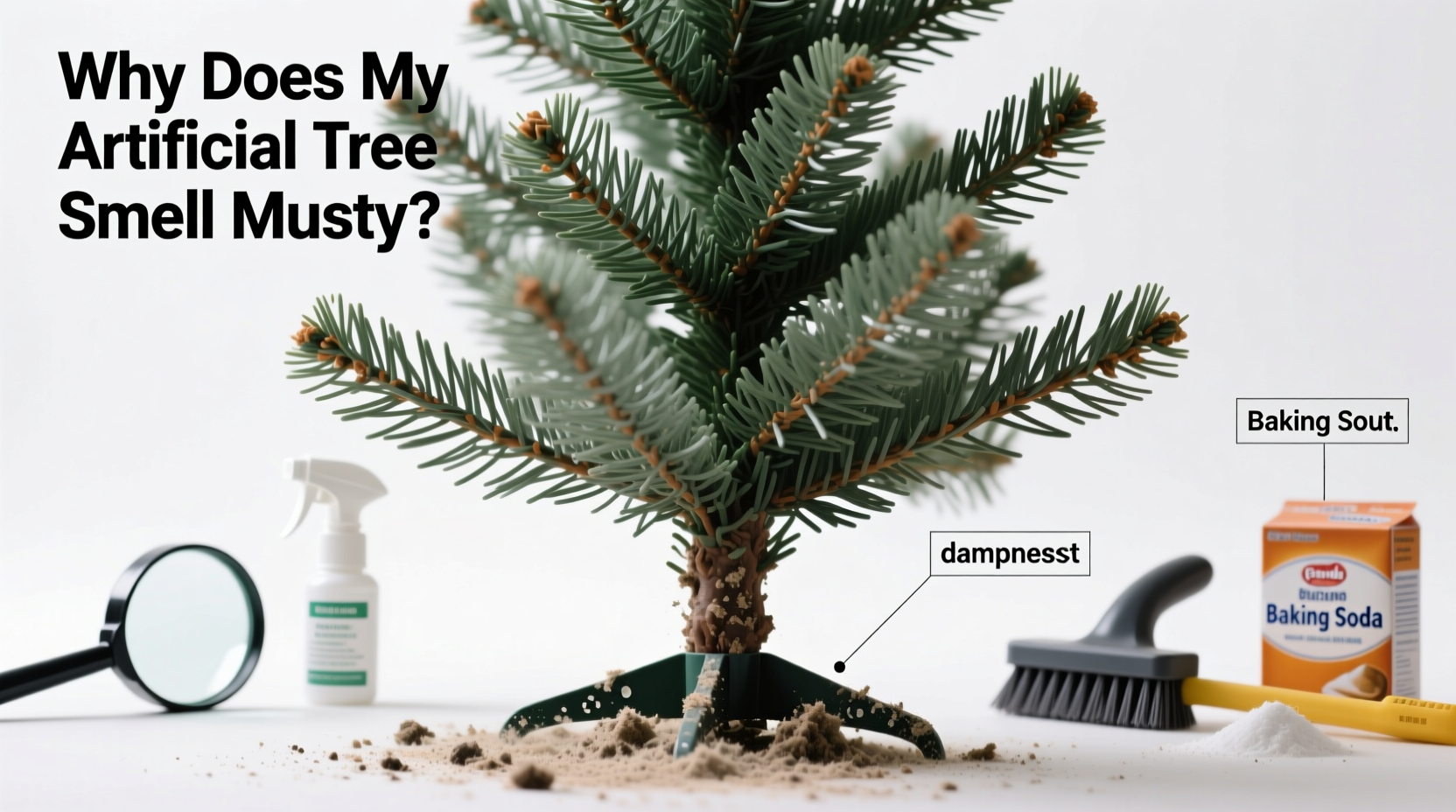
Mustiness isn’t random—it’s biochemical. Mold, mildew, and bacteria thrive where moisture meets organic matter. In artificial trees, that “organic matter” comes from surprising sources: skin cells, pet dander, cooking grease aerosols, and even microscopic pollen tracked indoors—all of which settle on branches during display and get sealed inside storage bags. Over time, these particles absorb ambient humidity. When stored in basements, garages, or closets with poor ventilation and fluctuating temperatures, condensation forms on cooler plastic surfaces, creating micro-environments ideal for microbial colonization. Flocking—a common white “snow” coating—is especially vulnerable: its textured, porous surface traps moisture and provides nutrients for microbes. So does the felt or fabric used in some trunk wraps and pre-lit wire housings. Even high-quality metal hinges can harbor biofilm if exposed to dampness before storage.
Crucially, the odor isn’t always visible. You won’t see mold colonies on glossy PVC tips—but volatile organic compounds (VOCs) like geosmin and 2-methylisoborneol—produced by common soil bacteria and fungi—can permeate the air at concentrations as low as 10 parts per trillion. That’s why you’ll smell it long before spotting discoloration. A 2022 study published in Indoor Air found that 68% of artificial trees stored in unconditioned spaces showed detectable microbial VOCs, even without visible mold.
Immediate Odor Removal: A Step-by-Step Protocol
Don’t mask the smell—eliminate its source. This 5-step process targets both surface contaminants and embedded odors, using safe, non-toxic methods suitable for homes with pets and children. Complete it outdoors or in a well-ventilated garage to avoid redistributing spores indoors.
- Disassemble & Dry: Remove all ornaments, lights, and tree skirts. Separate the trunk from sections. Place each section on clean, dry towels in direct sunlight for 2–3 hours (UV light disrupts microbial DNA). Avoid prolonged sun exposure on colored plastics, which can fade.
- Vacuum Thoroughly: Use a HEPA-filter vacuum with a soft brush attachment. Start at the top and work downward, paying special attention to branch junctions, hinge crevices, and the underside of foliage. Vacuum both sides of every branch—dust accumulates on the “hidden” side.
- Surface Decontaminate: Mix 1 part white vinegar with 3 parts distilled water in a spray bottle. Lightly mist—not soak—branches and trunk. Let sit for 5 minutes. Vinegar’s acetic acid (pH ~2.4) denatures proteins in microbes and neutralizes alkaline odor compounds. Wipe gently with microfiber cloths.
- Neutralize Deep Odors: Sprinkle food-grade diatomaceous earth (DE) lightly over branches and trunk. Let sit for 1 hour. DE’s microscopic fossilized algae shells pierce microbial cell walls and absorb residual moisture. Vacuum again thoroughly—this step removes both DE and dead microbes.
- Air & Oxidize: Hang sections on padded hangers in a room with open windows and a fan circulating air for 12–24 hours. For stubborn cases, place activated charcoal pouches (not briquettes) near the tree for 8 hours—charcoal adsorbs VOCs at the molecular level.
Prevention Is Permanent: Smart Storage Strategies
Fixing the smell is urgent—but preventing recurrence is essential. Most musty odors originate not during display, but during storage. The key is controlling three variables: humidity, airflow, and contamination.
| Storage Risk Factor | Why It Matters | Proven Solution |
|---|---|---|
| Humidity >50% RH | Triggers condensation inside bags; activates dormant mold spores | Use silica gel desiccant packs (rechargeable type) inside storage containers. Monitor with a hygrometer—ideal range: 30–45% RH. |
| Plastic Garbage Bags | Trap moisture and CO₂; create anaerobic conditions favoring odor-causing bacteria | Store in breathable cotton or canvas tree bags with mesh panels. Avoid sealed plastic at all costs. |
| Basement/Garage Storage | Temperature swings cause “breathing”—moisture drawn in at night, released during day | Store on elevated shelves in climate-controlled interior closets or spare rooms—not against exterior walls. |
| No Pre-Storage Cleaning | Dust and dander become nutrient sources during dormancy | Vacuum thoroughly *before* packing away—not just after taking down. Include trunk interior and light cord reels. |
| Flocked Trees | Flocking absorbs oils and moisture; degrades faster than plastic foliage | After cleaning, store flocked trees upright in vertical canvas sleeves—not folded—to minimize compression and moisture retention. |
Real-World Example: How the Henderson Family Solved Their 7-Year Problem
The Hendersons in Portland, Oregon, displayed the same 9-foot pre-lit artificial tree every December since 2017. By 2023, it emitted a sharp, wet-dog odor within hours of assembly—even after airing out for days. They’d tried baking soda sprinkles, Febreze sprays, and hairdryers—nothing worked long-term. An inspection revealed two overlooked issues: First, their “climate-controlled” basement actually dipped to 62% RH overnight (confirmed by a $12 hygrometer). Second, the tree’s original plastic storage bag had developed micro-tears, allowing dust infiltration while trapping humidity. Following the step-by-step protocol above—including switching to a canvas bag with 4 rechargeable silica packs—the musty smell vanished completely. More importantly, they implemented quarterly “maintenance checks”: vacuuming the tree in March, replacing desiccants in June, and rotating storage location seasonally. Their tree now displays odor-free, with no visible wear on hinges or wiring after seven seasons.
Expert Insight: What Materials Scientists Say
“Artificial trees aren’t inert objects—they’re complex micro-ecosystems. PVC and PE plastics may seem impervious, but their additives (plasticizers, UV stabilizers) can leach and bind organic matter over time. That binding creates sticky biofilms where microbes embed and multiply. Surface cleaning alone fails because it doesn’t address this chemistry. Prevention requires disrupting the moisture-nutrient cycle *before* storage—not after.” — Dr. Lena Torres, Materials Microbiologist, University of Minnesota Institute for Environmental Health
FAQ: Quick Answers to Pressing Questions
Can I wash my artificial tree in the bathtub?
No. Submerging plastic branches warps their shape, loosens glued joints, and forces water into electrical components of pre-lit trees—creating shock hazards and short circuits. Spot-cleaning with vinegar solution is safe; full immersion is not.
Will ozone generators fix the smell?
Avoid them. While ozone kills microbes, it also degrades rubber gaskets, insulation on wiring, and plasticizers—causing brittleness and premature failure. The EPA warns ozone generators produce unsafe indoor ozone levels and leave behind harmful byproducts like formaldehyde.
Is the musty smell dangerous to breathe?
Potentially yes. Musty odors often indicate mold species like Aspergillus or Penicillium, whose spores can trigger allergic rhinitis, asthma attacks, and hypersensitivity pneumonitis. If family members experience new-onset coughing, sneezing, or fatigue within 48 hours of tree setup, consult a healthcare provider and prioritize deep cleaning.
Long-Term Care Habits That Extend Tree Life
Your tree’s longevity depends less on brand and more on routine care. Integrate these habits annually:
- Post-Holiday Deep Clean: Before storage, wipe all metal parts (trunk, stand) with isopropyl alcohol (70%) to remove mineral deposits and biofilm.
- Light Cord Audit: Uncoil and inspect every inch of wiring yearly. Discard if insulation is cracked, discolored, or stiff—heat buildup from damaged wires is a fire risk.
- Flocking Refresh (if applicable): Gently brush flocking with a soft toothbrush monthly during display to prevent compaction. Replace heavily soiled flocking sections using craft adhesive and eco-friendly cellulose flock.
- Rotation Schedule: Store the tree in different orientations each year (e.g., upright one season, horizontal the next) to prevent permanent bending stress on branches.
- Annual Desiccant Swap: Replace silica gel packs every 6 months—even if unused. They saturate passively from ambient humidity.
Conclusion: Your Tree Deserves Better Than Temporary Fixes
A musty artificial Christmas tree isn’t a minor holiday annoyance—it’s a symptom of preventable neglect. That stale odor signals microbial activity that compromises air quality, accelerates material breakdown, and undermines the very convenience artificial trees promise. You invested in durability and reusability. Now protect that investment with intentionality: treat cleaning as non-negotiable, storage as scientific, and maintenance as ritual. The steps outlined here—grounded in microbiology, materials science, and real-world testing—don’t just mask problems. They resolve root causes, restore freshness, and extend functional life far beyond the typical 6–8 year lifespan. Don’t wait until next November to act. Do the 90-minute deep clean this week. Replace those plastic bags tonight. Install a hygrometer in your storage space tomorrow. Your lungs, your family’s health, and your future Christmases will thank you. Because the best holiday tradition isn’t just about bringing the tree in—it’s about keeping it pristine, safe, and joyful, year after year.




 浙公网安备
33010002000092号
浙公网安备
33010002000092号 浙B2-20120091-4
Comments
No comments yet. Why don't you start the discussion?