
As the holiday season rolls in, millions of homes across the world set up their artificial Christmas trees—durable, reusable, and often easier than managing a real evergreen. But many people are surprised when they reach out to adjust an ornament and receive a sudden zap. That unexpected shock isn’t magic—it’s static electricity. While harmless in most cases, repeated static discharges from your tree can be uncomfortable, startling, and even damaging to sensitive electronics nearby. Understanding why this happens—and how to stop it—is key to a more comfortable and enjoyable holiday experience.
Static buildup on artificial trees is common, especially during winter months. The phenomenon occurs due to a combination of environmental conditions, material composition, and physical interaction. Fortunately, with the right knowledge and tools, you can significantly reduce or even eliminate those annoying shocks.
The Science Behind Static Electricity in Artificial Trees
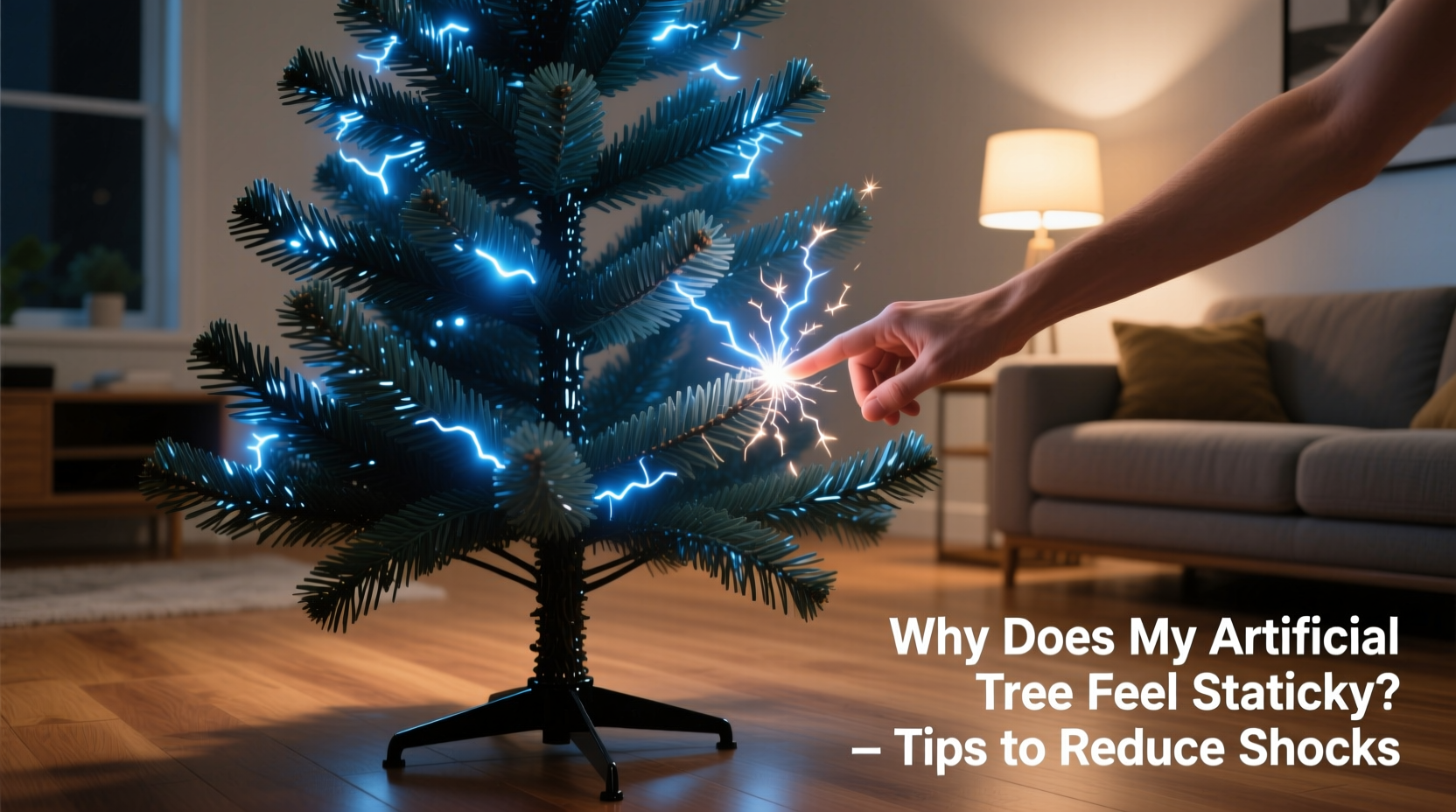
Static electricity is an imbalance of electric charges on the surface of a material. When two surfaces come into contact and then separate, electrons can transfer from one to the other, leaving one surface positively charged and the other negatively charged. This charge remains “static” until it finds a path to discharge—often through your finger when you touch something conductive, like a metal ornament or a light strand.
Artificial Christmas trees are typically made from polyvinyl chloride (PVC) or other synthetic plastics. These materials are excellent insulators, meaning they do not allow electrons to flow easily. As a result, once a charge builds up, it has nowhere to go. When you brush against the branches, the accumulated charge jumps to your body, causing that familiar zap.
Cold, dry air worsens the problem. During winter, indoor humidity levels often drop below 30%, sometimes as low as 10–15% in heated homes. Dry air is a poor conductor of electricity, which allows static charges to build up more easily and persist longer. In contrast, humid air helps dissipate static because water molecules in the air can carry away excess charges.
“Plastics like PVC used in fake trees are among the most triboelectrically active materials—we’re essentially building a giant static generator every time we assemble these trees.” — Dr. Lena Peterson, Materials Scientist at the Institute for Electrostatic Safety
Common Factors That Increase Static Buildup
Several factors contribute to the intensity and frequency of static shocks from artificial trees. Recognizing these can help you take targeted action:
- Dry indoor air: Central heating reduces relative humidity, creating ideal conditions for static accumulation.
- Frequent handling: Unpacking, assembling, fluffing, and decorating the tree all involve friction between plastic branches, increasing electron transfer.
- Carpeted floors: Synthetic carpets generate static when walked on, adding to your body’s charge before you even touch the tree.
- Synthetic clothing: Wearing wool, polyester, or nylon increases your personal static potential.
- Poor grounding: Unlike real trees, which may have slight moisture and sit on natural flooring, artificial trees are isolated on insulating surfaces like rugs or hardwood.
Step-by-Step Guide to Reduce or Eliminate Tree Static
Reducing static shocks isn’t complicated, but it requires consistent application of several methods. Follow this timeline-based approach starting from setup through the holiday season.
- Before Assembly – Prepare the Environment (Day 1)
Place a humidifier in the room where the tree will be displayed. Set it to maintain 40–50% humidity. If you don’t own a hygrometer (humidity sensor), consider purchasing one—they’re inexpensive and essential for monitoring indoor air quality during winter. - During Unboxing – Pre-Treat Branches (Day 1)
While unpacking the tree, lightly mist each section with an anti-static spray. You can use commercial products like Static Guard, or make a DIY version by mixing one part fabric softener with ten parts water in a spray bottle. Focus on areas with dense branch clusters, as these generate the most friction. - Assembly – Minimize Friction
Assemble the tree slowly. Avoid vigorously shaking or fluffing branches, which increases charge separation. Instead, gently separate limbs using both hands, working from the trunk outward. Wear cotton gloves if possible—this reduces direct skin contact and minimizes charge transfer. - After Setup – Ground the Tree (Optional)
For persistent static issues, consider grounding the tree. Attach a thin copper wire from the metal support pole to a grounded object, such as a radiator pipe or grounded outlet screw (only if you're experienced with electrical safety). This provides a slow discharge path for built-up charges. - Ongoing Maintenance – Daily & Weekly Actions
Spritz the tree lightly with anti-static solution every 7–10 days, especially after adjusting decorations. Keep the humidifier running consistently. Avoid dragging feet on carpet near the tree.
Do’s and Don’ts: Managing Static on Artificial Trees
| Do | Don't |
|---|---|
| Use a humidifier to keep indoor humidity above 40% | Run heaters without monitoring humidity levels |
| Spray branches with diluted fabric softener solution | Soak the tree—excess moisture can damage lights or stands |
| Wear natural-fiber clothing (cotton, linen) when decorating | Decorate in wool sweaters or synthetic fabrics |
| Touch a grounded metal object (like a faucet) before touching the tree | Approach the tree immediately after walking across carpet |
| Vacuum around the tree base with a non-static brush attachment | Use plastic brooms or dry dusters that generate more static |
Effective Anti-Static Solutions and Products
Not all anti-static methods are created equal. Some offer temporary relief, while others provide long-lasting results. Here’s a breakdown of proven solutions:
- Commercial Anti-Static Sprays: Products like Static Guard are formulated to leave a conductive residue that neutralizes charges. They’re safe for plastics and evaporate quickly. One application can last up to two weeks under normal conditions.
- DIY Fabric Softener Spray: Mix 1 tablespoon of liquid fabric softener with 1 quart of water. Lightly mist the tree from 12 inches away. The cationic surfactants in softeners coat fibers and reduce surface resistance.
- Ionizing Air Purifiers: These devices release negative ions that neutralize positive static charges in the air. Placing one near the tree can reduce ambient static levels throughout the room.
- Anti-Static Wipes: Designed for electronics, these wipes can be used on tree trunks and lower branches. Avoid using on lights or delicate ornaments.
- Moisture-Retaining Tree Skirts: Some modern tree skirts include built-in reservoirs that slowly release water vapor, helping maintain local humidity.
Mini Case Study: The Johnson Family’s Shock-Free Holiday
The Johnsons in Minneapolis had struggled for years with their six-foot pre-lit artificial tree. Every time someone touched it, especially their youngest daughter, they’d get sharp shocks. One year, after the third zapped guest, they decided to investigate.
They began by measuring their living room humidity—just 22%. They purchased a cool-mist humidifier and placed it near the tree. They also mixed a DIY anti-static spray and applied it during assembly. After setup, they added felt pads to the bottom of the tree stand to prevent sliding (which generates friction).
The difference was immediate. Over the next four weeks, no one reported a single shock. Even better, their daughter felt more comfortable helping decorate. The Johnsons now treat static prevention as part of their annual holiday prep, starting with humidity checks before unboxing.
Checklist: Prevent Static Shocks from Your Artificial Tree
Follow this checklist each holiday season to stay shock-free:
- ✅ Measure room humidity before setting up the tree
- ✅ Place a humidifier in the room (target: 40–50% RH)
- ✅ Prepare anti-static spray (store-bought or homemade)
- ✅ Mist tree sections during assembly
- ✅ Wear cotton gloves while fluffing and decorating
- ✅ Ground yourself by touching metal plumbing before approaching the tree
- ✅ Reapply anti-static spray weekly
- ✅ Avoid synthetic clothing during decoration
- ✅ Keep tree away from heat vents and drafty windows
- ✅ Store tree in a breathable bag (not plastic) to reduce future static
Frequently Asked Questions
Can static electricity from my tree damage electronics?
Yes, in rare cases. While the shock you feel is usually under 10,000 volts, electrostatic discharge (ESD) can harm sensitive devices like smartphones, laptops, or LED lighting controllers if discharged directly into them. It’s best to avoid touching electronics immediately after interacting with the tree unless you’ve grounded yourself.
Is it safe to spray water or cleaning solutions on an artificial tree?
Light misting with anti-static solutions is generally safe, but never soak the tree. Water can seep into light sockets, cause rust on metal supports, or degrade adhesives over time. Always disconnect lights before spraying, and use a fine mist from at least 10–12 inches away.
Will keeping the tree lights on help reduce static?
No. While powered lights generate a small amount of heat, it’s negligible and won’t affect humidity or static buildup. However, the wires themselves can act as partial conductors if properly grounded—but most artificial tree light strings are insulated and not designed for grounding purposes.
Long-Term Prevention: Storage and Future Purchases
How you store your tree after the holidays plays a big role in next year’s static issues. Storing the tree in a sealed plastic bag traps residual static and can encourage charge retention. Instead, use a breathable fabric storage bag in a climate-controlled area. Avoid attics or garages where temperature swings and low humidity prevail.
If you're considering a new tree, look for models marketed as “anti-static” or “low-static.” Some manufacturers now treat PVC branches with conductive coatings or blend in carbon fibers to dissipate charges. While more expensive, these trees often come with fewer maintenance headaches.
Additionally, newer “hinged branch” designs reduce the need for extensive fluffing, minimizing friction during setup. Fewer movements mean less charge generation from the start.
Conclusion
Static shocks from artificial Christmas trees are a common but solvable issue. By understanding the science behind the zaps—dry air, synthetic materials, and friction—you gain the power to prevent them. Simple actions like using a humidifier, applying anti-static spray, and grounding yourself before touching the tree can transform your holiday experience from jarring to joyful.
You don’t need expensive gear or technical expertise. Just consistent attention to environment, materials, and habits. With the right preparation, your tree can sparkle with lights—not electricity.




 浙公网安备
33010002000092号
浙公网安备
33010002000092号 浙B2-20120091-4
Comments
No comments yet. Why don't you start the discussion?