
Every holiday season, millions of homes are adorned with artificial Christmas trees—praised for their convenience, reusability, and allergy-friendly appeal. Yet even the most carefully selected faux tree can begin to shed its plastic needles over time, leaving behind a trail of synthetic debris that undermines the festive atmosphere. Unlike real trees, which naturally drop needles as they dry out, artificial trees shouldn’t lose foliage unless something is wrong. So when fake needles start accumulating on your floor, it’s a sign that materials are degrading, storage conditions are poor, or handling practices need improvement.
This article dives into the root causes of artificial tree needle shedding, separates myth from fact, and offers practical, expert-backed strategies to prevent and fix the issue. Whether you’ve just unboxed last year’s tree and noticed excessive shedding or want to protect a new investment, this guide delivers actionable insights to preserve your tree’s appearance for years to come.
Understanding Why Artificial Trees Shed
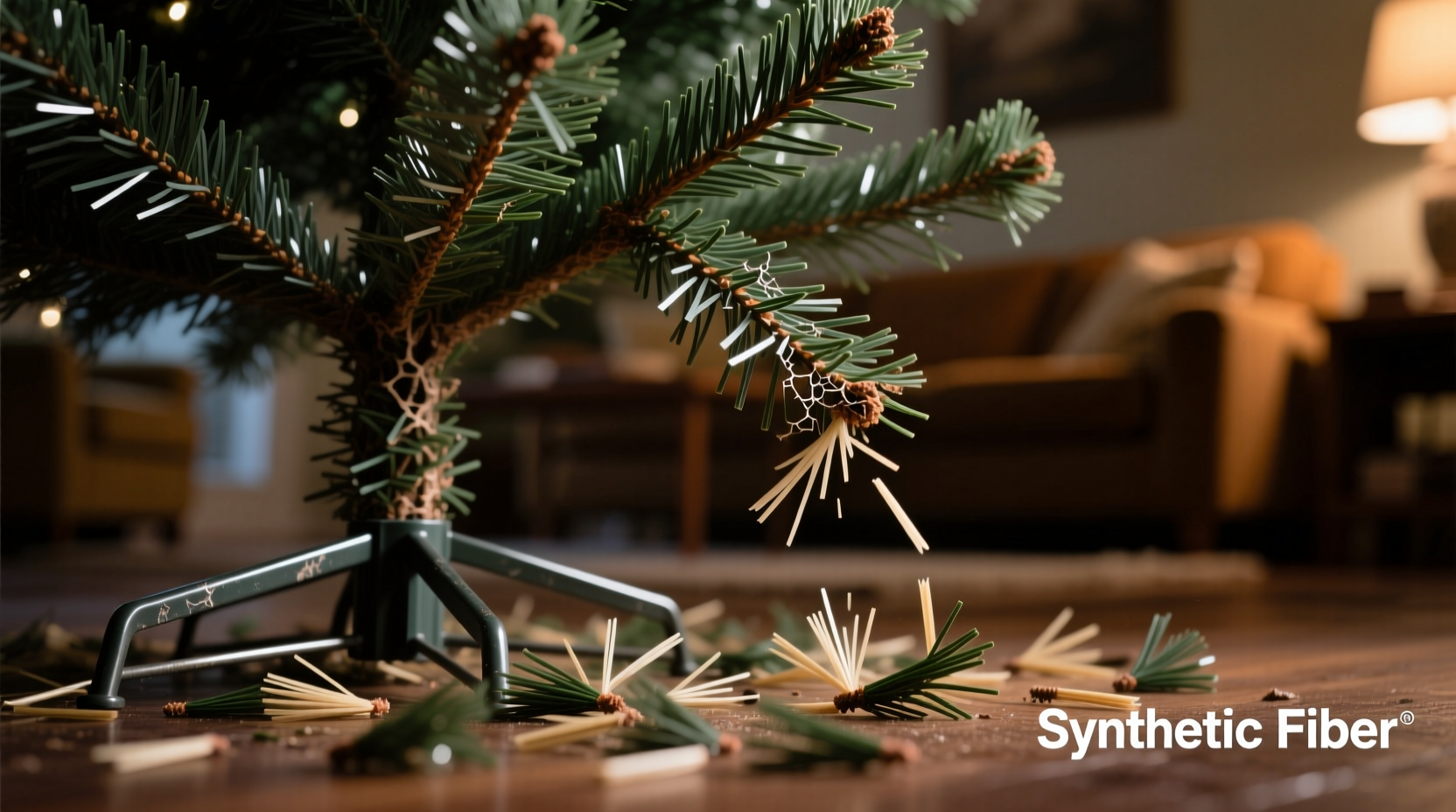
Artificial trees are typically made from polyvinyl chloride (PVC), polyethylene (PE), or a blend of both. These plastics are molded into lifelike branches and needles designed to mimic evergreen foliage. While durable, these materials degrade over time due to environmental exposure, physical stress, and improper care.
The primary reason for shedding lies in material fatigue. Repeated assembly, disassembly, and long-term compression during storage weaken branch stems and cause brittle fractures at connection points. UV exposure from nearby windows or lighting accelerates this process by breaking down polymer chains, making plastic more prone to cracking.
Additionally, lower-quality trees often use thinner plastic formulations and weaker hinge mechanisms between needles and stems. These design flaws become apparent after just one or two seasons. A 2022 consumer durability report by The Home & Holiday Institute found that budget-tier artificial trees were three times more likely to exhibit noticeable shedding by year three compared to premium models.
“Shedding in artificial trees isn't normal—it's a symptom of wear, poor materials, or inadequate storage.” — Dr. Linda Reeves, Materials Scientist and Holiday Product Consultant
Common Causes of Fake Needle Loss
Several factors contribute to the deterioration of artificial tree foliage. Identifying the specific cause in your home allows for targeted solutions.
1. Poor Storage Conditions
Storing your tree in an attic, garage, or basement exposes it to temperature fluctuations, humidity, and pests. Heat makes plastic pliable and weakens structural integrity, while cold temperatures increase brittleness. Moisture promotes mold growth on branches, which can eat away at adhesive joints and degrade PVC over time.
2. Compression Damage During Storage
Folding branches too tightly or stacking heavy items on top of stored tree sections crushes delicate needle clusters. Over several seasons, this leads to microfractures that eventually result in visible shedding when the tree is reassembled.
3. Excessive Handling and Rough Assembly
Yanking branches into place or forcing limb sockets together stresses connection points. Each rough movement increases the risk of breakage, especially on older trees where plastic has already begun to fatigue.
4. Prolonged Exposure to Light and Heat
Leaving lights on for extended periods generates heat, particularly with incandescent bulbs. This warmth softens plastic near light strands, weakening needle attachments. Similarly, placing the tree near radiators, fireplaces, or sunny windows accelerates photodegradation.
5. Age and Material Quality
No artificial tree lasts forever. Most manufacturers estimate a lifespan of 7–10 years under ideal conditions. However, cheaper models may begin shedding within 2–3 years due to substandard plastics and construction techniques.
Solutions to Stop and Prevent Shedding
Once shedding begins, it cannot be reversed—but it can be slowed significantly with proper intervention. The following strategies help stabilize your current tree and prevent future damage.
Inspect and Reinforce Weak Branches
Before assembling your tree each season, examine each section for loose or cracked branches. Use clear-drying craft glue (such as E6000) to reattach dangling needle clusters. Apply sparingly to avoid visible residue, and allow 24 hours to cure before setup.
Upgrade Your Storage System
Invest in a vertical tree storage bag with rigid internal rings or foam padding. Horizontal bins compress branches unnaturally, increasing breakage risk. Vertical bags allow sections to rest upright, mimicking their natural position.
Switch to LED Lights
Replace incandescent mini-lights with cool-burning LEDs. They produce minimal heat, reducing thermal stress on plastic foliage. According to Energy Star, LED holiday lights consume up to 90% less energy and last 10 times longer than traditional options.
Control Environmental Exposure
Keep your tree away from direct sunlight, heating vents, and high-humidity areas. If placed near a window, rotate the tree quarterly during storage to ensure even UV exposure doesn’t create weak spots.
Handle with Care During Setup
Treat each branch like fragile greenery. Gently fan out limbs instead of pulling or twisting them. Follow the manufacturer’s assembly guide to ensure proper alignment and reduce strain on connectors.
Step-by-Step Guide to Preserving Your Artificial Tree
Follow this annual preservation routine to maximize your tree’s lifespan and minimize shedding:
- Unbox in a clean, open space: Lay down a sheet or tarp to catch any loose debris and inspect for damage early.
- Dust thoroughly before assembly: Use a microfiber cloth or soft brush to remove accumulated dust, which can trap moisture and promote degradation.
- Check all branches for looseness: Secure any wobbly clusters with a small dab of flexible adhesive.
- Assemble slowly and correctly: Align pole sections and branch tiers as instructed. Avoid forcing connections.
- Add lights carefully: String LEDs gently, avoiding tight wrapping that could pinch or bend needles.
- Display in a climate-controlled area: Keep room temperature stable and avoid placing near heat sources.
- Disassemble methodically after the holidays: Remove ornaments and lights first, then collapse sections in reverse order.
- Clean before storing: Wipe down trunks and stands to remove dust and salt residue from water-based stands (if used).
- Pack in a vertical, padded container: Ensure no weight is placed on top during storage.
- Label and store in a dry, dark location: Basements should be dehumidified; attics should be insulated to prevent extreme temps.
Do’s and Don’ts: How to Handle Your Artificial Tree
| Do’s | Don’ts |
|---|---|
| Use a soft brush to remove dust annually | Use compressed air dusters—they can blast off weak needles |
| Store in a cool, dry, dark place | Leave in a hot attic or damp garage |
| Choose LED lights to reduce heat exposure | Wrap lights tightly around branches |
| Repair minor breaks with flexible glue | Ignore cracks or loose clusters—they’ll worsen |
| Rotate tree placement yearly to balance wear | Place near radiators, fireplaces, or sunny windows |
When to Replace Your Artificial Tree
Despite best efforts, every artificial tree reaches the end of its functional life. Signs it’s time to retire your tree include:
- Excessive shedding that continues even after cleaning and repair
- Multiple broken or missing branch sections
- Faded coloration or chalky texture on needles (a sign of advanced UV degradation)
- Difficulty assembling due to warped poles or stripped connectors
- Visible mold or persistent musty odor despite cleaning
If your tree exhibits three or more of these issues, replacement is more cost-effective than continued maintenance. Modern high-end artificial trees feature improved materials such as flame-retardant PE foliage and reinforced metal hinges that resist shedding far longer than older models.
Mini Case Study: The Johnson Family’s 8-Foot Fir
The Johnsons purchased an 8-foot pre-lit artificial tree in 2018. By 2021, they noticed increasing amounts of green debris on their hardwood floors after setup. Initially dismissing it as “normal wear,” they continued storing the tree in a flimsy cardboard box in their unheated garage.
In 2022, after reading about proper storage techniques, they invested in a vertical canvas storage bag with foam rings. They also began using a microfiber cloth to clean each section before packing it away. Additionally, they replaced aging incandescent lights with LEDs.
Result: Shedding decreased by over 80% within one season. As of 2024, the tree remains structurally sound with only minimal needle loss—proof that proactive care can dramatically extend usability.
FAQ: Common Questions About Artificial Tree Shedding
Is some shedding normal for artificial trees?
No. Minimal fiber release might occur during initial unboxing due to manufacturing residue, but ongoing shedding indicates damage, age, or poor storage. A well-maintained artificial tree should retain nearly all its needles throughout its lifespan.
Can I vacuum my artificial tree to remove loose needles?
Yes, but with caution. Use the soft brush attachment on low suction and avoid pressing directly onto delicate branches. Vacuuming is best done during disassembly, before storage, to remove dust and loose particles without causing additional breakage.
Does spraying my tree with a protective coating help?
Not recommended. Products marketed as “plastic protectants” or UV sealants can leave a greasy film, attract dust, or react poorly with PVC. Instead, focus on environmental control and physical protection through proper storage.
Checklist: Annual Artificial Tree Maintenance Routine
Use this checklist each holiday season to maintain your tree’s condition:
- ☐ Inspect all sections for loose needles or broken branches
- ☐ Clean branches with a dry microfiber cloth or soft brush
- ☐ Repair damaged clusters with flexible adhesive
- ☐ Confirm lights are functioning (replace burnt-out bulbs)
- ☐ Assemble tree gently, following manufacturer instructions
- ☐ Position away from heat sources and direct sunlight
- ☐ Disassemble carefully after the season ends
- ☐ Store in a vertical, padded container in a dry, dark location
- ☐ Add moisture-absorbing packets to storage bag
- ☐ Label container for easy identification next year
Conclusion: Protect Your Investment and Preserve the Magic
An artificial Christmas tree is more than a decoration—it’s a seasonal centerpiece that brings families together year after year. When it starts shedding fake needles, the problem isn’t just aesthetic; it signals that care routines may need refinement. With the right knowledge, tools, and habits, you can halt further deterioration and enjoy a lush, full-looking tree for many holidays to come.
Start today by auditing your current storage method, upgrading to LED lighting, and committing to gentle handling. Small changes yield long-term results, preserving both the appearance of your tree and the joy it brings. Share your own tips or experiences in the comments—your insight could help another family solve their shedding dilemma and keep their holiday spirit bright.




 浙公网安备
33010002000092号
浙公网安备
33010002000092号 浙B2-20120091-4
Comments
No comments yet. Why don't you start the discussion?