
Every holiday season, millions of households across the world set up their artificial Christmas trees—prized for their convenience, reusability, and low maintenance. But behind the festive glow lies a growing environmental and health concern: microplastic shedding. These synthetic trees, typically made from polyvinyl chloride (PVC) or polyethylene (PE), slowly degrade over time, releasing microscopic plastic particles into the air and dust within your home. While invisible to the naked eye, these particles can contribute to indoor air pollution and pose potential long-term health risks.
Recent studies have confirmed that artificial trees are a previously overlooked source of indoor microplastic contamination. As families gather around decorated trees, they may unknowingly inhale or ingest airborne microplastics shed from needles, branches, and coatings. The good news is that with informed choices and simple mitigation strategies, you can enjoy a beautiful holiday display while minimizing exposure.
The Science Behind Microplastic Shedding in Artificial Trees
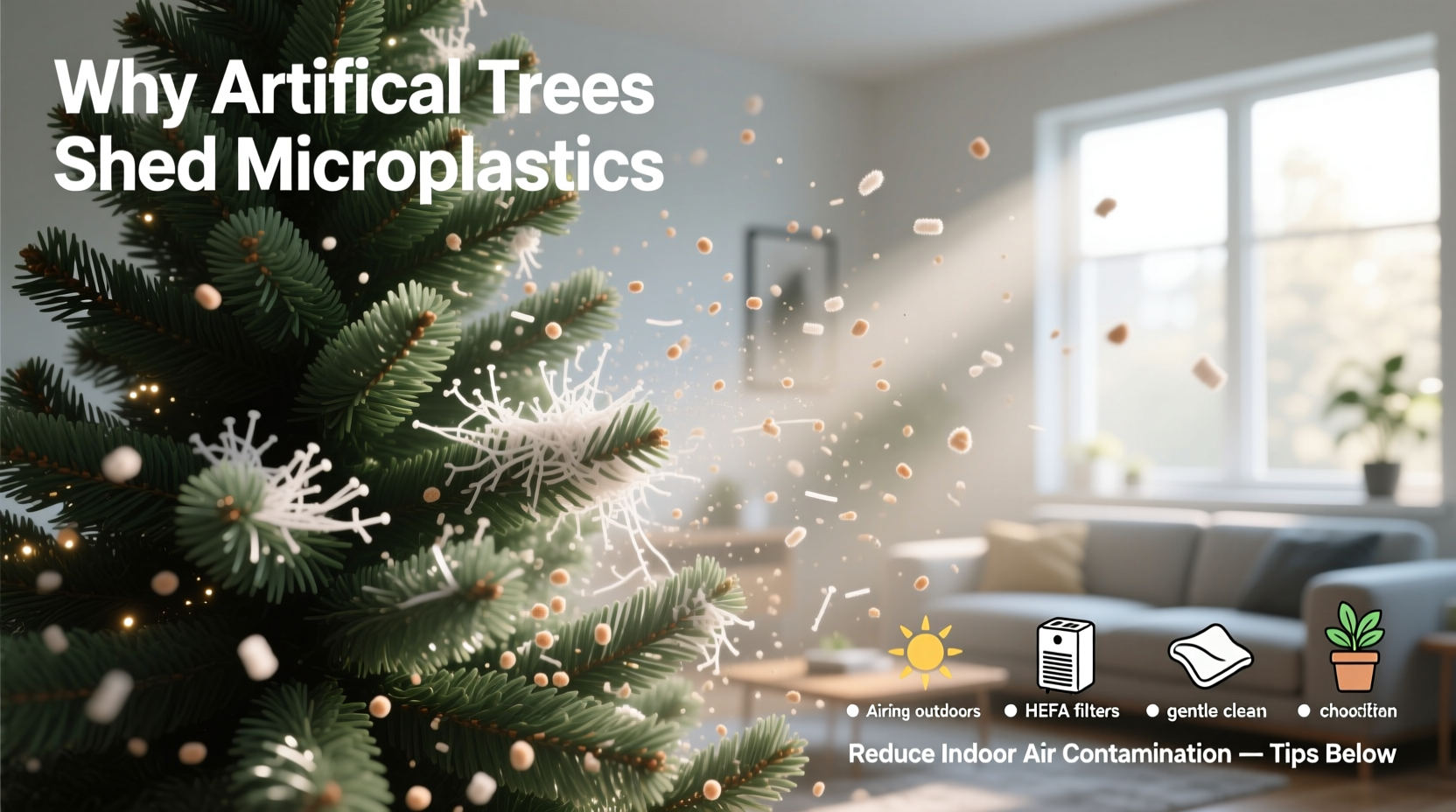
Artificial Christmas trees are primarily manufactured using plastics derived from petrochemicals. PVC is the most common material due to its flexibility and flame-resistant properties when treated. Polyethylene variants are also used for more realistic-looking foliage. Both materials are durable but not inert—they degrade through mechanical stress, temperature fluctuations, UV exposure (even indirect sunlight), and oxidation.
Each time an artificial tree is assembled, disassembled, brushed, or even lightly touched, tiny fragments break off from the needle tips and branch joints. These fragments range from 1 to 100 micrometers in size—small enough to become airborne or settle into household dust. A 2022 study published in Environmental Science & Technology Letters found that older artificial trees released significantly higher levels of microplastics compared to newer models, especially after multiple years of storage and use.
Once released, these particles mix with indoor air and can be inhaled deep into the lungs. Some research suggests microplastics may trigger inflammatory responses or carry adsorbed pollutants such as phthalates (used as plasticizers in PVC), which are known endocrine disruptors.
“Indoor environments are now recognized as significant reservoirs of microplastic exposure. Artificial trees, especially those stored in attics or basements, contribute more than people realize.” — Dr. Lena Torres, Environmental Health Scientist, University of Colorado Boulder
Factors That Accelerate Microplastic Release
Not all artificial trees shed at the same rate. Several factors influence how much and how quickly microplastics are released:
- Age of the tree: Older trees show visible wear—brittle needles, discoloration, cracking—signaling advanced polymer degradation.
- Storage conditions: Exposure to heat, humidity, or dust during off-season storage accelerates breakdown.
- Assembly frequency: Repeated bending, snapping, and fluffing increase mechanical stress on plastic components.
- Surface treatments: Some trees are coated with flame retardants or flocking (artificial snow), which can peel and carry microplastics into the air.
- Dust accumulation: Dust acts as an abrasive; when disturbed, it scrapes against plastic surfaces, increasing particle release.
How Microplastics Affect Indoor Air Quality
Indoor air is often two to five times more polluted than outdoor air, according to the U.S. Environmental Protection Agency (EPA). Microplastics add to this burden, particularly in homes with poor ventilation. Once airborne, these particles remain suspended for hours and can be drawn into HVAC systems, spreading throughout the house.
Microplastics don’t just float—they settle. They accumulate in carpets, upholstery, and on surfaces where children and pets spend time. Vacuuming without a HEPA filter can redistribute them into the air instead of capturing them. Over time, chronic exposure may contribute to respiratory irritation, especially in individuals with asthma or allergies.
A lesser-known pathway is ingestion. Children playing near the tree base may touch contaminated surfaces and transfer particles to their mouths. Studies analyzing household dust have detected high concentrations of PVC-derived microplastics in homes using artificial trees, particularly in rooms where trees were displayed for extended periods.
Common Sources of Indoor Microplastic Contamination
| Source | Material Type | Shedding Level | Mitigation Strategy |
|---|---|---|---|
| Artificial Christmas Tree | PVC, PE | High (with age) | Vacuum with HEPA, ventilate room |
| Synthetic Carpets | Polyester, Nylon | Moderate | Steam clean regularly |
| Plastic Toys | Polypropylene, ABS | Low–Moderate | Wipe down weekly |
| Curtains & Upholstery | Polyester blends | Low | Wash in cold water |
Step-by-Step Guide to Reducing Microplastic Contamination
You don’t need to give up your artificial tree to protect your home’s air quality. Follow this actionable plan to significantly reduce microplastic shedding and exposure:
- Inspect Before Setup: Examine your tree for brittle branches, crumbling flocking, or cracked bases. If needles snap easily, consider retiring the tree.
- Pre-Clean Offsite: Take the tree outside or to a garage. Use a soft brush or handheld vacuum with a HEPA filter to remove accumulated dust and loose particles before bringing it indoors.
- Assemble Carefully: Fluff branches gently by hand. Avoid forceful bending or shaking, which increases fragmentation.
- Place Strategically: Position the tree away from heating vents, direct sunlight, and high-traffic areas to reduce air dispersion and physical contact.
- Use an Air Purifier: Run a HEPA-filter air purifier near the tree throughout the season to capture airborne particles.
- Control Dust: Damp-mop floors weekly and wipe nearby surfaces with a microfiber cloth to trap settled microplastics.
- Post-Season Cleaning: Before storing, wipe down sections with a slightly damp cloth (no chemicals) and allow to dry completely.
- Store Properly: Keep in a cool, dry place inside a breathable cotton bag—not plastic—which prevents moisture buildup and reduces oxidation.
Alternatives and Long-Term Solutions
If you're concerned about ongoing microplastic exposure, consider switching to safer alternatives—or modifying your tradition:
- Real Christmas Trees: While not reusable, natural trees are biodegradable and do not release synthetic microplastics. Just ensure proper disposal to avoid environmental impact.
- Paper or Fabric Trees: Decorative trees made from recycled paper, felt, or wood offer creative, plastic-free holiday displays.
- Rented Live Trees: Some companies offer potted evergreens for indoor rental, which are replanted after the holidays.
- Minimalist Displays: Use a small tabletop tree or wall-mounted design to reduce material volume and shedding risk.
For those committed to keeping an artificial tree, look for newer models made with higher-grade polyethylene rather than PVC. These tend to be more flexible, less brittle, and often free of harmful plasticizers like phthalates. Check product labels for certifications such as “phthalate-free” or “low-emission,” though transparency in labeling remains limited.
Mini Case Study: The Thompson Family’s Holiday Air Test
The Thompsons, a family of four in Portland, Oregon, participated in a local environmental health initiative measuring indoor microplastic levels during the holiday season. They had used the same 12-foot PVC tree for 14 years, storing it in a damp basement each off-season.
Before setting up the tree, baseline air tests showed average microplastic counts of 12 particles per cubic meter. One week after assembly—without pre-cleaning—the levels rose to 89 particles per cubic meter, with the highest concentration near the living room floor. Dust samples revealed PVC fragments matching the tree’s color and composition.
After following expert recommendations—including outdoor cleaning, HEPA vacuuming, and continuous air purification—levels dropped to 28 particles per cubic meter by mid-January. The family decided to replace the tree the following year with a smaller, phthalate-free model and now store it in a climate-controlled closet.
Their experience highlights how simple interventions can make a measurable difference—even with older, high-shedding trees.
FAQ: Common Questions About Artificial Trees and Microplastics
Can I test my home for microplastics?
Yes, though consumer testing is still emerging. Some labs offer dust analysis kits that identify microplastic types and concentrations. While costly, they provide valuable insights for households with concerns about indoor air quality.
Do fake trees pollute more than other household plastics?
Not necessarily more, but they’re a concentrated seasonal source. Unlike everyday items, trees are stored for months and then introduced en masse into living spaces. Their large surface area and frequent handling make them disproportionately impactful during the holidays.
Is flocked artificial snow dangerous?
Flocking often contains PVC and adhesive binders that degrade over time. When it flakes off, it carries microplastics and may release volatile organic compounds (VOCs). Many experts recommend avoiding flocked trees altogether, especially in homes with young children or respiratory sensitivities.
Checklist: Reduce Microplastic Risk This Holiday Season
- ☑ Inspect tree for damage and brittleness
- ☑ Clean tree outdoors before setup
- ☑ Use gloves and a mask during assembly
- ☑ Place HEPA air purifier nearby
- ☑ Vacuum floors weekly with HEPA filter
- ☑ Wipe surfaces with damp microfiber cloth
- ☑ Store tree in breathable fabric bag
- ☑ Replace tree every 7–10 years
Conclusion: Celebrate Safely, Breathe Easier
Your holiday traditions shouldn’t come at the cost of your family’s health. By understanding that artificial trees shed microplastics—and taking straightforward, science-backed steps to reduce exposure—you can maintain a joyful, festive atmosphere without compromising indoor air quality.
This season, treat your tree like any other household appliance with a lifespan. Respect its material limits, handle it with care, and prioritize clean air through filtration and hygiene. Small changes today can lead to healthier breathing spaces for years to come.




 浙公网安备
33010002000092号
浙公网安备
33010002000092号 浙B2-20120091-4
Comments
No comments yet. Why don't you start the discussion?