
For many households, the artificial Christmas tree is a holiday staple—convenient, reusable, and seemingly low-maintenance. But when that familiar pine scent is replaced by something acrid and chemical, especially after several hours of illuminated cheer, concern is not only justified—it’s urgent. A burnt plastic odor coming from an artificial tree while the lights are on signals more than just poor manufacturing; it may indicate a serious safety hazard. Understanding the root causes, recognizing warning signs, and taking immediate action can prevent property damage or even save lives.
The Science Behind the Smell: Heat, Materials, and Electrical Load
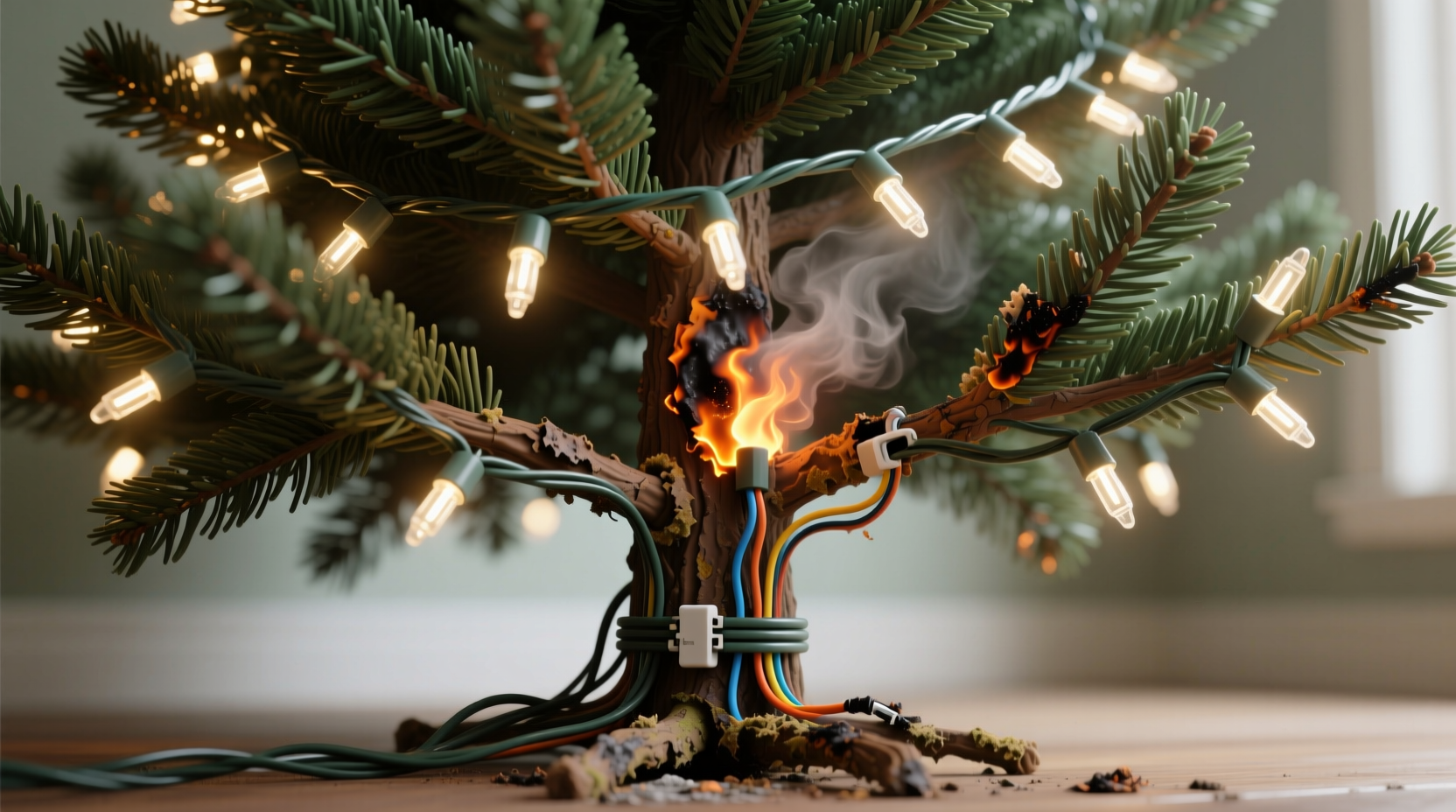
Artificial trees are typically constructed from polyvinyl chloride (PVC), polyethylene (PE), or other petroleum-based plastics designed to mimic the look of real foliage. While these materials are durable, they are not immune to thermal degradation. When exposed to prolonged heat—especially from incandescent or poorly insulated light strings—the plastic components can begin to off-gas volatile organic compounds (VOCs), producing a distinct burnt plastic odor.
This process accelerates when lights remain on for extended periods. Incandescent bulbs, in particular, convert only about 10% of energy into visible light, with the remaining 90% released as heat. Even LED lights generate some heat at the base of the bulb or within wiring junctions. If bundled too tightly into dense branches or covered by flammable material, this heat accumulates, raising surface temperatures beyond safe thresholds.
“Any persistent chemical or burning smell from electrical decor should be treated as a potential fire hazard. It often means insulation is degrading or connections are overheating.” — Dr. Alan Reeves, Electrical Safety Engineer, National Fire Protection Association (NFPA)
Common Causes of the Burnt Plastic Odor
Several interrelated factors contribute to the development of a burnt plastic smell in artificial trees:
- Low-quality construction: Budget-friendly trees may use thinner, less heat-resistant plastics that degrade faster under thermal stress.
- Poorly rated or damaged lights: Lights not rated for continuous use, or those with frayed wires, loose connections, or incorrect voltage, increase resistance and localized heating.
- Inadequate ventilation: Dense branch tips trap heat around light strands, preventing dissipation.
- Light overload: Exceeding manufacturer-recommended light counts per section or using multiple extension cords daisy-chained together increases electrical load and heat output.
- Age and wear: Older trees and light sets accumulate dust, which acts as an insulator, trapping heat. Internal wire coatings may also crack over time, exposing conductive elements.
Risk Assessment: Is Your Tree a Fire Hazard?
A transient plastic smell during the first few minutes of lighting may stem from dust burning off—a common occurrence with older lights. However, a persistent odor after four hours strongly suggests ongoing thermal breakdown. This is not normal and should never be ignored.
The NFPA reports that between 2017 and 2021, U.S. fire departments responded to an average of 7,640 home structure fires per year involving decorations, including Christmas trees. While most involve real trees, artificial trees account for a growing share due to synthetic materials that ignite easily and burn rapidly when overheated.
Consider the following risk indicators:
| Warning Sign | Low Risk | High Risk |
|---|---|---|
| Smell duration | Fleeting (first 5–10 min) | Persistent (>30 min) or worsens over time |
| Heat level | Slightly warm to touch | Too hot to touch (above 60°C / 140°F) |
| Smoke or discoloration | None | Visible browning, charring, or haze |
| Electrical source | UL-listed LED lights, timer-controlled | Damaged cords, non-certified adapters, overloaded circuits |
Step-by-Step: How to Diagnose and Resolve the Issue
If your artificial tree emits a burnt plastic smell after several hours of lighting, follow this protocol immediately:
- Turn off and unplug all lights. Do not attempt to inspect while powered.
- Allow the tree to cool completely (at least 1–2 hours).
- Inspect each light strand: Look for frayed wires, melted sockets, discolored plastic, or loose bulbs. Replace any defective set.
- Check the tree’s label: Confirm if it’s labeled “non-flammable” or “fire-resistant.” Note the year of manufacture—trees older than 10 years should be retired.
- Test lights separately: Plug each strand into a different outlet away from the tree. Run for 4 hours. If any emit odor, discard them.
- Re-evaluate placement: Ensure lights aren’t compressed between branches or touching trunks where heat builds.
- Switch to UL-listed LED mini-lights: LEDs produce significantly less heat and consume up to 90% less energy than incandescent bulbs.
- Use a surge protector with overload protection: Avoid power strips without built-in circuit breakers.
- Limit runtime: Use a programmable timer to keep lights on no more than 6 hours per day.
- Monitor during initial retest: After corrections, run the setup for 4 hours while present and awake. Watch for any recurrence of odor or heat.
Real Example: A Close Call in Denver
In December 2022, Sarah M., a homeowner in Denver, noticed a faint chemical smell emanating from her artificial tree after it had been lit for five consecutive hours. Initially dismissing it as “new plastic,” she later detected smoke near the base. Upon inspection, she found that a strand of incandescent lights—wrapped tightly around a PVC trunk—had melted through its own insulation, igniting the surrounding foliage.
She unplugged the tree immediately and called her local fire department for assessment. The fire marshal confirmed that the combination of high-wattage lights, poor airflow, and aged wiring created a perfect storm for thermal runaway. The tree, purchased in 2014, had exceeded its recommended lifespan. No fire occurred, but the incident prompted Sarah to replace both the tree and all light sets with certified, low-heat alternatives.
“I thought I was being festive,” she said. “But I was actually setting up a fire waiting to happen.”
Prevention Checklist: Keep Your Tree Safe
To avoid dangerous situations, use this actionable checklist every holiday season:
- ✅ Replace any artificial tree older than 10 years
- ✅ Use only UL- or ETL-listed light sets
- ✅ Choose LED lights over incandescent
- ✅ Follow manufacturer guidelines for max light count
- ✅ Avoid daisy-chaining more than three light strands
- ✅ Clean tree and lights before use
- ✅ Install lights loosely to allow heat dissipation
- ✅ Place tree away from heat sources (radiators, vents)
- ✅ Use a timer to limit lighting to 6 hours daily
- ✅ Inspect cords annually for brittleness or cracking
FAQ: Common Questions About Artificial Tree Odors
Is a slight plastic smell normal when first turning on the tree?
A very mild, short-lived odor may occur due to accumulated dust burning off, particularly with older lights. However, any strong or lasting plastic smell is not normal and indicates a problem with either the lights, tree material, or electrical setup.
Can LED lights still cause a burnt smell?
Yes, though rare. While LEDs generate far less heat, faulty drivers, poor-quality housings, or overloaded circuits can still lead to overheating. Always purchase LEDs from reputable brands with safety certifications.
How do I know if my tree is fire-resistant?
Check the label or original packaging. Trees manufactured after 1990 should carry a “Fire Resistant” or “Non-Flammable” tag issued under U.S. Consumer Product Safety Commission (CPSC) standards. If unlabeled or missing documentation, assume it is not safe and consider replacement.
Expert Insight: What Industry Professionals Recommend
According to the Electrical Safety Foundation International (ESFI), over 40% of holiday lighting fires stem from equipment that is outdated, damaged, or improperly used. Their data shows that replacing incandescent lights with LEDs reduces fire incidents by nearly 70%.
“The biggest mistake people make is assuming ‘if it still lights up, it’s safe.’ Wires degrade invisibly. Plastics become brittle. Connections loosen. Annual inspection isn’t optional—it’s essential.” — Lisa Tran, Public Education Director, ESFI
Experts also emphasize the importance of circuit load management. Most household outlets support 15–20 amps. A single strand of incandescent mini-lights can draw 0.3–0.5 amps. String ten together, and you’re nearing capacity—especially if other devices share the circuit.
Conclusion: Prioritize Safety Over Tradition
The burnt plastic smell from your artificial tree isn’t just unpleasant—it’s a warning signal. Whether caused by aging materials, faulty wiring, or excessive heat buildup, ignoring it risks more than ruined décor; it endangers your home and family. Modern alternatives like LED lighting, smart timers, and certified fire-resistant trees make it easier than ever to celebrate safely.
Holiday traditions should bring joy, not danger. Take a few hours now to inspect your tree, upgrade outdated components, and implement preventive habits. A small investment in safety today ensures many more seasons of worry-free celebrations tomorrow.




 浙公网安备
33010002000092号
浙公网安备
33010002000092号 浙B2-20120091-4
Comments
No comments yet. Why don't you start the discussion?