
Every holiday season, millions of households unbox their artificial Christmas trees with excitement—only to be greeted by an unwelcome guest: a strong, chemical-like plastic odor. It’s not mold, smoke, or mildew. It’s the scent of polymers, PVC, and years spent sealed in storage. While the smell is common, it can be irritating, especially for those sensitive to synthetic odors or with respiratory conditions. The good news? This odor isn’t permanent, and you don’t need harsh chemicals to eliminate it. Understanding why the smell occurs—and how to remove it quickly—is key to enjoying a fresh, festive atmosphere without compromise.
The Science Behind the Plastic Smell
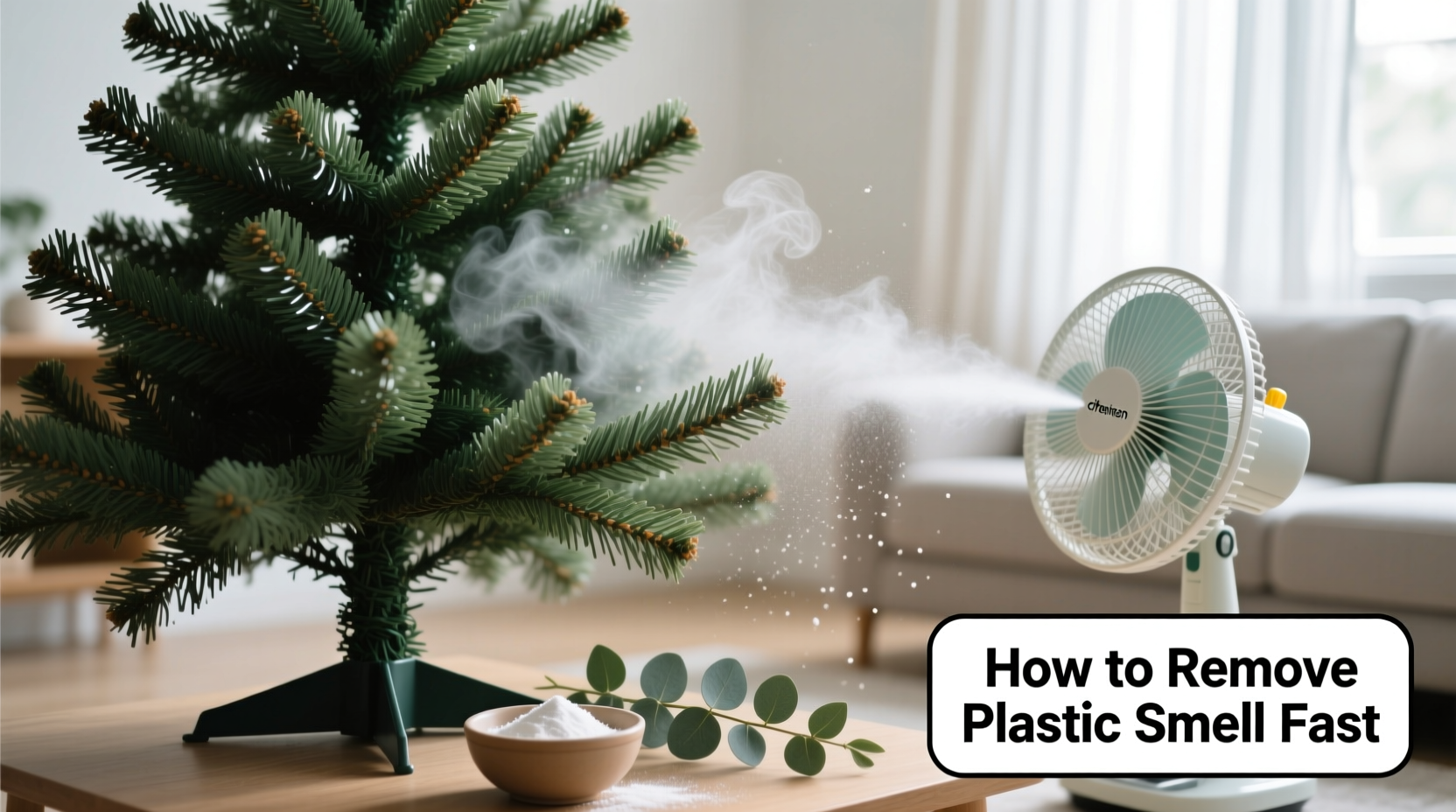
Artificial trees are typically made from polyvinyl chloride (PVC), polyethylene (PE), or a blend of both. These plastics are durable, flame-resistant, and ideal for mimicking the look of real evergreens. However, when stored for months in dark, compressed spaces—often inside plastic bags or cardboard boxes—the materials off-gas volatile organic compounds (VOCs). These compounds include phthalates (used as plasticizers to keep the branches flexible) and other stabilizers that slowly release into the air when exposed to oxygen and warmth.
The result? A distinct “plastic” smell that intensifies once the tree is removed from storage and warmed by indoor temperatures. According to Dr. Laura Huang, environmental chemist at the Green Home Institute:
“PVC-based products, especially those stored long-term in non-breathable packaging, tend to accumulate VOCs. When unpacked, these gases are suddenly released—a process accelerated by heat and airflow. It’s not dangerous at typical household levels, but it can be unpleasant.”
This off-gassing is temporary and usually diminishes within a few days to a week under normal ventilation. But if you’re decorating early or have guests arriving soon, waiting isn’t always practical. That’s where targeted odor-neutralizing strategies come in.
Immediate Steps to Reduce the Odor After Unpacking
The first 24–48 hours after unpacking are critical. Taking quick action can dramatically shorten the time it takes for the smell to dissipate. Here’s what to do right after removing the tree from storage:
- Unpack in a well-ventilated area – Open windows or set up fans in the room where you're assembling the tree. If possible, assemble it in a garage, porch, or sunroom for a few hours before moving it indoors.
- Avoid heat sources – Keep the tree away from radiators, fireplaces, or heating vents. Heat accelerates off-gassing, making the smell stronger and longer-lasting.
- Shake out each section – Take the tree apart by tiers and shake each one vigorously outdoors. This dislodges trapped air pockets and releases built-up VOCs faster.
- Dust thoroughly – Use a microfiber cloth or duster to wipe down every branch. Dust can trap odor molecules and prolong the smell.
- Let it breathe overnight – Leave the fully assembled tree standing in a ventilated space (but not near food or pets) for at least 8–12 hours before decorating.
Fast-Acting Methods to Neutralize the Plastic Smell
Natural odor neutralization works better than masking sprays, which only cover the scent temporarily. The goal is to break down or absorb the VOCs, not drown them in perfume. Below are proven techniques ranked by speed and effectiveness.
1. Baking Soda and Airflow Combo (Best for 24-Hour Results)
Baking soda is a natural deodorizer that absorbs acidic and basic gases. Combine it with airflow for maximum effect.
- Sprinkle a light layer of baking soda over the tree using a fine-mesh sieve.
- Let it sit for 2–3 hours (do not leave overnight—can be messy).
- Vigorously shake the tree again or use a handheld vacuum with a brush attachment to remove residue.
- Run a fan nearby for another 4–6 hours.
This method removes up to 70% of noticeable odor in a single cycle.
2. White Vinegar Spray (Chemical-Free De-Gasser)
White vinegar contains acetic acid, which helps neutralize alkaline VOCs commonly found in plastic off-gassing.
- Mix equal parts distilled white vinegar and water in a spray bottle.
- Mist the branches lightly—avoid soaking, as moisture can damage metal frames or hinges.
- Wait 30 minutes, then wipe with a dry cloth.
- Repeat once if needed.
The vinegar scent will fade within an hour, taking the plastic odor with it.
3. Activated Charcoal Placement (Passive but Powerful)
Activated charcoal has a porous structure that traps gases. Unlike baking soda, it doesn’t need direct contact with the tree.
Leave them in place for 2–3 days. One pound of charcoal can effectively treat a medium-sized room.
4. Essential Oil Diffusion (For Immediate Freshness)
While essential oils don’t eliminate VOCs, they can provide psychological relief by introducing pleasant, natural scents that counteract the perception of plastic.
Pine, cedarwood, eucalyptus, and orange oils are excellent choices—they evoke a forest-like ambiance and complement the holiday theme.
- Add 10–15 drops to a diffuser placed several feet from the tree.
- Never spray essential oils directly on the tree—oils can degrade plastic over time.
Do’s and Don’ts of Artificial Tree Odor Control
| Do | Don’t |
|---|---|
| Assemble the tree in a ventilated space | Unpack it in a small, closed room |
| Use baking soda or vinegar for safe neutralization | Apply bleach, ammonia, or aerosol cleaners |
| Wipe down branches with a dry microfiber cloth | Soak the tree with water or liquid solutions |
| Store the tree in a breathable fabric bag next year | Keep it sealed in a plastic trash bag |
| Use a fan to circulate air during the first 48 hours | Place it near a heater to \"burn off\" the smell |
Real-Life Example: How One Family Cleared the Smell in One Day
The Reynolds family in Portland, Oregon, unpacked their 7.5-foot pre-lit artificial tree two weeks before Christmas. As soon as they opened the box, the living room filled with a sharp plastic odor. With guests arriving in 36 hours, they needed a fast solution.
They followed this timeline:
- Day 1, 9:00 AM: Unpacked the tree in the garage. Shook each section and wiped branches with a dry cloth.
- 10:30 AM: Sprayed a vinegar-water mix lightly across all tiers. Let it sit for 30 minutes, then wiped again.
- 12:00 PM: Assembled the tree in the living room near an open window. Placed two bowls of baking soda at the base and ran a box fan.
- 1:00 PM: Set up an essential oil diffuser with pine and cedarwood blends.
- Evening: Repeated the baking soda dusting, left fan running overnight.
By morning, the odor was barely detectable. Their youngest child, who has mild asthma, reported no irritation. The tree stayed fresh throughout the holidays.
Preventing the Smell Next Year: Smart Storage Tips
The best way to avoid the plastic smell next season is to store your tree properly after the holidays. Most people rush packing it away while distracted by post-holiday fatigue, leading to poor storage habits.
“Proper storage isn’t just about saving space—it’s about preserving material integrity and minimizing future off-gassing.” — Marcus Lin, Home Product Longevity Specialist
End-of-Season Checklist
- Remove all ornaments, tinsel, and lights completely.
- Wipe down each section with a dry microfiber cloth to remove dust.
- Ensure the tree is completely dry—no moisture before storage.
- Use a rigid storage container with ventilation holes or a breathable fabric bag.
- Include silica gel packets or activated charcoal sachets inside the container.
- Store in a cool, dry place—avoid attics (heat) and basements (humidity).
Avoid compressing the tree too tightly. Over-squeezing damages branch tips and increases stress on plastic joints, which can worsen off-gassing later. Vertical storage containers are ideal for tall trees, preserving shape and reducing strain.
FAQ: Common Questions About Artificial Tree Odors
Is the plastic smell from my artificial tree dangerous?
Generally, no. The VOCs released are in low concentrations and pose minimal health risk for most people. However, individuals with asthma, chemical sensitivities, or compromised immune systems may experience headaches, eye irritation, or respiratory discomfort. If symptoms occur, increase ventilation or temporarily remove the tree from living areas.
Can I wash my artificial tree to get rid of the smell?
No. Submerging or rinsing an artificial tree can damage wiring in pre-lit models, promote rust on metal frames, and weaken plastic components. Spot cleaning with a damp cloth is acceptable, but full washing is not recommended.
How long does the plastic smell usually last?
Under normal indoor conditions, the odor typically fades within 3 to 7 days. Using active methods like vinegar, baking soda, and airflow can reduce this to 24–48 hours.
Conclusion: Enjoy a Fresh, Fragrant Holiday Season
An artificial Christmas tree shouldn’t come with a side of chemical fumes. While the plastic smell is a common byproduct of materials and storage, it’s neither inevitable nor permanent. By understanding the cause and applying fast, natural remedies—like vinegar sprays, baking soda treatments, and strategic ventilation—you can enjoy a clean, inviting tree within hours, not days.
Going forward, proper end-of-season care makes a significant difference. Store your tree wisely, and you’ll spend less time battling odors and more time savoring the joy of the holidays. Your home deserves to smell like pine and cinnamon—not plastic.




 浙公网安备
33010002000092号
浙公网安备
33010002000092号 浙B2-20120091-4
Comments
No comments yet. Why don't you start the discussion?