
Every holiday season, families across the country pull out their artificial trees with excitement—only to be greeted by an unexpected whiff of mildew, dampness, or stale air. This common issue isn’t just unpleasant; it can trigger allergies, affect indoor air quality, and dampen the festive mood. The musty odor doesn’t mean your tree is ruined. In fact, it’s usually a symptom of environmental exposure during storage, not inherent damage. Understanding the root causes and learning how to safely eliminate these odors—without resorting to harsh chemicals—is essential for maintaining a healthy, welcoming home during the holidays.
Artificial trees are typically made from PVC (polyvinyl chloride), metal, and plastic components—all materials that don’t decompose but can absorb moisture and trap airborne contaminants. When stored in basements, attics, or garages, they’re often exposed to fluctuating humidity, dust, mold spores, and poor ventilation. Over time, these conditions lead to odor development. The good news? You can effectively neutralize and prevent these smells using natural, accessible methods that protect both your family and the integrity of the tree.
The Science Behind Musty Smells in Stored Artificial Trees
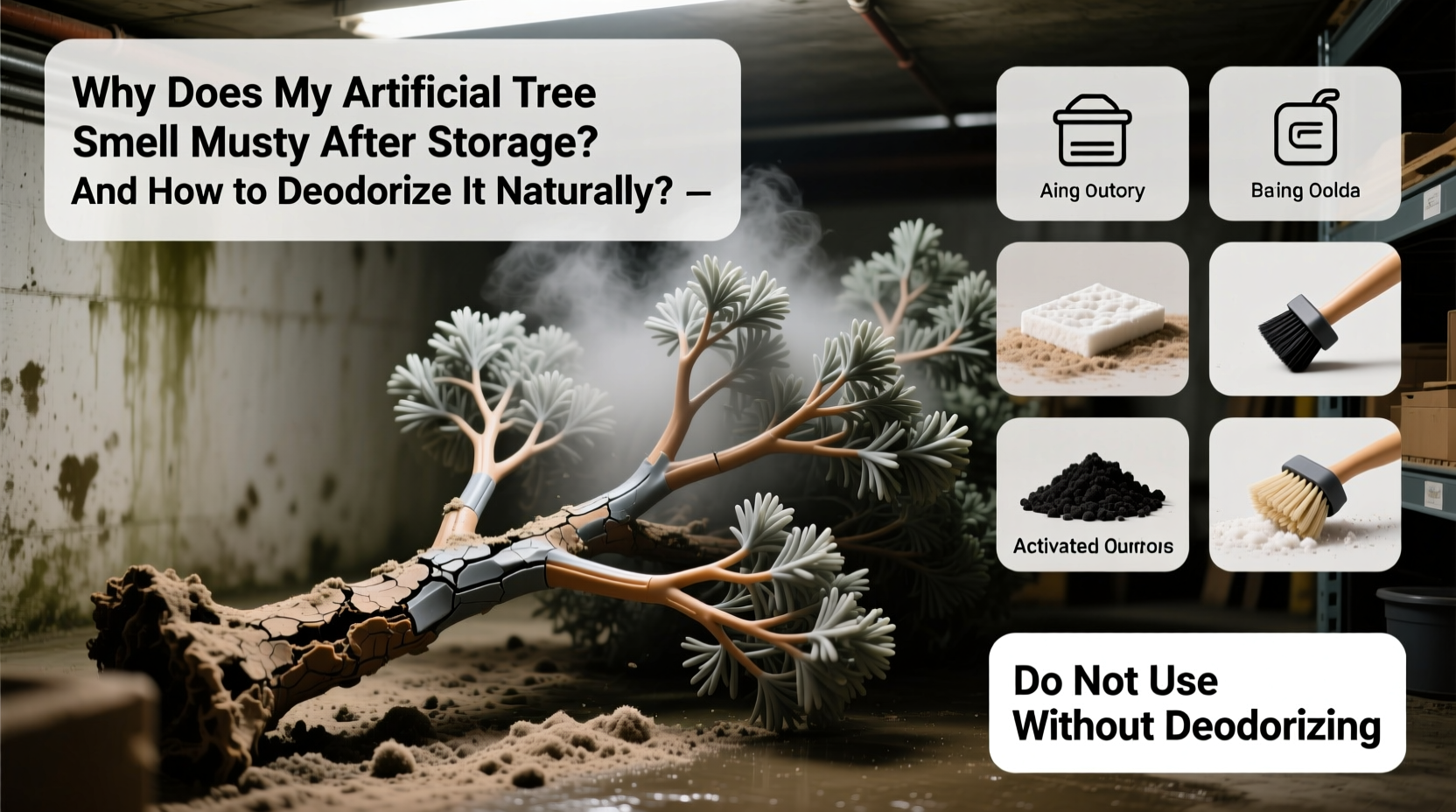
A musty odor is typically caused by microbial activity—specifically mold and mildew—even if visible growth isn’t apparent. These microorganisms thrive in dark, humid environments and feed on organic matter like dust, skin cells, or fabric residues that may have settled on your tree before storage. While the tree itself isn't organic, the layer of grime it accumulates over years provides enough nourishment for microbes to multiply under favorable conditions.
Additionally, PVC and other synthetic materials used in artificial trees are porous at a microscopic level. They can absorb volatile organic compounds (VOCs) from surrounding materials—such as cardboard boxes, old insulation, or nearby cleaning supplies—and slowly release them later, contributing to off-gassing smells when unpacked. This phenomenon is especially noticeable after long-term storage in poorly ventilated spaces.
“Even in the absence of visible mold, stored holiday decor can harbor microbial colonies that produce musty odors. Proper drying and airflow are critical in prevention.” — Dr. Lena Peterson, Indoor Air Quality Specialist
Environmental Factors That Contribute to Odor Buildup
- High Humidity: Relative humidity above 60% creates ideal conditions for mold spores to activate.
- Poor Ventilation: Closed containers or plastic bags trap moisture and prevent air circulation.
- Dust Accumulation: Dust carries organic particles that serve as food sources for microbes.
- Contact with Organic Materials: Storing the tree near wood, paper, or fabric increases risk of cross-contamination.
- Temperature Fluctuations: Condensation forms when items move between cold storage and warm rooms, introducing moisture.
Natural Deodorizing Methods Without Chemicals
Eliminating musty smells doesn’t require bleach, aerosol sprays, or synthetic fragrances. Natural deodorizers work by either absorbing odors, disrupting microbial growth, or neutralizing compounds through safe chemical reactions. Below are proven, non-toxic techniques that preserve your tree’s materials while restoring freshness.
1. Sunlight and Fresh Air Exposure
One of the most effective and simplest methods is airing out the tree outdoors. UV rays from sunlight naturally kill mold spores and bacteria, while fresh air disperses trapped VOCs. Place the assembled or sectioned tree in direct sunlight for 2–4 hours, ideally on a dry, breezy day.
Avoid leaving it out overnight or in damp conditions, which could worsen the problem. Rotate branches periodically to expose all sides to light and airflow.
2. Baking Soda Absorption Technique
Baking soda (sodium bicarbonate) is a powerful odor absorber due to its ability to neutralize acidic and basic compounds in the air. For best results:
- Shake each tree section gently outdoors to remove loose dust.
- Sprinkle baking soda lightly over branches, focusing on dense inner areas.
- Let it sit for 1–2 hours (do not leave overnight, as residue may attract moisture).
- Vacuum thoroughly using a brush attachment to remove powder and dislodged particles.
This method also helps lift surface-level mold spores and reduces acidity in odor molecules.
3. Vinegar Steam Refresh
White vinegar contains acetic acid, which has antimicrobial properties and breaks down odor-causing compounds. Use it indirectly to avoid damaging plastics:
- Fill a large pot with equal parts water and white vinegar.
- Bring to a simmer (do not boil vigorously) in a well-ventilated area.
- Hang tree sections nearby—never directly over steam—to allow vapor to penetrate foliage.
- Allow exposure for 20–30 minutes, then let dry completely before setup.
The mild vinegar scent dissipates quickly, taking mustiness with it.
4. Essential Oil Infused Air Circulation
While essential oils don’t eliminate mold, certain types like tea tree, eucalyptus, and lavender have natural antifungal properties. Combine them with passive diffusion:
- Add 10–15 drops of tea tree oil to a bowl of water.
- Place bowls strategically around the tree during assembly.
- Use a fan on low setting to circulate air gently through branches.
This enhances drying and introduces a clean, pleasant aroma without masking agents.
Step-by-Step Guide: How to Deodorize Your Artificial Tree Naturally
Follow this timeline-based process two to three days before decorating to ensure complete drying and odor removal.
| Day | Action | Duration | Tools Needed |
|---|---|---|---|
| Day 1 | Inspect and disassemble tree; shake outdoors | 30–45 min | Outdoor space, gloves |
| Day 1 (afternoon) | Apply baking soda treatment and vacuum | 2 hours | Baking soda, soft brush, vacuum |
| Day 2 | Air out in sunlight or well-ventilated area | 2–4 hours | Rope or stand to hold sections |
| Day 2 (evening) | Simmer vinegar solution nearby | 30 min | Pot, stove, vinegar, water |
| Day 3 | Final inspection and setup with oil diffusers | 1–2 hours | Fan, essential oils, bowls |
Ensure all components are completely dry before adding lights or ornaments. Moisture trapped beneath decorations can reignite microbial activity.
Preventing Future Musty Smells: Storage Best Practices
Deodorizing is only half the battle. Preventing recurrence starts with smarter storage habits. Many people store trees in original cardboard boxes or flimsy plastic bags, which absorb moisture and restrict airflow. Upgrading your storage system pays dividends year after year.
Do’s and Don’ts of Artificial Tree Storage
| Do | Don’t |
|---|---|
| Use rigid, ventilated tree storage bags made of breathable fabric | Store in sealed plastic bins or garbage bags |
| Wipe down metal poles and hinges with a dry cloth before packing | Store while still dusty or damp |
| Place in climate-controlled areas (e.g., closet, spare room) | Leave in attic, basement, or garage without humidity control |
| Add cedar blocks or silica gel packets inside the container | Use mothballs or scented dryer sheets (they leave chemical residue) |
| Elevate off the floor using shelves or pallets | Place directly on concrete floors where condensation forms |
Real Example: A Family’s Solution to Recurring Tree Odors
The Reynolds family in Ohio had struggled for years with a persistent musty smell from their 7.5-foot artificial tree. Stored in a basement corner near laundry equipment, the tree absorbed humidity from weekly wash cycles. Each December, they resorted to spraying commercial fresheners, which only masked the odor temporarily.
In 2022, after one of their children developed seasonal allergy symptoms, they consulted an indoor air quality specialist. Following the advice, they moved storage to a closet on the main floor, invested in a breathable canvas tree bag, and implemented a pre-season airing routine. They also began wiping down the trunk and stands annually with a dry microfiber cloth and placing activated charcoal pouches inside the storage container.
Last holiday season, they reported no detectable odor for the first time in over a decade. Their youngest child’s nasal congestion improved significantly during December and January. The change required minimal cost and effort—but delivered lasting health and comfort benefits.
FAQ: Common Questions About Musty Artificial Trees
Can I wash my artificial tree to remove the smell?
You should never submerge or hose down an artificial tree. Water can corrode metal supports, warp PVC needles, and seep into electrical wiring if it has built-in lights. Instead, use dry or vapor-based methods like baking soda, sunlight, or vinegar steam to refresh it safely.
Is the smell harmful to breathe?
Prolonged exposure to musty indoor air can irritate the respiratory system, especially for people with asthma, allergies, or compromised immunity. While occasional exposure during decoration isn’t dangerous for most, chronic mold-related odors indicate poor indoor air quality and should be addressed.
Will essential oils damage the tree’s material?
Pure essential oils used in moderation and via indirect diffusion (not sprayed directly) are generally safe. However, avoid concentrated application, as some oils may degrade plastic over time. Always test on a small area first and prioritize dilution with water or carrier mediums.
Conclusion: Freshen Up Your Holidays the Safe Way
A musty artificial tree doesn’t mean you need to replace it—it means it needs better care. By understanding how moisture, dust, and storage conditions contribute to odor, you gain the power to reverse and prevent the problem naturally. Simple solutions like sunlight exposure, baking soda treatment, and improved storage go a long way toward protecting your home’s air quality and preserving the joy of the season.
These methods aren’t just safer than chemical alternatives—they’re sustainable, affordable, and aligned with healthier living. Start this year with a clean, fresh-smelling tree, and build habits that keep it that way for years to come.




 浙公网安备
33010002000092号
浙公网安备
33010002000092号 浙B2-20120091-4
Comments
No comments yet. Why don't you start the discussion?