
Sitting on the floor is common in many cultures and can even be part of mindful practices like yoga or meditation. Yet for many people, especially those accustomed to chairs, it quickly leads to lower back pain, stiffness, or discomfort. While it may seem like a simple issue of “not being used to it,” the real causes are rooted in biomechanics, spinal alignment, and muscular imbalances. Understanding the anatomy behind floor sitting—and how modern lifestyles have weakened our natural postural resilience—can help you prevent pain and move more comfortably.
The Anatomy of Sitting: How Your Spine Responds to Floor Surfaces
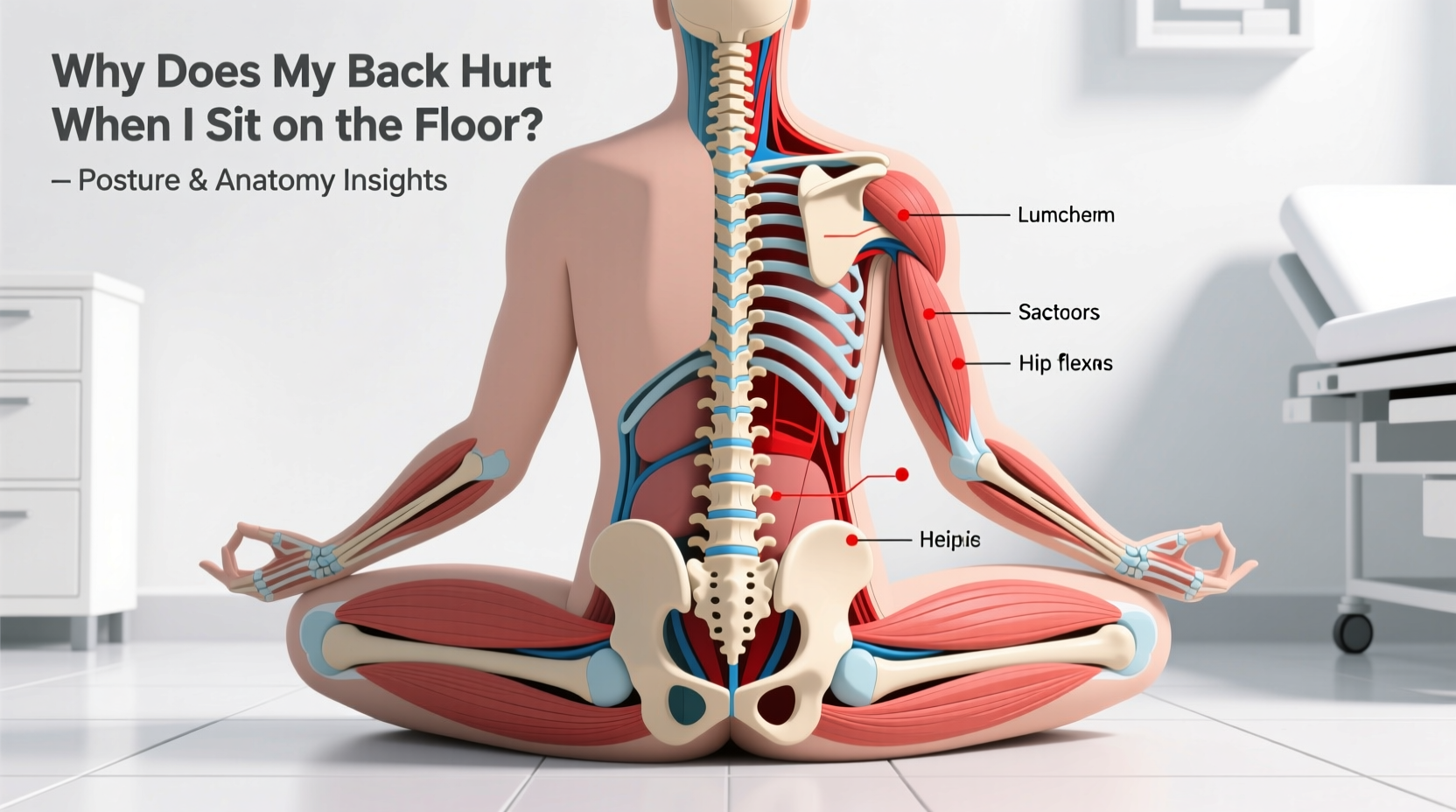
The human spine is designed to maintain three natural curves: cervical (neck), thoracic (upper back), and lumbar (lower back). These curves work together to distribute weight, absorb shock, and support upright movement. When you sit on the floor without proper support, these curves can become compromised—especially in the lumbar region.
On a hard floor, the pelvis tends to tilt backward (posterior pelvic tilt), which flattens the natural inward curve of the lower back. This forces the vertebrae into an unnatural position, increasing pressure on the intervertebral discs and straining the surrounding muscles and ligaments. Over time, this misalignment can lead to chronic discomfort or even disc degeneration.
The gluteal muscles and hip flexors also play a critical role. Tight hip flexors—common in people who sit at desks all day—pull the pelvis forward, creating an anterior tilt that overarches the lower back. Conversely, weak glutes fail to stabilize the pelvis during floor sitting, leading to compensatory strain in the lower back.
Common Floor-Sitting Postures and Their Impact on the Back
Not all floor-sitting positions are created equal. Some promote better alignment than others, depending on your flexibility, strength, and daily habits. Below is a breakdown of popular floor-sitting styles and their effects on spinal health.
| Posture | Anatomical Effect | Risk Level |
|---|---|---|
| Cross-Legged (Tailor Sit) | Moderate pelvic rotation; may cause sacroiliac joint stress if hips are tight | Medium |
| Kneeling (Seiza) | Increases lumbar flexion; high pressure on knees and lower back without support | High |
| Long Sitting (legs extended) | Encourages neutral spine if supported; ideal for beginners | Low |
| Side-Sitting | Creates spinal asymmetry; can lead to muscle imbalance over time | Medium-High |
| Lotus Position | Demands extreme hip external rotation; risky for those with limited flexibility | High |
For most people, long sitting—where legs are stretched straight out—is the safest starting point. It allows the spine to remain neutral and reduces rotational stress on the pelvis. As flexibility improves, cross-legged variations become more sustainable—provided pelvic support is maintained.
Why Modern Lifestyles Make Floor Sitting Uncomfortable
Humans evolved to squat, kneel, and sit on the ground as part of daily life. Yet today’s sedentary routines have eroded the physical capacity for these natural movements. Prolonged chair use contributes to several key issues:
- Weak core muscles: The transverse abdominis and obliques provide essential stability for the spine. Inactivity weakens these muscles, making unsupported sitting difficult.
- Tight hip flexors: Sitting in chairs keeps the hip flexors in a shortened position, reducing range of motion needed for comfortable floor sitting.
- Reduced ankle dorsiflexion: Limited mobility in the ankles prevents proper knee alignment during kneeling or cross-legged postures, indirectly affecting back mechanics.
- Poor proprioception: Without regular contact with uneven surfaces, body awareness diminishes, increasing the risk of poor posture.
A study published in the Journal of Physical Therapy Science found that individuals who spend more than six hours a day in chairs exhibit significantly reduced hip extension and increased lumbar flexion when attempting floor-level activities. This mechanical disadvantage directly correlates with reports of low back pain during floor sitting.
“Many patients complain of back pain when sitting on the floor, but the root cause isn’t the floor—it’s years of poor postural habits and muscular deconditioning.” — Dr. Lena Torres, Physical Therapist and Spinal Biomechanics Specialist
Step-by-Step Guide to Pain-Free Floor Sitting
You don’t need to avoid the floor altogether. With gradual adaptation and proper technique, you can build the strength and flexibility needed for comfortable, healthy sitting. Follow this timeline to improve your tolerance over four weeks.
- Week 1: Assess and Support
- Sit on the floor for 5–10 minutes daily using a firm cushion under your buttocks.
- Choose long sitting or modified cross-legged with legs slightly bent.
- Use a wall for back support if needed.
- Week 2: Mobilize Hips and Ankles
- Perform hip openers like pigeon pose or seated figure-four stretch (2 sets of 30 seconds per side).
- Add ankle mobility drills: kneel and rock forward to stretch the front of the ankle.
- Increase sitting duration to 15 minutes with continued pelvic elevation.
- Week 3: Strengthen Core and Glutes
- Do bridges (3 sets of 10) and bird-dogs (2 sets of 8 per side) to activate stabilizing muscles.
- Practice sitting without back support for short intervals, focusing on keeping ribs over hips.
- Introduce gentle twisting stretches to improve spinal mobility.
- Week 4: Refine Posture and Duration
- Attempt unsupported cross-legged sitting for up to 20 minutes.
- Monitor for signs of slouching or discomfort; reset posture every 5 minutes.
- Use a low stool or zafu cushion if transitioning to meditation or floor dining.
Checklist: Prepare Your Body and Environment for Comfortable Floor Sitting
Before attempting extended periods on the floor, ensure your body and space are ready. Use this checklist to minimize strain and maximize comfort.
- ✅ Elevate hips above knee level with a cushion or folded mat
- ✅ Warm up hips and spine with light stretching or walking
- ✅ Choose a flat, stable surface—avoid thick carpets that destabilize balance
- ✅ Keep feet active: press heels down or flex toes to engage leg muscles
- ✅ Avoid locking knees or rounding shoulders forward
- ✅ Limit initial sessions to 10–15 minutes; increase gradually
- ✅ Stay hydrated to maintain disc elasticity and joint lubrication
Real Example: Recovering Comfort After Chronic Discomfort
Mark, a 38-year-old software developer, began experiencing lower back pain during weekly family dinners held on the living room floor. Initially dismissing it as normal, he noticed the discomfort lasting longer after each session. After two months, the pain radiated into his hips, prompting a visit to a physical therapist.
Assessment revealed tight hip flexors, weak glutes, and poor core engagement. Mark spent most of his day in a reclined office chair, rarely squatting or bending. His therapist prescribed a routine including hip flexor stretches, glute bridges, and daily supported floor sitting with a 4-inch cushion.
Within five weeks, Mark could sit comfortably for 30 minutes without support. He now uses a low bench at home for casual seating and reports improved posture even while working at his desk. “I didn’t realize how much my chair was hurting me until I tried sitting differently,” he said.
Frequently Asked Questions
Is sitting on the floor bad for your back?
Not inherently. Floor sitting can be beneficial when done with proper alignment and adequate hip mobility. However, for individuals with weak core muscles, tight hips, or pre-existing back conditions, unsupported floor sitting may exacerbate pain due to poor pelvic positioning.
How can I sit on the floor without hurting my back?
Elevate your hips with a cushion so they’re higher than your knees, keep your spine tall, and engage your core gently. Avoid slouching or leaning on one hip. Start with short durations and build tolerance gradually while improving hip and ankle flexibility.
Can floor sitting improve posture?
Yes, when practiced mindfully. Floor sitting encourages greater body awareness and strengthens postural muscles often neglected in chair-based lifestyles. Over time, it can enhance balance, coordination, and spinal resilience—provided it’s introduced progressively and with attention to form.
Conclusion: Reclaim Natural Movement for Long-Term Back Health
Back pain when sitting on the floor is not a sign that the practice is wrong—it’s a signal that your body needs reconditioning. Decades of sedentary behavior have distanced us from fundamental human movements, weakening the very systems meant to support upright function. By understanding the interplay between posture, anatomy, and lifestyle, you can transform floor sitting from a source of discomfort into an opportunity for strengthening and healing.
Start small. Support your body. Move with intention. Over time, your spine will adapt, your muscles will rebalance, and sitting on the floor may become not just tolerable—but restorative.




 浙公网安备
33010002000092号
浙公网安备
33010002000092号 浙B2-20120091-4
Comments
No comments yet. Why don't you start the discussion?