
Betta fish are known for their vibrant colors and dramatic personalities. One of the most striking behaviors they display is flaring—where they spread their gills and fins wide in a display that resembles a fan. This behavior often occurs when a betta sees its own reflection in the tank glass or a nearby mirror. While it might look impressive, many owners wonder: Is this normal? Could it mean the fish is stressed? Understanding the reasons behind flaring, its impact on your betta’s well-being, and how to respond appropriately is essential for responsible care.
The Science Behind Betta Flaring
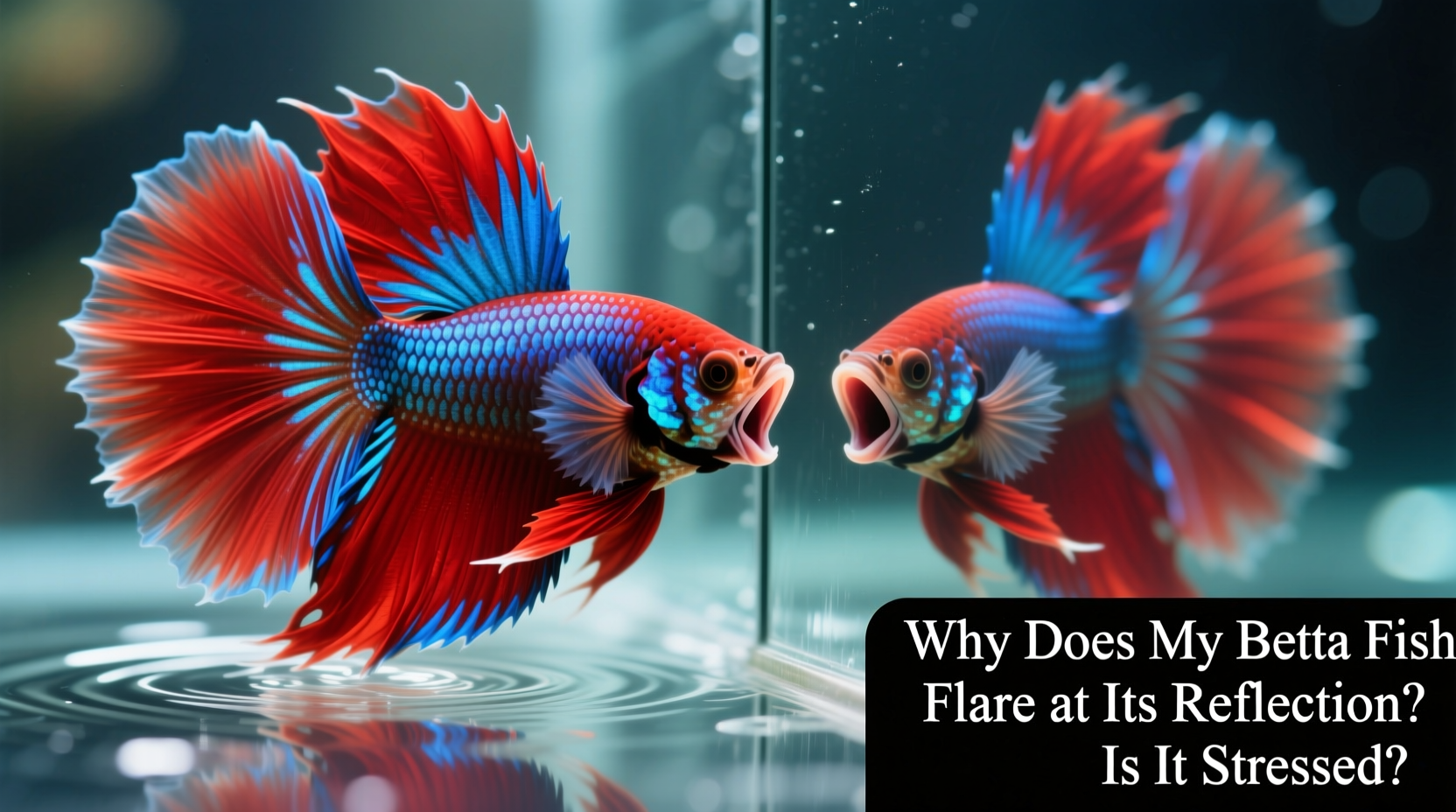
Betta splendens, commonly known as Siamese fighting fish, are native to shallow waters in Southeast Asia, including rice paddies, slow-moving streams, and floodplains. In the wild, males are highly territorial and use visual displays to defend their space from rivals. Flaring is a key part of this defense mechanism—it makes the fish appear larger and more intimidating to potential threats.
When a male betta sees another male—or what it perceives as one, such as its own reflection—it triggers an instinctive response. The fish erects its opercula (gill covers), spreads its fins, and may swim aggressively toward the perceived intruder. This behavior is not unique to reflections; it can also occur during interactions with other fish, sudden movements near the tank, or even certain decorations that resemble another betta.
Flaring itself is a natural, biologically programmed reaction. It is not inherently harmful. However, the frequency and duration of flaring determine whether it becomes a welfare concern. Occasional flaring, especially during short-term exposure, is normal. Chronic or prolonged flaring, however, can lead to stress, exhaustion, and weakened immunity.
“Flaring is a survival tactic evolved over generations. It’s not aggression for aggression’s sake—it’s communication through intimidation.” — Dr. Alicia Nguyen, Aquatic Ethologist
Is Flaring a Sign of Stress?
Flaring is not automatically a sign of stress. In fact, it can be a healthy expression of natural behavior when managed properly. The key lies in context. A betta that flares briefly when passing its reflection and then returns to normal swimming and feeding is likely exhibiting typical territorial behavior. But if flaring becomes constant—especially if the fish cannot escape its reflection—the situation shifts from natural display to chronic stress.
Chronic stress in bettas manifests through several physical and behavioral signs:
- Loss of appetite
- Lethargy or hiding constantly
- Faded coloration
- Clamped fins (fins held close to the body)
- Rapid breathing or gasping at the surface
- Increased susceptibility to illness, such as fin rot or ich
If your betta flares every time it swims past the glass and shows any of these symptoms, the reflection may be causing psychological strain. Unlike humans, fish do not recognize themselves in mirrors. To a betta, its reflection appears as a persistent, unyielding rival that never leaves. Over time, this can trigger a sustained stress response, elevating cortisol levels and compromising long-term health.
How to Manage Reflection-Induced Flaring
Preventing excessive flaring doesn’t mean eliminating all stimulation. Bettas benefit from mental engagement, but it must be balanced with rest and security. Here’s how to create a healthier environment:
1. Break the Reflection Cycle
The simplest fix is to eliminate reflective surfaces. Use background films on the outside of the tank, place the aquarium against a wall, or add opaque materials to block light bounce. Avoid placing mirrors inside or directly beside the tank for extended periods.
2. Rearrange Tank Decorations
Strategic placement of plants, caves, and driftwood can disrupt line-of-sight reflections. Floating plants like water sprite or frogbit help diffuse light and reduce glare. Hardscape elements can create visual barriers so the fish isn’t constantly confronted with its image.
3. Limit Intentional Mirror Exposure
Some betta keepers use mirrors briefly to encourage flaring for exercise or conditioning. While this can be done safely, it should be strictly controlled. Never leave a mirror in the tank. Instead, hold it up for no more than 30–60 seconds once every few days, then remove it. Watch for signs of fatigue or distress.
4. Provide Enrichment Alternatives
A mentally stimulated betta is less likely to obsess over its reflection. Add variety with floating toys, ping pong balls (without paint), or interactive feeding puzzles. Training exercises using a target stick can also redirect energy positively.
5. Monitor Water Quality and Environment
Stress compounds quickly in suboptimal conditions. Ensure your tank maintains stable parameters: temperature between 78–80°F (25–27°C), pH around 7.0, and zero ammonia and nitrites. A consistent day-night cycle with ambient room lighting helps regulate natural behavior patterns.
Do’s and Don’ts of Handling Betta Flaring
| Do’s | Don’ts |
|---|---|
| Use brief mirror sessions (<60 sec) for stimulation | Leave mirrors or reflective objects in the tank |
| Add live or silk plants to break reflections | Overcrowd the tank with aggressive stimuli |
| Observe behavior before and after flaring | Assume flaring always means stress |
| Provide hiding spots and shaded areas | Place the tank in high-traffic reflective areas |
| Maintain clean, warm, and stable water | Ignore signs of lethargy or loss of appetite |
Mini Case Study: Managing Reflection Stress in a Home Aquarium
Sarah, a first-time betta owner, noticed her blue crown-tail betta, Zeus, was flaring every time she walked past the tank. Initially, she thought he was excited to see her. But over two weeks, Zeus began spending more time at the bottom of the tank, stopped eating his usual pellets, and his bright blue fins appeared duller.
After researching online and consulting a local aquarium specialist, Sarah realized the large window beside the tank was creating a persistent reflection, making Zeus believe another male was constantly invading his space. She applied a matte black background film to the side facing the window and added dense stem plants along the glass.
Within three days, Zeus’s behavior improved. He resumed normal swimming, ate regularly, and only flared occasionally—usually when Sarah tapped the glass playfully. By removing the continuous threat perception, she restored his sense of safety without eliminating enrichment entirely.
Step-by-Step Guide to Assessing and Responding to Flaring
- Observe Frequency: Note how often your betta flares and under what conditions (e.g., near certain tank sides, during feeding, when people pass by).
- Check for Triggers: Identify reflective surfaces, mirrors, or shiny decorations that could be causing the behavior.
- Eliminate Persistent Reflections: Apply tank backgrounds, reposition the aquarium, or cover reflective areas temporarily.
- Monitor Behavior Changes: Look for improvements in appetite, activity level, and fin condition over the next 3–5 days.
- Introduce Controlled Stimulation: If desired, use a mirror for short bursts (30 seconds) once or twice a week to allow natural flaring in a safe way.
- Adjust Environment as Needed: Add hiding places, improve plant coverage, and ensure water quality supports overall health.
- Consult a Specialist: If flaring persists alongside poor health signs, consider seeking advice from an aquatic veterinarian or experienced aquarist.
Frequently Asked Questions
Can flaring hurt my betta fish?
Occasional flaring is not harmful and is a natural part of betta behavior. However, constant flaring due to unrelenting stimuli like reflections can lead to stress, fatigue, and weakened immunity, which may result in illness over time.
Should I ever show my betta a mirror?
You can use a mirror very briefly—as a training or stimulation tool—for no more than 30 to 60 seconds at a time, and only once every few days. Never leave a mirror in the tank, as this creates chronic stress. Always stop if the fish shows signs of exhaustion.
Why does my female betta flare too?
While less common, female bettas can also flare. They are territorial, especially in crowded tanks. Females may flare at each other, reflections, or sudden movements. Their displays are usually less intense than males’, but the underlying cause—perceived threat or competition—is similar.
Conclusion: Balancing Natural Instincts with Responsible Care
Flaring at a reflection is not inherently dangerous, but it demands thoughtful management. Recognizing the difference between natural territorial behavior and chronic stress is crucial for maintaining your betta’s long-term health. By adjusting the tank environment, minimizing persistent triggers, and providing balanced enrichment, you can support your fish’s instincts without compromising its well-being.
Bettas are intelligent, perceptive animals whose behaviors offer insight into their emotional and physical state. Rather than suppress flaring entirely, aim for balance—allowing expression in moderation while ensuring safety and calm dominate daily life. With attentive care, your betta can thrive, displaying its beauty not just in flared fins, but in vibrant color, active swimming, and steady appetite.




 浙公网安备
33010002000092号
浙公网安备
33010002000092号 浙B2-20120091-4
Comments
No comments yet. Why don't you start the discussion?