
It’s a familiar scene: you walk into the kitchen, only to find the refrigerator door wide open. Again. And once more, it was your boyfriend who left it that way. You’ve mentioned it before—politely, then firmly—but the habit persists. What gives? Is it carelessness, disrespect, or something deeper rooted in behavior patterns? This seemingly minor act can stir up tension, especially when it feels like a repeated disregard for shared space and responsibility. But before jumping to conclusions, it's worth understanding the psychology behind everyday habits, how attention and environment shape actions, and what you can do—without turning every fridge encounter into an argument.
The Psychology Behind Habitual Actions
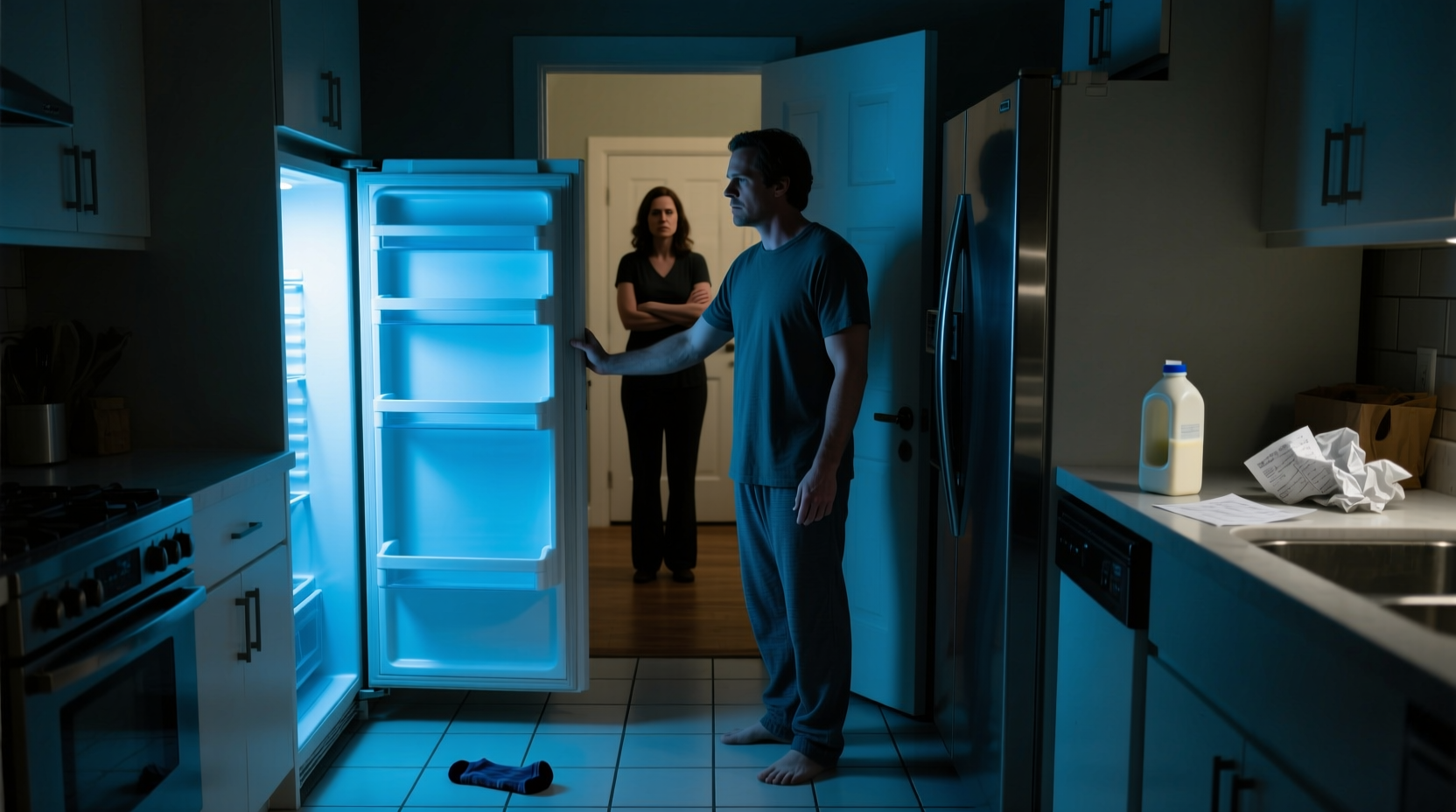
Habits are automatic behaviors shaped by repetition, context, and subconscious cues. When someone repeatedly leaves the fridge door open, it’s rarely a deliberate act of defiance. Instead, it often stems from a combination of cognitive load, environmental triggers, and lack of immediate consequences. The brain is wired to conserve energy by automating routine tasks. Opening the fridge, grabbing a snack, and walking away may be so ingrained in your boyfriend’s daily rhythm that he doesn’t consciously register closing the door.
Neuroscience supports this idea. According to Dr. Wendy Wood, a leading researcher in habit formation at the University of Southern California:
“People don’t repeat behaviors because they’re lazy or thoughtless—they repeat them because the environment prompts the action, and there’s no strong signal to stop. Small interruptions in routine are needed to break automaticity.” — Dr. Wendy Wood, Behavioral Psychologist
In other words, if his pattern is “open fridge → get drink → walk out,” and closing the door isn’t part of the mental script, it won’t happen—unless something disrupts the flow.
Attention, Distraction, and Cognitive Load
Modern life is saturated with distractions. Your boyfriend might be checking his phone, thinking about work, or responding to a message while retrieving something from the fridge. In such moments, the act of closing the door becomes a low-priority task buried under higher-cognitive demands. This isn’t unique to fridge doors—it applies to forgetting keys, leaving lights on, or misplacing items.
Research in attentional control shows that multitasking reduces performance on routine tasks. A 2021 study published in Cognitive Research: Principles and Implications found that individuals engaged in secondary cognitive tasks (like texting) were 68% more likely to forget to complete simple follow-up actions—even ones they had performed hundreds of times before.
So, when your boyfriend walks away with a yogurt in hand but leaves the door swinging, it’s less about intention and more about divided attention. His brain registered the primary goal (get food), but the secondary action (close door) didn’t make the cut.
Environmental Design Over Willpower
Relying on memory or reminders alone is often ineffective. A better approach is to modify the environment to support desired behaviors. Behavioral economists call this \"choice architecture\"—designing surroundings so that the right action becomes the easiest one.
| Problem | Traditional Response | Better Solution (Behavioral Design) |
|---|---|---|
| Fridge left open | Verbal reminder | Install a door alarm or use magnetic sensors |
| Forgetting to turn off lights | \"Don’t forget!\" nagging | Use motion-sensor lights |
| Leaving dirty dishes out | Asking for cleanup | Place a dishwasher rack on the counter |
Applying this logic, consider installing a simple $10 magnetic alarm that beeps when the fridge door stays open beyond 30 seconds. It’s not about punishment—it’s about creating feedback that bridges the gap between intention and action.
Relationship Dynamics and Emotional Triggers
While the behavior itself may be neutral, the emotional response it triggers is often not. For many partners, a perpetually open fridge symbolizes something larger: a perceived lack of consideration, unequal chore distribution, or emotional disconnect. These feelings are valid, but they require careful unpacking.
A mini case study illustrates this well:
Maria, 32, noticed her boyfriend Jake consistently left the fridge open after getting water at night. She initially dismissed it, but over time, it became a source of irritation. “It felt like he didn’t care,” she said. “I was the one paying the electric bill, cleaning up spilled condensation, and reminding him.” After discussing it during a calm moment, Jake revealed he often did it while half-asleep and hadn’t realized how frequently it happened. They agreed on a solution: placing glow-in-the-dark stickers on the fridge edge to make the open door more noticeable at night. The conflict dissolved once they reframed it as a shared problem, not a personal failing.
This example highlights a crucial point: the issue isn’t just the open fridge—it’s the meaning we assign to it. When small habits go unaddressed, they can accumulate into resentment. Addressing them requires empathy, communication, and joint problem-solving rather than blame.
Do’s and Don’ts in Communication
| Do | Don’t |
|---|---|
| Use “I” statements (“I feel stressed when the fridge is left open”) | Say “You always do this!” or “You never think of anyone else” |
| Pick a neutral time to talk (not mid-argument) | Bring it up in the moment of frustration |
| Focus on the behavior, not the person | Label him as “careless” or “lazy” |
| Collaborate on a solution | Dictate changes without input |
Step-by-Step Guide to Changing the Habit
Breaking a habit takes time, consistency, and structure. Use this six-step process to address the open fridge issue constructively:
- Observe without judgment: Track how often it happens and under what conditions (time of day, distractions present, etc.). Avoid confronting during incidents.
- Initiate a calm conversation: Choose a relaxed moment. Say, “I’ve noticed the fridge gets left open sometimes. Can we figure out a way to fix it together?”
- Explore reasons together: Ask open-ended questions. “Do you realize when you do it? Does anything distract you?” Listen without interrupting.
- Co-create a solution: Brainstorm options—alarms, visual cues, adjusting storage layout. Let him contribute ideas to increase buy-in.
- Test and adjust: Implement one solution for two weeks. Evaluate its effectiveness. If it fails, try another.
- Reinforce positively: Acknowledge effort, not just results. “I’ve noticed you’ve been more mindful lately—that helps a lot.”
This method shifts the dynamic from criticism to collaboration. People are more likely to change when they feel involved in the solution, not targeted for correction.
When It’s More Than Just a Fridge
If the fridge habit is part of a broader pattern—chronic disorganization, avoidance of chores, or dismissiveness toward your concerns—it may reflect deeper relational imbalances. Consider whether similar issues arise in other areas: laundry left on the floor, bills unpaid, plans forgotten.
In such cases, the fridge becomes a symptom, not the core issue. It may indicate:
- Differing standards of cleanliness or order
- Unequal division of invisible labor (mental load)
- Communication gaps around expectations
- Underlying stress, ADHD, or executive function challenges
If multiple habits cause consistent friction, a broader conversation about household roles and emotional labor may be necessary. Tools like a shared chore chart or weekly check-ins can help rebalance responsibilities.
“The biggest predictor of household harmony isn’t perfection—it’s fairness in effort and respect in communication.” — Dr. Laura Berman, Relationship Therapist
FAQ
Is leaving the fridge open really that bad?
Yes, over time. An open fridge increases energy consumption by up to 30%, raises electricity bills, strains the compressor, and promotes mold growth from excess moisture. Even brief openings add up if done daily.
Could this be a sign of ADHD?
Possibly. Frequent forgetfulness, distraction during routine tasks, and difficulty with follow-through are common in ADHD. If your boyfriend also struggles with deadlines, organization, or focus, it may be worth exploring with a professional—not as a label, but as a path to better strategies.
What if he refuses to change?
Focus on what you can control. Install an automatic door closer, use a smart fridge sensor, or reorganize items so he can grab what he needs without fully opening the door. Sometimes, adapting the environment is more effective than changing the person.
Checklist: Tackling the Open Fridge Habit
- ☑ Track frequency and timing of the behavior for one week
- ☑ Choose a calm moment to discuss it non-confrontationally
- ☑ Identify potential triggers (distractions, fatigue, layout)
- ☑ Test at least two environmental fixes (alarm, visual cue, layout change)
- ☑ Praise progress, even small improvements
- ☑ Reassess after 14 days and adjust strategy if needed
Conclusion
The open fridge door is more than a quirky habit—it’s a window into behavior, attention, and relationship dynamics. While it may seem trivial, its persistence can chip away at peace and partnership if left unaddressed. Understanding the science of habits, designing smarter environments, and communicating with empathy transforms frustration into opportunity. Instead of seeing it as a flaw in your boyfriend, see it as a shared challenge to solve together. Small changes, approached with patience and creativity, can lead to lasting improvements—not just in fridge etiquette, but in how you navigate everyday life as a couple.




 浙公网安备
33010002000092号
浙公网安备
33010002000092号 浙B2-20120091-4
Comments
No comments yet. Why don't you start the discussion?