
If you've found yourself standing in front of a slightly ajar refrigerator—again—wondering why your boyfriend seems incapable of closing it properly, you're not alone. This seemingly small habit can become a source of frustration, wasted energy, and even tension in shared living spaces. While it may appear trivial, repeated fridge neglect often reflects deeper behavioral patterns, environmental factors, or communication gaps between partners. Understanding the root causes is the first step toward resolving the issue without turning it into a recurring argument.
The refrigerator isn’t just an appliance; it’s a symbol of household cooperation. Leaving it open affects food safety, electricity bills, and overall home efficiency. More importantly, it can signal mismatched expectations about responsibility and attention to detail. Instead of reacting with annoyance, approaching this behavior with curiosity and empathy can lead to lasting solutions that benefit both partners.
The Psychology Behind the Open Fridge
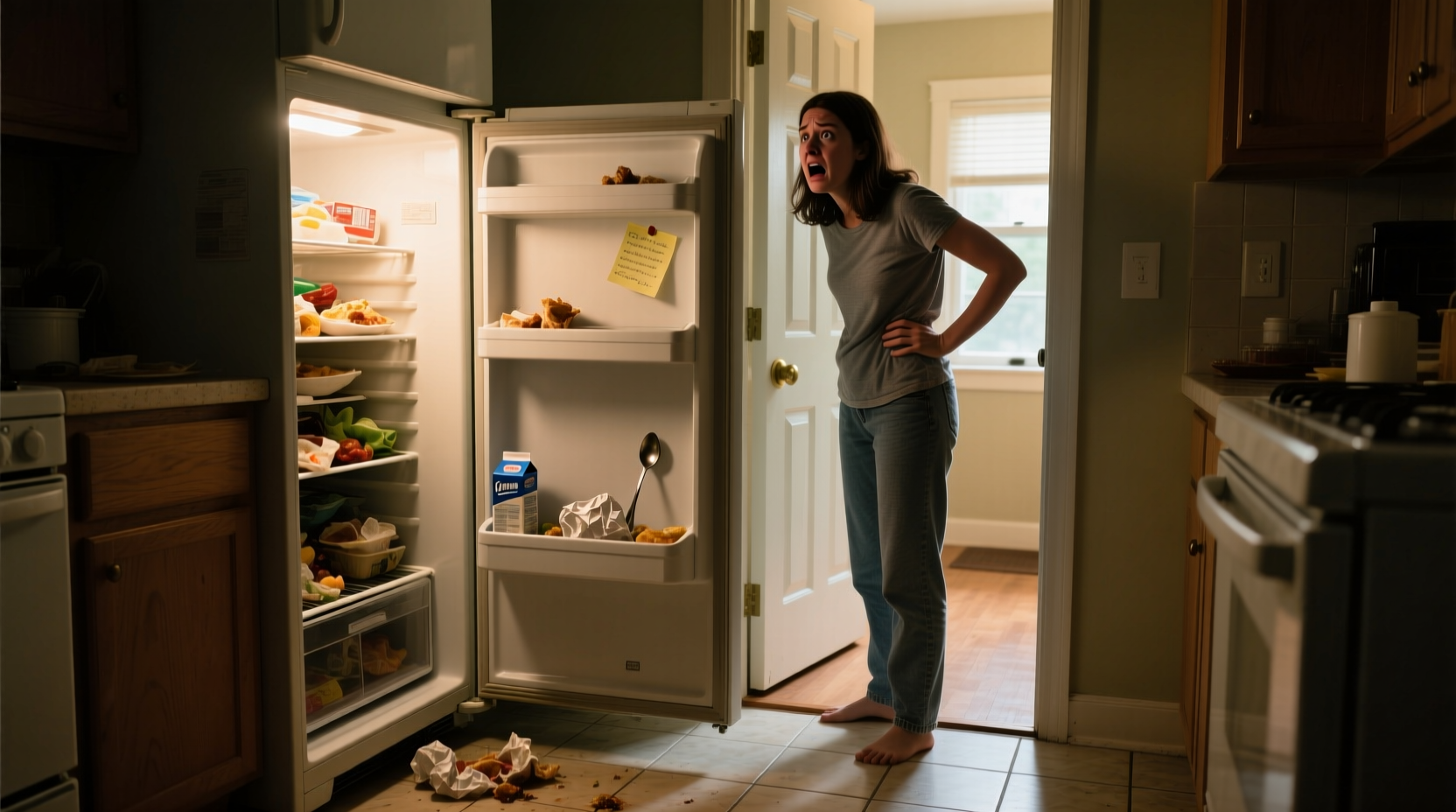
At first glance, leaving the fridge open might seem like pure carelessness. But human behavior is rarely that simple. Cognitive psychology suggests that routine actions—like opening and closing the fridge—are often performed on \"autopilot.\" These are called *habit loops*, composed of a cue, a routine, and a reward. In many cases, the act of retrieving food or drink is the goal, and closing the door is simply forgotten because it doesn't register as part of the essential task.
Men, in particular, may be more prone to this oversight due to differences in spatial memory and multitasking focus. A 2019 study published in *Scientific Reports* found that men tend to prioritize goal-oriented tasks over peripheral details—meaning they’re laser-focused on getting the milk, not on the door behind them.
“People often don’t realize how much of their daily behavior is automatic. Closing the fridge isn’t inherently rewarding, so if it’s not reinforced, it gets dropped.” — Dr. Lena Torres, Cognitive Behavioral Psychologist
Additionally, some individuals have lower levels of *action monitoring*, a mental process that tracks whether a task has been completed. Without conscious effort, they may walk away believing they shut the door when they didn’t.
Practical Consequences of an Open Fridge
While the emotional friction is real, the physical consequences are measurable. An open refrigerator doesn’t just annoy—it costs money and risks health.
- Energy waste: Just 10 minutes with the door open can increase internal temperature by 30°F, forcing the compressor to work harder. Over time, this raises electricity bills by up to 15%, according to the U.S. Department of Energy.
- Food spoilage: Frequent temperature fluctuations encourage bacterial growth. Dairy, meats, and leftovers degrade faster, increasing the risk of foodborne illness.
- Appliance strain: Constant cycling shortens the lifespan of your fridge, potentially leading to costly repairs or early replacement.
In one documented case, a couple discovered their monthly electric bill was $47 higher than average—traced directly to frequent door openings and extended periods left ajar. After tracking usage and adjusting habits, they reduced consumption by nearly 12% within two months.
Mini Case Study: The Weekend Snack Cycle
Sarah and Mark share a two-bedroom apartment. Every Friday night, Mark hosts game nights with friends. During these gatherings, the fridge is opened repeatedly for drinks and snacks. Sarah noticed that after each event, several items spoiled prematurely, and the kitchen developed a faint sour odor. She initially blamed Mark for “not caring,” but after installing a smart plug to monitor fridge runtime, they discovered the appliance ran 28% longer on weekends. Together, they implemented a serving tray system to reduce door openings—cutting runtime by 19% the following week.
Do’s and Don’ts When Addressing the Issue
How you approach the topic matters as much as the solution. Tackling it with blame escalates conflict; addressing it collaboratively fosters change. Use this guide to navigate the conversation effectively.
| Do | Don’t |
|---|---|
| Choose a calm moment to talk—never mid-argument or right after spotting the open fridge. | Bring it up sarcastically (“Here we go again, Einstein.”). |
| Use “I” statements: “I feel stressed when the fridge is left open because I worry about the electric bill.” | Say “You always do this” or “You never think about anyone else.” |
| Offer joint solutions: “Can we try putting a sticky note as a reminder?” | Demand immediate perfection or set rigid rules without discussion. |
| Track progress positively: “I’ve noticed you’ve been better about closing it—thanks!” | Nag daily or keep a running tally of “offenses.” |
| Check fridge mechanics: Ensure seals are intact and doors close smoothly. | Assume the behavior is intentional without investigating possible mechanical issues. |
Step-by-Step Guide to Fix the Habit
Changing ingrained behaviors takes time and structure. Follow this six-week plan to create lasting improvement without conflict.
- Week 1: Observe and Document
Track every instance the fridge is left open for more than 30 seconds. Note the time, who was responsible, and what they were doing. This removes emotion and provides data. - Week 2: Initiate a Neutral Conversation
Share your observations calmly. Say, “I’ve noticed the fridge door stays open a few times a day. I’m concerned about energy use and food waste. Can we figure out why and how to improve it?” - Week 3: Identify Triggers
Is it during late-night snacking? While cooking? When distracted by phone use? Pinpoint high-risk moments and brainstorm alternatives. - Week 4: Implement Environmental Fixes
Install a door alarm, use brightly colored stickers near the handle, or place a small sign: “Did you close me?” These nudges increase awareness without confrontation. - Week 5: Introduce a Shared System
Create a simple checklist on the fridge: “Open → Take Items → Close Door → Confirm.” Make it lighthearted with icons or humor. - Week 6: Review and Reinforce
After a month, discuss what worked. Celebrate improvements. If lapses continue, consider assigning a weekly “fridge check” duty to alternate responsibility.
Effective Tools and Modifications
Sometimes, willpower isn’t enough. The environment must support the desired behavior. Consider these low-cost, high-impact modifications:
- Fridge door alarms: Small sensors emit a beep if the door remains open beyond 30–60 seconds. Available online for under $15.
- Magnetic reminders: Place a fun message like “Seal the Deal!” or “Cold Air Escaping!” at eye level.
- Improved organization: Rearrange shelves so frequently used items are at the front. Less rummaging means shorter door-open times.
- Double-check routine: Encourage a “turn, touch, confirm” habit—physically touching the door after closing reinforces the action.
One couple installed a smart sensor that sent a notification to their phones if the fridge stayed open past one minute. Within three weeks, incidents dropped from 5–6 per day to less than one.
When It’s More Than Just the Fridge
Persistent disregard for shared responsibilities—even minor ones—can reflect broader relational dynamics. If your boyfriend dismisses your concerns, refuses to participate in solutions, or reacts defensively, the fridge may be a symptom of deeper disconnect.
Chronic inattentiveness to household norms might indicate:
- Lack of perceived partnership equality
- Different standards of cleanliness or order
- Underlying stress or distraction (work, mental health)
- A tendency to avoid conflict by ignoring issues
In such cases, the conversation should shift from the fridge to mutual respect and shared values. Ask: “How do we want our home to feel? What kind of team do we want to be?” Framing it around shared goals—not fault-finding—encourages buy-in.
FAQ
Is leaving the fridge open really that bad?
Yes. Even brief openings add up. The EPA estimates that inefficient fridge use accounts for 5–10% of unnecessary household energy consumption. Over a year, this can cost $50–$100 extra and significantly reduce food freshness.
What if he says he *did* close it?
It’s likely a memory gap, not dishonesty. Suggest testing the seal: close the door on a piece of paper. If it slips out easily, the gasket may be worn, making closure unreliable. Also, hinges can loosen over time, preventing automatic sealing.
Could this be a sign of ADHD?
Potentially. Difficulty with task completion, forgetfulness, and poor action monitoring are common in ADHD. If this behavior is part of a larger pattern—missing appointments, losing keys, forgetting chores—it may be worth exploring with a professional. Frame concern compassionately: “I’ve noticed you forget small steps sometimes. Has this ever been something you’ve looked into?”
Final Checklist: How to Stop the Open Fridge Cycle
- ✔️ Track occurrences for one week without comment
- ✔️ Discuss concerns using “I” statements in a neutral setting
- ✔️ Check fridge mechanics: seals, hinges, auto-close function
- ✔️ Install visual or auditory reminders (stickers, alarms)
- ✔️ Optimize fridge layout to reduce search time
- ✔️ Establish a shared closing ritual (“turn, touch, confirm”)
- ✔️ Praise improvements and revisit progress monthly
- ✔️ Expand conversation to shared household values if resistance persists
Conclusion
The open fridge is rarely about the fridge. It’s about attention, reciprocity, and the small acts that build a respectful, functional shared life. By understanding the psychological roots, measuring real-world impact, and applying structured, empathetic solutions, you can turn a frustrating habit into an opportunity for connection and collaboration.
Change won’t happen overnight. But with patience, clear communication, and a few smart tweaks, you can close the door on this issue—literally and figuratively. Start tonight: observe without judgment, initiate a calm conversation, and choose one strategy to try this week. Small steps lead to lasting harmony.




 浙公网安备
33010002000092号
浙公网安备
33010002000092号 浙B2-20120091-4
Comments
No comments yet. Why don't you start the discussion?