
It’s a familiar scene in many shared bedrooms: lights off, blankets pulled up, and just as you’re drifting off, your boyfriend reaches over and switches on the fan. You might find it annoying—after all, the noise can be distracting, and the breeze sometimes feels too strong. But there’s solid science behind this habit. From thermoregulation to white noise benefits, turning on a fan during sleep is more than just preference—it’s rooted in human biology and environmental comfort. Understanding the reasons can not only reduce friction in your relationship but also help you optimize your own sleep environment.
The Role of Body Temperature in Sleep Regulation
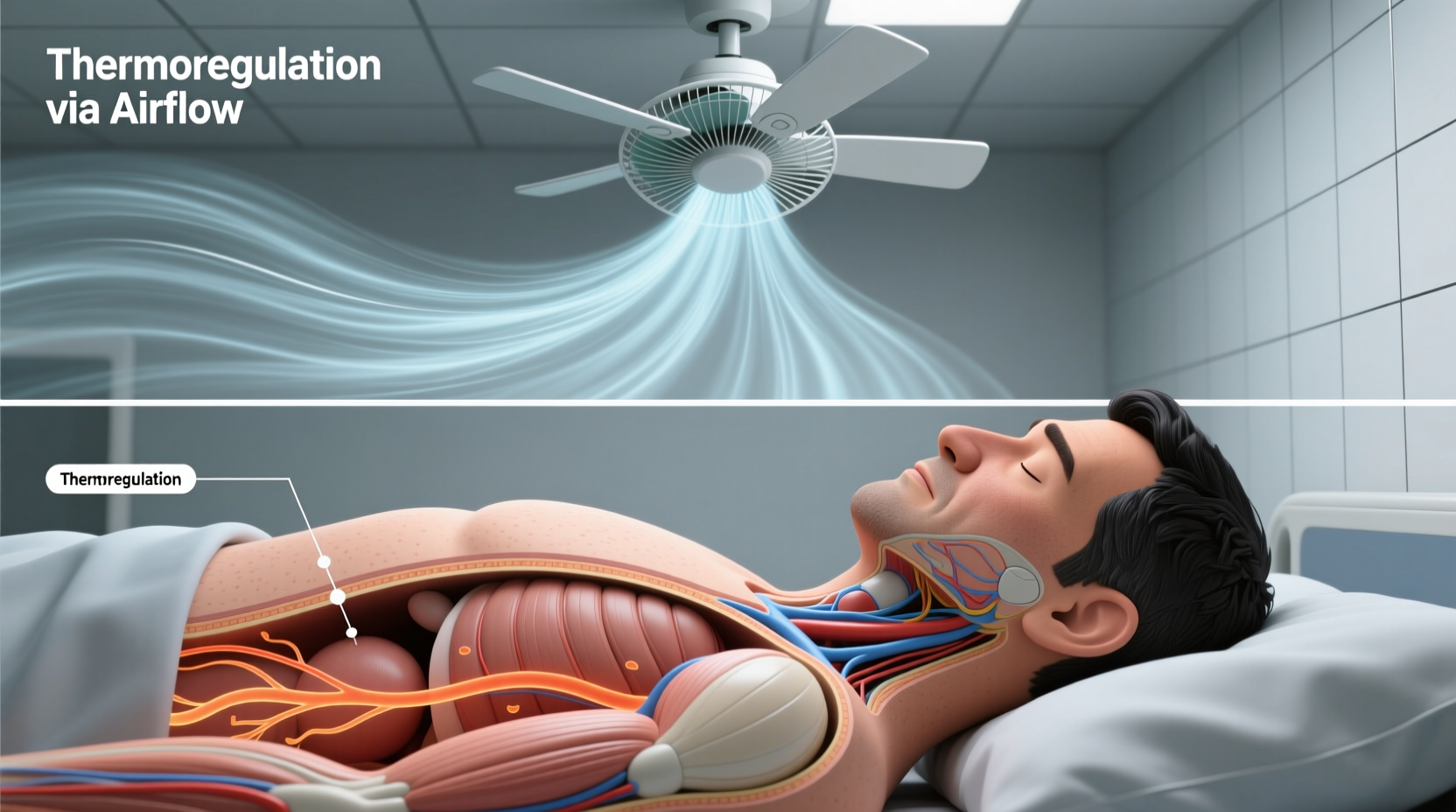
Sleep onset and quality are deeply tied to core body temperature. As night falls, your internal thermostat begins to lower your core temperature by about 0.5 to 1 degree Celsius—a natural signal that helps initiate and sustain deep sleep. This drop is essential for transitioning into restorative sleep stages, particularly slow-wave and REM sleep.
A ceiling or standing fan enhances this process through convective cooling. Even if the room isn’t extremely hot, the movement of air increases the rate of heat dissipation from the skin via evaporation and convection. This subtle cooling effect mimics the body’s natural thermal rhythm, making it easier to fall asleep and stay asleep.
“Even a slight elevation in bedroom temperature can delay sleep onset and fragment sleep architecture.” — Dr. Rachel Marcus, Sleep Physiologist at the National Sleep Foundation
For individuals who run warm—often due to higher muscle mass, metabolism, or hormonal fluctuations—this cooling assistance is especially valuable. Men, on average, have a slightly higher basal metabolic rate and more lean muscle than women, which means they generate more body heat. A fan helps offset this biological tendency, explaining why your boyfriend may instinctively seek airflow where you might feel comfortable without it.
Airflow Science: How Fans Improve Sleep Environment
Fans don’t just cool—they condition the air. Stagnant air traps humidity and warmth near the body, creating a microclimate under the sheets that can lead to discomfort and night sweats. Air circulation disrupts this pocket of heat, promoting even temperature distribution throughout the bedroom.
From a fluid dynamics perspective, fans increase air exchange rates, reducing localized CO₂ buildup near the face—a factor that, while subtle, can influence breathing efficiency and arousal thresholds during light sleep. Improved ventilation also reduces allergens and dust concentration over time, benefiting those with mild respiratory sensitivities.
Additionally, fans help mitigate humidity. In humid climates, sweat doesn’t evaporate efficiently, leading to clamminess and disrupted sleep. By accelerating evaporation from the skin, fans enhance perceived coolness—even when ambient temperature remains unchanged. This phenomenon, known as the “wind chill effect,” makes a room feel several degrees cooler than it actually is.
Key Benefits of Fan Use During Sleep
- Enhances evaporative cooling of the skin
- Reduces localized heat and humidity around the body
- Improves air circulation, minimizing stuffiness
- Lowers perceived room temperature by 2–4°F (1–2°C)
- Helps maintain alignment with natural circadian temperature drops
White Noise and Sound Masking: The Auditory Advantage
Beyond temperature control, fans produce a consistent, low-frequency hum that acts as natural white noise. This sound profile is highly effective at masking disruptive environmental noises—like traffic, snoring, creaking floors, or a partner shifting in bed.
White noise works by filling the auditory cortex with steady input, reducing the contrast between sudden sounds and silence. This dampens the brain’s startle response, decreasing nighttime awakenings and improving sleep continuity. Unlike electronic white noise machines, fans offer a dual benefit: airflow and sound—without requiring extra devices or electricity beyond their primary function.
Some people develop a psychological association between the sound of a fan and sleep onset. Over time, the noise becomes a conditioned cue that signals the brain it’s time to wind down. This Pavlovian effect can make falling asleep significantly harder in quiet environments, explaining why your boyfriend may feel restless without the fan running.
| Feature | Fan-Generated Noise | Electronic White Noise Machine |
|---|---|---|
| Noise Type | Natural broadband (fan motor + airflow) | Synthetic pink/white/brown noise |
| Cooling Benefit | Yes | No |
| Energy Use | Moderate (30–75 watts) | Low (5–15 watts) |
| Maintenance | Dust buildup requires cleaning | Minimal |
| Cost Over Time | One-time purchase, durable | Varies; some require subscriptions |
Personal Comfort vs. Shared Sleep: Finding Balance
Differing sleep preferences are one of the most common sources of tension in co-sleeping relationships. While your boyfriend craves airflow, you might prefer stillness and warmth. These differences aren’t arbitrary—they stem from physiological, psychological, and even cultural factors.
Women generally have a lower resting metabolic rate and higher body fat percentage, which insulates better and reduces heat loss. As a result, many women report feeling colder at night, especially during certain phases of the menstrual cycle when progesterone elevates basal temperature yet increases sensitivity to cold.
Instead of viewing the fan as a point of conflict, consider it an opportunity to design a smarter sleep ecosystem. Solutions like directional airflow, dual-blanket setups, or split-firmness mattresses with zoned climate control can accommodate both preferences.
Mini Case Study: The Compromise That Improved Both Partners’ Sleep
Sarah and James had argued for months about the bedroom fan. James insisted it was non-negotiable for his sleep; Sarah found the breeze uncomfortable and the noise grating. After tracking their sleep with wearable devices, they discovered James’s core temperature dropped 0.8°C faster with the fan on, correlating with earlier REM onset. Sarah, meanwhile, showed increased limb movements and lighter sleep stages when exposed to direct airflow.
Their solution? They repositioned the fan to face the wall opposite the bed, using indirect airflow to circulate cool air without direct exposure. They added a weighted blanket for Sarah and set the fan to low-speed oscillation. Within two weeks, both reported deeper sleep and fewer nighttime awakenings. The compromise wasn’t about winning or losing—it was about understanding the science behind their needs.
Step-by-Step Guide to Optimizing Fan Use for Couples
If differing airflow preferences are affecting your sleep harmony, follow this practical sequence to find a sustainable solution:
- Assess individual sleep patterns: Use sleep trackers or journals to note when each person wakes, feels too hot or cold, or struggles to fall asleep.
- Test fan positioning: Start with the fan oscillating across the room, not aimed at either person. Adjust angle and distance gradually.
- Vary speed settings: Try low or medium speeds first. High speed is rarely necessary and often excessive.
- Use layered bedding: Allow each partner to adjust their own covers—light cotton for the fan-lover, flannel or down for the one who runs cold.
- Consider alternative cooling: Explore breathable mattress toppers (gel-infused foam), moisture-wicking pajamas, or cooling pillows for the heat-sensitive partner.
- Set seasonal rules: Agree to use the fan only during warmer months or when indoor temperatures exceed 70°F (21°C).
- Re-evaluate monthly: Check in on comfort levels and adjust as needed. Sleep needs can shift with age, health, or seasonal changes.
Common Misconceptions About Sleeping with a Fan
Despite its benefits, fan use during sleep is often misunderstood. Let’s clarify a few myths:
- Myth: Fans dry out your throat and cause illness.
Reality: While moving air can increase trans-epidermal water loss, it doesn’t cause infections. Dryness can be mitigated with hydration and a humidifier if needed. - Myth: It’s unsafe to leave a fan running all night.
Reality: Modern fans are safe for continuous use. Just clean them regularly to prevent dust buildup and ensure proper ventilation. - Myth: Fans cool the room.
Reality: Fans cool people, not spaces. They work by enhancing personal heat loss, not lowering ambient temperature.
FAQ: Your Top Questions Answered
Can sleeping with a fan cause muscle stiffness or headaches?
There’s no scientific evidence that fans directly cause these issues. However, prolonged exposure to strong, cold airflow may lead to minor muscle tension in sensitive individuals—especially if the fan blows directly on the neck or shoulders. Using indirect airflow and moderate speeds minimizes this risk.
Is it wasteful to run a fan all night?
Compared to air conditioning, fans are highly energy-efficient. A typical box fan uses about 50–75 watts—less than a single incandescent light bulb. Running it for 8 hours costs roughly $0.06–$0.10 per night, depending on local electricity rates. For natural cooling and noise masking, it’s a cost-effective solution.
What if I hate the sound of fans but my partner loves them?
Try noise-canceling solutions like high-fidelity earplugs designed for sleep, or use a white noise app on a smartphone placed away from your side of the bed. Alternatively, opt for a quieter fan model—some brands specialize in silent operation with powerful airflow.
Checklist: Optimize Your Bedroom Fan Setup
- ☐ Position fan to circulate air, not blow directly on anyone
- ☐ Clean fan blades and housing monthly to reduce dust
- ☐ Use oscillation mode for even air distribution
- ☐ Choose variable speed settings for flexibility
- ☐ Pair with breathable bedding materials (cotton, bamboo, TENCEL™)
- ☐ Monitor room temperature—ideal range is 60–67°F (15.5–19.5°C)
- ☐ Consider a smart plug to automate fan timing
Conclusion: Embrace the Breeze, Understand the Science
Your boyfriend’s insistence on the fan isn’t just a quirk—it’s a biologically informed behavior that supports better sleep. From aiding thermoregulation to providing soothing background noise, fans play a multifaceted role in sleep hygiene. Rather than seeing it as a nuisance, view it as a window into how personalized sleep optimization can be.
By applying airflow science, respecting individual differences, and making small environmental tweaks, you can transform a nightly point of friction into a shared win for restful sleep. Whether you embrace the breeze or learn to coexist with it, the goal remains the same: waking up refreshed, together.




 浙公网安备
33010002000092号
浙公网安备
33010002000092号 浙B2-20120091-4
Comments
No comments yet. Why don't you start the discussion?