
Sometime after a casual chat, meeting, or even an argument, you find yourself back in the moment—reliving every word, tone, and pause. You replay the conversation like a broken record, analyzing what you said, what you should have said, and how the other person might have interpreted it. This experience is more common than you think. Known as rumination, this repetitive mental loop affects millions of people across ages and backgrounds. While occasional reflection is normal, chronic replaying can fuel anxiety, lower self-esteem, and disrupt sleep and focus. The good news: understanding why it happens is the first step toward stopping it.
The Psychology Behind Conversation Replay
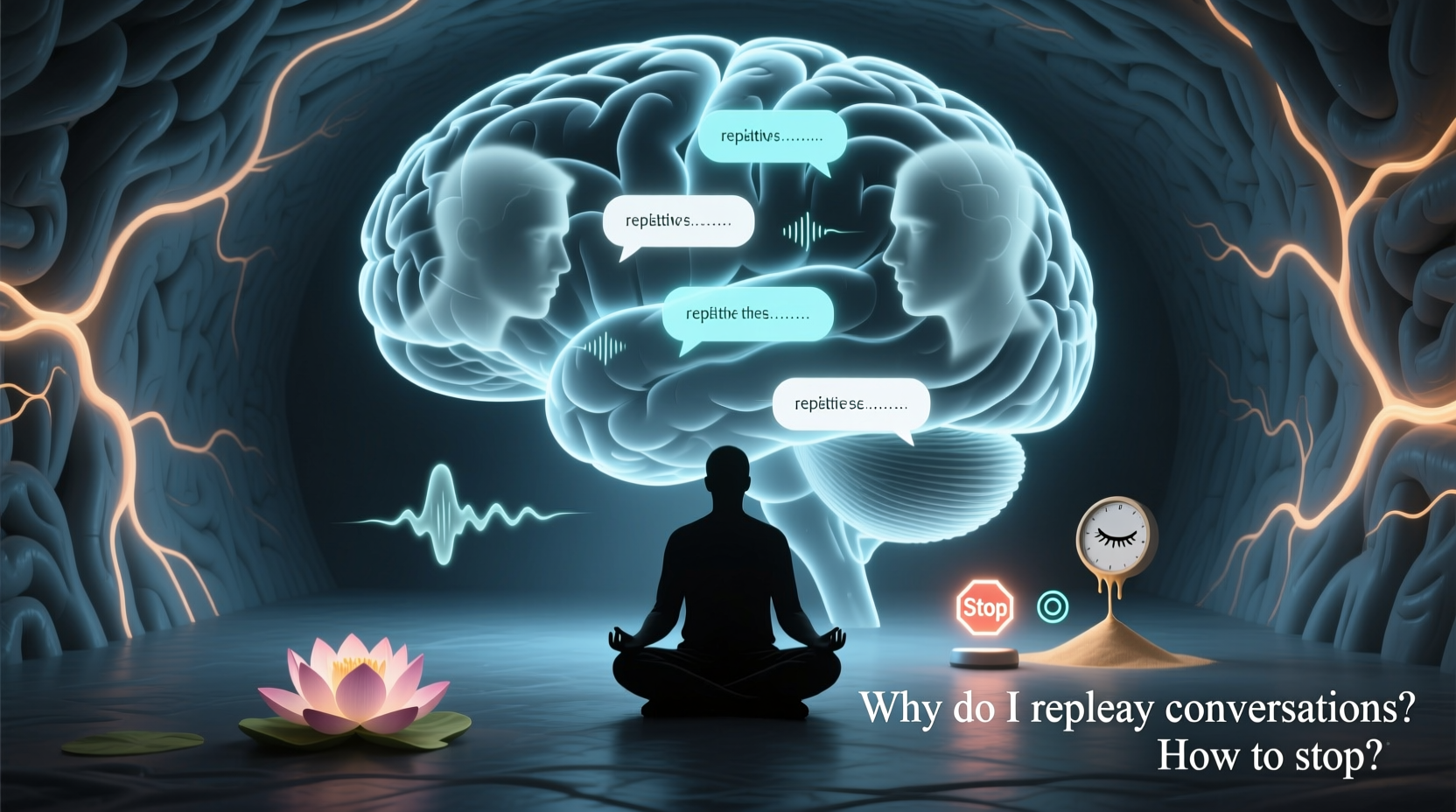
Replaying conversations isn’t a flaw—it’s a function of how the human brain processes social interactions. Our brains are wired for connection and evaluation. After any exchange, especially one with emotional weight, the prefrontal cortex activates to assess outcomes: Did I come across well? Was I misunderstood? Could I have handled that better?
This reflective process evolved to help us navigate complex social hierarchies. In ancestral environments, missteps in communication could lead to exclusion or conflict. Today, while the stakes are rarely life-or-death, the same neural circuitry remains active. When something feels unresolved—a comment left hanging, perceived criticism, or awkward silence—the brain treats it as an open loop. It keeps returning to the event in an attempt to “solve” it.
Rumination becomes problematic when it shifts from productive review to obsessive repetition. Unlike constructive reflection, which leads to insight and growth, rumination circles without resolution. It often involves negative self-talk, catastrophizing, and hypothetical scenarios that never occurred.
“Rumination isn’t thinking—it’s stuck thinking. The mind gets caught in a feedback loop of self-criticism and imagined outcomes.” — Dr. Lisa Firestone, Clinical Psychologist and Mental Health Researcher
Common Triggers of Repetitive Thought Loops
Not all conversations trigger replay. Certain conditions make them more likely:
- Perceived social mistakes: Saying something awkward, misspeaking, or feeling embarrassed during an interaction.
- Unresolved endings: Conversations that end abruptly or without closure (e.g., a text left on read).
- High-stakes discussions: Job interviews, confrontations, or emotionally charged arguments.
- Personality traits: Perfectionism, high empathy, or social anxiety increase vulnerability.
- Past trauma: Individuals with history of criticism or rejection may hyper-analyze interactions due to conditioned hypervigilance.
These triggers activate the brain’s default mode network (DMN), responsible for self-referential thought and memory consolidation. When overactive, the DMN sustains internal narratives long after external events have passed.
How to Stop the Loop: Science-Backed Strategies
Breaking free from repetitive mental replays requires both awareness and deliberate practice. Here are seven evidence-based methods to regain control.
1. Schedule a “Worry Window”
Instead of suppressing thoughts—which often amplifies them—designate 10–15 minutes daily to fully engage with the conversation. Write down everything you remember, analyze possible meanings, and draft ideal responses. When the time ends, close the notebook and move on. This technique, rooted in cognitive behavioral therapy (CBT), contains rumination instead of letting it spill into hours of the day.
2. Practice Cognitive Defusion
Cognitive defusion, a core principle in Acceptance and Commitment Therapy (ACT), teaches you to observe thoughts without attaching to them. When the conversation replays, say silently: “I’m having the thought that I messed up,” rather than “I messed up.” This subtle shift creates psychological distance, reducing the thought’s emotional grip.
3. Use Sensory Grounding Techniques
When caught in a mental loop, redirect attention to your physical environment. Try the 5-4-3-2-1 method:
- Identify 5 things you can see.
- Notice 4 things you can touch.
- Listen for 3 sounds.
- Recognize 2 smells.
- Pay attention to 1 thing you can taste.
This exercise interrupts the default mode network and re-engages the present-moment sensory processing areas of the brain.
4. Reframe the Narrative
Most replays are skewed by negativity bias—the brain’s tendency to prioritize threats over neutral or positive information. Challenge distorted thinking patterns:
- Am I assuming intent without evidence?
- Would I judge a friend this harshly for the same comment?
- What’s a more balanced interpretation?
Writing a compassionate alternative version of the conversation can reduce shame and promote closure.
5. Set Behavioral Boundaries with Yourself
Create rules to limit rumination. For example:
- No replaying conversations after 8 p.m.
- No discussing the event again unless new facts arise.
- If I catch myself ruminating, I must do 5 push-ups or walk around the block.
Physical action breaks the cycle by shifting neurochemistry and signaling that the brain must move on.
Checklist: Daily Practices to Reduce Mental Replays
Integrate these habits into your routine to gradually reduce frequency and intensity of rumination:
- ✅ Journal briefly about social interactions—then close the entry.
- ✅ Practice mindfulness meditation for 5–10 minutes daily.
- ✅ Identify one irrational belief per week and challenge it.
- ✅ Limit caffeine and alcohol, which can heighten anxious thinking.
- ✅ Replace post-conversation analysis with a ritual (e.g., wash hands, listen to a favorite song).
- ✅ Strengthen self-compassion with affirmations: “I did my best in that moment.”
Do’s and Don’ts: Managing Post-Conversation Thoughts
| Do | Don’t |
|---|---|
| Reflect once with purpose and intention. | Spend hours dissecting tone and body language. |
| Seek feedback if clarity is needed. | Assume the worst without confirmation. |
| Use replay as a tool for future improvement. | Use it as proof of personal failure. |
| Practice self-forgiveness for imperfect moments. | Engage in self-punishment through mental repetition. |
Real Example: How Sarah Broke the Cycle
Sarah, a 32-year-old project manager, found herself replaying a team meeting for three nights straight. She had suggested a timeline change and felt her voice trembled when speaking. Her mind kept returning to it: “They probably think I’m insecure. I sounded unsure. Why didn’t I prepare more?”
She began journaling each evening, writing down the event and her reactions. Then, she applied cognitive defusion: “I’m having the thought that they judged me—not that they actually did.” She scheduled a 10-minute “review window” the next day and used that time to write a follow-up email clarifying her point—something she hadn’t done originally.
Within a week, the replays diminished. More importantly, Sarah noticed a pattern: whenever she felt underprepared, her brain defaulted to rumination. She started arriving 10 minutes early to meetings, which reduced anxiety and prevented loops before they began.
Frequently Asked Questions
Is replaying conversations a sign of anxiety?
Yes, frequent and distressing mental replays are commonly linked to social anxiety, generalized anxiety disorder (GAD), and obsessive-compulsive tendencies. While not diagnostic on their own, they often coexist with clinical anxiety. If replays interfere with daily functioning or sleep, consider consulting a mental health professional.
Can replaying conversations improve communication skills?
In moderation, yes. Reflecting on interactions can enhance emotional intelligence and verbal agility. However, only intentional, brief review is beneficial. Chronic, emotion-driven replay tends to distort perception and hinder growth rather than support it.
How long does it take to stop mentally replaying conversations?
There’s no fixed timeline. With consistent use of techniques like mindfulness, cognitive restructuring, and behavioral scheduling, many people notice improvement within 2–6 weeks. Lasting change depends on underlying causes; deeper patterns related to self-worth or trauma may require longer-term therapeutic support.
Conclusion: Regain Control of Your Inner Dialogue
Your brain replays conversations because it’s trying to protect you—from embarrassment, conflict, or disconnection. But when that protective mechanism becomes excessive, it turns from ally to adversary. The strategies outlined here aren’t about silencing your mind, but about reshaping your relationship with it. You don’t need to eliminate all reflection; you need to replace compulsive rumination with intentional insight.
Start small. Choose one technique—grounding, journaling, or scheduling worry time—and practice it consistently. Over time, you’ll notice fewer loops, greater emotional resilience, and more presence in your daily life. The goal isn’t perfection in conversation; it’s peace afterward.




 浙公网安备
33010002000092号
浙公网安备
33010002000092号 浙B2-20120091-4
Comments
No comments yet. Why don't you start the discussion?