
Baking bread at home should be a rewarding experience—golden crust, soft crumb, and that unmistakable aroma filling your kitchen. But too often, bakers pull open their oven to find a dense, sunken loaf that barely rose. The culprit? Usually, it’s not the recipe—it’s the yeast. Understanding why your bread fails to rise is the first step toward consistent success. Yeast is a living organism, sensitive to temperature, timing, and ingredients. When conditions aren’t right, even the most carefully measured dough won’t expand. This guide dives into the most common reasons for poor dough rise, explains the biology behind fermentation, and gives you practical solutions to ensure your loaves rise beautifully every time.
The Science of Yeast: What Makes Bread Rise?
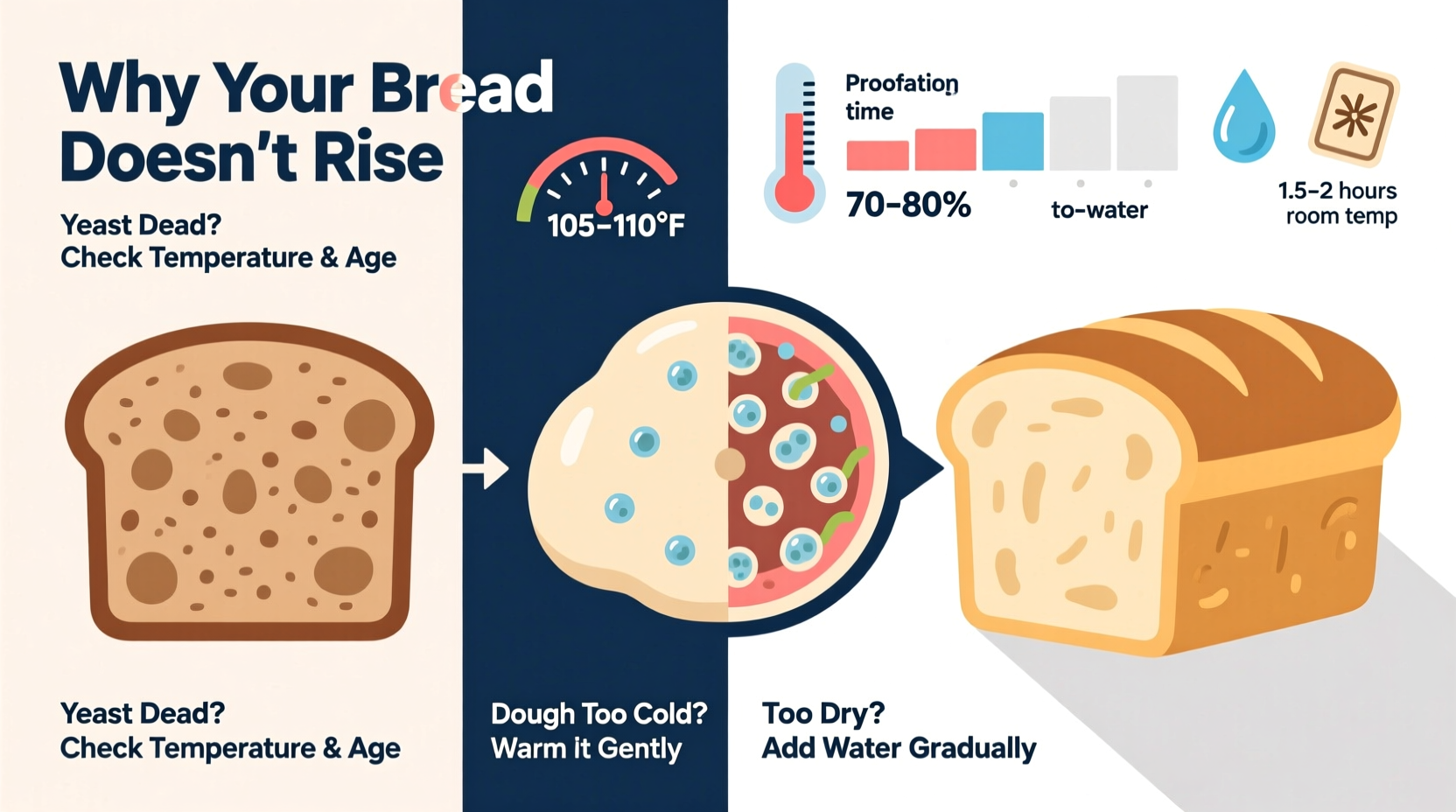
Yeast, specifically *Saccharomyces cerevisiae*, is a single-celled fungus that consumes sugars and produces carbon dioxide and alcohol as byproducts—a process known as fermentation. In bread baking, the carbon dioxide gets trapped in the gluten network of the dough, causing it to expand and rise. Without active yeast or proper dough structure, this gas escapes, and the bread remains flat.
For optimal activity, yeast needs three key conditions: warmth, moisture, and food (sugar or starch). Temperatures between 75°F and 85°F (24°C–29°C) are ideal for fermentation. Too cold, and yeast becomes sluggish; too hot, and it dies. Water activates yeast and helps distribute it through flour. And while flour provides complex carbohydrates, yeast breaks them down into simple sugars for energy.
“Yeast isn’t just an ingredient—it’s a partner in baking. Treat it with care, and it will reward you with light, airy bread.” — Dr. Lena Torres, Food Microbiologist and Artisan Baker
Common Reasons Your Bread Isn’t Rising (And How to Fix Them)
1. Yeast Is Expired or Inactive
Dry yeast has a shelf life. Even when stored properly, instant or active dry yeast loses potency over time. Using old yeast means fewer live cells to produce gas, resulting in weak or no rise.
To test yeast activity, mix 1/2 teaspoon sugar and 1/2 teaspoon yeast into 1/4 cup warm water (105°F–110°F). Wait 10 minutes. If the mixture bubbles and develops a yeasty aroma, the yeast is alive. If it remains still, discard it and use fresh yeast.
2. Water Temperature Is Too Hot or Too Cold
Water temperature plays a crucial role in yeast activation. Cold water slows fermentation dramatically. Boiling or near-boiling water kills yeast instantly. The sweet spot is 105°F to 110°F for rehydrating active dry yeast. For instant yeast, you can mix it directly with room-temperature liquids.
If you don’t have a thermometer, use your wrist: the water should feel warm but not scalding—like baby bottle temperature.
3. Salt Was Mixed Directly With Yeast
Salt inhibits yeast growth. While salt is essential for flavor and gluten strength, adding it directly to undiluted yeast can kill or severely slow the organisms. Always dissolve yeast in water first, or mix it with flour before adding salt.
4. Dough Wasn’t Given Enough Time to Rise
Rising isn’t about clock time—it’s about dough behavior. A recipe might say “let rise for 1 hour,” but if your kitchen is cold, that may not be enough. Instead, judge rise by volume: the dough should roughly double in size. Under-risen dough lacks sufficient gas production, leading to a dense crumb.
Cool kitchens (below 70°F) slow fermentation. To speed things up, place the bowl in a turned-off oven with a pan of hot water on the rack below. The steam and warmth create a proofing chamber.
5. Poor Gluten Development
Gluten forms when flour and water combine and are mixed or kneaded. It creates the elastic structure that traps carbon dioxide. If the dough is under-kneaded or made with low-protein flour (like cake flour), the structure collapses instead of expanding.
Use bread flour for better gluten formation. Knead by hand for 10–15 minutes or use a stand mixer with a dough hook until the dough passes the “windowpane test”: stretch a small piece thin enough to see light through without tearing.
Step-by-Step Guide to Proper Yeast Activation and Proofing
Follow this sequence to maximize yeast performance and ensure your dough rises reliably:
- Gather fresh ingredients: Check yeast expiration date. Use filtered or bottled water if your tap water is heavily chlorinated (chlorine can inhibit yeast).
- Warm the liquid: Heat water or milk to 105°F–110°F. Use a thermometer for accuracy.
- Bloom the yeast: Stir yeast and 1 teaspoon sugar into warm liquid. Let sit 5–10 minutes until foamy.
- Mix dry ingredients separately: Combine flour, salt, and any dry spices in a separate bowl to avoid direct contact with yeast early on.
- Combine and knead: Add the yeast mixture to the dry ingredients. Mix until a shaggy dough forms, then knead until smooth and elastic.
- First rise: Place dough in a lightly oiled bowl, cover with a damp towel or plastic wrap, and let rise in a warm, draft-free area until doubled (usually 1–2 hours).
- Punch down and shape: Gently deflate the dough, reshape, and place in a loaf pan or on a baking sheet for the second rise.
- Final proof: Let rise again until puffy—about 30–60 minutes. It should spring back slowly when gently pressed.
- Bake immediately: Preheat oven thoroughly. Slash the top if needed, then bake according to recipe.
Do’s and Don’ts of Yeast Baking
| Do’s | Don’ts |
|---|---|
| Store yeast in the freezer for long-term freshness | Leave yeast at room temperature for months |
| Use lukewarm liquid (105°F–110°F) for activating yeast | Use boiling water or ice-cold water |
| Add sugar to help activate yeast | Add salt directly to yeast before dissolving |
| Let dough rise until doubled, not by the clock | Rush the rise because the timer went off |
| Knead until windowpane stage for strong gluten | Under-knead or use low-protein flour for bread |
Real-Life Example: Sarah’s Sourdough Struggles
Sarah had been trying to bake sourdough for months. Her starter bubbled nicely, but her loaves came out dense and gummy. She followed recipes exactly, yet nothing changed. After reviewing her process, she realized two issues: First, she was refrigerating her starter and using it straight from the fridge without feeding and warming it. Second, her kitchen was only 65°F during winter, far too cold for proper fermentation.
She began feeding her starter 12 hours before baking and keeping it at room temperature overnight. She also placed her dough in the oven with a bowl of hot water to create a warm microclimate. The next loaf had an open crumb and rose nearly two inches higher than before. Small adjustments made all the difference.
Troubleshooting Checklist: Why Your Bread Didn’t Rise
Before discarding another failed loaf, go through this checklist:
- ✅ Is the yeast within its expiration date?
- ✅ Did I test the yeast for activity before using?
- ✅ Was the liquid too hot or too cold?
- ✅ Did I mix salt directly with dry yeast?
- ✅ Did I allow enough time for the dough to double in size?
- ✅ Was the room too cold for rising?
- ✅ Did I knead the dough sufficiently to develop gluten?
- ✅ Am I using the right type of flour (e.g., bread flour, not cake flour)?
- ✅ Did I punch down and reshape the dough properly after the first rise?
- ✅ Was the final proof long enough before baking?
Frequently Asked Questions
Can I use instant yeast instead of active dry yeast?
Yes. Instant yeast can be mixed directly with dry ingredients and doesn’t require blooming. Active dry yeast benefits from being dissolved in warm water first. Use the same amount unless the recipe specifies otherwise.
Why did my dough rise and then collapse?
Over-proofing is the most common cause. If dough rises too long, the gluten structure weakens and can’t hold the gas. The bubbles grow too large and pop, causing the dough to deflate. Stick to visual cues—double in size—not strict timing.
Can I save dough that didn’t rise?
Sometimes. If the dough hasn’t risen due to cold temperatures, move it to a warmer spot and give it more time. If the yeast is dead, you can try making a new yeast slurry and kneading it into the dough, though results vary. Otherwise, repurpose the dough into crackers or flatbread.
Advanced Tips for Consistent Results
Once you’ve mastered the basics, refine your technique with these pro-level practices:
- Autolyse: Mix only flour and water and let rest for 20–30 minutes before adding yeast and salt. This improves gluten development and reduces kneading time.
- Bench rest: After shaping, let the dough rest for 15–20 minutes before final proofing. This relaxes the gluten, making it easier to shape without springing back.
- Use a proofing basket (banneton): Supports the dough during the final rise, especially for high-hydration sourdoughs, preventing spreading.
- Track your environment: Keep a kitchen thermometer. Knowing your ambient temperature helps predict rise times more accurately.
- Freeze extra yeast: Divide bulk yeast into small portions and freeze in airtight bags. It stays viable for up to a year.
“The best bakers aren’t those with perfect recipes—they’re the ones who observe, adapt, and understand what their dough is telling them.” — Marcus Reed, Head Baker at Hearth & Crust Bakery
Conclusion: Rise Above the Failures
Bread that refuses to rise is frustrating, but rarely irreversible. Most failures come down to simple, fixable errors: expired yeast, incorrect temperatures, or impatience. By understanding yeast’s needs and paying attention to your environment, you gain control over the fermentation process. Each loaf—even the flat ones—is a lesson in patience and precision. Don’t give up after one collapse. Adjust, apply the tips here, and bake again. The perfect rise isn’t magic; it’s method. With practice and awareness, your kitchen will soon fill with the smell of success—light, airy, and golden-brown.




 浙公网安备
33010002000092号
浙公网安备
33010002000092号 浙B2-20120091-4
Comments
No comments yet. Why don't you start the discussion?