
Baking a cake should be a joyful process—measuring ingredients, smelling vanilla rise in the oven, and pulling out a golden dome ready for frosting. But when you open the oven door only to find a crater in the center, disappointment sets in fast. A sunken cake isn’t just unattractive; it can signal deeper issues in your technique or recipe. Understanding why this happens requires more than guesswork—it demands a look into the chemistry of baking. From leavening reactions to structural development, every stage of cake-making plays a role in whether your creation rises proudly or collapses under pressure.
The Science Behind Cake Structure and Rise
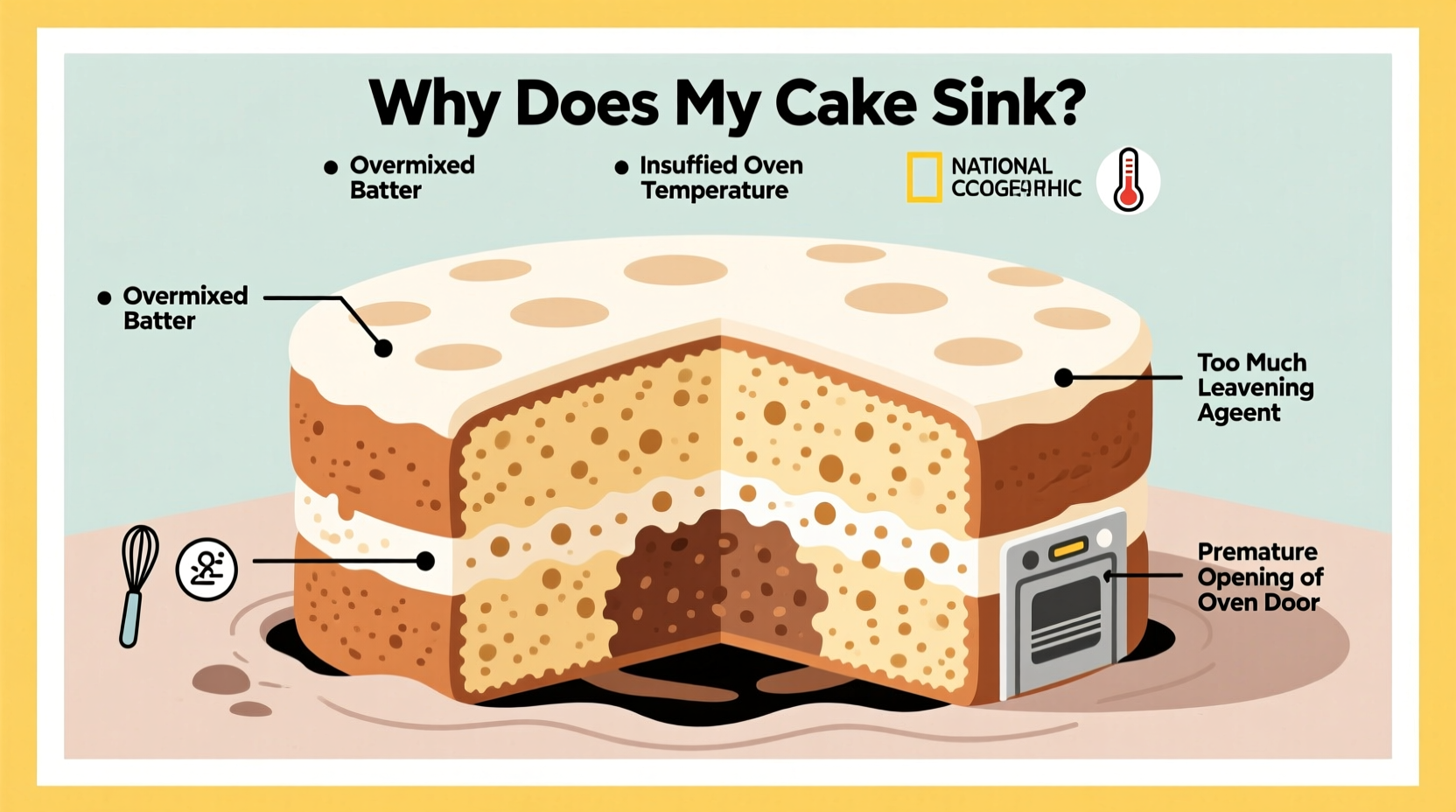
A cake’s ability to rise and maintain its shape hinges on three critical components: structure, leavening, and moisture balance. During baking, heat causes air bubbles trapped in the batter to expand. Simultaneously, leavening agents like baking powder or baking soda release carbon dioxide, further inflating the mixture. As temperature increases, proteins from eggs and flour begin to coagulate, forming a network that solidifies the cake’s crumb. Starches gelatinize, absorbing moisture and adding support. When these processes occur in harmony, the result is a light, even texture with a uniform rise.
However, if one element fails—whether due to incorrect ingredient ratios, premature cooling, or underbaking—the entire structure becomes unstable. The center may remain soft while the outer edges set, creating a weak spot prone to collapse. This imbalance often manifests as a sunken middle, especially common in dense batters like pound cakes or chocolate fudge varieties.
“Cake structure is a delicate dance between expansion and stabilization. If the framework doesn’t form quickly enough, gravity wins.” — Dr. Helen Torres, Food Chemist at the Institute of Baking Sciences
Common Causes of a Sunken Cake Center
Several factors contribute to a cake sinking in the middle. Some are easily corrected; others require attention to detail and consistency in method. Below are the most frequent culprits backed by baking science.
1. Underbaking
The leading cause of a collapsed cake is removing it from the oven too soon. Even if the top looks golden and a toothpick comes out mostly clean, residual heat might not have fully set the internal structure. The center remains gelatinous and unable to support its own weight. As the cake cools, the still-soft starches and proteins contract, causing the middle to fall.
2. Overmixing the Batter
While smooth batter seems ideal, overmixing introduces excessive air and develops gluten in flour. When gluten strands become too strong, they create a tight matrix that expands unevenly during baking. Once the cake leaves the oven, this tension releases suddenly, resulting in a dip. Additionally, large air bubbles formed by overbeating can burst mid-bake, destabilizing the rise.
3. Incorrect Oven Temperature
An oven that runs too cool delays protein coagulation and starch gelatinization, prolonging the time the cake spends in a fragile state. Conversely, an overly hot oven browns the surface too quickly, sealing the crust before the interior has finished rising. This creates a “skin” that traps steam and pressure, eventually forcing the wet center downward as it cools.
4. Opening the Oven Door Too Early
Sudden drops in temperature caused by opening the oven door before the cake has set can shock the delicate structure. Between 15 and 30 minutes into baking, most cakes are transitioning from liquid to solid. Introducing cold air halts expansion and may cause immediate collapse, particularly in sensitive recipes like sponge or chiffon cakes.
5. Imbalanced Ingredient Ratios
Too much sugar, fat, or leavening agent disrupts the cake’s equilibrium. Excess sugar weakens the protein structure by interfering with egg coagulation. Too much butter or oil compromises firmness, making the cake greasy and prone to sagging. And an overdose of baking powder produces rapid, unsustainable lift followed by deflation.
Do’s and Don’ts: Preventing Cake Collapse
| Do’s | Don’ts |
|---|---|
| Use room-temperature ingredients for even mixing | Don’t open the oven within the first 25 minutes |
| Sift dry ingredients to distribute leaveners evenly | Don’t overfill pans—leave at least ½ inch headspace |
| Rotate pans halfway through for even heat exposure | Don’t use expired baking powder or soda |
| Cool cakes in the pan for 10–15 minutes before transferring | Don’t cool cakes upside down unless recipe specifies (e.g., angel food) |
| Test doneness with a thin skewer near the center | Don’t rely solely on appearance—color isn’t proof of doneness |
Step-by-Step Guide to Baking a Perfectly Risen Cake
Follow this detailed sequence to minimize risk and maximize success:
- Prepare Ingredients Properly: Bring eggs, butter, and milk to room temperature. Cold ingredients emulsify poorly, leading to lopsided textures.
- Preheat Oven Accurately: Turn on the oven 20–30 minutes before baking. Use a standalone thermometer to confirm it reaches the correct temperature.
- Mix Methodically: Cream butter and sugar until light and fluffy (~3–5 minutes). Add eggs one at a time. Alternate adding dry and wet ingredients, starting and ending with flour. Mix only until combined—do not overbeat.
- Fill Pans Correctly: Distribute batter evenly using a scale or measuring cup. For standard 8- or 9-inch rounds, fill no more than two-thirds full.
- Bake Without Disturbance: Place pans in the center rack. Avoid opening the door until at least 75% of the recommended baking time has passed.
- Test for Doneness: Insert a toothpick into the center. It should come out with moist crumbs—not wet batter, not completely dry.
- Cool Gradually: Let the cake sit in the pan on a wire rack for 10–15 minutes. Then loosen edges and invert onto the rack to cool completely.
Real Example: Recovering a Repeated Failure
Sarah, a home baker in Portland, struggled for months with her favorite chocolate layer cake consistently sinking in the middle. She followed the same recipe each time, yet results varied wildly. After tracking variables, she discovered her oven ran 25°F cooler than displayed. Her baking powder was also six months past expiration, reducing its effectiveness. By replacing the leavener and calibrating her oven with a thermometer, her next batch rose evenly and held its shape perfectly. Sarah now logs oven temps and ingredient dates, turning frustration into precision.
Tips for High-Altitude and Humid Environments
Environmental conditions significantly impact cake behavior. At high altitudes (above 3,000 feet), lower atmospheric pressure allows gases to expand faster, increasing the chance of over-rising and collapse. To compensate:
- Increase oven temperature by 15–25°F to set structure faster.
- Reduce sugar by 1–2 tablespoons per cup to strengthen protein networks.
- Decrease baking powder by ⅛–¼ teaspoon per teaspoon called for.
- Add 1–2 tablespoons extra liquid to counteract faster evaporation.
In humid climates, flour absorbs ambient moisture, altering hydration levels. Sifting flour immediately before use helps aerate and normalize consistency. Consider reducing liquids slightly (by 1–2 teaspoons) if your batter appears unusually runny despite correct measurements.
Frequently Asked Questions
Can I fix a sunken cake after baking?
Yes, depending on severity. If the center is only slightly depressed and fully baked, level it with a serrated knife and cover with frosting or fruit. For deep sinks filled with gooey batter, repurpose the layers into trifle or cake pops. Never serve underbaked cake as-is—it poses food safety risks.
Does pan material affect cake rise?
Absolutely. Dark metal pans absorb heat faster, promoting quicker crust formation, which can inhibit rise. Light aluminum reflects heat more evenly, supporting steady expansion. Nonstick coatings sometimes cause sticking if not properly greased, pulling down the structure during removal. For best results, use light-colored aluminum pans and grease them with butter and flour or nonstick baking spray.
Why did my cake rise and then fall?
This typically points to over-leavening or excessive moisture. Too much baking powder creates a rapid surge of gas that the structure can’t sustain. Similarly, excess liquid delays setting, allowing the risen cake to deflate as it cools. Double-check your measurements and ensure leaveners are fresh but not overused.
Essential Checklist for Flawless Cakes
- ✅ Verify oven temperature with a reliable thermometer
- ✅ Use fresh baking powder (test by mixing ½ tsp with hot water—if it doesn’t fizz, replace it)
- ✅ Measure flour correctly—spoon into cup and level off (don’t scoop!)
- ✅ Mix batter just until combined after adding flour
- ✅ Avoid opening the oven door before the minimum bake time
- ✅ Cool cake in pan briefly before transferring to a rack
- ✅ Test doneness with a skewer inserted in the center
Conclusion: Master the Science, Elevate Your Results
A cake sinking in the middle isn’t random bad luck—it’s a message from your baking process. Whether it’s inaccurate oven heat, old ingredients, or subtle missteps in mixing, each failure carries a lesson rooted in food science. By understanding how structure forms, how gases behave, and how environmental factors interfere, you gain control over outcomes. Baking is equal parts art and chemistry, and mastery comes not from perfection, but from informed adjustments. Apply these principles consistently, and you’ll transform inconsistent results into reliably beautiful cakes.




 浙公网安备
33010002000092号
浙公网安备
33010002000092号 浙B2-20120091-4
Comments
No comments yet. Why don't you start the discussion?