
Baking a cake should be a joyful experience—soft crumb, even rise, golden crust. But when you pull it from the oven only to find a crater in the center, disappointment sets in fast. A sunken cake isn’t just visually unappealing; it often signals structural or chemical imbalances in the batter. The good news? Most causes are preventable. Understanding the science behind rising and setting can transform your baking results. This guide breaks down the most common reasons cakes sink in the middle, offers actionable fixes, and equips you with tools to consistently bake flawless cakes.
Understanding Cake Structure: Rise vs. Set
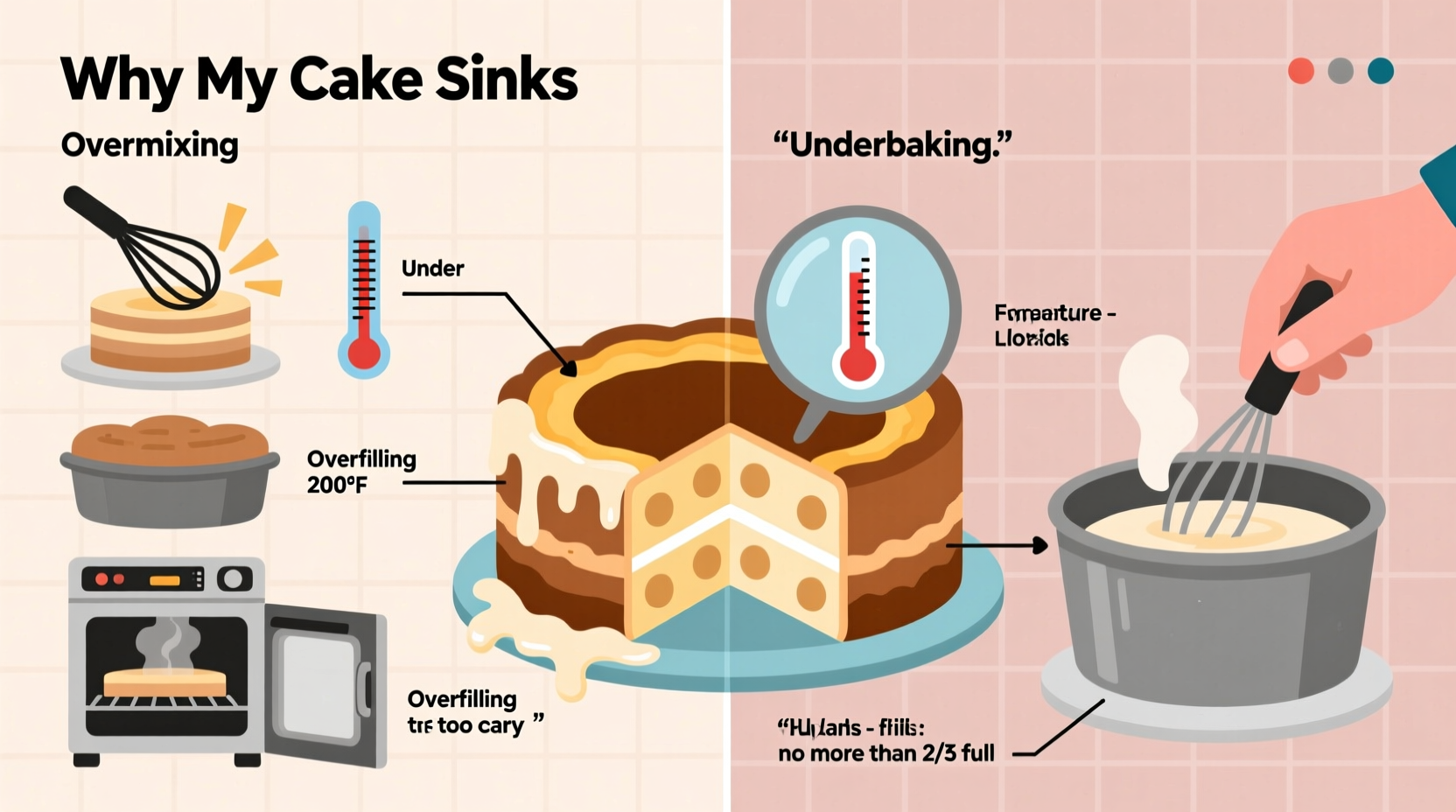
A successful cake relies on a delicate balance between leavening (rising) and structure (setting). Leavening agents like baking powder, baking soda, or air incorporated through creaming create gas bubbles that expand in the oven. Simultaneously, the cake’s structure—formed by gluten, eggs, and starches—must firm up quickly enough to support the rising batter before it collapses.
If the structure lags behind the expansion, the cake rises too fast and then caves in as the interior remains underbaked. Alternatively, if the oven temperature is too low or the door is opened prematurely, heat loss destabilizes the fragile network of air pockets. Recognizing this interplay helps pinpoint where things went wrong—and how to correct them.
Common Baking Errors That Cause Cakes to Sink
1. Underbaking Due to Incorrect Oven Temperature
One of the top culprits behind a collapsed cake is an oven that runs cooler than indicated. Many home ovens develop calibration issues over time, leading to inconsistent heat. If the oven doesn't reach the required temperature, the cake may appear done on the outside while the center remains wet and unsupported.
Using an oven thermometer is the best way to verify actual temperature. Relying solely on the built-in dial can mislead even experienced bakers.
2. Opening the Oven Door Too Early
The temptation to peek is strong, but opening the oven door during the first 20–25 minutes of baking can cause drastic temperature drops. This sudden cooling causes the air bubbles inside the cake to contract rapidly, collapsing the still-fragile structure.
“Never open the oven during the initial rise phase. Wait until at least two-thirds of the baking time has passed.” — Chef Lila Monroe, Pastry Instructor at Boston Culinary Academy
3. Overmixing the Batter
Overmixing develops excess gluten in flour-based batters. While some gluten is necessary for structure, too much creates a dense, elastic network that traps air unevenly. When baked, this tension can lead to irregular expansion and eventual collapse.
This is especially true for tender cakes like vanilla, chocolate, or pound cakes made with all-purpose flour. Mix just until ingredients are incorporated—no more.
4. Inaccurate Ingredient Measurements
Baking is chemistry. Slight deviations in ingredient ratios can disrupt the balance. Too much leavening agent (e.g., extra baking powder) produces excessive gas, causing the cake to rise too quickly and fall before the center sets. Conversely, too little flour weakens the structure, making it unable to support its own weight.
Always use a kitchen scale for precision, or spoon flour into measuring cups and level off—never scoop directly from the bag, which compacts the flour and leads to overdosing.
5. Expired or Improperly Stored Leavening Agents
Baking powder and baking soda lose potency over time. Using old leaveners means insufficient lift, resulting in a flat or uneven rise. Worse, expired baking powder may activate inconsistently, creating weak spots in the crumb.
Troubleshooting Guide: Step-by-Step Fixes
When your cake sinks, don’t just start over—analyze. Follow this timeline to identify and correct the issue next time.
- Inspect the Timing: Did you remove the cake too soon? Insert a toothpick into the center—it should come out clean or with a few moist crumbs, not wet batter.
- Check Oven Calibration: Use an independent oven thermometer to confirm temperature accuracy.
- Review Mixing Method: Were egg whites overbeaten? Was batter stirred after adding dry ingredients? Note any deviations from the recipe.
- Evaluate Ingredients: Verify expiration dates on leaveners. Were substitutions made (e.g., whole wheat for all-purpose)?
- Assess Pan Choice: Dark metal pans absorb more heat than light ones, increasing the risk of over-browning before the center sets. Adjust temperature downward by 25°F if using dark pans.
- Observe Cooling Process: Did you cool the cake in a drafty area? Rapid cooling can cause contraction and sinking.
Do’s and Don’ts: Baking Best Practices Table
| Do’s | Don’ts |
|---|---|
| Use room-temperature eggs and butter for even emulsification | Use cold ingredients straight from the fridge |
| Sift dry ingredients to distribute leaveners evenly | Add baking powder without sifting—can cause clumping and tunneling |
| Preheat oven for at least 15–20 minutes before baking | Put cake in a cold or warming oven |
| Cool cake in pan for 10–15 minutes before transferring to wire rack | Remove cake immediately—can break fragile structure |
| Measure flour by spooning into cup and leveling | Scoop flour directly with measuring cup—adds up to 25% extra |
Real Example: From Sunken Disaster to Perfect Layers
Sarah, a home baker from Portland, struggled for months with her favorite chocolate layer cake recipe. Every batch rose beautifully in the oven but sank dramatically in the center upon cooling. Frustrated, she posted in an online baking group asking for help.
After reviewing her process, several users pointed out she was using a convection oven without adjusting the temperature. Convection settings circulate hot air, which speeds surface drying but can delay internal setting. She also admitted to checking the cake at 20 minutes—well before the recommended 30-minute mark.
She adjusted by reducing the oven temperature by 25°F, disabling convection, and resisting the urge to open the door. On her next attempt, the cake rose evenly and held its shape. “I couldn’t believe such small changes made such a big difference,” she said. “Now I get perfect layers every time.”
Expert Tips for Foolproof Cake Baking
Avoiding a sunken cake starts long before you turn on the oven. These professional techniques ensure consistency and reliability.
- Rotate pans halfway through baking—if your oven has hot spots, rotating ensures even cooking.
- Use cake strips—wet fabric strips wrapped around the outside of the pan slow browning and promote even rise.
- Tap the pan gently on the counter after filling to release large air bubbles that could create weak zones.
- Avoid overfilling pans—fill no more than two-thirds full to allow room for expansion.
- Let ingredients come to room temperature—cold eggs or butter won’t emulsify properly, leading to unstable batters.
“The key to a stable cake is patience. Respect the chemistry, follow the method, and never rush the process.” — Marcus Tran, Executive Pastry Chef, The Birchwood Inn
Frequently Asked Questions
Can I fix a cake that has already sunk?
If the cake is fully baked but slightly indented, you can salvage it. Level the top with a serrated knife and use the flat surface for frosting. For deeper sinks, hollow out the center and fill with fruit, mousse, or jam. Alternatively, crumble the cake into trifle or cake pops.
Does altitude affect cake sinking?
Yes. At high altitudes (above 3,000 feet), lower atmospheric pressure causes gases to expand faster and liquids to evaporate sooner. This can lead to rapid rise and collapse. To adjust, reduce leavening by 1/8 to 1/4 teaspoon, increase oven temperature by 15–25°F, and add 1–2 tablespoons of extra liquid to prevent dryness.
Why did my cake rise in the middle but not on the sides?
This dome shape usually results from uneven heat distribution. The center heats faster than the edges, causing it to puff up. Using insulated baking strips or light-colored aluminum pans can help regulate heat and produce flatter tops.
Final Checklist Before You Bake
Before mixing your next cake, run through this quick verification list to avoid sinking disasters:
- ✅ Oven fully preheated with verified temperature
- ✅ All ingredients at room temperature (unless specified otherwise)
- ✅ Leavening agents tested and fresh
- ✅ Flour measured correctly (spooned and leveled)
- ✅ Mixer stopped as soon as ingredients are combined
- ✅ Pan filled only 2/3 full
- ✅ No opening oven door during first 20–25 minutes
- ✅ Toothpick test confirms doneness before removing from oven
Conclusion: Bake with Confidence
A cake that sinks in the middle is rarely a lost cause—it’s a signal. Each collapse teaches something about timing, temperature, or technique. By understanding the underlying causes and applying precise corrections, you gain control over the baking process. Whether you're making a simple vanilla sheet cake or an elaborate layered dessert, attention to detail makes all the difference. Now that you know what to watch for, trust your instincts, respect the science, and bake with confidence.




 浙公网安备
33010002000092号
浙公网安备
33010002000092号 浙B2-20120091-4
Comments
No comments yet. Why don't you start the discussion?