
One moment your car’s air conditioning delivers crisp, cool air. The next, warm or lukewarm airflow takes over—only for the chill to return minutes later. Intermittent AC performance is more than an annoyance; it’s a symptom of an underlying mechanical, electrical, or refrigerant issue. Unlike a complete AC failure, which is easier to pinpoint, intermittent cooling can be elusive. But with the right diagnostic approach, you can identify and resolve the problem quickly—often before it leads to a full breakdown.
This guide breaks down the most common causes of erratic AC behavior in vehicles, explains how each affects system performance, and provides a structured method to diagnose the root cause without expensive tools or guesswork.
How Car Air Conditioning Works: A Quick Refresher
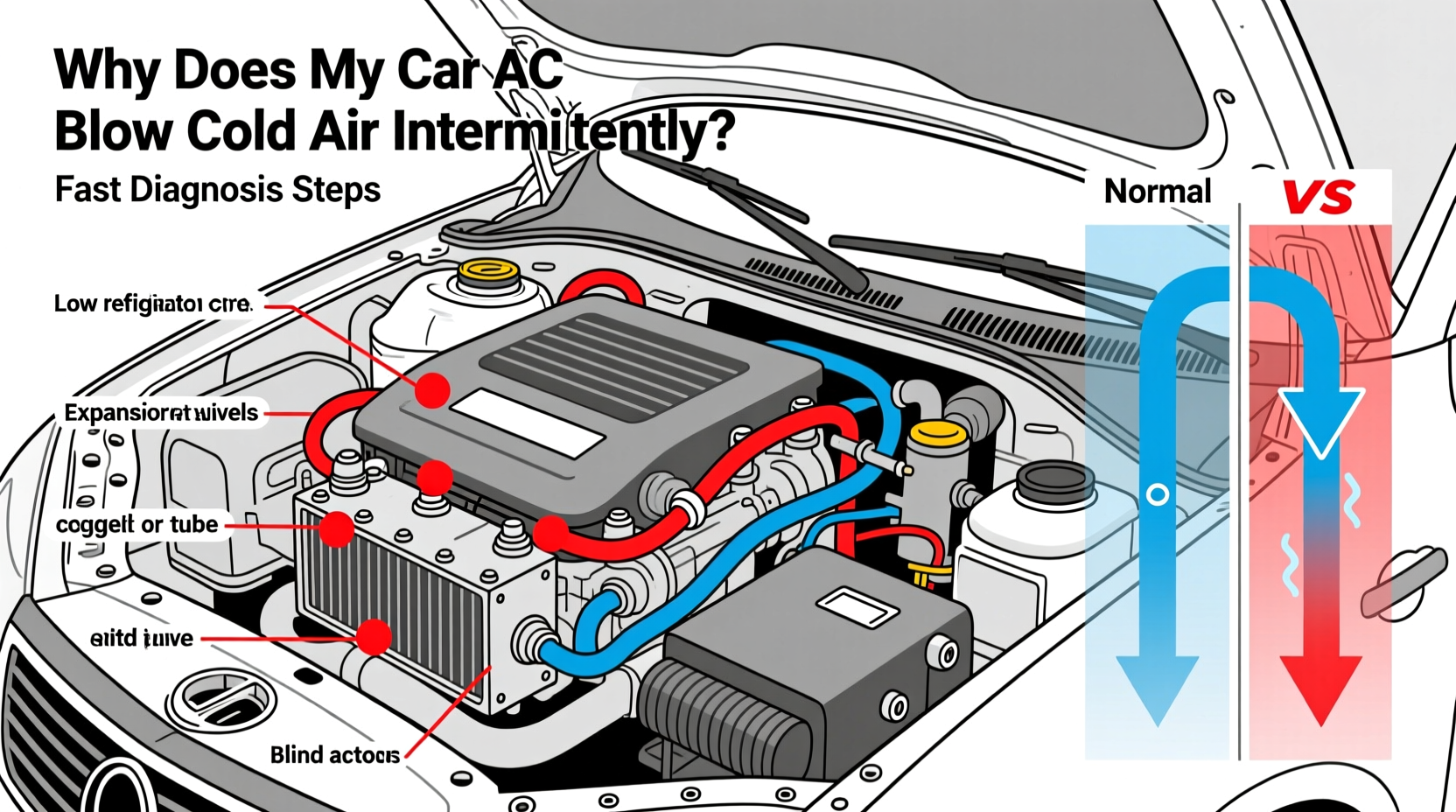
Understanding why your AC blows cold air only sometimes starts with knowing how the system functions under normal conditions. The automotive AC cycle relies on four key components working in harmony:
- Compressor: Pressurizes refrigerant and circulates it through the system.
- Condenser: Located in front of the radiator, it releases heat from the refrigerant.
- Expansion valve or orifice tube: Regulates refrigerant flow into the evaporator.
- Evaporator: Absorbs heat from cabin air, producing cold airflow.
The process depends on consistent pressure, proper refrigerant levels, electrical signals, and thermal regulation. Any disruption—whether due to low refrigerant, a failing sensor, or an overheating compressor—can cause the system to cycle unpredictably.
“Intermittent cooling is often the early warning sign of a deeper issue. Addressing it promptly can prevent costly repairs down the road.” — Carlos Mendez, ASE-Certified Master Technician
Top 5 Causes of Intermittent Cold Air
When your AC cuts in and out, it’s rarely random. Each cause has distinct patterns and triggers. Recognizing these helps narrow down the source.
1. Low Refrigerant Levels (Leaking System)
Refrigerant is essential for maintaining pressure and enabling heat exchange. A small leak won’t immediately kill the system but will cause pressure fluctuations. When pressure drops too low, the low-pressure switch disables the compressor. As temperatures equalize, pressure may rise enough to restart the compressor—leading to cycles of cold and warm air.
Common leak points include hoses, O-rings, the evaporator core, and the condenser. These leaks are often slow and hard to detect without dye or electronic detection.
2. Failing AC Compressor or Clutch
The compressor clutch engages and disengages based on temperature and pressure. If the clutch is worn, it may slip or fail to engage consistently. You might hear a clicking noise when the AC cycles off, followed by silence as the pulley spins freely.
A failing compressor may also seize temporarily when hot, then work again after cooling down—a classic sign of thermal failure.
3. Electrical Issues: Relays, Fuses, and Wiring
Electrical gremlins are among the most common culprits behind intermittent operation. A corroded relay, loose ground, or damaged wire harness can interrupt power to the compressor or control module. Heat and vibration worsen these issues, explaining why problems often appear during long drives or in hot weather.
Faulty pressure switches or temperature sensors send incorrect signals to the vehicle’s computer, tricking it into disabling the AC even when conditions seem normal.
4. Clogged or Faulty Expansion Valve / Orifice Tube
The expansion device regulates how much refrigerant enters the evaporator. If it becomes clogged with debris or moisture, refrigerant flow becomes inconsistent. This leads to ice buildup, reduced cooling, and eventual shutdown until the ice melts—then the cycle repeats.
Moisture contamination often stems from improper servicing or a compromised receiver/drier.
5. Overheating Engine or Poor Condenser Cooling
The AC system shares space with the engine’s cooling system. If your engine runs hot or the radiator fan fails, the condenser can’t dissipate heat effectively. High head pressure triggers the high-pressure switch, shutting off the compressor. Once the engine cools, the AC resumes—creating a frustrating on-off pattern.
Step-by-Step Diagnosis Guide
You don’t need a mechanic’s garage to begin diagnosing intermittent AC issues. Use this logical sequence to isolate the problem efficiently.
- Observe the Pattern: Note when the AC fails—is it after 10 minutes of driving? Only at idle? During acceleration? Patterns reveal clues.
- Check Dashboard Vents: Feel the airflow when cooling stops. Is it blowing room temperature air or warm air from the engine?
- Listen Under the Hood: Open the hood while the AC is running. When cooling stops, look at the compressor clutch. Is it still engaged? A spinning center hub means it’s active; if it’s still, the clutch isn’t engaging.
- Inspect Fuses and Relays: Locate the AC fuse and relay in the engine bay’s fuse box. Swap the AC relay with a similar one (like the horn relay) to test functionality.
- Scan for Error Codes: Use an OBD2 scanner to check for stored codes related to the AC system (e.g., P0530 for low refrigerant pressure).
- Monitor Temperature and Pressure: If possible, attach gauges to measure high- and low-side pressures. Fluctuating readings point to refrigerant issues or blockages.
- Test the Cooling Fans: Ensure both radiator and condenser fans activate when the AC is on. No airflow = poor heat rejection.
Real-World Example: Sarah’s 2015 Honda Civic
Sarah noticed her AC worked perfectly in the morning but blew warm air by midday. The issue disappeared after letting the car sit for an hour. Using the step-by-step method above, she discovered the compressor clutch wasn’t engaging when the system was warm.
After checking fuses and relays (all functional), she used an OBD2 scanner and found no codes. She then tapped the compressor lightly with a wrench—and the clutch engaged. This pointed to a sticking clutch mechanism caused by wear and voltage drop under heat.
Replacing the compressor clutch solved the issue. Total cost: $180 in parts and two hours of labor. Had she ignored it, the entire compressor could have failed, costing over $600.
Do’s and Don’ts: AC Troubleshooting Table
| Do | Don't |
|---|---|
| Check for visible oil stains around AC lines (signs of leaks) | Overfill refrigerant without evacuating the system first |
| Clean condenser fins blocked by leaves or bugs | Assume “recharge kits” fix all cooling problems |
| Inspect electrical connections for corrosion | Run the AC continuously if it’s cycling abnormally |
| Use an OBD2 scanner to read live data (e.g., AC request, compressor status) | Ignore unusual noises like grinding or squealing |
| Verify cooling fan operation with AC on | Attempt DIY repairs without proper recovery equipment |
Quick Checklist: Diagnose Your AC in Under 30 Minutes
Use this checklist for a fast field diagnosis:
- ✅ Does the compressor clutch engage when cooling starts?
- ✅ Does it disengage when airflow warms up?
- ✅ Are all fuses intact and relays clicking?
- ✅ Do the cooling fans turn on with the AC?
- ✅ Is there any hissing or bubbling sound under the hood?
- ✅ Can you smell mustiness or notice fogging inside?
- ✅ Did an OBD2 scan reveal any AC-related codes?
- ✅ Is the cabin filter clean and unobstructed?
If the compressor disengages when cooling fails, the issue is likely electrical, refrigerant-related, or sensor-based. If the compressor stays on but air warms, the problem may lie in airflow, blend doors, or internal blockages.
Frequently Asked Questions
Can low refrigerant cause intermittent cooling?
Yes. Modern vehicles have low-pressure cutoff switches that disable the compressor when refrigerant levels drop below a safe threshold. As the system cools and pressure rises slightly, the compressor may restart—creating a cycle of cold and warm air.
Why does my AC work better at highway speeds?
This typically indicates insufficient airflow through the condenser. At higher speeds, more air passes through, helping reject heat. At idle, poor fan operation or debris blockage prevents adequate cooling, causing the system to overheat and shut down.
Is it safe to use AC recharge kits from auto stores?
They can help if the only issue is slightly low refrigerant and you confirm no leaks. However, adding refrigerant without fixing leaks is temporary. Worse, overcharging can damage the compressor. Kits lack precision and don’t remove moisture or contaminants. For lasting results, professional evacuation and refill are recommended.
When to See a Professional
While many issues can be diagnosed at home, certain situations require expert intervention:
- Confirmed refrigerant leak needing repair
- Internal component failure (compressor, expansion valve)
- Electrical faults in the AC control module or body computer
- Moisture contamination requiring system evacuation
- Complex diagnostics involving live data monitoring
A qualified technician can perform a vacuum test, leak detection, and precise refrigerant charging—ensuring long-term reliability.
Conclusion: Act Fast, Stay Cool
Intermittent AC performance is not something to ignore. It’s a clear signal that your vehicle’s climate system is struggling. Whether it’s a minor electrical fault or an early-stage refrigerant leak, catching the issue early saves money, comfort, and prevents further damage.
You now have the knowledge to observe patterns, conduct basic tests, and communicate effectively with mechanics. Don’t wait for total failure. Use the checklist, listen to your car, and take action before summer heat turns your drive into a sauna.




 浙公网安备
33010002000092号
浙公网安备
33010002000092号 浙B2-20120091-4
Comments
No comments yet. Why don't you start the discussion?