
That familiar beep when you open your car door might seem like a minor annoyance, but it’s actually a carefully designed signal meant to keep you and your vehicle safe. While many drivers simply accept the sound as normal, sudden changes—like a louder tone, repeated chirping, or a new beep where there was none before—can spark concern. Understanding why your car beeps upon entry isn’t just about peace of mind; it’s about staying informed on your vehicle’s health and safety systems. From forgotten keys to low battery warnings, this guide breaks down the most likely causes, what they mean, and how to respond appropriately.
Understanding Your Car’s Warning System
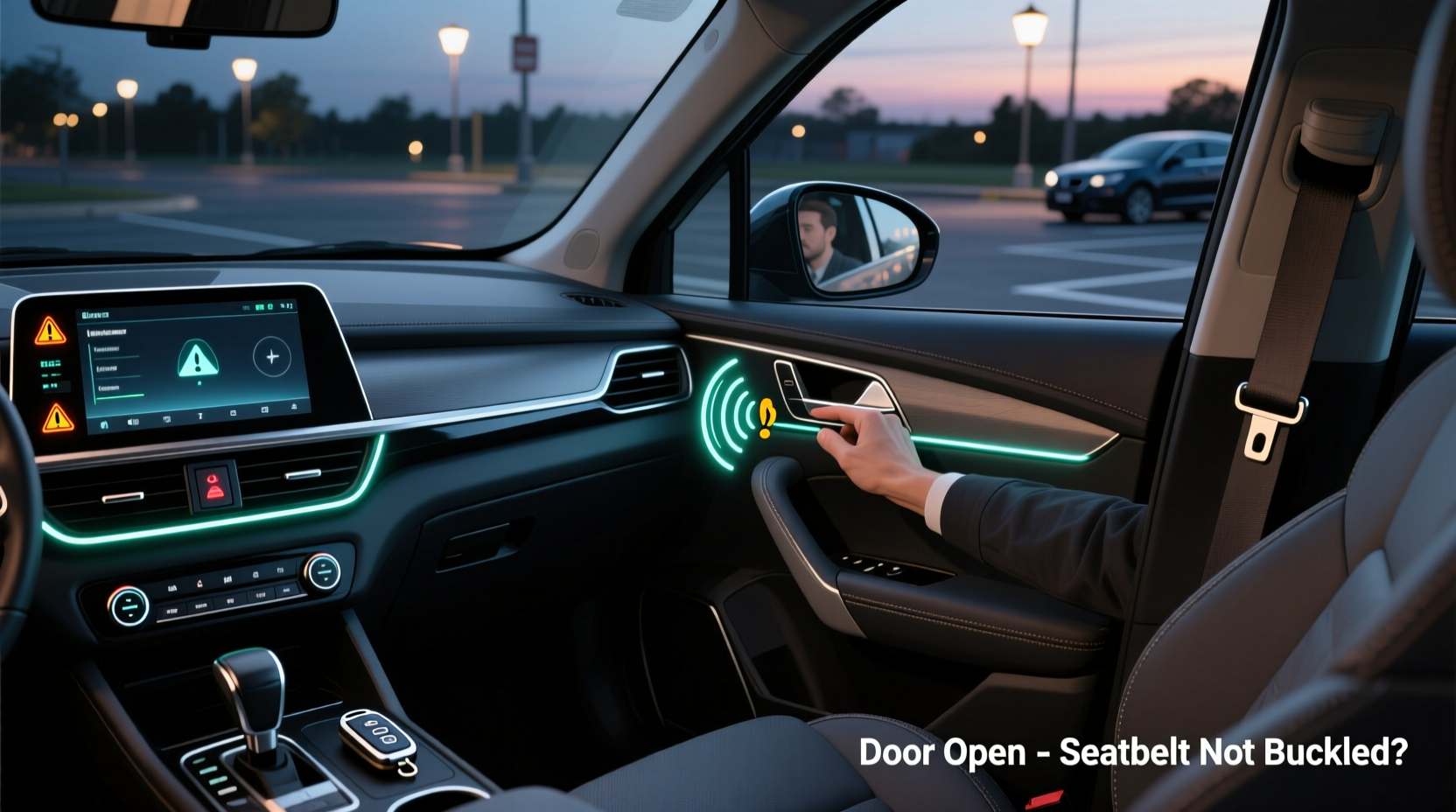
Modern vehicles are equipped with complex electronic modules that monitor everything from seatbelt use to engine performance. The beep you hear when opening the door is typically part of an integrated warning system managed by the body control module (BCM). This system communicates through auditory alerts, dashboard lights, and chimes to inform drivers of potential issues or reminders.
These sounds are not random. Each tone pattern—its pitch, duration, and repetition—carries specific meaning. For example, a single short beep may indicate the headlights are still on, while a rapid series of beeps could signal an unfastened seatbelt. When the door opens, the BCM activates certain checks based on input from sensors located in the doors, ignition switch, key fob receiver, and battery monitoring circuits.
“Vehicle chimes are among the most effective passive safety features we’ve seen in the last two decades. They reduce human error by providing immediate feedback.” — Dr. Alan Reeves, Automotive Safety Researcher at MIT Transportation Lab
Common Reasons Your Car Beeps When You Open the Door
The cause of the beep varies depending on make, model, and year, but several explanations recur across brands. Below are the top five reasons for this behavior:
1. Key Left in the Ignition
If the key is still in the ignition when you open the driver’s door, most cars will emit a continuous or repeating beep. This is a fail-safe reminder to prevent theft or accidental lock-ins. Even with push-button start systems, removing the key fob from the detection zone triggers the same alert if the fob remains inside the cabin.
2. Headlights or Interior Lights Left On
A soft, intermittent chime often signals that the headlights or dome light was left on after turning off the engine. The system detects voltage draw and activates the warning once the door opens, helping prevent a drained battery. This is especially common in older models without automatic shutoff features.
3. Seatbelt Not Fastened
Some vehicles initiate the seatbelt reminder chime as soon as the door opens and the engine starts—but others begin the alert sequence earlier, especially if the system detects that the driver has entered but not secured the belt within a few seconds. In certain models, this can start even before ignition.
4. Key Fob Still Inside the Vehicle
Newer cars with smart key systems (e.g., Toyota Smart Key, BMW Comfort Access) beep when the driver exits and leaves the key fob behind. This feature, known as “Key-in-Car” or “Key Left Inside” alert, prevents owners from locking themselves out. The beep usually begins shortly after the door opens and continues until the fob is removed or the door closes.
5. Low 12-Volt Battery Voltage
A weak car battery can trigger unexpected chimes. When voltage drops below optimal levels (typically under 12.2 volts), the BCM may activate warning tones during high-draw events like opening the door, which powers interior lights and sensors. If your car beeps only occasionally—and seems sluggish to start—it may be time to test the battery.
Troubleshooting the Beep: A Step-by-Step Guide
Before assuming something is broken, follow this diagnostic process to identify the root cause:
- Observe the beep pattern: Is it one long tone? Rapid chirps? Does it repeat every few seconds? Note the rhythm—this helps determine the message.
- Check for obvious oversights: Look for the key in the ignition, confirm headlights are off, and ensure the key fob isn’t on the passenger seat.
- Inspect the instrument cluster: Turn the key to “ON” (without starting) and look for warning icons—seatbelt, battery, door ajar, etc.
- Test each door: Close all doors firmly. Sometimes a faulty door jamb switch falsely reports an open door, triggering the chime.
- Scan for error codes: Use an OBD2 scanner to check for stored BCM or lighting circuit faults, especially if the beeping persists.
- Monitor battery health: Use a multimeter to measure voltage. A healthy battery should read 12.6V when off and 13.7–14.7V when running.
If no clear cause emerges, consider environmental factors. Extreme temperatures can temporarily affect sensor sensitivity, and aftermarket installations (like alarms or dashcams) may interfere with factory chime logic.
When the Beep Isn’t Normal: Warning Signs of Deeper Issues
Occasional beeping is expected. But persistent, erratic, or new chimes warrant closer inspection. Here are red flags that suggest more than just a reminder tone:
- Beeping occurs with all doors closed and engine off
- Chimes continue for minutes without stopping
- The sound is unusually loud or distorted
- Other electrical components behave erratically (e.g., flickering lights, unresponsive locks)
- The beep started after recent repairs or battery replacement
In such cases, the issue may lie in a malfunctioning door switch, a software glitch in the BCM, or parasitic drain. One real-world example involved a 2019 Honda CR-V where moisture seeped into the driver’s side door jamb switch. The car constantly registered the door as “ajar,” triggering nonstop beeping and draining the battery overnight. Replacing the $12 switch resolved the problem instantly.
“I had my battery replaced at a local shop, and suddenly my car started beeping every time I opened the door—even with the key out. Turns out, they forgot to reset the BCM after disconnecting power. A quick relearn procedure fixed it.” — Mark T., San Diego, CA
Can You Disable the Door Chime?
Yes, in some cases—but caution is advised. Disabling safety-related chimes removes valuable feedback. However, if the beep is due to a false alarm or nuisance (e.g., a faulty sensor), temporary or permanent disablement may be justified.
Methods vary by manufacturer:
- Through infotainment settings: Many newer vehicles allow chime volume adjustment or muting via the onboard menu (e.g., Settings > Vehicle > Audio Warnings).
- Fuse removal: Locate the chime or BCM fuse in the owner’s manual and pull it. This disables all audible alerts—use only as a last resort.
- Software reset: Disconnecting the battery for 10–15 minutes can reset the BCM and stop phantom alerts caused by glitches.
| Method | Difficulty | Risk Level | Reversible? |
|---|---|---|---|
| Infotainment Menu Adjustment | Easy | Low | Yes |
| Battery Disconnect Reset | Moderate | Medium (may reset radio presets, clock) | Yes |
| Fuse Removal | Easy | High (disables all chimes) | Yes |
| Dealer Reprogramming | Hard | Low | Yes |
Preventative Maintenance Checklist
To avoid unnecessary beeping and maintain system reliability, perform these checks regularly:
- ✅ Clean door jamb switches annually with electrical contact cleaner
- ✅ Inspect battery terminals for corrosion every 3 months
- ✅ Test battery voltage twice a year (spring and fall)
- ✅ Ensure all exterior lights turn off automatically
- ✅ Update vehicle software if manufacturer recalls or bulletins mention chime issues
- ✅ Store key fobs away from metal surfaces or other electronics that may block signals
Frequently Asked Questions
Why does my car beep when I open the door but not every time?
Intermittent beeping often depends on context. For example, the car may only beep if the headlights were on, the key is in the ignition, or the seatbelt isn’t fastened. It may also occur when battery voltage is borderline. Environmental factors like humidity or temperature swings can affect sensor performance temporarily.
My car didn’t used to beep—why did it start recently?
A sudden onset of beeping could follow a battery disconnection (which resets system defaults), a software update, or activation of a previously disabled feature. Some vehicles re-enable safety chimes after servicing. Check your settings or consult the owner’s manual for recent change logs.
Is it bad to disable the door chime?
Disabling the chime removes a useful safety layer. While it may silence a nuisance, you risk missing critical alerts like “key left inside” or “headlights on.” If disabling, do so selectively and only after confirming no underlying issues exist.
Final Thoughts: Listen to What Your Car Is Telling You
Your car’s beep isn’t just noise—it’s communication. Whether reminding you of a simple oversight or signaling a developing fault, these alerts are designed to protect your vehicle and enhance safety. Rather than ignoring or silencing them outright, take a moment to interpret the message. Most causes are harmless and easily corrected. But when patterns change or persist, proactive diagnosis can prevent bigger problems down the road.
Stay attentive, maintain your vehicle’s electrical system, and remember: every beep has a reason. Address it early, and you’ll enjoy a quieter, more reliable ride for years to come.




 浙公网安备
33010002000092号
浙公网安备
33010002000092号 浙B2-20120091-4
Comments
No comments yet. Why don't you start the discussion?