
It’s a familiar sound: you approach your car, unlock the door, and as soon as you pull the handle, a sharp, repetitive beep cuts through the air. No key is in the ignition—so why is your car warning you? This behavior, while sometimes annoying, is not random. It's a deliberate safety and convenience feature built into most modern vehicles. Understanding the reasons behind this alert can help you determine whether it's functioning correctly, needs adjustment, or indicates a deeper issue.
The beeping noise when opening a car door without the keys present is typically part of the vehicle’s reminder system. Designed to prevent accidental lockouts and promote fuel efficiency, these alerts are integrated into the broader network of sensors and modules that monitor everything from seatbelt use to lighting status. However, when the beeping persists without an obvious cause, it can raise concerns about battery drain, electrical faults, or malfunctioning components.
How Vehicle Reminder Systems Work
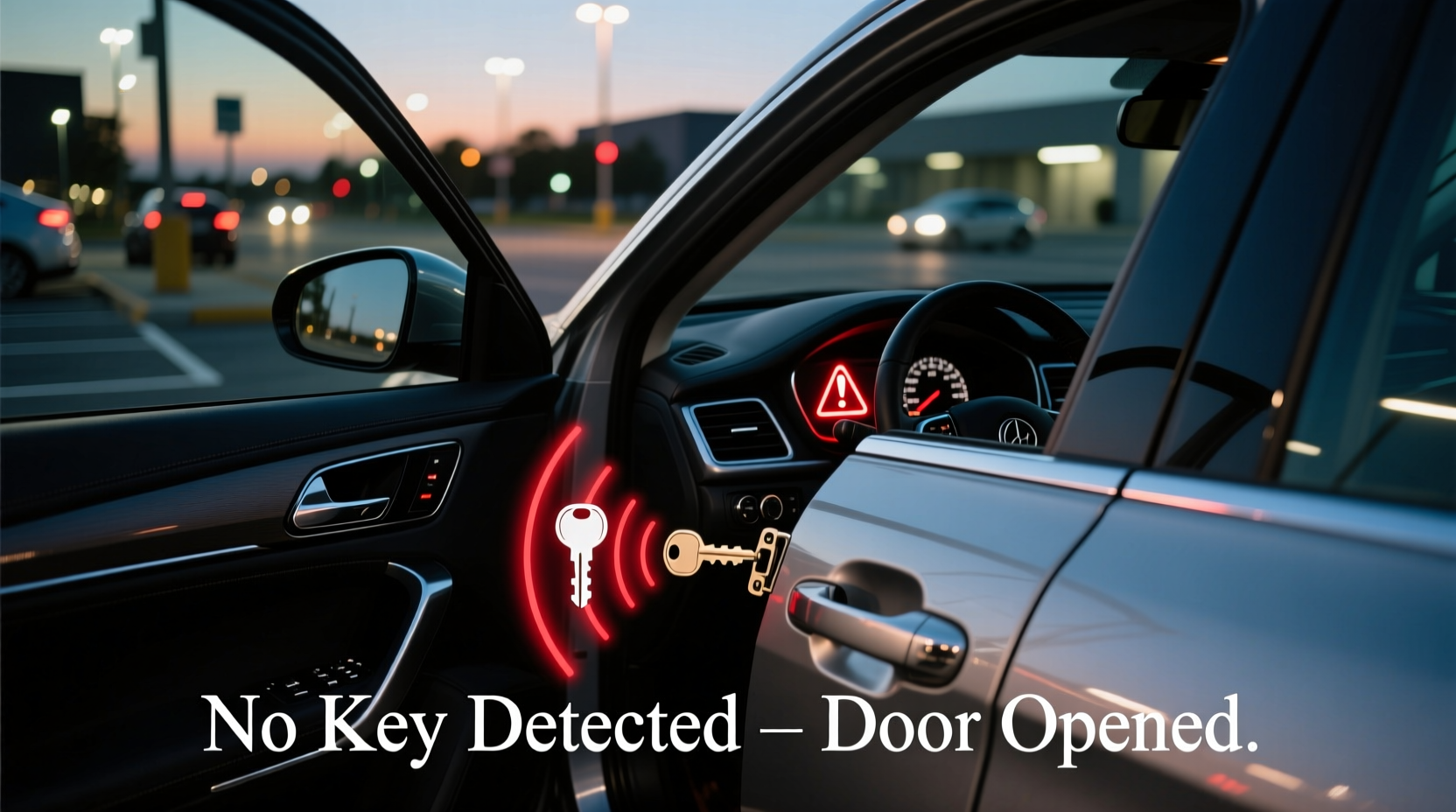
Modern cars rely on interconnected electronic control units (ECUs) to manage functions ranging from engine performance to interior lighting. One of these systems—the body control module (BCM)—is responsible for monitoring cabin activity, including door status, key presence, and ignition state. When you open the driver’s door without the key in the ignition, the BCM receives signals from multiple sources:
- A door jamb switch detects the door is open.
- The ignition sensor confirms the key is not in the \"on\" or \"accessory\" position.
- If headlights are left on, the light sensor triggers an additional alert.
Based on pre-programmed logic, the BCM activates the chime to warn the driver. This sequence is intended to prevent two common issues: leaving the headlights on (which drains the battery) and walking away from the vehicle with the keys still inside, potentially locking yourself out.
“Most factory-installed warning chimes are designed around user safety and equipment protection. They’re not arbitrary—they respond to real-world risks drivers face daily.” — Daniel Reeves, Automotive Electronics Engineer
Common Causes of Door-Opening Beeps
While the general purpose of the beep is clear, several specific conditions can trigger it. Knowing these helps distinguish normal operation from potential malfunctions.
1. Headlights Left On
The most frequent reason for a door-opening beep is active exterior lighting. If your headlights or parking lights remain on after turning off the engine, the car will often chirp when the driver’s door opens. This is especially common in automatic headlight systems that don’t shut off immediately in low-light conditions.
2. Key Fob Inside the Vehicle
With push-button start systems, the physical key isn’t inserted—but the fob’s presence is detected. Some models emit a warning if the fob is left inside the car and the door opens, reducing the risk of locking it in the cabin or trunk.
3. Ignition Not Fully Off
If the ignition is in “accessory” mode (radio on, but engine off), the car may interpret this as an incomplete shutdown. Opening the door under these conditions usually triggers a chime to prompt full power-down.
4. Faulty Door Ajar Sensor
A malfunctioning door switch can send incorrect signals to the BCM. Even if the door is closed, a stuck or corroded switch might register it as open, leading to erratic beeping—including when opening the door again.
5. Aftermarket Accessories Interference
Alarm systems, remote starters, or dashcams hardwired into the door circuit can disrupt the original signal flow. These modifications sometimes override factory logic, causing unintended chimes.
Diagnosing the Source: A Step-by-Step Guide
Before assuming a defect, follow this diagnostic process to identify what’s triggering the beep.
- Turn off all lights manually. Use the headlight switch to ensure they’re fully deactivated, bypassing automatic settings.
- Remove the key or fob from the vehicle. Place it at least 10 feet away to eliminate proximity-based detection.
- Close all doors securely. Walk around the car and press each door lightly at the latch point to confirm closure.
- Open only the driver’s door. Listen for the beep. If it occurs, note its pattern: single chirps, rapid beeps, or long tones can indicate different triggers.
- Check the dashboard. Look for a “door ajar” warning light—if illuminated, one of the switches is likely faulty.
- Repeat with ignition in accessory mode. This tests whether partial power activation influences the alert.
If the beep persists despite all lights being off and the key removed, further inspection is warranted. Focus next on the door jamb switches and fuse box.
Troubleshooting and Solutions
Once the cause is narrowed down, targeted fixes can resolve the issue. Below are practical solutions based on common scenarios.
Replacing a Faulty Door Switch
The door jamb switch—a small plunger near the hinge—is exposed to moisture and wear. Over time, it may stick or fail to make contact. To replace it:
- Unscrew the switch housing (usually one Phillips screw).
- Disconnect the wiring harness gently.
- Install the new switch and test door closure.
Cost: $15–$40 per switch. Labor at a shop averages 0.5 hours.
Resetting the Body Control Module
Occasionally, the BCM retains false states due to voltage drops or software glitches. A reset can clear phantom alerts:
- Turn off the ignition and remove the key.
- Open the hood and locate the BCM fuse (refer to owner’s manual).
- Remove the fuse for 15 minutes.
- Reinsert and test door operation.
This soft reset clears temporary memory without affecting stored settings like radio presets.
Disabling the Chime (When Appropriate)
In some cases, owners choose to disable the chime permanently—especially if it’s overly sensitive or redundant with smartphone alerts. Options include:
- Using dealership-configurable settings: Many brands (e.g., Toyota, Honda, Ford) allow chime adjustments via onboard menus or dealer-mode programming.
- Fuse removal: Pulling the chime or BCM fuse silences the alert but may affect other features like turn signal clicks.
- Aftermarket modules: Devices like iDatastart offer programmable chime control without voiding warranties.
| Solution | Difficulty | Risk Level | Best For |
|---|---|---|---|
| Turn off headlights manually | Low | None | Daily prevention |
| Replace door switch | Moderate | Low | Stuck sensor |
| Reset BCM | Low | Low | Glitches after battery change |
| Disable chime via fuse | Low | Medium | Temporary fix |
| Dealer reprogramming | High | None | Permanent customization |
Real-World Example: The Case of the Persistent Beep
Consider Sarah, a rideshare driver in Seattle. Her 2019 Honda CR-V began beeping every time she opened the driver’s door—even after removing her foot from the brake and taking the key fob inside. Initially, she assumed it was a battery-saving alert. But when the chime continued during rainy commutes, she grew concerned about premature wear on the speaker or electrical drain.
She followed basic troubleshooting: confirmed lights were off, checked door latches, and even replaced the fob battery. No change. A visit to a local mechanic revealed the root cause: moisture had seeped into the passenger-side door jamb switch, causing a constant “door open” signal. Though the door appeared closed, the BCM thought it was ajar. Replacing the $27 switch resolved the issue instantly.
Sarah’s case highlights how environmental exposure can compromise simple components, leading to misleading alerts. What seemed like a systemic fault was actually a localized hardware failure.
When to Seek Professional Help
While many causes are DIY-friendly, certain signs warrant professional diagnosis:
- The beep continues even with all doors closed and ignition off.
- Battery drains overnight repeatedly.
- Multiple warning lights appear alongside the chime.
- The horn sounds intermittently without input.
These could indicate deeper electrical issues such as a short circuit, parasitic draw, or failing control module. A certified technician can perform a multimeter test to measure current draw and use an OBD2 scanner to read BCM error codes.
Frequently Asked Questions
Can a low car battery cause door-opening beeps?
No, a weak battery doesn’t directly trigger the chime. However, voltage fluctuations from a failing battery can confuse the BCM, leading to erratic behavior, including false alarms. If beeping coincides with slow cranking or dim lights, have the battery and alternator tested.
Is it safe to disable the door chime?
Yes, but with trade-offs. Disabling the chime removes a useful reminder about lights or keys. If you're vigilant about turning off accessories and carrying your fob, disabling it poses minimal risk. However, families or shared vehicles may benefit more from keeping it active.
Why does my car beep only at night?
This usually points to automatic headlights. At dusk or in tunnels, the sensors activate the lights. If they stay on after shutdown, the car warns you when the door opens. Manually switching them off post-drive should stop the alert.
Final Thoughts and Action Plan
The beeping sound when opening your car door without the keys inside is rarely a defect—it’s a carefully engineered alert meant to protect your vehicle and habits. In most cases, it’s triggered by headlights left on, a lingering key fob signal, or a minor sensor issue. By understanding the logic behind the chime, you gain control over when to address it and when to simply acknowledge its message.
Start with simple checks: turn off lights, remove the fob, and ensure doors are fully latched. If the sound persists, investigate the door switches or consider a BCM reset. Reserve permanent modifications like chime disablement for situations where the alert adds no value to your routine.
Remember, modern cars communicate through sounds, lights, and messages. Responding thoughtfully—not reactively—helps maintain both safety and system longevity.




 浙公网安备
33010002000092号
浙公网安备
33010002000092号 浙B2-20120091-4
Comments
No comments yet. Why don't you start the discussion?