
Feeling a vibration through the steering wheel or brake pedal when slowing down is more than just annoying—it's a warning sign. Many drivers immediately assume their brakes are failing or that their wheels are out of alignment. While both can contribute to driving discomfort, the root cause of shaking during braking is often misunderstood. The real culprit? More frequently than not, it's worn or warped brake rotors. However, suspension issues, misalignment, and other mechanical problems can mimic or worsen the sensation. Understanding the differences between rotor-related shaking and alignment-induced instability is essential for timely repairs and long-term vehicle safety.
How Braking Systems Work: A Quick Overview
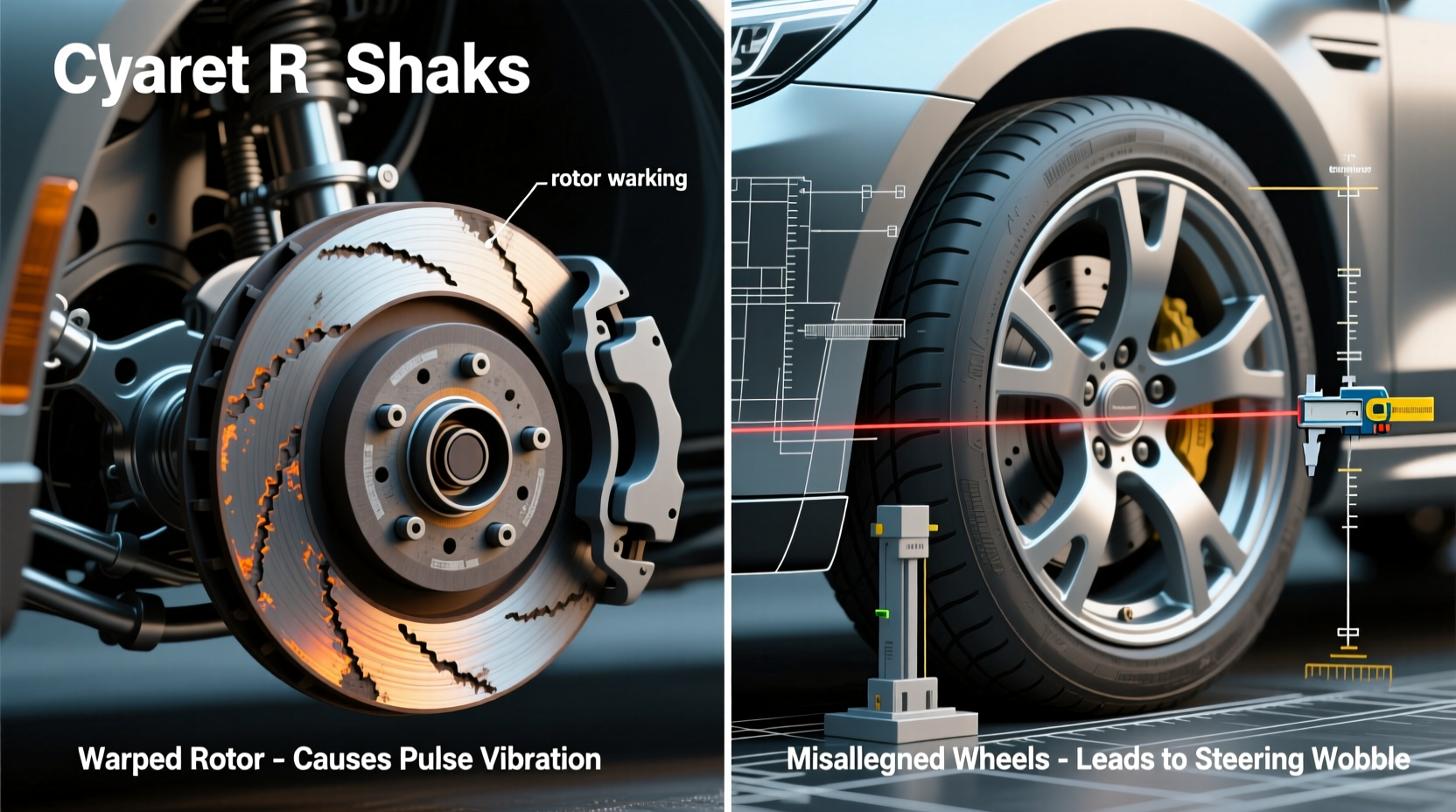
Your car’s braking system relies on friction to slow down. When you press the brake pedal, hydraulic pressure forces brake pads against the rotors (also called discs), which are attached to the wheels. This contact creates resistance, converting kinetic energy into heat and bringing the vehicle to a stop. For this process to be smooth, the rotors must be perfectly flat and evenly surfaced. Any imperfection—such as warping, grooving, or uneven wear—can disrupt the contact between pad and rotor, leading to pulsation or shaking.
While alignment doesn’t directly affect braking mechanics, poor alignment alters how tires contact the road. This can lead to uneven tire wear, which may transmit vibrations under certain conditions—including during braking. But unlike rotor issues, alignment problems typically cause constant shaking at various speeds, not just when stopping.
Brake Rotors: The Primary Cause of Brake-Related Shaking
Warped or damaged rotors are the most common reason for steering wheel or pedal vibration during braking. Over time, repeated heating and cooling cycles can cause rotors to lose their flatness. This warping means the brake pads don’t make consistent contact with the rotor surface, resulting in a rhythmic pulsing sensation.
Other rotor-related issues include:
- Glazing: High heat can create a smooth, glassy layer on the rotor surface, reducing friction and causing inconsistent braking.
- Scoring: Deep grooves from worn brake pads can create uneven surfaces that vibrate when engaged.
- Thickness variation: Also known as “runout,” this occurs when parts of the rotor are thinner than others due to uneven wear or improper machining.
Rotors can also become contaminated with oil, grease, or rust, especially if a vehicle sits for long periods. While minor rust usually wears off after a few stops, persistent contamination can cause grabbing and shuddering.
“Over 70% of brake-shake complaints we see are due to warped or poorly resurfaced rotors. It’s critical to inspect them whenever a customer reports pulsation.” — Mark Reynolds, ASE-Certified Master Technician
When Rotors Need Replacement vs. Resurfacing
Resurfacing (or “turning”) rotors was once a standard practice during brake jobs. It involves machining the rotor surface to restore flatness. However, modern rotors are often thinner and designed to be replaced rather than resurfaced. Repeated turning reduces rotor mass, compromising heat dissipation and structural integrity.
Replacement is recommended if:
- The rotor thickness is below the manufacturer’s minimum specification.
- There are deep cracks, severe scoring, or visible warping.
- The rotor has been turned previously and lacks sufficient material for another cut.
Alignment Issues: Indirect Contributors to Vibration
Wheel alignment refers to the adjustment of a vehicle’s suspension components to ensure the wheels are set to the manufacturer’s specifications. Proper alignment ensures even tire wear, predictable handling, and straight tracking. Misalignment, however, can lead to pulling to one side, feathered tire edges, and steering wheel vibration—but rarely only during braking.
Common alignment problems include:
- Camber misalignment: Wheels tilt inward or outward excessively, causing uneven tire wear.
- Toe misalignment: Wheels point inward or outward relative to each other, leading to scrubbing and vibration.
- Caster issues: Affects steering stability and return-to-center behavior.
While misaligned wheels don’t directly cause brake pulsation, they can exacerbate existing issues. For example, uneven tire wear from poor alignment may amplify vibrations felt through the chassis during braking. Additionally, alignment problems often stem from worn suspension components like control arms, ball joints, or tie rods—parts that, if loose, can allow wheel movement under braking force, contributing to instability.
Key Differences Between Rotor and Alignment Problems
| Symptom | Caused by Rotors | Caused by Alignment |
|---|---|---|
| Shaking only when braking | Yes – typical of warped rotors | No – alignment doesn’t activate only during braking |
| Vibration at steady speed (e.g., 50 mph) | Possible, if severe warping | Yes – common with misalignment or tire imbalance |
| Steering pulls to one side | Rarely – unless pads are sticking | Yes – classic sign of misalignment |
| Uneven tire wear | No – not caused by rotors | Yes – direct consequence of misalignment |
| Pulsation in brake pedal | Yes – strong indicator of rotor issue | No |
Step-by-Step Diagnosis: Is It Rotors or Alignment?
Diagnosing the source of your car’s shaking doesn’t require a mechanic’s garage, though professional tools help. Follow this logical sequence to narrow down the cause:
- Observe when the shake occurs: Does it happen only when braking? Or all the time at certain speeds? If only during braking, suspect rotors. If constant, consider alignment, tire balance, or wheel bearings.
- Note the location of the vibration: Steering wheel shake points to front rotors. Pedal pulsation may indicate rear rotors or ABS system issues. Seat vibration suggests rear-end problems.
- Inspect brake pads and rotors: Remove wheels and visually examine rotors for bluing (heat damage), scoring, or uneven wear. Use a micrometer to measure thickness at multiple points—if variation exceeds 0.001 inches, replacement is needed.
- Check for play in suspension components: Grab the tire at 3 and 9 o’clock and wiggle. Excessive movement may indicate worn tie rods or bushings. Repeat at 12 and 6 o’clock for ball joint issues.
- Review recent service history: Were brakes recently serviced? Poorly installed pads or overtightened lug nuts can warp rotors. Was alignment checked after new tires?
- Test drive with controlled braking: On a safe road, perform moderate stops from 40–45 mph. If pulsation increases with speed, it’s likely rotor-related. If the car drifts or pulls, alignment or suspension is suspect.
- Visit a shop for measurement: A technician can use a dial indicator to measure rotor runout and a four-wheel alignment rack to assess angles. These tools provide definitive answers.
Mini Case Study: Sarah’s Pulsating Honda Civic
Sarah, a schoolteacher in Portland, noticed her 2016 Honda Civic began vibrating when she braked above 35 mph. The shake was strongest in the steering wheel and disappeared as she slowed below 20 mph. She assumed her wheels were out of alignment because the car had hit a deep pothole two months prior.
She visited a tire shop where an alignment check revealed only minor toe deviation—within acceptable range. The technician suggested rotating the tires, but the problem persisted. Frustrated, Sarah took the car to a brake specialist. Upon inspection, the front rotors showed significant thickness variation and light warping. Both were below the minimum thickness spec after previous resurfacing.
The mechanic replaced the front rotors and pads with OEM-grade parts, torqued the lug nuts properly, and test-drove the vehicle. The shaking vanished. Sarah learned that while the pothole could have contributed to early rotor stress, the primary failure was age and heat fatigue—not alignment.
Prevention Checklist: Avoid Future Brake and Alignment Issues
Regular maintenance and smart driving habits can extend the life of your brakes and keep your alignment stable. Use this checklist to stay ahead of problems:
- ✅ Inspect brake pads and rotors every 12,000 miles or during tire rotations.
- ✅ Replace rotors in pairs (front or rear) to maintain balanced braking.
- ✅ Use a torque wrench when reinstalling wheels—overtightening distorts rotors.
- ✅ Get a four-wheel alignment annually or after any suspension work.
- ✅ Rotate tires every 5,000–7,000 miles to promote even wear.
- ✅ Avoid hard braking from high speeds when possible; allow gradual deceleration.
- ✅ Check for signs of suspension wear: clunking noises, wandering steering, or uneven tire tread.
Frequently Asked Questions
Can bad alignment cause my car to shake when braking?
Not directly. Alignment affects tire contact and directional stability, but it doesn’t create brake pulsation. However, poor alignment leads to uneven tire wear, which can amplify vibrations felt during braking. So while it’s not the root cause, it can make an existing issue worse.
How much does it cost to fix warped rotors?
Replacing front brake rotors and pads typically costs between $250 and $500 per axle, depending on the vehicle and parts used. Resurfacing is cheaper ($15–$25 per rotor) but less common now due to thinner rotor designs. Always get a full brake inspection before deciding.
Is it safe to drive with a shaking brake pedal?
Driving with mild brake vibration is generally safe in the short term, but it indicates reduced braking efficiency and potential component failure. Ignoring it can lead to longer stopping distances, damaged calipers, or complete rotor failure. Address the issue promptly.
Conclusion: Take Control of Your Car’s Safety
A shaking car during braking isn’t something to ignore or dismiss as normal wear. Whether the cause lies in warped rotors, compromised alignment, or underlying suspension faults, each issue compromises safety and performance. By understanding the distinctions—rotors affect braking-specific vibration, while alignment influences overall ride quality—you can communicate more effectively with technicians and avoid unnecessary repairs.
Don’t wait for the shake to worsen. Proactive inspection, proper maintenance, and using quality parts can restore smooth, confident stops. Your braking system is one of the most critical safety features on your vehicle. Treat it with the attention it deserves.




 浙公网安备
33010002000092号
浙公网安备
33010002000092号 浙B2-20120091-4
Comments
No comments yet. Why don't you start the discussion?