
Cast iron skillets are prized for their durability, heat retention, and ability to develop a natural non-stick surface over time. Yet even the most seasoned home cooks can be surprised to find rust creeping across their beloved pan. Rust doesn’t mean your skillet is ruined—it’s a common issue rooted in the material’s chemistry and care habits. Understanding why rust forms and knowing how to reverse it safely ensures your cast iron remains a kitchen workhorse for generations.
The Science Behind Cast Iron Rust
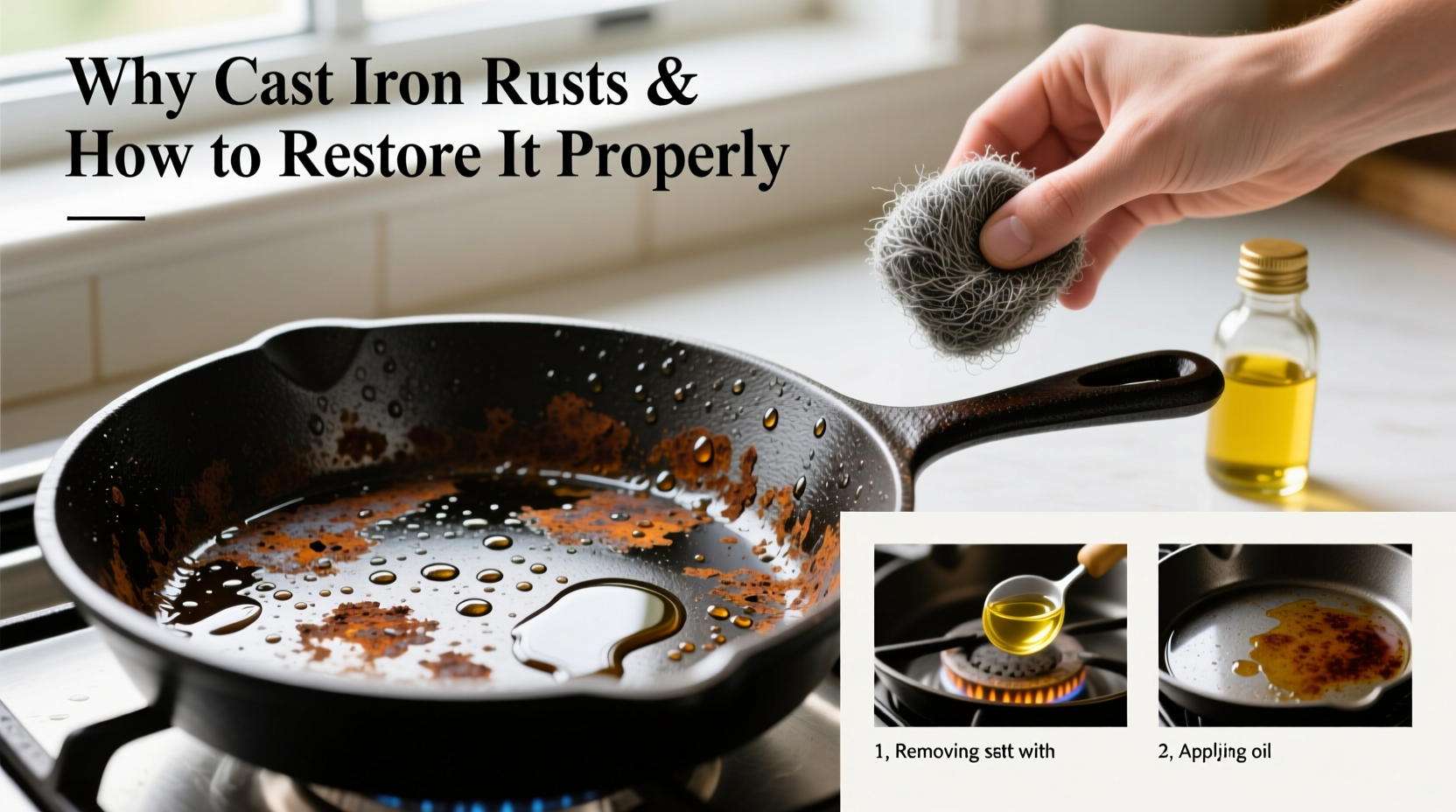
Cast iron is made primarily of iron, a reactive metal that readily oxidizes when exposed to moisture and oxygen. This chemical reaction—iron + water + oxygen → iron oxide—is what we know as rust. Unlike stainless steel or aluminum, cast iron lacks protective alloying elements to resist corrosion. While seasoning (a polymerized layer of oil) acts as a barrier, any breach exposes the raw metal underneath.
Rust typically appears as reddish-brown spots or flaky patches. In mild cases, it's surface-level; in severe cases, it eats into the metal, compromising structural integrity. The good news? Most rusted skillets can be restored with patience and the right technique.
Common Causes of Rust on Cast Iron
Rust isn’t a flaw in the cookware—it’s a symptom of exposure. Below are the most frequent culprits:
- Improper drying: Leaving the skillet air-drying on a rack or towel traps moisture against the metal.
- Soaking or dishwashing: Submerging cast iron in water breaks down seasoning and invites oxidation.
- Storing while damp: Even invisible moisture inside a cupboard can initiate rust.
- High-humidity environments: Kitchens near stoves or sinks often have elevated moisture levels.
- Infrequent use: Long periods of inactivity without a protective oil layer increase vulnerability.
- Damaged seasoning: Scratches from metal utensils or abrasive scrubbing expose bare iron.
One study by the Cookware and Bakeware Institute found that over 60% of rust cases stemmed from post-wash moisture retention. The takeaway? Drying is more critical than cleaning.
“Rust on cast iron is inevitable if you cook with it long enough. What matters is how you respond.” — Daniel Gritzer, Culinary Director at Serious Eats
Step-by-Step Guide to Restoring a Rusted Cast Iron Skillet
Restoration isn’t complicated, but it requires attention to detail. Follow this timeline-tested method to return your skillet to optimal condition.
- Evaluate the rust level: Light surface rust (small orange specks) is easy to fix. Heavy pitting or deep flaking may need aggressive treatment but is still salvageable in most cases.
- Gather supplies: Steel wool or scrub pad, white vinegar, baking soda (optional), stiff brush, paper towels, vegetable oil (high smoke point), oven.
- Remove loose debris: Use a stiff nylon or brass brush to knock off flaking rust and old seasoning. Avoid steel wool on minor rust—it’s overkill and can scratch excessively.
- Tackle stubborn rust with vinegar: Fill a container with equal parts white vinegar and water. Submerge the skillet for 1–4 hours. Check every 30 minutes. Vinegar dissolves rust chemically without damaging the base metal.
- Scrub gently: After soaking, use steel wool or a scrub pad to remove remaining rust. Rinse thoroughly with clean water.
- Neutralize acidity: To stop vinegar residue from causing new rust, soak the pan in a baking soda solution (1 tbsp per quart of water) for 10 minutes, then rinse again.
- Dry completely: Place the skillet on the stove over low heat for 5–10 minutes until all moisture evaporates. Alternatively, dry in a 200°F oven for 15 minutes.
- Re-season the skillet: Apply a thin layer of oil (grapeseed, canola, or flaxseed) using a paper towel. Wipe off excess—this is crucial. Too much oil leads to sticky residue.
- Bake upside-down: Place the skillet upside-down in a 375°F oven for one hour. Put a tray beneath to catch drips. Repeat 2–3 times for a durable layer.
- Cool and test: Let it cool gradually. Test with a fried egg—if it releases easily, the seasoning is working.
Do’s and Don’ts of Cast Iron Care
| Do’s | Don’ts |
|---|---|
| Wipe clean with a soft sponge or brush while warm | Soak in water overnight |
| Dry immediately on the stovetop or in the oven | Use harsh detergents regularly |
| Apply a light coat of oil after each wash | Store with food residue or moisture inside |
| Use kosher salt as a natural abrasive for stuck bits | Put a cold skillet directly on high heat (thermal shock risk) |
| Season periodically, especially after heavy use | Stack skillets without protection (use paper towels between layers) |
Real Example: Recovering a Heirloom Skillet
Maria, a home cook in Ohio, inherited her grandmother’s 1940s Wagner cast iron skillet. Stored in a basement for years, it arrived covered in thick, flaky rust and had almost no visible metal surface. Many would’ve discarded it. Instead, Maria soaked it in a vinegar bath for three hours, scrubbed with #0000 steel wool, and repeated the process twice. She neutralized the acid, dried it on the stove, and baked on four fresh layers of grapeseed oil. After restoration, the skillet performed better than her modern ones—smooth, non-stick, and evenly heated. “It felt like bringing history back to life,” she said. “Now I use it every Sunday for cornbread.”
This case illustrates that age and neglect don’t equate to irreversibility. With consistent effort, even severely degraded skillets regain function and beauty.
Preventing Future Rust: A Maintenance Checklist
Restoration is effective, but prevention saves time and preserves seasoning. Follow this checklist to keep your skillet rust-free:
- ✅ Clean promptly after cooking using minimal water
- ✅ Dry thoroughly using heat—never air-dry
- ✅ Apply a micro-thin oil layer while the pan is warm
- ✅ Store in a dry place with airflow (avoid sealed plastic bags)
- ✅ Re-season every few months or when food starts sticking
- ✅ Avoid cooking acidic foods (tomatoes, wine, vinegar) in newly seasoned pans
- ✅ Use wooden, silicone, or nylon utensils to preserve the seasoning layer
Humidity control matters too. If you live in a coastal or rainy climate, consider storing your skillet with a small desiccant pack nearby—or simply keep it on the stove where usage keeps it conditioned.
“The best cast iron care routine is boring: clean, dry, oil, repeat. There are no shortcuts, but the payoff is decades of reliable cooking.” — Kenji López-Alt, Author of *The Food Lab*
Frequently Asked Questions
Is rust on cast iron dangerous?
Ingesting small amounts of rust (iron oxide) isn’t toxic for most people, but it can affect flavor and indicate poor maintenance. More importantly, rust compromises the non-stick surface and can lead to uneven cooking. It’s safe once fully removed and re-seasoned.
Can I use an oven cleaner to remove rust?
Avoid commercial oven cleaners containing lye or strong alkalis—they can etch the metal and leave harmful residues. Stick to mechanical removal (scrubbing) or mild acids like vinegar. Lye-based dips are used industrially but require extreme caution and thorough rinsing.
How often should I re-season my skillet?
There’s no fixed schedule. Signs you need to re-season include food sticking, dull gray appearance, or water beading poorly. Most home cooks benefit from re-seasoning 2–4 times per year. High-heat searing or frequent deglazing may require more frequent touch-ups.
Conclusion: Treat Rust as a Reset, Not a Ruin
A rusted cast iron skillet isn’t a failure—it’s feedback. It tells you the balance of oil, moisture, and use has tipped. The restoration process, though sometimes laborious, reconnects you with the craft of maintaining tools that last. Each time you scrub, oil, and bake, you’re not just repairing metal—you’re reinforcing a tradition of mindful cooking.
Whether your skillet is a thrift-store find or a family heirloom, its longevity depends less on perfection and more on consistency. Address rust early, store wisely, and season regularly. Your cast iron will reward you with unmatched performance and character that only improves with time.




 浙公网安备
33010002000092号
浙公网安备
33010002000092号 浙B2-20120091-4
Comments
No comments yet. Why don't you start the discussion?