
Cats and Christmas lights have a complicated relationship. One moment, your home is glowing with festive cheer; the next, your feline companion is batting at dangling cords, chewing on wires, or launching acrobatic attacks on the tree. While this behavior may seem like harmless play, it poses serious risks—to your cat, your electronics, and your holiday peace of mind. Understanding why cats are drawn to light cords is the first step in preventing dangerous interactions. More importantly, knowing how to redirect their instincts safely ensures a joyful and secure season for everyone.
Cats don’t target Christmas lights out of malice. Their actions stem from deeply ingrained behaviors rooted in curiosity, hunting instincts, and environmental enrichment needs. The good news? With thoughtful planning and consistent deterrents, you can coexist with both your cat and your decorations—without sacrificing safety or spirit.
The Instinct Behind the Attack: Why Cats Target Light Cords
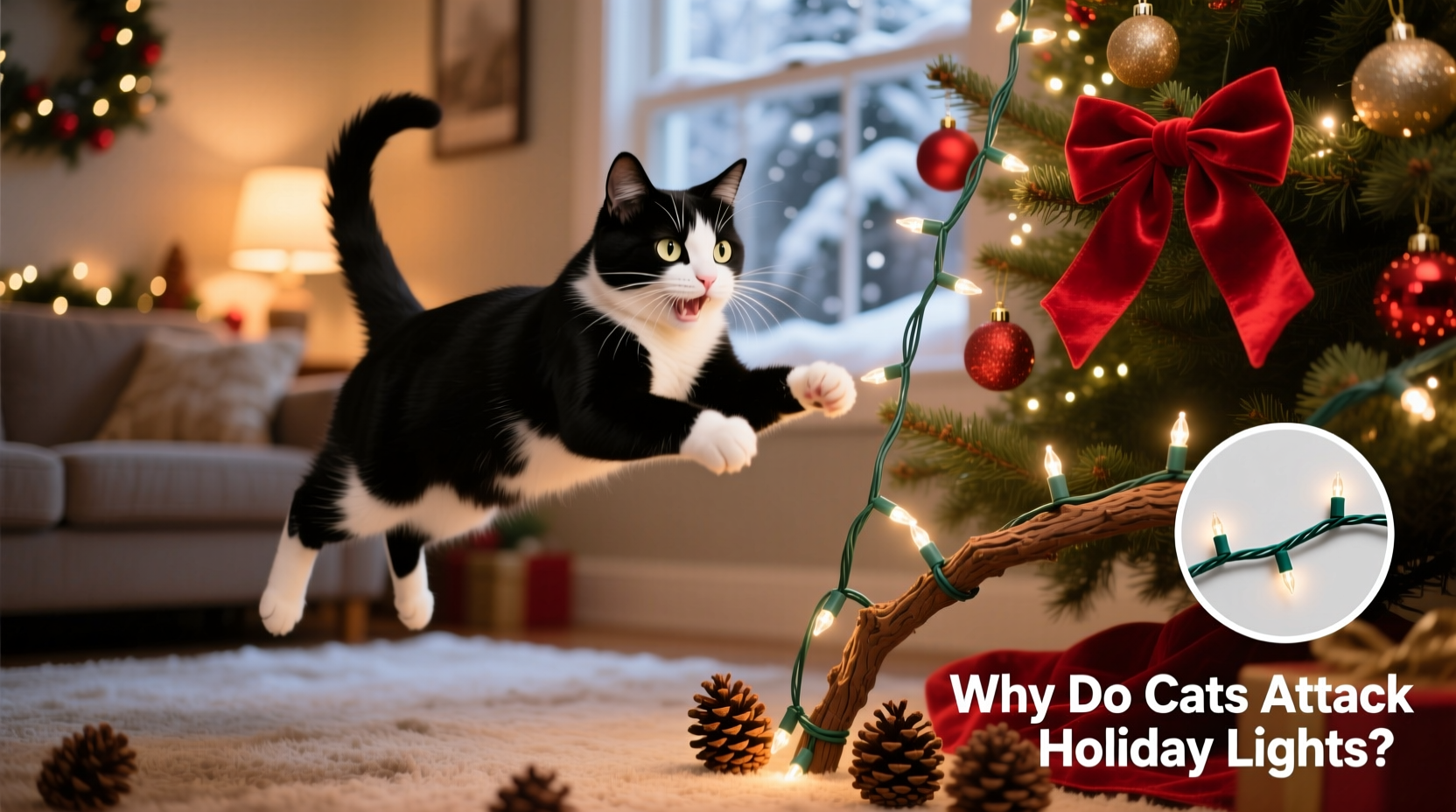
To effectively deter unwanted behavior, it’s essential to understand what drives it. For cats, light cords resemble natural prey in several key ways:
- Movement: Even slight swaying from air currents mimics the motion of insects or small animals, triggering a cat’s predatory reflex.
- Texture: Wires often feel satisfying to bite or chew, especially for younger cats exploring their environment through their mouths.
- Location: Cords drape across floors and furniture—prime territory for ambush-style hunting games.
- Novelty: Seasonal decorations introduce new stimuli into a cat’s routine, making them irresistible objects of investigation.
Dr. Lena Peterson, a certified feline behaviorist, explains: “Cats are hardwired to respond to linear movement. A dangling cord activates the same neural pathways as spotting a worm or snake. It’s not mischief—it’s instinct.”
This doesn’t excuse the danger, however. Chewing electrical cords can lead to burns, electrocution, or house fires. Even playful batting can topple trees or break ornaments. Recognizing that the behavior is natural—but potentially hazardous—shifts the focus from punishment to prevention.
Safety-First Strategies: Protecting Your Cat and Home
Prevention begins with minimizing access and risk. Since completely removing temptation isn't always possible—especially with large displays—a layered approach works best. Consider these core principles:
- Conceal or reroute cords behind furniture, along baseboards, or inside cord covers.
- Use battery-operated lights whenever possible to eliminate live wiring near accessible areas.
- Secure heavy decorations and trees to prevent tipping if your cat climbs or bats at them.
- Unplug lights when unsupervised—especially overnight or when leaving the house.
Hard plastic cord organizers or raceway kits (available at hardware stores) provide an affordable way to bundle and hide multiple cords. These also reduce tripping hazards for humans and discourage pawing by making the wires less accessible.
Another overlooked strategy is elevation. Mounting power strips high on walls or using elevated shelves keeps cords out of floor-level exploration zones. If you must run cords across walkways, consider flat cord protectors that lie flush with the ground and are difficult for cats to grip.
“Electrocution from chewed cords is one of the most preventable yet common emergencies we see in December,” says Dr. Arjun Mehta, veterinary emergency specialist at the Midwest Animal Care Center. “Even minor punctures in insulation can carry lethal current.”
Behavioral Deterrence: Redirecting Natural Instincts
You can’t remove a cat’s hunting drive, but you can redirect it. The goal isn’t to stop your cat from playing—it’s to channel that energy toward safer alternatives. Start by enriching your cat’s environment with appropriate outlets for stimulation.
| Problem Behavior | Why It Happens | Effective Alternative |
|---|---|---|
| Chewing cords | Oral fixation, teething (kittens), texture appeal | Provide chew-safe toys (rubber, silicone, food-grade nylon) |
| Batting at hanging lights | Hunting reflex triggered by movement | Dangle teaser wands or feather toys nearby |
| Climbing the tree | Vertical space seeking, territorial marking | Install a cat tree nearby with perches and hiding spots |
| Knocking over decorations | Curiosity, tactile exploration | Offer puzzle feeders or crinkle tunnels |
Timing matters. Introduce alternative activities before your cat engages with the cords. For example, schedule interactive play sessions around peak activity times—dawn and dusk—when hunting instincts are strongest. Use wand toys to simulate prey movement across the floor, then “hide” the toy under a blanket to mimic burrowing.
Consistency builds habit. Over time, your cat learns that chasing feathers earns rewards, while ignoring cords leads to positive outcomes. Pair redirection with mild deterrents to reinforce boundaries.
Proven Deterrents: What Works (and What Doesn’t)
Not all deterrents are equally effective. Some popular methods can backfire or cause stress. Below is a breakdown of commonly used techniques:
- Double-sided tape: Sticky surfaces discourage paws from batting or lying near cords. Effective on nearby surfaces but should not be applied directly to wires.
- Bitter sprays: Commercial pet-safe bitter apple or citrus sprays can deter chewing. Reapply frequently and test on a small area first to avoid damage.
- Aluminum foil: Many cats dislike the texture and sound. Place strips near cord entry points or under tree skirts.
- Citrus peels: Natural scent deterrents. Place orange or lemon rinds near problem zones (replace every 2–3 days).
Avoid using strong essential oils (like tea tree or eucalyptus)—these are toxic to cats even in small amounts. Similarly, shock-based devices or loud noises create fear-based associations that can lead to long-term anxiety.
One highly effective method combines visual and sensory cues: wrapping cords in spiral cable protectors (often called “rat tubes”) adds rigidity and an unappealing crunch. Paired with a motion-activated air canister (such as Ssscat), which emits a brief puff of air when triggered, this creates a non-harmful but memorable boundary.
Step-by-Step Guide: Making Your Home Holiday-Safe in 5 Days
If the holidays are already here and your cat is mid-attack mode, follow this timeline to minimize risk without dismantling your entire display:
- Day 1 – Assess & Isolate: Identify all exposed cords and high-risk zones. Unplug everything. Temporarily block off the tree area with a baby gate if needed.
- Day 2 – Conceal & Secure: Use cord covers, adhesive clips, or raceways to route wires along walls and furniture legs. Anchor the tree to a wall bracket.
- Day 3 – Deter & Disguise: Apply pet-safe bitter spray to low-accessible cord ends. Place aluminum foil or textured mats beneath the tree base.
- Day 4 – Enrich & Redirect: Set up a cat tree or perch near the living room. Introduce new interactive toys and schedule two 10-minute play sessions.
- Day 5 – Monitor & Adjust: Plug in lights only when supervising. Observe your cat’s behavior. If they ignore the cords, offer praise or treats. If they approach, gently redirect to a toy.
After one week, reassess. If the behavior persists, consider switching to fiber-optic or LED rope lights powered by batteries, which pose no electrical risk.
Real Example: How the Rivera Family Protected Their Kitten During First Christmas
When Maria and Tom Rivera adopted Luna, a curious 4-month-old tabby, they didn’t anticipate her fascination with their traditional light display. On setup night, Luna immediately pounced on the tangled strands beneath the tree, gnawing at a frayed end.
Concerned, they consulted their vet, who recommended immediate cord protection and environmental enrichment. They purchased a plug-in cord cover kit, wrapped lower sections in spiral tubing, and installed a motion-activated air deterrent near the tree trunk.
They also bought a cat tree positioned three feet from the tree, adorned with dangling ribbons and hidden treats. Each evening, they engaged Luna in five minutes of wand play before allowing supervised access to the living room.
Within four days, Luna lost interest in the cords. By Christmas Eve, she preferred napping on her new perch or chasing a crinkle ball. The Riveras still unplug lights at night—but now it’s precaution, not panic.
Frequently Asked Questions
Can I train my cat to stop chewing cords completely?
Yes—with consistency and redirection. Most cats can learn to avoid cords within 1–2 weeks using a combination of concealment, deterrents, and positive reinforcement. Kittens may require more repetition as they mature.
Are LED lights safer than incandescent ones?
LED lights generate less heat and consume less power, reducing fire and burn risks. However, both types carry electrical hazards if chewed. Safety depends more on installation and supervision than bulb type.
Is it okay to use outlet covers even if I have surge protectors?
Absolutely. Outlet covers add a physical barrier that prevents curious paws from probing sockets. Surge protectors manage power flow but don’t block access. Using both provides maximum protection.
Final Checklist: Cat-Safe Holiday Lighting Plan
- ✅ Conceal all cords using raceways, clips, or baseboard routing
- ✅ Switch to battery-powered lights where possible
- ✅ Install motion-activated deterrents near high-risk zones
- ✅ Apply pet-safe bitter spray to accessible wire ends
- ✅ Provide daily interactive play to satisfy hunting instincts
- ✅ Anchor the Christmas tree to prevent tipping
- ✅ Unplug lights when leaving the room or going to sleep
- ✅ Offer chew-safe toys and rotate weekly for engagement
Conclusion: Enjoy the Holidays Without Compromise
Your cat’s attraction to Christmas light cords isn’t defiance—it’s biology. By respecting their instincts while setting clear, safe boundaries, you create a home where celebration and companionship coexist. The holidays shouldn’t mean choosing between your traditions and your pet’s well-being. With smart planning, preventive tools, and a little patience, you can enjoy twinkling lights, a happy cat, and peace of mind.




 浙公网安备
33010002000092号
浙公网安备
33010002000092号 浙B2-20120091-4
Comments
No comments yet. Why don't you start the discussion?