
It’s a familiar holiday scene: tinsel glinting under the lights, the scent of pine in the air—and your cat launching a full-scale aerial assault on a glass bauble, sending it shattering across the floor. You sigh, pick up the shards, and wonder: Why does this keep happening? Is my cat trying to sabotage Christmas—or is something deeper going on? The truth is neither malicious nor random. Your cat’s behavior is rooted in instinct, sensory biology, and unmet environmental needs. And while it’s easy to dismiss as “just play,” repeated ornament attacks can lead to injury, stress, expensive replacements, and even dangerous ingestion of glass, metal hooks, or toxic coatings. This isn’t about training your cat to “behave for the holidays.” It’s about understanding feline ethology—the science of natural behavior—and redesigning your tree setup with empathy, safety, and practicality at its core.
The Instinct Behind the Assault: What Your Cat Is Really Responding To
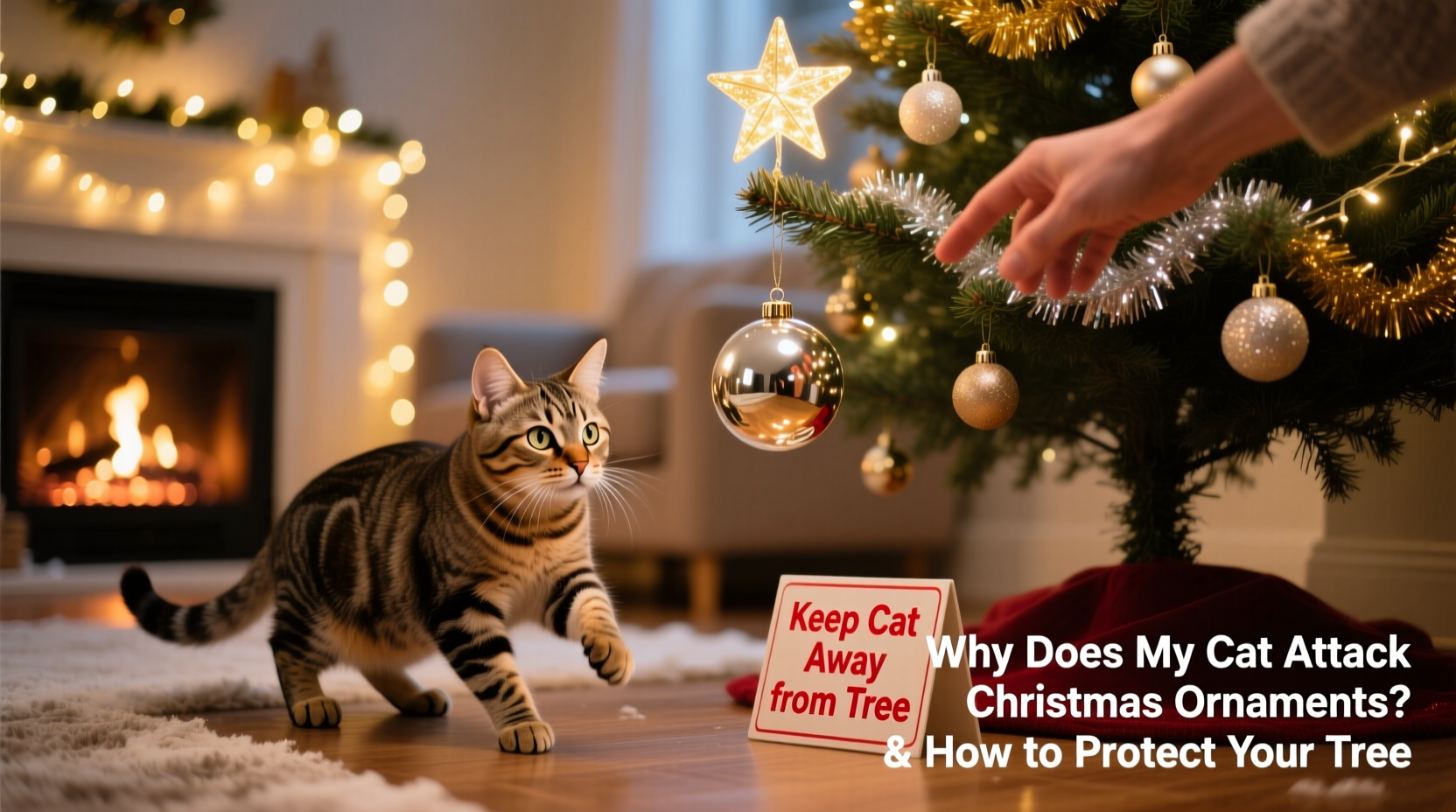
Cats don’t see ornaments as festive decor. They perceive them through a hunter’s lens—tiny, unpredictable, reflective, dangling objects that trigger deeply encoded predatory circuitry. A 2022 study published in Applied Animal Behaviour Science confirmed that movement speed, visual contrast, and high-frequency shimmer are among the strongest elicitors of predatory sequences in domestic cats—even in well-fed, indoor individuals. Ornaments hit all three triggers:
- Motion sensitivity: Even subtle air currents cause ornaments to sway, mimicking the erratic movement of birds or rodents.
- Visual contrast: Metallic finishes, mirrored surfaces, and glossy reds/golds reflect ambient light in rapid, flickering bursts—similar to how prey animals flash in sunlight.
- Texture and sound: Glass, acrylic, and thin metal produce sharp, high-pitched sounds when tapped or bitten—auditory cues that resemble small animal vocalizations or distress calls.
This isn’t “naughtiness.” It’s neurobiological wiring honed over 60 million years of evolution. As Dr. Sarah Heath, a certified veterinary behaviorist and Fellow of the Royal College of Veterinary Surgeons, explains:
“Cats don’t distinguish between ‘holiday decoration’ and ‘potential prey’ at the neural level. When an ornament swings, their visual cortex activates the same pathways used during actual hunting—complete with stalk, pounce, and bite sequences. Suppressing that without offering alternatives doesn’t change the instinct; it only redirects frustration.” — Dr. Sarah Heath, Veterinary Behaviour Specialist
Importantly, young cats (under 3 years) and unneutered males show heightened reactivity—not because they’re “more mischievous,” but due to elevated baseline arousal and exploratory drive. Senior cats may also target ornaments if vision or hearing is declining, making movement more salient than static objects.
Ornament Risks: Beyond Broken Glass
Most owners focus on cleanup—but the real dangers are often invisible or delayed. Here’s what’s at stake:
| Risk Category | Common Examples | Potential Consequences |
|---|---|---|
| Physical Injury | Broken glass, sharp metal hooks, wire stems, tinsel strands | Lacerations to paws/mouth; embedded fragments requiring surgical removal |
| Toxic Ingestion | Lead-based paints (common in vintage ornaments), PVC-coated tinsel, antifreeze residue on artificial trees, adhesive glues | Acute poisoning (vomiting, tremors, kidney failure); chronic heavy-metal accumulation |
| Choking & Obstruction | Small plastic balls, bead chains, ribbon loops, foam ornaments | Esophageal impaction, intestinal blockage requiring emergency endoscopy or laparotomy |
| Stress & Behavioral Fallout | Repeated scolding, spray bottles, confinement near tree, inconsistent boundaries | Increased anxiety, redirected aggression, litter box avoidance, or chronic vigilance around the tree area |
A 2023 survey by the ASPCA Animal Poison Control Center found that December sees a 47% spike in feline ingestions of decorative items—tinsel alone accounts for nearly 1 in 5 reported foreign-body cases in cats during the holiday season.
Proven, Cat-Safe Tree Protection Strategies (That Actually Work)
Forget sticky tape, citrus sprays, or “cat repellent” plug-ins—they’re ineffective long-term and often stressful for sensitive cats. Instead, adopt a layered, evidence-informed approach grounded in environmental enrichment and behavioral redirection. Start early: begin implementing these strategies at least two weeks before decorating.
Step-by-Step Tree Setup Protocol
- Choose the right tree: Opt for a sturdy, weighted base (minimum 25 lbs for 6–7 ft trees). Avoid lightweight aluminum stands—cats can tip them with a single leap. Real trees are preferable to most artificial ones: their scent deters some cats, and their denser branch structure makes climbing harder.
- Anchor strategically: Secure the top third of the trunk to a wall stud using flexible, breakaway straps (not rope or wire). Test stability by gently pushing the top—it should not sway more than 2 inches.
- Zone the lower third: Keep the bottom 24 inches completely ornament-free. Use this space for cat-safe alternatives: soft felt balls, crinkle tunnels, or a low perch with a view of the room.
- Layer ornament placement: Hang heavier, less reflective ornaments (wood, felt, ceramic) on lower branches. Reserve delicate glass or metallic pieces for the upper two-thirds—out of pounce range but still visible.
- Add motion buffers: String clear fishing line horizontally between upper branches (at 6-inch intervals) to disrupt vertical leaps. Cats detect the lines visually and avoid mid-air collisions—no harm, no stress.
Redirecting the Drive: Enrichment That Replaces Ornament Hunting
Eliminating access without satisfying the underlying need guarantees frustration—and often worse behavior elsewhere. The goal is to make hunting ornaments *less rewarding* than engaging with better alternatives. This requires daily, scheduled interaction—not just toys left out.
Effective Daily Enrichment Routine (15 minutes minimum)
- 9:00 AM – Targeted Play Session: Use a wand toy with feathers or fur to mimic bird flight patterns—high, erratic, and ending with a “capture” (let your cat bite and hold the lure for 10 seconds). Follow immediately with a meal or treat puzzle.
- 3:00 PM – Sensory Exploration: Rotate 3–4 novel scent objects weekly (dried catnip, silvervine powder, valerian root in a muslin pouch) placed in different locations—never near the tree.
- 7:00 PM – Cognitive Challenge: Use a slow-feeder puzzle bowl or hide kibble in cardboard boxes with holes cut in the sides. Reward sustained problem-solving with verbal praise, not food alone.
Crucially, avoid laser pointers—they create unsatisfying, unfulfilled chase cycles linked to increased frustration and obsessive behaviors in some cats. Also skip “interactive” apps or videos; cats respond to real-world tactile feedback, not screen-based stimuli.
Mini Case Study: Luna, 2-year-old Domestic Shorthair
Luna lived in a downtown apartment with her owner, Maya. Every December, Luna would knock down 3–5 ornaments nightly—often targeting red glass balls. Maya tried deterrents: double-sided tape on the stand, bitter apple spray, even moving the tree to a closed-off bedroom (which led to door-scratching and yowling). After consulting a veterinary behaviorist, Maya implemented the layered strategy above—including anchoring the tree, removing lower ornaments, and introducing twice-daily wand sessions timed to Luna’s natural energy peaks. Within 10 days, Luna’s interest in the tree dropped by 90%. By Day 21, she ignored ornaments entirely and instead napped on a heated pad placed beside the tree’s base—a spot she’d claimed as her own “command post.” Maya noted, “She wasn’t being defiant. She just needed a better job to do—and I finally gave her one.”
What NOT to Do: Common Missteps That Escalate the Problem
Well-intentioned interventions often backfire. Here’s what veterinary behaviorists consistently advise against—and why:
- Using water sprays or compressed air: These induce fear without teaching an alternative. Cats may associate the tree itself—or you—with threat, increasing avoidance or defensive aggression.
- Overusing citrus or vinegar sprays: While mildly aversive, these irritate nasal passages and can trigger respiratory sensitivity in asthmatic cats. Their effect fades quickly and offers no positive outlet.
- Leaving tinsel or ribbon within reach: These are among the most common causes of linear foreign body surgery in cats. Even “pet-safe” versions pose entanglement risk.
- Ignoring nighttime activity: Most ornament attacks happen between 2–5 a.m., when cats are naturally most active. If your cat is awake and unsupervised, provide a designated “hunt zone” (e.g., a cardboard box filled with shredded paper and hidden treats) away from the tree.
FAQ
Can I use a fake tree instead of a real one to reduce attraction?
Not reliably—and sometimes it worsens the issue. Many artificial trees have smoother trunks and wider branch angles, making them easier to climb. Their synthetic scent lacks the mild deterrent effect of pine resin. If you choose artificial, select one with a heavy, wide-base design and dense, downward-sweeping branches. Always inspect for loose wires or exposed plastic edges before assembly.
My cat loves batting ornaments—but never breaks them. Should I still intervene?
Yes—consistently. Even “gentle” contact risks cumulative damage to ornaments and desensitizes your cat to boundaries. More importantly, it reinforces the behavior loop: movement → attention → reward (even if unintentional). Early intervention prevents escalation to forceful swipes or jumping. Redirect *before* contact occurs—offer a toy or initiate play the moment your cat approaches the tree.
Are there truly safe ornaments I can use freely?
Yes—but “safe” means non-toxic, non-sharp, non-detachable, and non-ingestible. Prioritize: hand-blown wooden ornaments (smooth, sanded edges), thick-felt shapes with embroidered details (no loose threads), or large, hollow ceramic pieces with wide bases. Avoid anything with glue seams, painted surfaces (unless certified non-toxic for pets), or small parts that could detach. Always test durability: gently squeeze or tap—if it cracks, bends, or sheds material, it’s not safe.
Conclusion
Your Christmas tree doesn’t have to be a battleground. Your cat’s instinct to hunt, explore, and interact with movement isn’t a flaw to correct—it’s a vital part of who they are. By shifting your focus from restriction to enrichment, from punishment to purpose, you honor their nature while safeguarding your home and peace of mind. The most resilient solutions aren’t about perfect obedience; they’re about thoughtful design, consistent routines, and deep respect for feline cognition. Start small: anchor your tree today, swap out one fragile ornament for a wooden one tomorrow, and schedule your first 15-minute play session before bedtime. These aren’t holiday hacks—they’re lasting habits that strengthen your bond far beyond December. And when your cat curls peacefully beside the tree, watching the lights without lifting a paw, you’ll know you didn’t win a battle. You built a better world—for both of you.




 浙公网安备
33010002000092号
浙公网安备
33010002000092号 浙B2-20120091-4
Comments
No comments yet. Why don't you start the discussion?