
Cats are natural predators, and even the most domesticated feline carries the instincts of a hunter. If you’ve ever turned on a star projector or noticed your cat lunging at flickering light patterns from a ceiling fan, you’ve likely witnessed this primal drive in action. While it may seem amusing—or even endearing—when your cat pounces on a dancing dot of light, repeated fixation on artificial movement can become problematic. It may lead to overstimulation, frustration, or redirected aggression toward people or other pets. Understanding why cats react so strongly to moving projections is the first step in managing their behavior safely and humanely.
The Instinct Behind the Pounce
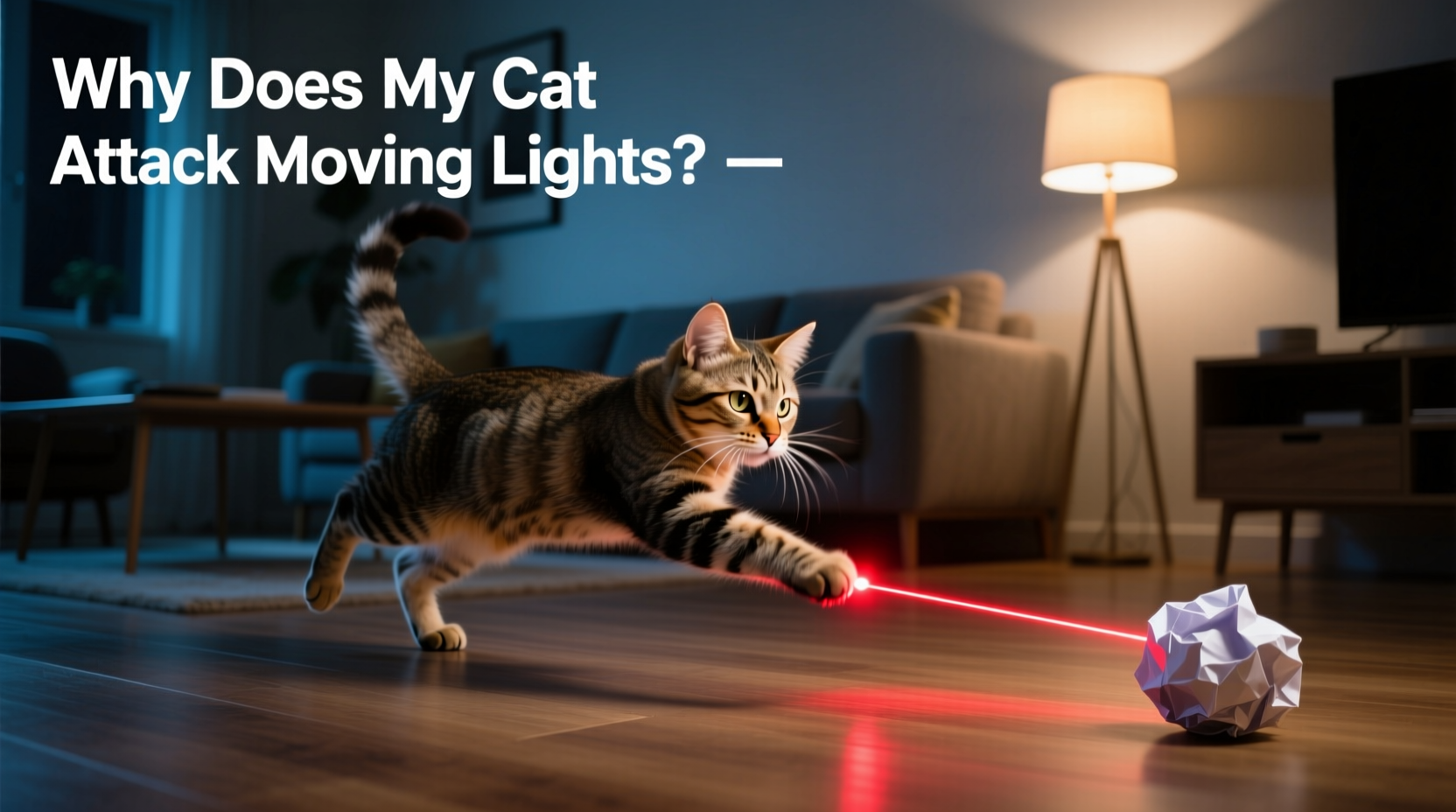
Cat behavior is deeply rooted in survival mechanisms developed over thousands of years. The sudden appearance of a small, fast-moving point of light triggers the same neurological pathways that respond to real prey: insects, rodents, or birds darting through underbrush. Even though your indoor cat has never hunted for food, its brain processes these stimuli as potential targets.
Movement detection is one of the most refined aspects of a cat’s visual system. Their eyes are optimized for motion rather than detail or color. A shifting shadow or glint of light across a wall mimics the erratic movements of prey, making it nearly impossible for many cats to resist the urge to stalk and strike.
“Cats don’t see the world the way we do. To them, a laser dot isn’t abstract—it’s alive, unpredictable, and worth chasing.” — Dr. Sarah Thompson, Feline Behavior Specialist
This predatory sequence—spotting, stalking, chasing, capturing—is hardwired into their psychology. When a cat attacks a projected light, it's not playing; it's engaging in a full behavioral ritual. The problem arises when there’s no conclusion to the hunt. Without a tangible \"kill,\" the cat experiences incomplete satisfaction, which can lead to stress or obsessive repetition.
Why Projection Lights Are Particularly Triggering
Not all lights provoke the same reaction. Static lamps or ambient lighting rarely attract attention, but dynamic projections—especially those with irregular paths—are uniquely stimulating. Here’s why:
- Motion unpredictability: Unlike toys on strings or rolling balls, projection lights often move erratically, mimicking live prey more closely.
- No physical form: Since the light cannot be touched or caught, the cat never receives closure, reinforcing compulsive chasing.
- Ubiquity in modern homes: LED projectors, fiber-optic nightlights, or sunlight reflecting off rotating objects (like ceiling fans) create frequent opportunities for stimulation.
- Low-light enhancement: Many projection devices operate in dim environments, where a cat’s night vision gives them an edge, heightening arousal.
Safe Distraction Strategies: Redirecting Energy Constructively
Eliminating all moving lights from your home isn't practical—or necessary. Instead, focus on redirecting your cat’s hunting impulses toward appropriate outlets. The goal is not to suppress instinct but to channel it in ways that satisfy the full predatory sequence.
1. Replace Illusion with Reality
Whenever possible, transition from intangible light chases to physical play. After a few seconds of allowing your cat to engage with a projected light, introduce a wand toy with feathers or a crinkle mouse. This gives them something real to \"capture.\" Over time, your cat will begin to associate the start of light movement with the arrival of a physical toy.
2. Use Timed Play Sessions
Establish regular interactive play periods before meals—ideally 10–15 minutes twice daily. Use toys that simulate prey: fluttering birds, scurrying mice, or dangling insects. This routine reduces spontaneous hunting urges triggered by incidental lights.
3. Modify the Environment
If certain rooms consistently trigger attacks—such as a bedroom with a rotating galaxy projector—consider adjusting usage. Turn off the device when unsupervised, or position it higher on the ceiling where it’s less likely to appear ground-level and prey-like.
4. Introduce Sensory Alternatives
Engage other senses to reduce fixation on visual stimuli. Catnip-infused toys, puzzle feeders, or auditory toys with crinkles or bells can shift focus away from lights. Some cats respond well to window perches with bird feeders outside, offering real-world movement to observe without physical pursuit.
Step-by-Step Guide to Safe Redirection
Follow this five-step process to manage your cat’s response to moving projections effectively:
- Observe Triggers: Note when and where your cat reacts to lights. Is it during evening relaxation? Near specific devices?
- Interrupt Gently: When your cat begins to fixate, make a soft noise (a clap or kiss sound) to break focus—avoid startling them.
- Redirect Immediately: Toss a plush toy nearby or dangle a wand to draw attention toward a physical object.
- Complete the Hunt: Allow your cat to catch the toy. Follow with a treat or meal to simulate \"eating\" the prey.
- Reinforce Calm Behavior: Reward moments of disengagement with affection or quiet praise to encourage self-regulation.
Consistency is key. Over several weeks, this method conditions your cat to expect a satisfying conclusion after initial excitement, reducing frustration-based behaviors.
Do’s and Don’ts of Managing Light-Based Play
| Do | Don’t |
|---|---|
| Use lasers only as part of a broader play session ending with a physical toy. | Never use laser pointers exclusively or allow prolonged chases without resolution. |
| Keep projectors out of reach or mount them high on ceilings. | Don’t shine lights directly at your cat or encourage frantic chasing. |
| Provide alternative hunting simulations like puzzle feeders. | Don’t punish your cat for reacting—this is natural behavior, not defiance. |
| Supervise interactions with new lighting devices. | Don’t leave automatic projectors running unattended for long periods. |
Mini Case Study: Luna and the Galaxy Projector
Luna, a three-year-old tabby living in a downtown apartment, began showing signs of agitation every evening when her owners turned on a fiber-optic galaxy projector. She would stare intensely at the ceiling, twitch her tail, then suddenly lunge at walls or swat at curtains. On two occasions, she scratched her owner while attempting to pounce on a moving star cluster.
After consulting a veterinary behaviorist, Luna’s owners implemented a structured redirection plan. They kept the projector on a timer set for 20-minute intervals and introduced a feather wand immediately after turning it on. During each session, they guided Luna’s attention to the wand, allowing her to \"catch\" it multiple times. Within three weeks, her aggressive reactions decreased significantly. Now, she still watches the stars but remains calm unless invited to play with a toy.
The success came not from removing the stimulus, but from teaching Luna that excitement could lead to fulfillment—not frustration.
FAQ
Is it harmful for my cat to chase lights regularly?
Occasional chasing isn’t harmful, but habitual engagement without resolution can cause psychological stress. Cats need closure in their hunting sequence to feel satisfied. Repeated failure to \"catch\" prey may contribute to anxiety, irritability, or compulsive behaviors.
Can I train my cat to ignore moving lights completely?
It’s unlikely—and unnecessary—to eliminate the instinct entirely. However, you can train your cat to respond differently. With consistent redirection and enrichment, many cats learn to disengage or wait for appropriate play cues instead of reacting impulsively.
Are some cats more prone to light-chasing than others?
Yes. Younger, high-energy cats and breeds with strong hunting drives—such as Bengals, Siamese, or Abyssinians—are more likely to obsess over moving lights. Understimulated or indoor-only cats also tend to fixate more due to limited environmental input.
Building a Balanced Environment for Your Cat
At its core, light-chasing behavior signals a deeper need: mental and physical engagement. A cat that attacks projections isn’t misbehaving—it’s seeking stimulation. Rather than viewing this as a problem to solve, reframe it as feedback about your cat’s environment.
A balanced feline lifestyle includes:
- Daily interactive play that mimics hunting cycles
- Vertical spaces for climbing and observation
- Foraging opportunities via food puzzles or hidden treats
- Safe access to windows or enclosed outdoor areas (catios)
- Quiet zones for rest and recovery
When these needs are met, incidental lights lose much of their appeal. Your cat will still notice them—but they’ll be less compelled to act.
Conclusion: Honor the Hunter, Guide the Companion
Your cat’s urge to attack moving projection lights isn’t quirky or random—it’s a testament to their evolutionary brilliance. These behaviors have ensured survival for generations. As responsible caregivers, our role isn’t to suppress nature, but to guide it wisely.
By understanding the roots of this behavior and applying thoughtful, consistent strategies, you can protect your cat from frustration while keeping your home safe and harmonious. Replace illusion with interaction, unpredictability with routine, and emptiness with fulfillment.




 浙公网安备
33010002000092号
浙公网安备
33010002000092号 浙B2-20120091-4
Comments
No comments yet. Why don't you start the discussion?