
Every holiday season, millions of households bring a Christmas tree into their homes, transforming living rooms into festive spaces. But for many cat owners, this joyous tradition comes with an unexpected challenge: a feline obsessed with attacking the tree. Whether it’s batting at ornaments, climbing the branches, or knocking the entire tree over, these behaviors can be frustrating—and even dangerous. Understanding why cats engage in this behavior is the first step toward preventing it. More importantly, knowing how to deter the behavior humanely ensures both your cat's well-being and your holiday decor remains intact.
The Instinct Behind the Attack
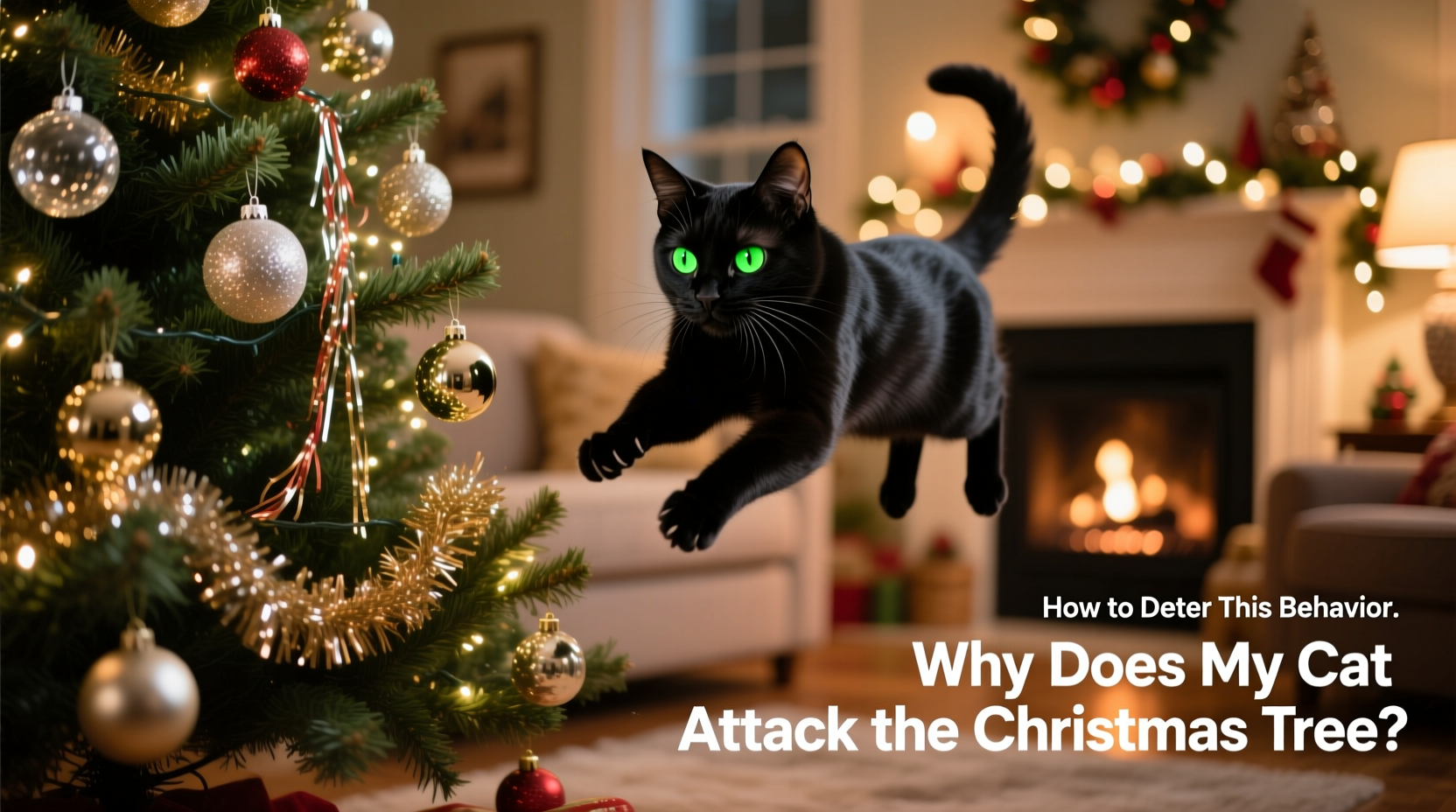
Cats don’t target Christmas trees out of malice. Their actions are driven by deeply ingrained instincts shaped by evolution. The tree, with its dangling objects, rustling needles, and vertical structure, mimics elements of a natural hunting environment. From a cat’s perspective, the tree is not a symbol of celebration—it’s a jungle gym filled with prey-like stimuli.
Movement triggers predatory responses. Ornaments that sway in air currents, tinsel that glimmers like water, and lights that flicker all resemble small animals or insects. Even the scent of a real pine tree can be stimulating, as evergreens emit volatile compounds that may intrigue a cat’s sensitive nose. Add to this the novelty of the tree’s sudden appearance in the home, and you have a perfect storm of curiosity and instinctual drive.
Additionally, climbing is a natural feline behavior. In the wild, cats climb to survey territory, escape threats, or rest in safe vantage points. A Christmas tree offers height and concealment—ideal from a cat’s point of view. When your cat scales the tree, they’re not being destructive; they’re exploring, playing, and asserting control over their environment.
“Cats see the Christmas tree as an enrichment opportunity—a new structure full of sensory input. Our job isn’t to punish curiosity but to redirect it appropriately.” — Dr. Sarah Bennett, Feline Behavior Specialist
Effective Strategies to Deter Tree Attacks
Preventing tree attacks requires more than just shooing your cat away. Lasting change comes from modifying the environment and providing alternatives that satisfy your cat’s natural needs. Below are proven methods to keep your tree upright and your cat engaged elsewhere.
1. Secure the Tree Physically
The first line of defense is stability. An unsecured tree is an invitation for disaster. Use a sturdy base and anchor the tree to a wall or ceiling with fishing line or soft straps. This prevents tipping if your cat attempts to climb.
2. Eliminate Tempting Decorations
Ornaments are often the primary trigger. Avoid using fragile, shiny, or edible decorations (like popcorn strings). Small ornaments can be swallowed, and tinsel is especially hazardous—if ingested, it can cause intestinal blockages requiring surgery.
- Use lightweight or unbreakable ornaments placed high on the tree (above 3 feet).
- Avoid tinsel, ribbons, or string-like materials entirely.
- Opt for paper, felt, or fabric decorations that pose less risk.
3. Make the Tree Less Appealing
Deterrence isn’t about punishment—it’s about making the tree less interesting. Cats dislike certain textures and scents. Strategically placing these around the base can discourage approach.
| Method | How It Works | Notes |
|---|---|---|
| Aluminum foil | Cats dislike the texture and sound underfoot | Place around the tree stand |
| Citrus peels | Strong scent deters most cats | Replace every few days |
| Double-sided tape | Unpleasant sticky sensation | Use on lower trunk or nearby floor |
| Plastic carpet runners (nubby side up) | Uncomfortable to walk on | Invisible when placed under tree skirt |
4. Provide Alternative Enrichment
A bored cat will seek stimulation—even if it means toppling a $150 tree. Ensure your cat has engaging alternatives. Introduce new toys, puzzle feeders, or a dedicated “cat tree” near the holiday tree. Rotate toys weekly to maintain interest.
Consider setting up a separate “kitty holiday zone” with a small cardboard tree, cat-safe decorations, and treats hidden in pine-scented bedding. This gives your cat a sanctioned space to explore without endangering the main display.
Step-by-Step Guide to Cat-Proofing Your Christmas Tree
Follow this timeline to prepare your home before the tree arrives and respond effectively during the season.
- Week 1: Assess Your Cat’s Behavior
Observe how your cat interacts with vertical spaces and novel objects. Note any signs of obsession with heights or swaying items. - Week 2: Set Up Alternatives
Introduce a new cat tree or climbing shelf. Begin rotating in new toys and use food puzzles during meals to increase mental stimulation. - Day of Setup: Secure the Tree Before Decorating
Anchor the tree to a wall using clear fishing line. Place aluminum foil or carpet runner around the base. Do not yet add ornaments or lights. - Day 2: Gradual Introduction
Add one or two non-tempting decorations. Allow your cat to investigate under supervision. Redirect gently if they paw or sniff too closely. - Day 3+: Monitor and Adjust
Add remaining decorations only after confirming your cat shows no interest. Continue daily checks for loose wires, fallen ornaments, or signs of chewing. - Ongoing: Supervise and Reinforce
If your cat approaches the tree, redirect to a toy or scratch post. Never yell or spray with water—this creates fear, not learning.
Real Example: How the Rivera Family Saved Their Tree
The Riveras had given up on Christmas trees for three years after their cat, Luna, destroyed two consecutive firs—once pulling down the entire tree during a family dinner. Determined to restore the tradition, they consulted a veterinary behaviorist and implemented a multi-pronged strategy.
They purchased a taller, narrower tree and secured it with aircraft cable to the ceiling. Around the base, they placed plastic carpet runners (nub-side up) beneath the tree skirt. They used only large, fabric-based ornaments above four feet and replaced lights with battery-operated LED ones to eliminate chew risks.
Most crucially, they built a “Luna Lounge” across the room: a multi-level cat tree decorated with pine-scented toys, crinkle balls, and a perch overlooking the window. They also introduced daily play sessions with wand toys to burn energy.
By Christmas morning, the tree stood untouched. Luna spent most evenings napping on her own tower, occasionally glancing at the tree—but never approaching. The Riveras now enjoy the holidays with both tradition and peace of mind.
Common Mistakes That Make the Problem Worse
Even well-meaning owners can accidentally reinforce unwanted behavior. Avoid these pitfalls:
- Reacting with attention: Yelling, laughing, or chasing your cat gives them attention—even negative attention can encourage repetition.
- Using physical punishment: Hitting, tapping, or spraying water damages trust and increases anxiety.
- Leaving tempting items accessible: Tinsel, low-hanging glass balls, or electrical cords invite interaction.
- Ignoring enrichment needs: Assuming your cat will “leave it alone” without offering alternatives sets them up to fail.
“Punishment doesn’t teach a cat what to do instead. Positive redirection does.” — Dr. Lena Torres, Certified Feline Behavior Consultant
Checklist: Cat-Safe Christmas Tree Preparation
Use this checklist in the weeks leading up to setup:
- ✅ Choose a stable tree stand and plan anchoring method
- ✅ Remove or secure electrical cords with cord covers
- ✅ Select pet-safe, non-toxic decorations
- ✅ Prepare deterrents (foil, carpet runner, citrus)
- ✅ Set up alternative climbing structures
- ✅ Stock up on interactive toys and puzzle feeders
- ✅ Schedule extra playtime during the holiday season
- ✅ Discuss tree rules with all household members
Frequently Asked Questions
Can I train my cat not to go near the Christmas tree?
Yes, but not through commands like dogs. Training involves environmental management and positive reinforcement. Reward your cat for staying near their own toys or perches. Over time, they’ll associate distance from the tree with good outcomes.
Are artificial trees safer than real ones?
Artificial trees are generally safer because they don’t shed toxic needles (some real pines are mildly toxic if ingested) and are easier to stabilize. However, both types attract cats equally due to shape and decoration. Safety depends more on setup than material.
What should I do if my cat eats tinsel or an ornament?
Contact your veterinarian immediately. Ingested tinsel can cause linear foreign body obstructions, which are life-threatening. Do not induce vomiting unless instructed. Keep packaging or a photo of the item for reference.
Conclusion: Peaceful Holidays Start with Understanding
Your cat isn’t trying to ruin Christmas—they’re responding to instinct in a world full of new stimuli. By understanding the root causes of tree attacks and implementing thoughtful, humane solutions, you can protect your holiday centerpiece while respecting your cat’s natural behaviors. Prevention, not punishment, is the key. With proper preparation, enrichment, and consistency, you can enjoy a joyful, mess-free season—for both you and your feline companion.




 浙公网安备
33010002000092号
浙公网安备
33010002000092号 浙B2-20120091-4
Comments
No comments yet. Why don't you start the discussion?