
If you've ever been jolted awake at 3 a.m. by the soft thud of a crumpled paper ball hitting your face or watched in sleepy disbelief as your cat drops a stuffed mouse on your chest, you're not alone. This peculiar ritual—your cat delivering \"gifts\" in the dead of night—is more common than many realize. While it may seem random or even mischievous, this behavior is deeply rooted in feline biology, instinct, and social dynamics. Understanding why your cat chooses 3 a.m. for these offerings reveals not just quirks of personality, but insights into how cats perceive their world—and their place within your household.
The Nocturnal Nature of Domestic Cats
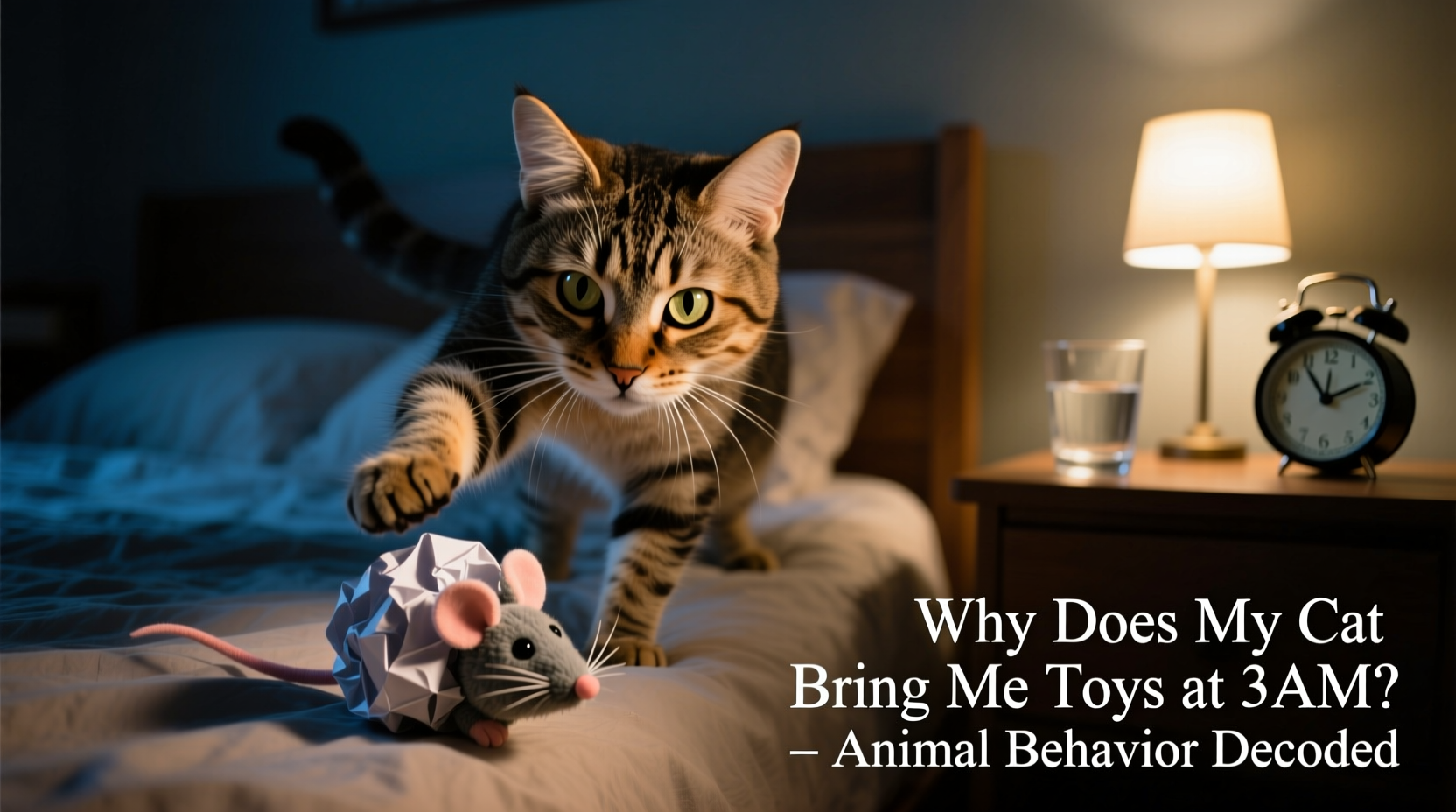
Cats are crepuscular by nature, meaning they are most active during dawn and dusk. However, domestication has slightly shifted their rhythms, especially when influenced by human schedules. Despite this, many indoor cats revert to nocturnal tendencies, particularly when left alone during the day. At night, when the house is quiet and distractions are minimal, your cat’s natural hunting instincts become more pronounced.
This timing explains why toy deliveries often occur between 2 a.m. and 5 a.m. The stillness amplifies small movements and sounds, making play more stimulating. Additionally, if your cat sleeps during the day while you're at work, their internal clock naturally aligns with nighttime activity peaks.
Hunting Instincts and the \"Gift-Giving\" Behavior
Bringing toys to you isn’t about affection in the human sense—it’s an expression of predatory behavior. In the wild, mother cats bring injured prey to their kittens to teach them how to hunt. Similarly, domestic cats may view their owners as inept hunters who need instruction. When your cat drops a toy at your feet—or on your face—it’s mimicking the act of presenting captured prey.
Dr. Sarah Elliott, a veterinary ethologist, explains:
“Cats don’t distinguish between live prey and plush toys in terms of behavioral output. The sequence—stalk, pounce, capture, present—is hardwired. When they bring you a toy, they’re completing the hunt cycle, and including you in it reinforces social bonds.” — Dr. Sarah Elliott, Feline Behavior Researcher
This behavior also signals trust. By bringing you their \"kill,\" your cat acknowledges you as part of their social group. They’re not trying to feed you (despite appearances), but rather share the success of the hunt and seek acknowledgment.
Why 3 a.m.? Decoding the Timing
The specific hour—often around 3 a.m.—isn't arbitrary. Several factors converge at this time to trigger gift-giving behavior:
- Peak energy release: After hours of rest, cats experience a surge in energy.
- Lack of stimulation: Fewer lights, sounds, and activities mean less distraction from instinctual drives.
- Attention-seeking: You’re asleep, which makes any reaction—startled awakening, verbal response—even more rewarding.
- Environmental cues: Subtle changes like temperature drops or distant animal noises can stimulate alertness.
In multi-cat households, competition can also play a role. A subordinate cat might bring a toy to you early in the morning to establish bonding without interference from dominant cats who are still resting.
How to Manage Midnight Toy Drops
While endearing, repeated disruptions can affect sleep quality and overall well-being. The key is not to suppress natural behavior, but to redirect it constructively. Punishment or ignoring the behavior entirely rarely works and may damage trust.
Step-by-Step Guide: Reducing 3 a.m. Toy Deliveries
- Establish a pre-sleep routine: Spend 15–20 minutes engaging your cat in high-energy play using wand toys or laser pointers. This simulates a full hunt cycle—chase, capture, eat.
- Feed after play: Offer a meal or treat immediately after playtime. In nature, hunting precedes eating; replicating this sequence helps signal the end of activity.
- Provide independent enrichment: Leave puzzle feeders or motion-activated toys out overnight so your cat has alternatives to waking you.
- Create a designated play zone: Set up a space away from bedrooms with climbing structures, hiding spots, and toys to contain nighttime activity.
- Gradually adjust wake times: If possible, delay interaction. Avoid eye contact or verbal engagement when toys are presented at night. Wait until morning to reward calm behavior.
Do’s and Don’ts of Responding to Nighttime Gifts
| Do’s | Don’ts |
|---|---|
| Respond calmly in the morning if you want to reinforce the behavior positively. | Yell, punish, or throw the toy back—this may increase anxiety or confusion. |
| Praise and pet your cat briefly during daylight hours when they bring a toy. | Engage enthusiastically at 3 a.m.—even negative attention reinforces the timing. |
| Rotate toys weekly to maintain novelty and reduce obsessive focus on one item. | Leave all toys accessible at once—overstimulation can increase erratic behavior. |
| Use treat-dispensing toys to simulate post-hunt rewards. | Ignore the behavior completely long-term—cats thrive on predictable feedback. |
Mini Case Study: Luna and the Midnight Mouse
Sophie, a graphic designer living in Portland, adopted Luna, a rescue tabby, six months ago. Within weeks, she noticed a pattern: every night around 3:15 a.m., Luna would leap onto the bed and drop a red felt mouse on Sophie’s pillow. Initially amused, Sophie soon found her sleep disrupted and began dreading bedtime.
After consulting a feline behaviorist, she implemented a structured evening routine: 7 p.m. play session with a feather wand, followed by a small meal. She also installed a battery-powered electronic toy that twitched randomly in the living room overnight. Within two weeks, Luna’s visits decreased significantly. By week four, the toy deliveries shifted to early evening, often while Sophie was still awake and able to engage appropriately.
The change didn’t eliminate the behavior—it honored it. “I realized Luna wasn’t trying to annoy me,” Sophie said. “She wanted to share something important. Now we have our ‘hunt time’ together, and I actually look forward to it.”
When Gift-Giving Signals Stress or Health Issues
While most toy-bringing is normal, sudden increases in frequency or intensity can indicate underlying issues. Obsessive gift-giving, especially when paired with vocalization, pacing, or overgrooming, may point to anxiety or environmental stressors such as:
- New pets or people in the home
- Changes in routine
- Lack of mental stimulation
- Medical discomfort (e.g., hyperthyroidism, cognitive decline in older cats)
Elderly cats, in particular, may exhibit altered sleep-wake cycles due to feline cognitive dysfunction syndrome (CDS). If your senior cat begins bringing toys repeatedly at night along with disorientation or litter box accidents, consult your veterinarian.
Frequently Asked Questions
Is my cat trying to feed me when they bring me toys?
No, not literally. Your cat likely sees you as part of their social group and is demonstrating care through the act of sharing prey. It’s a sign of inclusion, not nutritional concern.
Should I discourage my cat from bringing me toys at night?
Not entirely—but you can shape the timing. Complete suppression may lead to frustration. Instead, encourage daytime or evening interactions and provide alternative outlets for nighttime energy.
What if my cat brings real animals instead of toys?
This is natural predatory behavior. If outdoor access can’t be restricted, consider using a bell collar or supervised outdoor time in a catio. Indoors, enrich the environment to satisfy hunting urges and reduce the drive to catch live prey.
Checklist: Creating a Balanced Nighttime Environment for Your Cat
- ✅ Schedule a 15-minute interactive play session before bedtime
- ✅ Feed a meal right after evening play
- ✅ Rotate toys weekly to prevent boredom
- ✅ Provide self-play options (motion toys, puzzle feeders)
- ✅ Designate a safe play area outside the bedroom
- ✅ Avoid reinforcing nighttime attention-seeking with interaction
- ✅ Monitor for signs of stress or medical issues
Conclusion: Embracing the Quirks of Feline Companionship
Your cat bringing you toys at 3 a.m. isn’t a flaw in design—it’s a window into a rich, instinct-driven mind. What feels like an inconvenience is, in truth, a complex blend of biology, trust, and communication. Rather than viewing these moments as nuisances, reframing them as expressions of connection allows for deeper understanding and empathy.
With thoughtful adjustments to routine and environment, you can honor your cat’s natural behaviors while protecting your own rest. The goal isn’t to stop the gifts, but to guide when and how they’re given. In doing so, you strengthen the bond you share—one toy drop at a time.




 浙公网安备
33010002000092号
浙公网安备
33010002000092号 浙B2-20120091-4
Comments
No comments yet. Why don't you start the discussion?