
Cats are enigmatic creatures whose behaviors often leave their human companions puzzled. One such behavior—bringing toys to the food bowl—might seem random or even quirky at first glance. Yet, behind this seemingly odd habit lies a complex web of instinct, communication, and emotional expression. Understanding why your cat engages in this ritual can deepen your bond and provide insight into their inner world. This article explores the psychological and evolutionary roots of this behavior, offering practical interpretations and guidance for cat owners.
The Instinctual Drive Behind Toy-Bringing Behavior
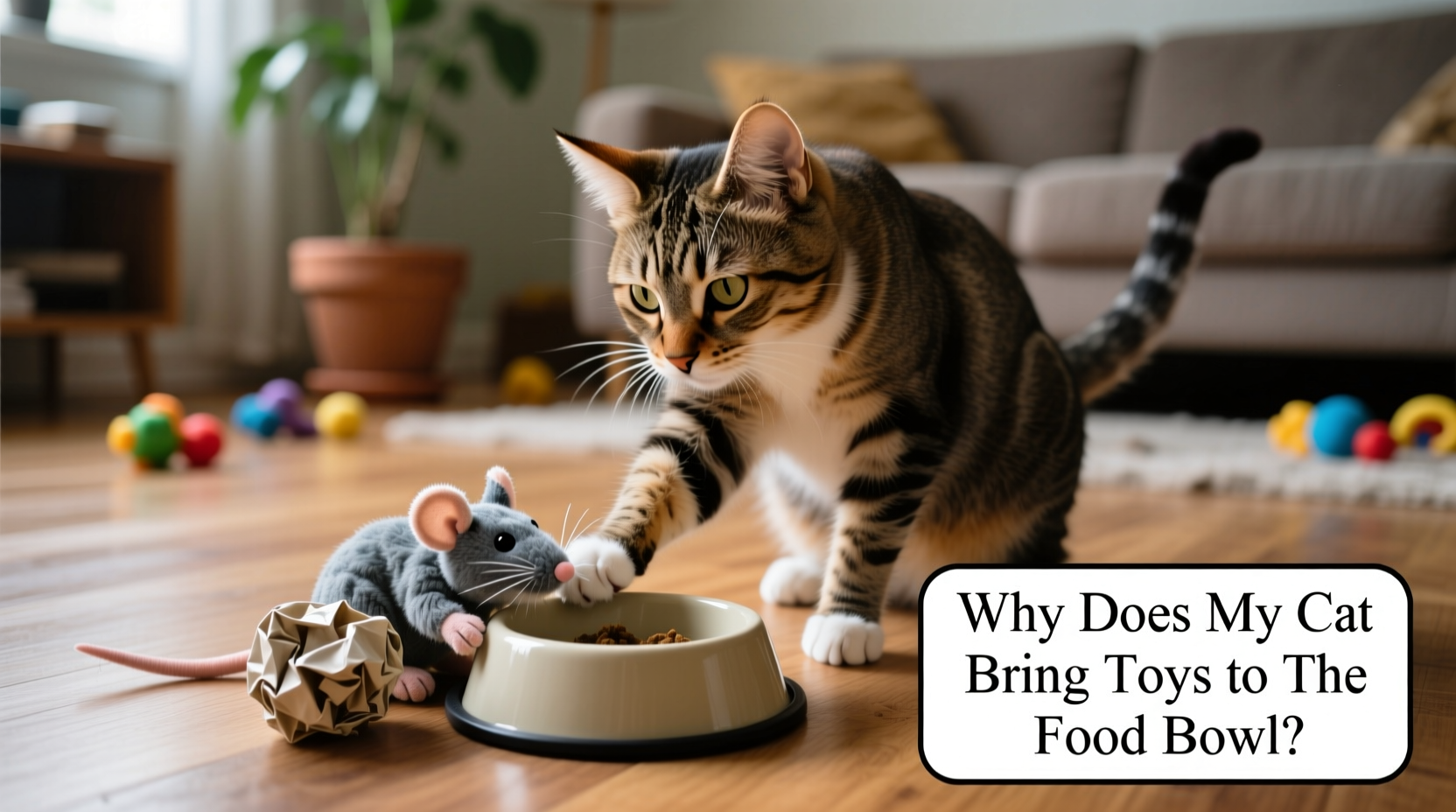
At its core, a cat’s tendency to carry toys to their food bowl is rooted in natural predatory instincts. In the wild, cats hunt small prey, make a kill, and then retreat to a safe location to consume or store it. Domestication has not erased these deeply ingrained patterns. Instead, they’ve been repurposed within the context of home life.
When a cat picks up a toy—especially one that resembles prey, like a feathered mouse or crinkly bird—they’re engaging in simulated hunting. Carrying that toy to the food bowl may represent an attempt to “store” their catch in a place associated with safety and sustenance. The food bowl becomes a symbolic den, a secure zone where valuable items belong.
This behavior is particularly common in cats who view their feeding area as a personal sanctuary. It's not just about hunger; it's about territory, security, and routine. The bowl signifies a consistent source of nourishment and comfort, making it a logical endpoint for prized possessions.
Communication and Social Bonding Through Objects
Cats may also bring toys to the food bowl as a form of communication with their humans. While dogs are more overt in seeking attention, cats express connection through subtle gestures. Placing a toy near the food bowl could be a way of saying, “This is important to me, and I want it near what matters most.”
In multi-cat households, this act might serve a dual purpose: marking territory and asserting ownership. A cat may deposit a toy by the food bowl to signal dominance or claim priority access. Even in single-cat homes, the gesture reinforces a sense of control over resources—a key aspect of feline well-being.
Interestingly, some cats treat their owners like surrogate kittens or fellow colony members. By bringing a \"kill\" (the toy) to a central feeding area, they may be mimicking how mother cats teach their young by leaving prey near nesting sites. In this interpretation, your cat isn’t just storing a toy—they’re sharing a lesson, or perhaps even offering you a gift.
“Cats don’t separate food, safety, and social structure in the way humans do. To them, the food bowl is a hub of emotional significance—not just a dish for meals.” — Dr. Sarah Thompson, Feline Behavioral Specialist
Environmental Triggers and Routine Reinforcement
A cat’s environment plays a significant role in shaping repetitive behaviors. If your cat consistently brings toys to the food bowl, consider the layout of their space. Is the feeding station located in a quiet, low-traffic area? Do they have limited hiding spots or elevated perches nearby?
Cats prefer environments where they can observe without being exposed. A food bowl placed against a wall, away from foot traffic, naturally becomes a secure anchor point. When combined with daily feeding rituals, this spot gains emotional weight. Over time, any object tied to excitement—like a favorite toy—may be drawn toward it.
Routine also reinforces the behavior. If your cat receives praise or interaction when near the food bowl, they may associate the area with positive reinforcement. Even unintentional responses—like picking up the toy and returning it—can encourage repetition. The cat learns that placing items there gets attention, creating a feedback loop.
Common Environmental Factors That Encourage Toy-Dropping at Food Bowls
- Limited designated play zones
- Absence of dedicated toy storage (e.g., baskets or cubbies)
- Feeding area positioned in a high-security zone (corner, under furniture)
- High levels of household activity elsewhere
- Lack of vertical spaces or alternative safe zones
Step-by-Step Guide to Understanding and Responding to the Behavior
If you're curious about your cat’s motivations—or if the behavior seems excessive—follow this structured approach to assess and respond appropriately.
- Observe Without Interfering: For three to five days, simply watch when and how your cat brings toys to the bowl. Note the type of toy, time of day, and whether eating follows.
- Map Their Territory: Sketch a rough layout of your home highlighting feeding, litter, sleeping, and play areas. Identify if the food bowl occupies a psychologically dominant position.
- Introduce Alternative Zones: Place a second toy basket near a favored napping spot or window perch. Gently guide your cat to drop toys there using treats or verbal cues.
- Rotate Toys Strategically: Limit available toys to two or three at a time, swapping them weekly. This reduces fixation and keeps interest distributed across spaces.
- Respond Mindfully: Avoid scolding or removing toys abruptly. Instead, calmly return misplaced toys while saying, “This goes here,” and pointing to the new basket.
- Reinforce New Habits: Reward your cat with affection or a treat when they leave toys in designated areas—even if accidental.
Do’s and Don’ts: Managing Toy-to-Bowl Behavior
| Do’s | Don’ts |
|---|---|
| Provide multiple resource zones (feeding, playing, resting) to reduce territorial concentration. | Place all resources (food, water, toys) in high-traffic or noisy areas that stress your cat. |
| Use positive reinforcement to encourage use of toy baskets or shelves. | Yell at or punish your cat for bringing toys to the bowl—it may increase anxiety. |
| Respect their routine—sudden changes in feeding time or location can disrupt behavior balance. | Move the food bowl frequently without gradual transition. |
| Engage in daily interactive play to satisfy hunting instincts before meals. | Ignore play needs, leading to redirected behaviors like obsessive toy-moving. |
Mini Case Study: Luna and the Red Mouse
Luna, a 3-year-old domestic shorthair, lived in a bustling two-bedroom apartment with her owner, Mark. Every evening around 6 PM, she would retrieve her red plush mouse from the living room rug and carry it to her stainless steel food bowl, dropping it with a deliberate flick before meowing for dinner.
Mark initially found the behavior amusing but grew concerned when Luna began hoarding other toys—feathers, bells, even crumpled paper balls—around the same spot. After consulting a feline behaviorist, he realized that Luna viewed the kitchen corner as her safest zone. Her daytime was spent dodging vacuum cleaners, loud phone calls, and visiting guests. The food bowl, replenished nightly, represented predictability.
Following a consultation, Mark introduced a small woven basket beside Luna’s favorite windowsill perch, placing her red mouse inside each morning. He also started pre-dinner play sessions using a wand toy to simulate a full \"hunt-eat-groom-sleep\" cycle. Within two weeks, Luna began leaving her toys in the basket more often. The food bowl remained respected—but no longer monopolized—as her primary emotional anchor.
The case illustrates how environmental stability, predictable routines, and enriched play can gently reshape seemingly fixed behaviors.
Frequently Asked Questions
Is it normal for my cat to bring toys to the food bowl every day?
Yes, it’s entirely normal. Many cats develop ritualistic behaviors around feeding times, especially if they’re highly food-motivated or have strong territorial instincts. As long as your cat is healthy, eating well, and not showing signs of stress, this habit is likely harmless and even enriching for them.
Could this behavior indicate anxiety or OCD?
In most cases, no. However, if your cat obsessively carries toys to the bowl multiple times per hour, ignores food, or shows other signs like overgrooming, vocalization, or aggression, it may point to underlying stress. Consult a veterinarian or certified feline behaviorist to rule out medical or psychological causes.
Should I stop my cat from doing this?
Generally, it’s best not to discourage the behavior unless it interferes with feeding or hygiene. Instead, work with your cat’s instincts by providing alternative outlets. Trying to suppress natural behaviors often leads to frustration or displacement activities elsewhere.
Conclusion: Embracing Your Cat’s Unique Language
Your cat doesn’t speak in words, but every action—from purring to pawing, from kneading to toy-carrying—is part of a rich, nuanced language. Bringing toys to the food bowl isn’t randomness; it’s a meaningful expression shaped by evolution, environment, and emotion. Rather than correcting it outright, consider what your cat is trying to communicate. Are they seeking security? Sharing a symbolic hunt? Reinforcing their sense of order?
By observing closely, responding with empathy, and enriching their world with thoughtful routines and spaces, you honor their nature while fostering a deeper connection. The next time your cat drops a crinkly ball beside their kibble, remember: they’re not just moving objects. They’re inviting you into their world—one small, deliberate step at a time.




 浙公网安备
33010002000092号
浙公网安备
33010002000092号 浙B2-20120091-4
Comments
No comments yet. Why don't you start the discussion?