
If you’ve ever watched your cat press their nose against the glass, eyes locked on a fluttering sparrow or perched robin, you’ve likely heard it—the rapid, chattering sound that resembles a tiny machine gun made of teeth. This peculiar vocalization, often accompanied by twitching jaws and vibrating tails, is one of the most distinctive behaviors cats display when observing prey they can’t reach. While it may seem odd or even comical, this chattering is deeply rooted in feline biology, instinct, and emotional response. Understanding why cats chatter offers insight into their evolutionary past, predatory psychology, and emotional complexity.
Cat owners frequently wonder: Is this excitement? Frustration? A hunting reflex gone awry? The truth lies in a blend of all three. This article explores the science behind feline bird-chattering, its connection to natural hunting behavior, and what it reveals about your cat’s inner world.
The Anatomy of the Chatter: What It Sounds Like and When It Happens
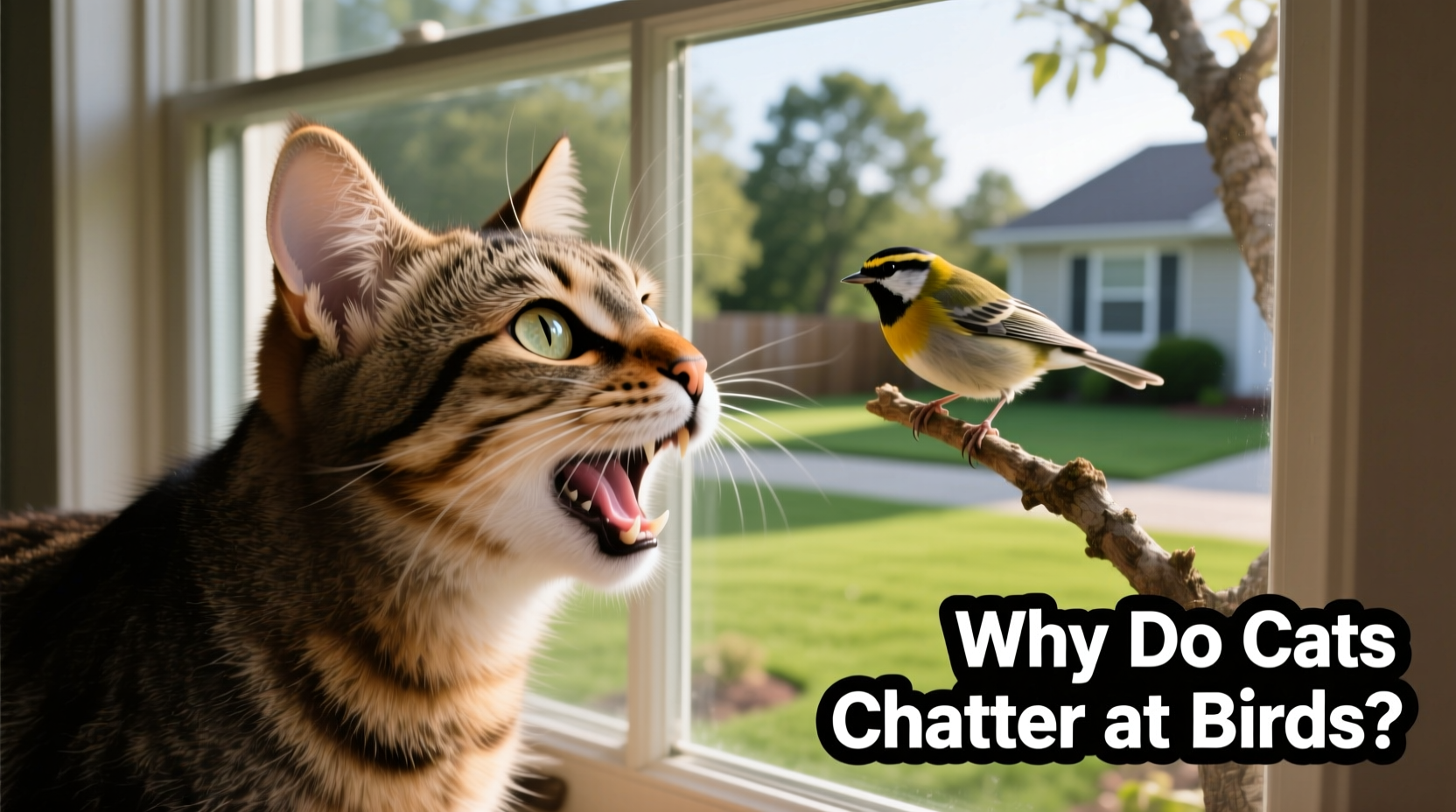
The chattering sound—sometimes described as a mix between a chirp, a clack, and a growl—is produced by rapid jaw movements and tongue flicks. It typically occurs when a cat spots small, fast-moving animals, especially birds, through a barrier like a window or screen. The behavior is most common during daylight hours when birds are active, but some cats will chatter at squirrels, insects, or even toy movements on TV screens.
What sets this apart from other cat vocalizations is its specificity. Unlike meows, purrs, or hisses—which serve broad communicative functions—the chatter is almost exclusively linked to prey observation. It rarely occurs during social interactions with humans or other pets, reinforcing its role as a hardwired hunting-related behavior.
Hunting Instinct and the \"Killing Bite\" Reflex
The leading theory behind cat chattering ties directly to the mechanics of predation. In the wild, cats kill small prey like birds and rodents with a precise bite to the neck or skull, severing the spinal cord quickly and efficiently. This requires rapid jaw movement and coordination. Ethologists believe that the chattering motion mimics this killing bite—a physical rehearsal of the final strike.
Dr. John Bradshaw, a renowned anthrozoologist and author of *Cat Sense*, explains:
“The chattering jaw movement is likely a motor pattern associated with delivering the nape bite. Even indoor cats retain this neural programming because it’s genetically embedded.” — Dr. John Bradshaw, Anthrozoologist
When a cat sees a bird but cannot act, the motor program activates anyway. The brain signals the muscles used in the killing bite, but since there’s no physical outlet, the action manifests as a visible, audible chatter. Think of it as an involuntary “dry run” of a lethal maneuver—one the cat has never been taught but knows innately.
This behavior isn’t limited to adult cats. Kittens as young as eight weeks old have been observed chattering at birds on television, suggesting the instinct emerges early and doesn’t require prior hunting experience.
Frustration vs. Excitement: Decoding the Emotional Drive
While the physical mechanism of chattering is tied to hunting reflexes, the emotional trigger is more complex. Two primary emotions appear to fuel the behavior: intense excitement and thwarted frustration.
Excitement arises from the sight of potential prey. Birds trigger a surge in dopamine and adrenaline, activating the cat’s predatory sequence: search → stalk → chase → pounce → kill. The chatter often begins during the “search” phase and intensifies as the bird moves unpredictably.
However, when the window blocks access, the sequence cannot complete. This creates a psychological conflict. The cat is primed to act, but physically restrained. The result? A behavioral overflow—energy that must go somewhere. Chattering becomes a release valve for pent-up predatory drive.
A 2013 study published in *Applied Animal Behaviour Science* found that cats exposed to live prey behind glass exhibited higher levels of repetitive behaviors—including chattering—than those shown non-prey stimuli. This supports the idea that the behavior is not just mimicry but an expression of internal tension.
Signs Your Cat Is Frustrated, Not Just Excited
- Sudden tail lashing after prolonged stillness
- Abandoning the window abruptly after chattering
- Vocalizing loudly (meowing or yowling) post-chatter
- Redirected aggression toward toys or people afterward
Is Chattering Normal? A Behavioral Checklist
Yes, chattering is entirely normal and healthy in most cases. However, understanding when it crosses into problematic territory helps ensure your cat’s well-being. Use this checklist to assess whether your cat’s behavior falls within typical ranges:
- Frequency: Does your cat chatter occasionally when birds are present, or constantly throughout the day?
- Duration: Episodes last seconds to minutes—not hours.
- Recovery: After the bird leaves, does your cat relax, groom, or play—or remain agitated?
- Physical Signs: No drooling, trembling, or loss of balance during episodes.
- Other Behaviors: No obsessive pacing, over-grooming, or destruction linked to window watching.
If all items align with the first option in each pair, your cat is likely expressing natural instinct. If multiple answers point to the second option, consider environmental enrichment or consultation with a veterinary behaviorist.
Environmental Enrichment: Channeling Predatory Energy Constructively
Indoor cats live in a world vastly different from their wild ancestors. While windows provide visual stimulation, they also create a “predation gap”—the ability to see prey without the ability to hunt. Over time, unmet predatory needs can contribute to stress, obesity, and behavioral issues.
The solution isn’t removing access to windows—it’s supplementing it with opportunities to express natural behaviors safely. Here’s how:
Step-by-Step Guide: Creating a Hunting-Enriched Environment
- Rotate Interactive Toys Daily: Use wand toys that mimic bird flight patterns (zigzagging, sudden drops). Rotate them to maintain novelty.
- Introduce Puzzle Feeders: Make meals part of the hunt. Use feeders that require batting, pawing, or chasing to release kibble.
- Set Up a Bird-Watching Perch: Place a cat tree near the window with a secure ledge. Add a sheer curtain nearby to simulate stalking cover.
- Incorporate Scheduled Play Sessions: Twice daily, engage in 10–15 minute hunts ending with a “kill” (letting the cat catch the toy) and a treat.
- Try Electronic Prey Simulators: Devices like automated laser mice or robotic balls offer unpredictable movement for solo play.
These activities don’t replace chattering—they contextualize it. When a cat feels fulfilled in their predatory role indoors, the emotional charge behind window chattering often diminishes, though the instinctual response remains.
Do’s and Don’ts of Responding to Cat Chattering
| Do’s | Don’ts |
|---|---|
| Observe quietly to understand your cat’s triggers | Yell at or punish your cat for chattering |
| Use the moment to initiate play with a feather wand | Tap the window or make loud noises that scare the bird away abruptly |
| Provide alternative outlets for hunting behavior | Assume the behavior means your cat wants to go outside unsupervised |
| Respect your cat’s focus—don’t interrupt mid-chatter unnecessarily | Encourage obsession by leaving bird feeders right outside accessible windows |
Mini Case Study: Luna the Apartment Cat
Luna, a 3-year-old domestic shorthair living in a high-rise apartment, began chattering intensely at pigeons on the balcony ledge. Her owner, Maria, noticed that after these episodes, Luna would swat at her legs or knock items off shelves. Concerned, Maria consulted a feline behavior consultant.
The assessment revealed that while Luna’s chattering was normal, her lack of structured play was causing redirected aggression. The consultant recommended a daily routine: 10 minutes of wand toy play each morning and evening, rotating toys weekly, and installing a window perch with a view of a squirrel-free tree (to reduce overstimulation).
Within three weeks, Luna’s chattering remained but became shorter and less frantic. She no longer displayed aggressive outbursts. Maria reported that Luna now often grooms herself after watching birds—signaling emotional resolution.
This case illustrates that chattering itself isn’t the issue—context and outlet are key.
FAQ: Common Questions About Cat Chattering
Do all cats chatter at birds?
No, not all cats do. While the instinct is universal, individual personality, early exposure to prey, and environmental factors influence whether a cat expresses chattering. Some cats may hiss, whine, or simply freeze instead.
Can chattering be a sign of medical problems?
Rarely. In isolated cases, neurological conditions or dental pain might cause unusual jaw movements. However, if chattering only occurs during prey observation and stops when the stimulus is removed, it’s almost certainly behavioral. Consult a vet if you notice drooling, facial twitching, or lethargy.
Should I let my cat outside to hunt so they stop chattering?
No. Allowing cats to roam freely outdoors poses serious risks—to the cat (traffic, disease, predators) and to local wildlife. Studies estimate that free-roaming cats kill billions of birds and small mammals annually. Instead, enrich indoor hunting experiences using safe alternatives like supervised harness walks or enclosed catio spaces.
Conclusion: Embracing the Wild Within
Your cat’s chattering at birds isn’t a quirk to correct—it’s a window into their evolutionary soul. That rapid-fire jaw motion connects your cozy housecat to generations of skilled hunters who relied on precision, patience, and instinct to survive. Rather than suppress this behavior, embrace it as a sign of a mentally engaged, biologically fulfilled companion.
The goal isn’t to eliminate chattering but to ensure it exists within a balanced lifestyle. When cats have consistent opportunities to hunt (even if symbolically), they’re less likely to suffer from frustration, anxiety, or destructive habits. You’re not just a pet owner—you’re a steward of a predator’s well-being.




 浙公网安备
33010002000092号
浙公网安备
33010002000092号 浙B2-20120091-4
Comments
No comments yet. Why don't you start the discussion?