
It happens every December: you hang the lights with care, step back to admire the glow—and then hear the unmistakable crunch of plastic insulation giving way under tiny, determined teeth. Your cat isn’t trying to sabotage the holidays. They’re responding to deeply wired instincts, unmet needs, or environmental triggers that make dangling, warm, crackling wires irresistibly compelling. Unlike dogs, who may chew out of boredom or anxiety, cats chew wires for a confluence of sensory stimulation, developmental impulses, and neurological factors—and mistaking this behavior for “mischievousness” delays effective, compassionate intervention. This article explains the science behind the chewing, debunks common myths, and delivers actionable, vet-vetted strategies that prioritize feline welfare without sacrificing holiday cheer.
The Real Reasons Cats Target Christmas Light Wires
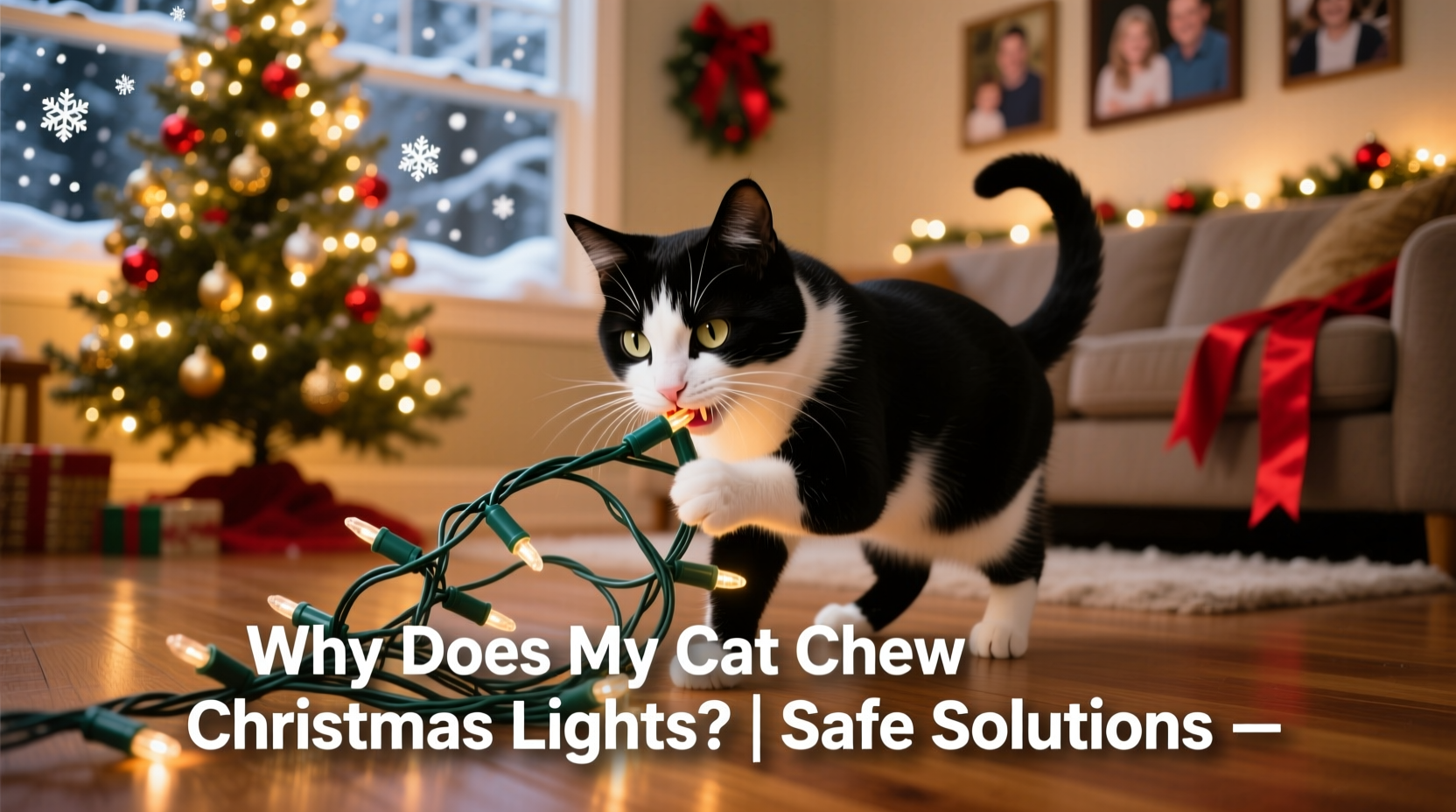
Cats don’t perceive electrical cords as hazards. Their evolutionary wiring interprets them as prey-like stimuli: thin, linear, mobile (when swaying), temperature-emitting (especially older incandescent strands), and textured (with ridges, plugs, or flexible sheathing). Veterinarian Dr. Sarah Lin, DVM, DACVB, explains:
“Cats under age three are especially prone to oral exploration—it’s how they learn about their world. But even mature cats may chew wires due to redirected hunting behavior, dental discomfort, or chronic stress. It’s rarely ‘just play.’ It’s communication.”
Three primary drivers account for most cases:
- Sensory Seeking: The subtle vibration from low-voltage current (even in LED strands), faint warmth from transformers, and crinkly texture engage a cat’s highly attuned tactile and auditory systems. For indoor cats with limited environmental enrichment, these cues become magnetic.
- Oral Discomfort or Developmental Need: Kittens teething between 3–6 months use chewing to relieve gum pressure. Adult cats with dental disease (gingivitis, resorptive lesions) may chew to soothe pain—a sign often missed until weight loss or drooling appears.
- Stress or Understimulation: Holiday disruptions—new scents, visitors, rearranged furniture, or altered routines—elevate cortisol. Chewing releases endorphins, offering temporary relief. Simultaneously, reduced playtime during busy seasons leaves excess energy with no healthy outlet.
Importantly, this behavior carries serious risk: electrocution (especially with frayed or damaged wires), oral burns, intestinal obstruction from ingested plastic, or fire hazard if insulation is compromised. Ignoring it—or resorting to punishment—worsens both safety and trust.
Immediate Safety Measures: What to Do *Right Now*
If your cat has already started chewing lights—or you’re setting up this year—prioritize physical prevention before addressing root causes. These steps take under five minutes and significantly reduce danger:
- Relocate high-risk zones: Keep trees and lighted garlands at least six feet from furniture your cat jumps onto. Avoid floor-level stringing—cats investigate ground-level movement first.
- Use cord concealers—not just covers: Rigid plastic cord channels (not soft sleeves) physically block access. Secure them with double-sided tape or command strips, not staples or nails that could damage walls or trap paws.
- Install motion-activated deterrents: Place battery-operated devices emitting high-frequency tones (inaudible to humans, aversive to cats) near baseboards where wires run. Test placement first—some cats habituate quickly, so rotate locations weekly.
- Apply bitter-tasting, pet-safe sprays: Use only FDA-compliant formulas like Grannick’s Bitter Apple or Vetericyn Hot Spot Spray. Reapply daily for first week—saliva dilutes effectiveness. Never use cayenne, citrus oils, or essential oil blends; these irritate mucous membranes and can cause aspiration pneumonia.
- Create a “no-wire zone” around the tree: Use a baby gate or freestanding pet barrier (minimum 24” tall) to define boundaries. Pair with positive reinforcement: reward calm sitting *outside* the zone with treats or play.
These aren’t long-term fixes—but they buy critical time while you implement behavioral and environmental changes.
Behavioral & Environmental Solutions That Last
Stopping wire chewing permanently requires satisfying the underlying need—not just blocking the behavior. A 2023 study in the Journal of Feline Medicine and Surgery found that cats whose owners increased daily interactive play by just 15 minutes saw a 72% reduction in destructive oral behaviors within two weeks. Sustainability comes from consistency, not complexity.
Enrichment That Targets the Root Cause
| Need Being Met | Effective Intervention | Why It Works |
|---|---|---|
| Sensory Stimulation | Rotating “prey” toys: feather wands with varying textures (furry, crinkly, silky), motorized mice with erratic movement, or treat-dispensing balls filled with kibble + catnip | Mimics unpredictability of real prey—engages visual, auditory, and tactile senses more intensely than static wires |
| Oral Relief | Cool, food-grade silicone chew toys (e.g., N-Bone Kitten Chew Stick), frozen washcloths twisted into ropes, or dental chews approved by the Veterinary Oral Health Council (VOHC) | Provides safe resistance and cooling sensation—ideal for teething kittens or adults with gum inflammation |
| Stress Reduction | Dedicated “safe zones”: elevated perches near windows (with bird feeders outside), Feliway diffusers in high-traffic rooms, and consistent feeding/play schedules—even during holidays | Reduces cortisol spikes triggered by novelty; predictable routines signal safety to a prey animal’s nervous system |
Crucially, avoid overloading your cat with options. Introduce one new toy or routine per week. Observe what they choose—this reveals their dominant motivation. If they ignore the feather wand but carry the crinkly ball to their bed, prioritize auditory/tactile items.
A Real-Life Case Study: Maya and Luna
Maya, a graphic designer in Portland, noticed her 2-year-old tabby Luna chewing the base of her artificial tree’s power cord each December. She’d tried citrus spray (Luna licked it off), scolding (which increased Luna’s hiding), and taping the cord to the wall (Luna peeled the tape). After consulting a veterinary behaviorist, Maya mapped Luna’s activity: she chewed most between 4–6 p.m., right after Maya returned from work—coinciding with Luna’s peak predatory drive and post-nap energy surge. Together, they redesigned the routine: Maya now spends 12 minutes of focused play with a wand toy *before* hanging lights, then offers a puzzle feeder filled with Luna’s favorite freeze-dried chicken. Within eight days, Luna stopped approaching the cord entirely. The key wasn’t restricting access—it was redirecting the biological impulse at its source.
Step-by-Step Holiday Wire Safety Plan (Start Now, Finish Before Tree Setup)
- Week 1: Audit & Assess
Unplug all lights. Inspect for fraying, exposed copper, or cracked plugs. Discard damaged strands. Note which wires your cat targets most—often the transformer cord or lowest strand near the floor. - Week 2: Install Physical Barriers
Mount cord channels along baseboards. Set up the pet barrier around your planned tree location. Test motion deterrents for coverage and volume. - Week 3: Launch Enrichment Rotation
Introduce one new chew-safe toy and one new interactive play session. Track timing: does chewing decrease during/after play? Adjust duration or intensity based on response. - Week 4: Refine & Reinforce
Replace bitter spray daily. Add Feliway diffuser to living room. Reward *any* alternative behavior near the tree zone (e.g., sniffing a toy instead of the cord). - Holiday Week: Maintain & Monitor
Keep lights unplugged when unsupervised. Rotate toys daily. Offer extra play sessions during visitor arrivals or gift-wrapping chaos. If chewing resumes, pause and reassess—stress may have spiked unexpectedly.
FAQ: Addressing Common Concerns
Can I use aluminum foil or double-sided tape to deter chewing?
Yes—but only as a short-term surface deterrent on *non-electrical* areas (e.g., wrapping foil around the base of the tree stand). Never apply tape or foil directly to wires: heat buildup can melt insulation or create fire hazards. Foil’s crinkly sound and texture startle many cats initially, but effectiveness fades within days. Pair it with enrichment, not rely on it alone.
My cat only chews lights when I’m home. Does that mean they’re doing it for attention?
Possibly—but not necessarily. Cats often chew when owners are present because that’s when lights are illuminated (activating sensory appeal) and movement occurs (making wires sway). True attention-seeking usually involves vocalizing, pawing, or bringing toys *before* chewing starts. If your cat stares at you while chewing, try redirecting *before* the behavior begins—offer a toy the moment they approach the tree.
Is there a safe “chew-proof” light option?
No light strand is truly chew-proof, but LED lights with thicker, braided PVC jackets (like commercial-grade outdoor strands) resist puncture better than thin, clear-coated indoor wires. Look for UL-certified products labeled “heavy-duty” or “commercial use.” Even then, physical barriers remain essential—curiosity and persistence override material strength.
Conclusion: Safety, Empathy, and the Spirit of the Season
Your cat isn’t defying tradition—they’re expressing needs shaped by millions of years of evolution. Chewing Christmas lights isn’t rebellion; it’s a symptom of unmet sensory, physical, or emotional requirements. By responding with observation instead of frustration, enrichment instead of exclusion, and patience instead of punishment, you transform a seasonal hazard into an opportunity to deepen your bond. You’ll also protect your home, prevent veterinary emergencies, and preserve the quiet joy of watching your cat nap peacefully beside softly glowing lights—without fear. Start today: unplug one strand, place one cord channel, and spend five minutes playing with a wand toy. Small actions, consistently applied, build lasting safety. And when your tree shines brightly and your cat curls up contentedly nearby, you’ll know the truest gift of the season isn’t under the branches—it’s peace of mind, earned through understanding.




 浙公网安备
33010002000092号
浙公网安备
33010002000092号 浙B2-20120091-4
Comments
No comments yet. Why don't you start the discussion?