
It’s a familiar holiday scene: tinsel glitters, ornaments shimmer, and your cat—wide-eyed and utterly entranced—is crouched beneath the tree, gnawing on a power cord. You lunge, heart pounding. Not just because of the risk of electrocution or fire—but because you know, deep down, this isn’t mischief. It’s a signal. A cat doesn’t chew electrical wiring for fun; it’s responding to instinct, environment, or unmet needs. Understanding why is the first step toward solving it—not with punishment or panic, but with empathy, preparation, and feline-informed safety.
The Real Reasons Behind the Chewing
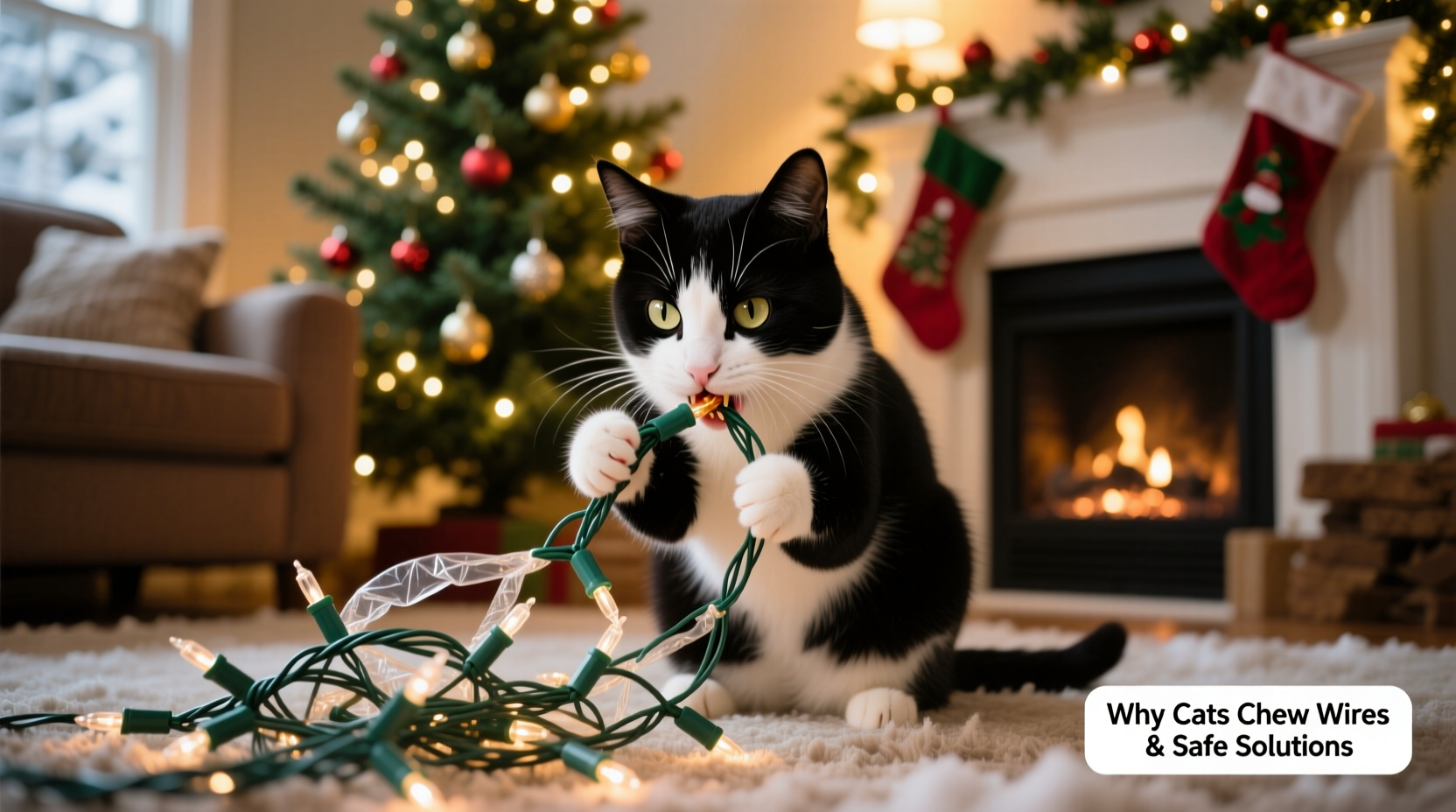
Cats don’t target Christmas tree wires out of malice or seasonal rebellion. Their behavior stems from deeply rooted biological and psychological drivers. Veterinarians and feline behaviorists consistently identify four primary causes:
- Oral exploration and teething: Kittens (and some adult cats with dental discomfort or oral sensitivities) explore the world with their mouths. Wires mimic the texture and resistance of prey tendons—flexible, slightly yielding, and novel.
- Sensory stimulation: The faint hum of low-voltage lights, the subtle warmth of bundled cords, and the crinkling sound when teeth press against insulation create multisensory feedback that can be irresistible to a curious cat.
- Environmental stress or boredom: The holidays disrupt routine—guests arrive, furniture shifts, new scents linger, and the tree itself becomes an unpredictable, towering presence. For cats who thrive on predictability, chewing may serve as self-soothing or displacement behavior.
- Attention-seeking or play reinforcement: If your cat has ever been inadvertently rewarded—by being picked up, spoken to, or even gently shooed away—while interacting with the tree, they may associate the activity with engagement.
Crucially, this behavior is rarely “just a phase.” Left unaddressed, it can escalate into habitual wire-chewing—even outside the holiday season—if the underlying need remains unfulfilled.
Why This Is More Dangerous Than It Appears
Electrical cords pose three distinct, life-threatening risks to cats:
- Electrocution: Even low-voltage holiday lights (typically 12–24V) can deliver enough current to cause cardiac arrhythmias, respiratory paralysis, or severe oral burns—especially if saliva bridges exposed conductors.
- Oral trauma: Chewed insulation exposes sharp copper strands. These can lacerate gums, tongue, or palate—and embedded fragments may require surgical removal.
- Fire hazard: Damaged cords increase resistance, leading to overheating, melting, and potential ignition—particularly in dry pine trees near flammable decorations.
A 2023 survey by the ASPCA Animal Poison Control Center found that 68% of reported holiday-related feline emergencies involved ingestion or contact with electrical cords—making it the second-most common seasonal hazard after toxic plants like poinsettia and holly.
Proven, Vet-Approved Prevention Strategies
Effective prevention combines environmental management, behavioral redirection, and consistent reinforcement. Here’s what works—backed by veterinary behavior science:
1. Physical Barrier Systems That Actually Hold Up
Cats are agile, persistent, and clever. Flimsy tape or loosely draped fabric won’t deter them. Instead, use layered, cat-proof barriers:
- Hard-shell cord covers: Rigid PVC or rubber conduit (e.g., “cord armor” sleeves) prevents biting and resists clawing. Secure ends with heavy-duty Velcro or zip ties—not tape.
- Tree skirt + barrier base: Place a sturdy, weighted tree skirt (fabric or faux-fur) over a rigid plastic or metal ring base that extends at least 18 inches beyond the trunk. This creates a physical moat cats won’t cross.
- Perimeter deterrents: Use double-sided tape or aluminum foil strips around the tree’s base—textures cats dislike walking on. Reapply daily; static buildup diminishes effectiveness over time.
2. Environmental Enrichment That Redirects Instinct
Chewing often signals unspent energy or under-stimulated senses. Replace the wire with something safer—and more satisfying—that taps into natural drives:
- Provide daily interactive play sessions (2×15 minutes) using wand toys that mimic prey movement—especially in the early evening when cats are most active.
- Introduce puzzle feeders filled with kibble or freeze-dried treats. Rotate them every 48 hours to maintain novelty.
- Offer safe chew alternatives: organic hemp rope toys, frozen cucumber sticks (cut into 1-inch pieces), or veterinarian-approved dental chews designed for feline oral health.
3. Tree Setup Modifications That Reduce Appeal
Make the tree less stimulating—not more. Counterintuitively, reducing visual and auditory interest lowers the cat’s drive to investigate:
- Use LED lights only (cooler, quieter, lower voltage) and avoid blinking or flashing patterns, which heighten arousal.
- Keep lower branches bare—no dangling ornaments, ribbons, or garlands within 24 inches of the floor.
- Anchor the tree securely to a wall stud using a breakaway strap (not fishing line or thin rope—these pose strangulation hazards).
What NOT to Do (And Why)
Some well-intentioned tactics backfire—increasing stress, damaging trust, or worsening the behavior. Avoid these common mistakes:
| Action | Why It Fails | Better Alternative |
|---|---|---|
| Spraying water or yelling when caught chewing | Creates fear-based association with you—not the wire. Increases anxiety, potentially worsening displacement behaviors. | Quietly interrupt with a soft “psst,” then redirect to a toy or treat. |
| Using citrus sprays or essential oils near the tree | Many oils (e.g., orange, lemon, tea tree) are toxic to cats when inhaled or ingested—even in small amounts. Can cause liver damage or respiratory distress. | Use food-grade bitter gels labeled “safe for cats” (e.g., Grannick’s Bitter Apple for felines)—applied sparingly to cord ends only. |
| Leaving the tree unattended for long periods | Gives unsupervised access during peak curiosity windows (dawn/dusk). Reinforces habit formation. | Install a baby gate or use a pet-safe playpen around the tree zone when you’re not actively supervising. |
| Wrapping cords with masking tape or duct tape | Easily peeled off, leaves sticky residue cats lick, and offers no bite resistance. | Use rigid, chew-resistant cord sleeves rated for pets (look for ASTM F963 certification). |
Mini Case Study: Luna, 3-Year-Old Domestic Shorthair
Luna lived in a quiet downtown apartment with her owner, Maya. During her first Christmas with the family, Luna began obsessively chewing the base cord of their pre-lit artificial tree. She’d stalk it for minutes before lunging—ignoring toys, treats, and even her favorite feather wand. After two near-misses (a mild shock and a lip laceration requiring stitches), Maya consulted a board-certified veterinary behaviorist.
The behaviorist observed Luna’s routine and identified key triggers: minimal daytime enrichment, no vertical space near the living room window, and high sensitivity to the tree’s low-frequency hum. They recommended three changes: installing a tall, multi-level cat tree beside the window; switching to battery-operated LED lights on the lower third of the tree; and introducing daily “chew time” with frozen green beans in a slow-feeder ball.
Within 11 days, Luna’s wire-chewing ceased entirely. Her focus shifted to batting the green beans and watching birds from her new perch. Maya noted, “She wasn’t being ‘bad’—she was asking for something I hadn’t given her. Once I listened, the problem solved itself.”
Expert Insight: What Veterinary Behaviorists Emphasize
“Cats chew wires not because they’re disobedient—but because we’ve built environments that don’t meet their evolutionary needs. A single ‘no’ won’t override 10,000 years of instinct. Safety comes from redesigning the space, not retraining the cat.” — Dr. Sarah Lin, DACVB, Director of Feline Behavior Services at Cornell University College of Veterinary Medicine
Dr. Lin stresses that consistency matters more than intensity: “Five minutes of focused play twice a day reduces destructive behavior more reliably than one hour of sporadic interaction. And never underestimate the power of predictable feeding times—they anchor a cat’s sense of security during chaotic seasons.”
Step-by-Step Holiday Wire Safety Plan
Follow this timeline to implement safeguards *before* the tree goes up—and sustain them through New Year’s:
- Week Before Tree Setup: Audit all cords. Replace frayed or damaged ones. Purchase rigid cord sleeves, double-sided tape, and a wall-mounting kit.
- Day Before Tree Installation: Set up cat enrichment zones—place puzzle feeders, new toys, and perches away from the intended tree location. Introduce chew alternatives gradually.
- Tree Setup Day (Morning): Anchor tree first. Run all cords through sleeves *before* plugging in. Route cords vertically along the wall—not horizontally across the floor.
- Tree Setup Day (Evening): Apply pet-safe bitter gel to sleeve ends only. Place barrier skirt and perimeter tape. Supervise first 30 minutes of cat-tree interaction.
- Daily Maintenance (Dec 1–Jan 2): Inspect cords for wear each morning. Rotate chew toys every 48 hours. Spend 15 minutes of dedicated playtime before dark.
FAQ
Can I use a citrus-scented deterrent spray safely?
No. Citrus oils—including d-limonene found in orange and lemon extracts—are hepatotoxic to cats. Even low-concentration sprays can cause vomiting, lethargy, or tremors when inhaled or licked. Opt instead for vet-approved bitter gels or physical barriers.
My cat only chews when I’m not home. How do I monitor that?
Set up a pet camera with motion alerts focused on the tree area. Review clips daily—not to punish, but to identify patterns (e.g., chewing occurs 30 minutes after you leave, suggesting separation-related stress). Pair with calming aids like Feliway diffusers and ensure access to food, water, and litter before departure.
Is there a medical reason my older cat suddenly started chewing wires?
Yes—sudden onset in cats over age 7 warrants a veterinary exam. Dental disease, hyperthyroidism, cognitive dysfunction, or oral pain can trigger compulsive chewing. Rule out medical causes before assuming behavioral origin.
Conclusion
Your cat isn’t trying to ruin the holidays. They’re communicating—through teeth and tail, silence and stare—that something in their world feels unbalanced, unstimulating, or unsafe. Stopping the chewing isn’t about making the tree inaccessible. It’s about making your cat feel seen, secure, and satisfied—so the wire loses its appeal entirely. You don’t need perfect solutions. You need consistent, compassionate adjustments: one cord sleeve, one extra play session, one moment of quiet observation. Start today—not when the tree arrives, but before the first ornament is unwrapped. Because the safest Christmas isn’t the one without risk—it’s the one where your cat thrives, exactly as they are.




 浙公网安备
33010002000092号
浙公网安备
33010002000092号 浙B2-20120091-4
Comments
No comments yet. Why don't you start the discussion?