
Every December, thousands of cat owners face the same heart-stopping moment: a flicker, a sizzle, a faint acrid smell—and then, there’s Mittens, jaws clamped around a strand of blinking lights, tail twitching like she’s just discovered electricity is edible. It’s not cute. It’s dangerous. And it’s far more common—and explainable—than most people realize.
Chewing on electrical cords isn’t “just a phase” or “kitten nonsense.” It’s a behavior rooted in biology, environment, and unmet needs. Ignoring it risks electrocution, oral injury, or fire. But overreacting—with punishment, bitter sprays alone, or complete holiday deprivation—misses the point. The solution lies in understanding *why* your cat targets those wires, then applying layered, compassionate, and evidence-based interventions.
Why cats chew on Christmas lights (it’s not about destruction)
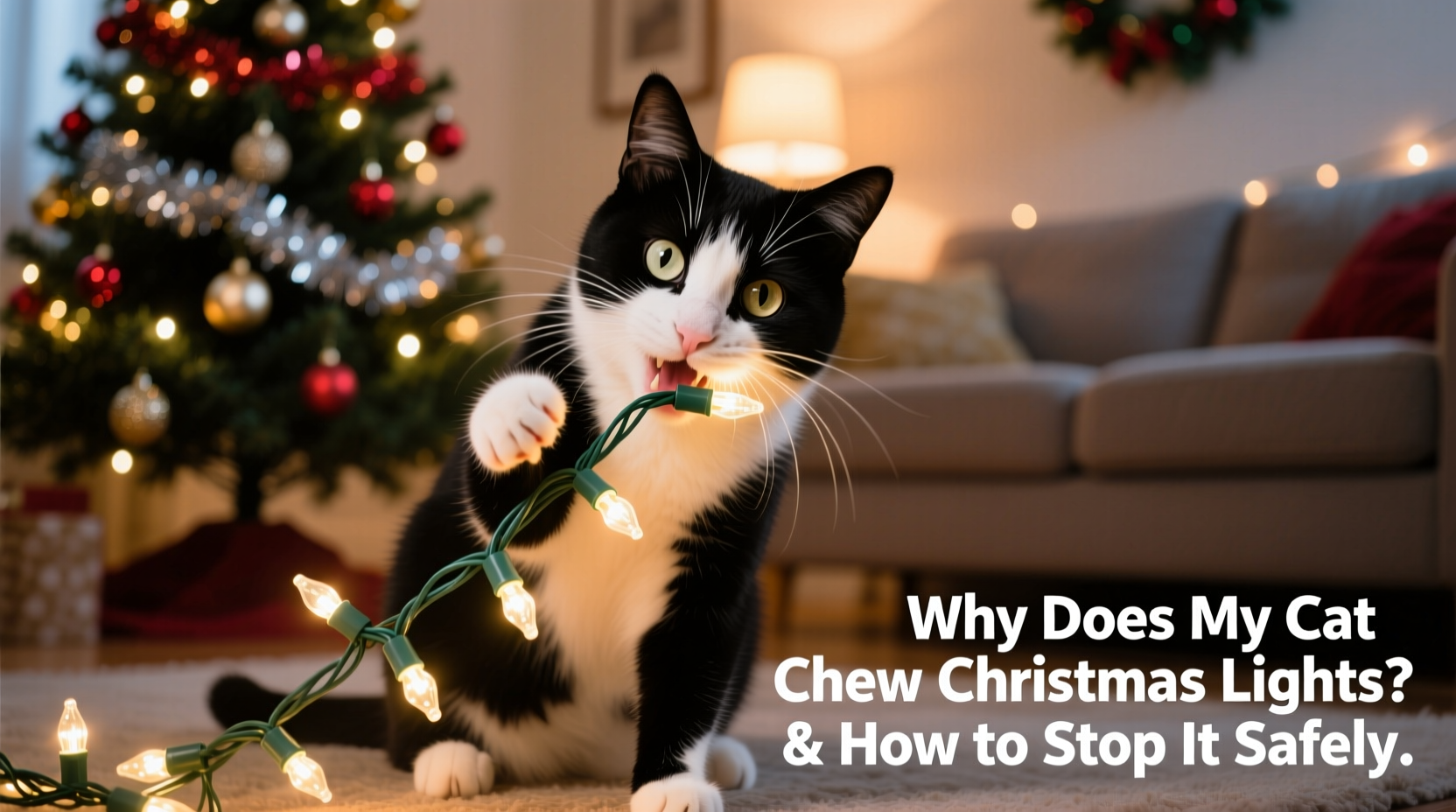
Cats don’t chew cords to annoy you or sabotage your decor. Their behavior maps directly to evolutionary instincts and modern stressors. Veterinarians and feline behaviorists identify four primary drivers:
- Sensory fascination: The thin, flexible texture of light cords mimics prey movement—especially when draped or dangling. Combined with subtle warmth, faint hums (inaudible to humans but detectable by cats), and reflective surfaces, cords become irresistible kinetic toys.
- Teething & oral exploration: Kittens under 6 months—and some adult cats with dental discomfort or pica—use chewing to relieve gum pressure or explore texture. Holiday lights often appear during peak teething windows (late fall/early winter).
- Stress or boredom: The holiday season disrupts routine dramatically: guests, noise, rearranged furniture, new scents, and reduced playtime. Chewing releases endorphins, offering self-soothing relief for anxious or under-stimulated cats.
- Attention-seeking reinforcement: A startled “No!” or even gentle redirection can unintentionally reward the behavior. If chewing consistently triggers human interaction—even negative—it becomes a learned strategy.
Crucially, this isn’t a sign of “bad” cats. It’s a sign of unmet physical or emotional needs. As Dr. Sarah Wooten, DVM and certified feline specialist, explains:
“Cord-chewing is rarely a discipline issue—it’s a communication. Your cat is saying, ‘I’m bored, I’m stressed, my mouth hurts, or I need more appropriate outlets.’ Punishment doesn’t teach alternatives; it teaches fear—and fear makes the problem worse.” — Dr. Sarah Wooten, DVM, CVJ, AAHA
Immediate safety steps (do these before decorating)
Before hanging a single bulb, secure your home. These are non-negotiable safeguards—not suggestions.
- Unplug all strands before installation: Work with cold, disconnected cords. Never drape live wires while adjusting placement.
- Route cords high and tight: Use cord clips, adhesive hooks, or wall-mounted raceways to keep wires flush against baseboards, behind furniture, or along ceiling edges—out of paw-and-jaw reach.
- Bundle and conceal: Wrap cords in split loom tubing or heavy-duty fabric cord covers. Avoid plastic sleeves that cats can puncture or chew through.
- Install outlet covers: Use tamper-resistant, spring-loaded outlet caps—not just sliding plates—to block access to exposed sockets where cords plug in.
- Test GFCI protection: Ensure all holiday outlets are on Ground Fault Circuit Interrupter (GFCI) circuits. These cut power within milliseconds if current leakage is detected—potentially saving a life.
7 vet-recommended strategies to stop the chewing (and keep your cat engaged)
Prevention is only half the battle. To eliminate the behavior long-term, you must redirect the impulse into safe, satisfying alternatives. These seven methods work synergistically—combine at least three for best results.
1. Provide species-appropriate chew alternatives
Cats need oral stimulation. Offer chilled, food-grade silicone chew toys (like N-Bone Kitten Chew Rings), dried tendon chews (single-ingredient, no preservatives), or frozen cat-safe broth cubes in ice cube trays. Rotate options weekly to maintain novelty.
2. Increase predatory play (not just “waving a string”)
True play mimics hunting: stalk → chase → pounce → kill → eat. Use wand toys with realistic feathers or fur, vary speed and direction, and always end with a treat or meal. Aim for two 15-minute sessions daily—especially before dusk, when natural hunting drive peaks.
3. Enrich the vertical space
Christmas trees and decorations draw attention upward—but so should your cat’s world. Install wall-mounted shelves, tall cat trees near windows, or hammocks. Height reduces territorial anxiety and redirects climbing/chewing energy away from ground-level cords.
4. Apply taste deterrents *strategically*
Bitter apple spray works—but only if applied correctly. Spray *only* on cord ends and visible segments (not entire lengths). Reapply every 2–3 days and after cleaning. Never use citrus oils, tea tree oil, or cayenne—these are toxic to cats. Always test on a small area first for skin sensitivity.
5. Use motion-activated deterrents (not shock collars)
Devices like Ssscat air canisters emit a harmless puff of compressed air when triggered by movement near cords. Place them near baseboard runs or tree stands. Cats associate the surprise with the location—not you—making it an effective, guilt-free boundary tool.
6. Create a “cord-free zone” around the tree
Use baby gates, freestanding pet barriers, or strategically placed furniture to establish a 3-foot perimeter. Line the barrier’s inner edge with double-sided tape (cats dislike the sticky sensation) or aluminum foil (crinkly texture deters approach). Pair with a cozy cat bed just outside the zone—so the area feels inviting, not punitive.
7. Address underlying medical causes
If chewing is sudden, intense, or accompanied by drooling, weight loss, or changes in appetite, consult your veterinarian. Dental disease, gastrointestinal issues, nutritional deficiencies (e.g., iron or B12), or compulsive disorders can manifest as pica. Bloodwork and oral exams rule out physiological triggers.
Do’s and Don’ts: What actually works (and what makes it worse)
| Action | Do | Don’t |
|---|---|---|
| Punishment | Redirect calmly with a toy or treat when you catch chewing. | Yell, spray water, or use shock collars—they increase fear and erode trust. |
| Deterrents | Use vet-approved bitter sprays or motion-activated air canisters. | Apply essential oils, hot sauce, or pepper—many are toxic or cause oral burns. |
| Enrichment | Rotate toys weekly; offer puzzle feeders filled with kibble or wet food. | Leave the same toy out for months—it loses appeal and increases frustration. |
| Supervision | Use baby monitors or pet cameras to check on unsupervised time. | Assume “he’s fine for 10 minutes”—electrocution can happen in under 3 seconds. |
| Veterinary care | Schedule a dental exam if chewing starts suddenly in adults. | Wait until after holidays to address possible pain or illness. |
Real-world example: How Lena saved Leo (and her living room)
Lena adopted 4-month-old Leo in early November. Within days, he’d chewed through two sets of mini-lights and left burn marks on his gums. Her first instinct was to banish the tree—but her vet advised against total deprivation, which could heighten fixation.
She implemented a three-tier plan: First, she installed cord raceways along all baseboards and used GFCI outlets exclusively. Second, she bought a tall, sisal-wrapped cat tree beside the window and began twice-daily play sessions ending with meals. Third, she introduced frozen tuna-broth cubes and rotated chew toys every 48 hours.
Within 11 days, Leo ignored the lights entirely. By week three, he’d begun batting at the tree’s lowest branch—gently, playfully—without touching cords. Lena kept the barrier up until New Year’s, then gradually removed it. “He didn’t stop because he was scared,” she says. “He stopped because he had better things to do.”
Step-by-step: A 7-day cord-chew intervention plan
Start this plan *before* decorations go up—or immediately upon noticing the behavior. Consistency matters more than perfection.
- Day 1: Audit all cords. Unplug, inspect for damage, replace if worn. Install GFCI outlets and outlet covers.
- Day 2: Mount cord raceways or clips. Route all strands tightly against walls or behind furniture.
- Day 3: Introduce 2–3 new chew toys. Freeze one in broth; place another near his favorite napping spot.
- Day 4: Begin structured play sessions—15 minutes morning and evening, ending with food.
- Day 5: Apply bitter apple spray to cord ends and visible segments. Test reaction.
- Day 6: Set up motion-activated deterrent near high-risk zones (tree stand, entertainment center).
- Day 7: Observe and adjust. Note when/where chewing occurs. Add vertical space if he’s lingering near baseboards.
FAQ: Quick answers to urgent questions
Can my cat really get electrocuted from chewing lights?
Yes—absolutely. Even low-voltage LED strands carry enough current to cause cardiac arrest, severe oral burns, or respiratory paralysis. According to the ASPCA Animal Poison Control Center, electrical cord injuries are among the top five non-toxic emergencies reported each holiday season.
Are battery-operated lights safer?
They eliminate shock risk—but not chewing risk. Batteries pose ingestion hazards (especially lithium button cells), and the cords themselves remain attractive. Use them only if fully enclosed in rigid plastic housings and mounted securely out of reach.
Will my cat grow out of this?
Some kittens do as they mature past teething—but many adult cats continue if the underlying cause (boredom, stress, or dental pain) remains unaddressed. Waiting for “outgrowing it” is never a safe strategy. Intervention prevents habit formation and builds lifelong coping skills.
Conclusion: Safety isn’t sacrifice—it’s smarter celebration
Your cat doesn’t want to ruin your holidays. They want to feel safe, stimulated, and understood. Chewing Christmas lights isn’t defiance—it’s a plea written in teeth and instinct. When you respond with empathy, science-backed tools, and consistent care, you don’t just protect your cat. You deepen your bond. You transform panic into partnership. And you reclaim the joy of the season—not despite your cat, but *with* them.
This year, hang your lights with confidence. Not because the danger is gone, but because you’ve built layers of intelligent, loving prevention. Start today—not after the first chew mark appears. Not after the first sizzle. Now. Your cat’s well-being, and your peace of mind, begin with one thoughtful step.




 浙公网安备
33010002000092号
浙公网安备
33010002000092号 浙B2-20120091-4
Comments
No comments yet. Why don't you start the discussion?