
Every December, thousands of pet owners face the same heart-stopping moment: spotting their cat gnawing on a live electrical cord wrapped around the base of the Christmas tree. It’s not just annoying—it’s an urgent safety hazard. Electrocution, severe oral burns, cardiac arrest, and even death can occur in seconds. Yet many owners dismiss it as “just a phase” or “cute kitten behavior.” The truth is far more serious—and far more preventable. This isn’t about willful mischief. It’s about biology, environment, and unmet needs converging at the most festive—and fragile—time of year.
The Real Reasons Behind the Chewing (It’s Not “Just Curiosity”)
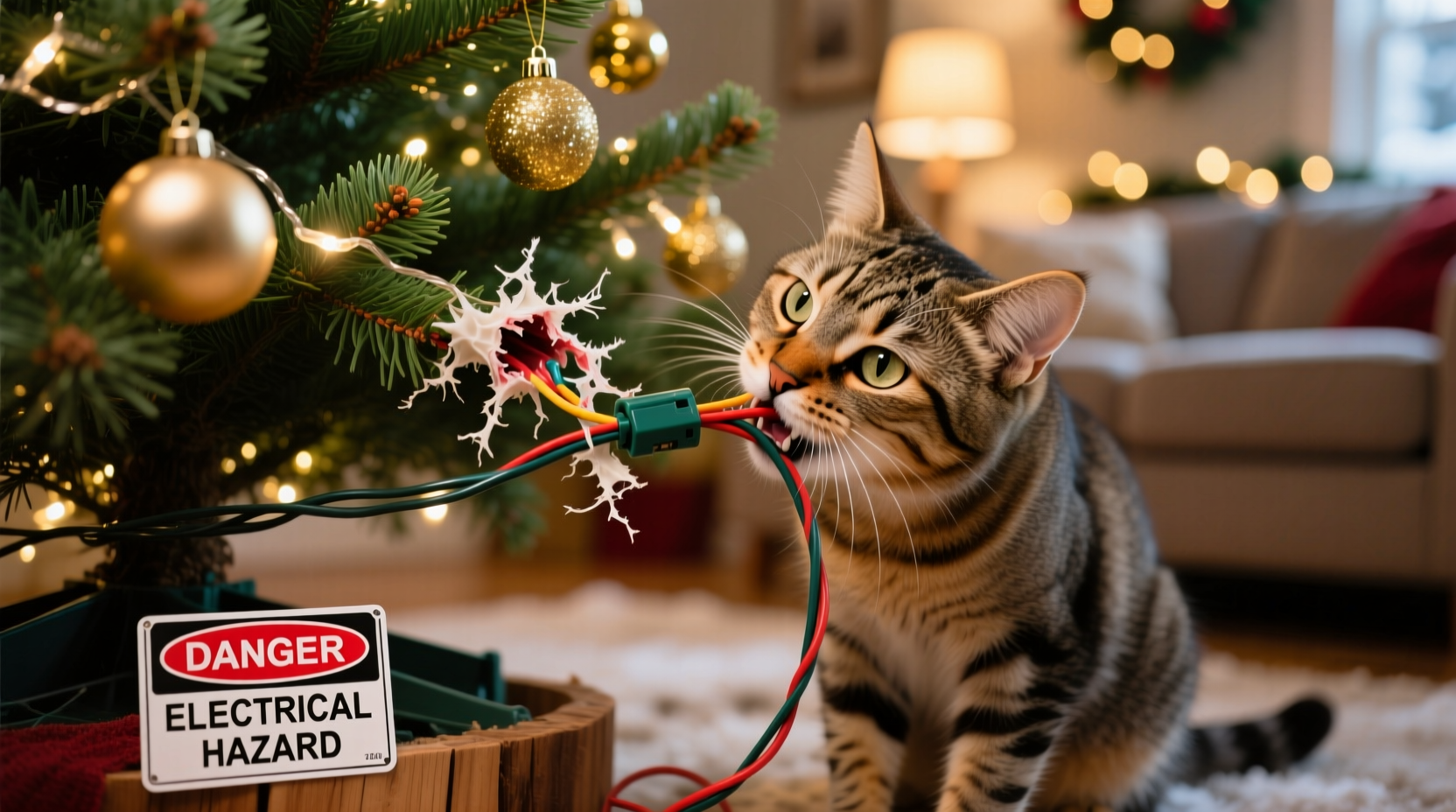
Cats don’t chew wires because they’re “naughty” or “testing boundaries.” Their behavior stems from deeply rooted physiological and psychological drivers. Understanding these helps shift your response from frustration to informed intervention.
First, teething and oral exploration are primary motivators—especially in kittens under six months. But adult cats chew too, often due to chronic oral discomfort. Dental disease, gingivitis, or even early-stage resorptive lesions cause persistent gum irritation that cats attempt to soothe by chewing on firm, textured objects—including insulated cords that vibrate subtly when current flows.
Second, environmental enrichment deficits play a major role. A freshly erected Christmas tree introduces novelty, height, movement (from ornaments swaying), and scent (pine resin). For indoor cats with limited stimulation, the tree becomes a multisensory playground—and its dangling wires mimic prey-like motion. Dr. Sarah Wooten, DVM and certified veterinary behaviorist, explains:
“Cats don’t differentiate between ‘safe’ and ‘unsafe’ novelty. To them, a flickering LED wire is indistinguishable from a moving insect—except it’s accessible, persistent, and emits subtle warmth and vibration. That makes it neurologically irresistible.”
Third, stress and anxiety spike during the holidays. Changes in routine, unfamiliar guests, loud music, and new scents disrupt feline security. Chewing releases endorphins and provides a predictable sensory anchor—making wires an inadvertent coping tool. Finally, some cats develop compulsive oral behaviors, especially those with histories of early weaning, isolation, or limited socialization. These patterns intensify when routines fracture, as they do between Thanksgiving and New Year’s.
Why This Habit Is Life-Threatening (Not Just “Risky”)
It’s critical to recognize that even brief contact with low-voltage holiday lights can be fatal. Most mini-light strands operate at 2.5–3.5 volts per bulb—but the full string carries 120 volts AC. When a cat bites through insulation, saliva acts as a conductor, completing the circuit across molars and tongue. This causes immediate tissue necrosis, pulmonary edema, and ventricular fibrillation.
A 2022 study published in the Journal of Feline Medicine and Surgery reviewed 147 cases of feline electrocution in North America over three holiday seasons. Key findings:
- 78% occurred within 48 hours of tree setup
- 63% involved cats under two years old
- Only 22% survived beyond 72 hours—even with emergency veterinary care
- Oral burns were present in 94% of survivors, requiring weeks of pain management and soft-food diets
Unlike dogs, cats rarely vocalize distress during electrocution. They may freeze, stagger, or collapse silently—delaying recognition and treatment. There is no “safe amount” of exposure. Prevention isn’t precautionary; it’s non-negotiable.
7 Vet-Backed Strategies to Stop the Chewing—Safely & Effectively
Scolding, spraying water, or using bitter apple spray alone rarely work—and can worsen stress. Effective solutions address root causes while prioritizing physical safety. Here’s what works, based on clinical behavior modification protocols and veterinary consensus:
- Physically isolate the wiring zone: Use rigid PVC conduit (½-inch diameter) to encase all cords running from the tree base to outlets. Secure ends with cord clips and cover exposed junctions with snap-on cord organizers. This eliminates access—not just temptation.
- Redirect oral needs with species-appropriate alternatives: Offer chilled, food-stuffed puzzle toys (e.g., frozen KONGs filled with tuna paste) twice daily. Rotate textures: silicone chew rings, dried fish skins, and untreated rawhide alternatives satisfy biting urges without risk.
- Install motion-activated deterrents—not shock collars: Place battery-operated devices like Ssscat spray (uses compressed air, not chemicals) near the tree base. Position so the sensor covers the entire approach path. Refill every 3–4 days; cats habituate quickly if used inconsistently.
- Modify the tree’s sensory appeal: Cover the lower 24 inches of trunk with aluminum foil (cats dislike the crinkling sound and texture) or double-sided tape (tactile aversion). Avoid citrus sprays—they irritate eyes and respiratory tracts.
- Enrich the environment *away* from the tree: Install vertical space—wall-mounted shelves or tall cat trees—at least 6 feet from the tree. Place interactive feeders, window perches overlooking bird activity, and timed laser sessions in those zones to build positive associations elsewhere.
- Implement structured play therapy: Conduct two 15-minute predatory play sessions daily using wand toys that mimic rodent movement (horizontal sweeps, sudden stops, hiding behind furniture). End each session with a high-value treat to fulfill the “hunt-catch-consume” sequence—a critical neurological reset.
- Schedule a dental wellness check before December 1st: Request a conscious oral exam (no sedation needed for basic assessment) to rule out painful conditions driving chewing. If tartar buildup or red gums are present, schedule professional cleaning promptly.
What NOT to Do: A Critical Do’s and Don’ts Table
| Action | Do | Don’t |
|---|---|---|
| Physical barrier | Use rigid PVC conduit or heavy-duty cord covers rated for pets | Rely on loose rugs, decorative fabric wraps, or rubber bands (easily chewed or tangled) |
| Deterrents | Use motion-activated air sprays or aluminum foil at base level | Apply essential oils, vinegar, or cayenne pepper (toxic if licked or inhaled) |
| Redirection | Offer chilled chew toys after meals and before bedtime | Give rawhide or nylon bones (choking hazard; intestinal blockage risk) |
| Stress reduction | Maintain consistent feeding, play, and litter box routines | Confine cat to a separate room for long periods (increases anxiety) |
| Veterinary care | Schedule pre-holiday dental screening and discuss anti-anxiety options if needed | Wait until chewing escalates or assume “it’ll grow out of it” |
Real-Life Intervention: How Maya Saved Her Cat Leo
Maya, a veterinary technician in Portland, noticed her 3-year-old domestic shorthair Leo obsessively licking and chewing the base of her artificial tree’s light cord. She’d tried bitter apple spray and reprimands—both failed. After Leo received a mild shock (no visible injury, but he yelped and hid for hours), she consulted her clinic’s behavior specialist.
The plan was methodical: First, she installed ¾-inch PVC conduit around all cords and secured it with stainless steel hose clamps. Second, she placed a wall-mounted shelf 7 feet from the tree, stocked with a rotating selection of food puzzles and a heated cat bed. Third, she began twice-daily play sessions using a feather wand—ending each with a spoonful of salmon pate. Fourth, she scheduled Leo’s dental exam, which revealed stage 1 gingivitis; antibiotics and a chlorhexidine rinse resolved oral discomfort within 10 days.
Within 11 days, Leo stopped approaching the tree base entirely. By Day 22, he’d chosen the shelf as his preferred napping spot. “I thought I needed to ‘train’ him to ignore the tree,” Maya shared. “What I really needed was to meet his biological needs—and remove the danger, not just the behavior.”
Step-by-Step Holiday Safety Timeline
Prevention begins long before the first ornament goes up. Follow this timeline for maximum safety:
- 6 Weeks Before Tree Setup: Schedule dental exam and update vaccinations. Introduce new chew toys gradually.
- 3 Weeks Before: Begin daily play therapy sessions. Install vertical spaces away from planned tree location.
- 1 Week Before: Purchase and test motion-activated deterrents. Practice placing conduit on spare cords to ensure fit.
- Tree Setup Day (Morning): Assemble tree *before* bringing in lights. Encase all cords *before* plugging in. Place deterrents and foil barrier.
- Tree Setup Day (Evening): Conduct first redirected play session near new shelf. Offer first chilled puzzle toy.
- Daily Through January 2nd: Inspect conduit for damage. Rotate chew toys. Maintain play schedule—even during travel or parties.
Frequently Asked Questions
Can I use cord covers designed for babies?
No. Baby cord covers are made of soft plastic or fabric and are easily punctured by cat teeth. Only use rigid, chew-resistant conduit rated for electrical applications (UL-listed PVC or metal flex).
My cat only chews at night—should I unplug the tree then?
Yes—absolutely. Unplugging all lights overnight eliminates electrocution risk and reduces visual stimulation that triggers nocturnal hunting instincts. Use a simple mechanical timer ($8–$12) to automate this without disrupting your schedule.
Will neutering/spaying reduce this behavior?
No. Chewing wires is unrelated to reproductive hormones. It’s driven by oral health, environment, and neurology—not libido. Spaying/neutering has zero impact on this specific behavior.
Conclusion: Your Cat’s Safety Starts With Understanding—Not Discipline
This habit isn’t defiance. It’s communication—in the language of teeth, nerves, and instinct. When your cat chews on Christmas tree wires, they’re telling you something is missing: relief from oral pain, engagement for an agile mind, security in a changing world, or simply a safe outlet for natural urges. Responding with punishment silences that message—and puts your companion at grave risk. Responding with knowledge, preparation, and compassion builds trust that lasts far beyond the holiday season.
You don’t need perfect execution—just consistent, science-informed action. Start today: call your vet about that dental check. Measure your cords for conduit. Set that timer. These aren’t holiday chores. They’re acts of stewardship for a creature who relies on you for survival, not just comfort.




 浙公网安备
33010002000092号
浙公网安备
33010002000092号 浙B2-20120091-4
Comments
No comments yet. Why don't you start the discussion?