
It’s a scene repeated in homes across the Northern Hemisphere every December: You’ve carefully arranged your tree, strung lights with care, and stepped away for five minutes—only to return and find your cat gnawing intently on a bundle of dark, unlit wires tucked behind the stand. No blinking LEDs. No warmth. No movement. Just cold, coiled plastic and copper. Yet your cat is fixated—teeth gripping, jaw working, tail flicking with quiet intensity. This isn’t playful curiosity. It’s a behavior rooted in biology, environment, and unmet needs—and it poses real danger. Electrical cords—even unplugged ones—can fray, expose conductors, or become choking hazards. More critically, if a cord is accidentally plugged in during chewing, electrocution risk spikes dramatically. Understanding *why* this happens is the first, essential step toward stopping it—not with punishment, but with empathy, prevention, and redirection.
The biological and behavioral roots of wire-chewing
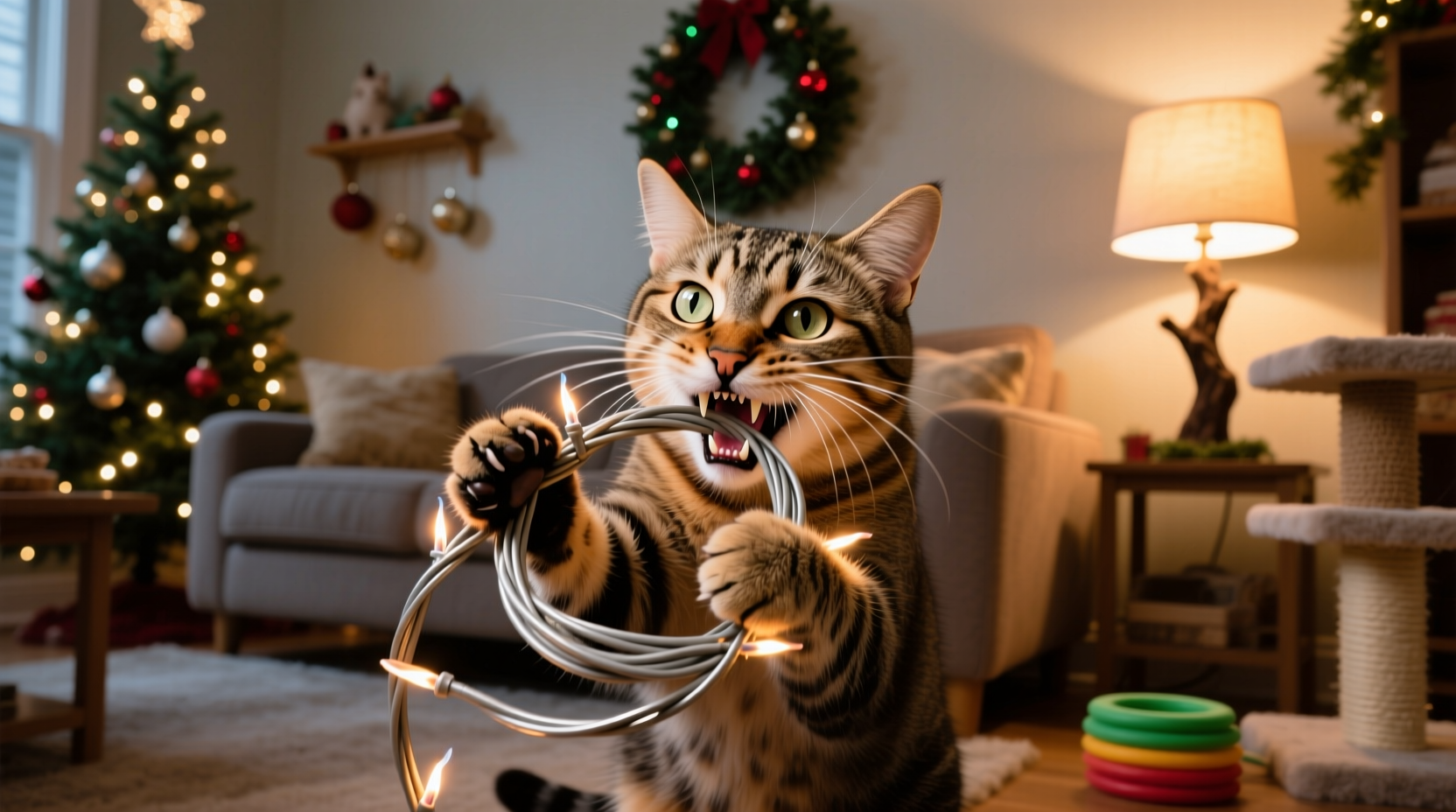
Cats don’t chew wires because they’re “naughty” or “testing boundaries.” They do it because their instincts, sensory systems, and developmental needs converge on that thin, textured, linear object in ways we often overlook. Kittens explore the world orally—much like human babies—using their mouths to investigate texture, flexibility, temperature, and resistance. While most cats outgrow intense mouthing by 6–8 months, some retain oral exploration into adulthood, especially when under-stimulated, anxious, or nutritionally imbalanced. Unlit wires offer a uniquely compelling stimulus: they’re cool to the touch, slightly yielding yet springy, emit faint static or residual odors (from manufacturing oils or dust), and produce subtle crinkling or squeaking sounds when bitten. Their shape mimics prey—long, thin, and mobile when tugged—triggering predatory motor patterns even without visual cues.
Neurologically, chewing releases endorphins and reduces cortisol. For indoor cats with limited environmental enrichment, repetitive oral behaviors can become self-soothing habits—akin to human nail-biting or hair-twirling. A 2022 study published in Applied Animal Behaviour Science found that cats exhibiting persistent non-nutritive chewing (on fabrics, cords, plastics) were significantly more likely to live in households with fewer vertical spaces, less daily interactive play, and inconsistent feeding schedules. In other words, wire-chewing is rarely about the wire itself—it’s a symptom of an under-resourced feline life.
Vet-confirmed risks: Beyond the shock hazard
While electrocution dominates safety warnings, veterinarians emphasize three additional, under-recognized dangers:
- Oral trauma: Copper wiring and PVC insulation aren’t designed for teeth. Repeated chewing causes micro-fractures in enamel, gum abrasions, and tongue lacerations—often invisible until infection sets in.
- Toxic ingestion: Many PVC coatings contain phthalates and flame retardants like polybrominated diphenyl ethers (PBDEs). When chewed, these compounds leach into saliva and are swallowed. Chronic low-dose exposure is linked to thyroid dysfunction and liver enzyme elevation in cats, per research from the Cornell Feline Health Center.
- Intestinal obstruction: Small, brittle fragments of insulation or wire sheathing can accumulate in the gastrointestinal tract. Unlike string or ribbon, these pieces don’t always show up clearly on X-rays—and may require exploratory surgery if they cause partial blockages.
“Chewing on electrical cords isn’t ‘just a phase.’ We see cats admitted with severe oral burns, chemical pneumonitis from inhaled insulation particles, and chronic gastritis—all tied to persistent cord-chewing. Prevention must start before the first bite.”
— Dr. Lena Torres, DVM, DACVB, Board-Certified Veterinary Behaviorist, UC Davis School of Veterinary Medicine
Proven, humane prevention strategies (not just deterrents)
Sticky sprays and citrus scents have limited efficacy—many cats habituate within days, and others ignore them entirely. Lasting success comes from combining physical barriers, environmental redesign, and behavioral reinforcement. Here’s what actually works, based on field data from veterinary behavior clinics and shelter rehoming programs:
Step-by-step cord protection protocol
- Identify all vulnerable zones: Map every cord running near the tree, baseboard, or furniture legs—including extension cords, light strings, timer plugs, and power adapters. Note length, accessibility, and proximity to cat resting spots.
- Install physical barriers: Use rigid, split-loom tubing (not flexible spiral wrap) over cords. Secure ends with zip ties—not tape—to prevent unraveling. For floor-level runs, lay flat, wide-based cord covers (minimum 2-inch width) and anchor them with double-sided carpet tape.
- Redirect the impulse: Place two or three approved chew toys *directly beside* the tree base—within 6 inches of where cords enter the area. Rotate them daily to maintain novelty. Ideal options include food-dispensing rubber toys stuffed with moist food or catnip-infused hemp rope.
- Modify access, not behavior: Create a 3-foot “cord-free perimeter” around the tree using low, stable baby gates or freestanding pet barriers. Ensure the barrier doesn’t trap the cat against walls or furniture—safety and escape routes are non-negotiable.
- Validate the behavior’s function: If chewing correlates with boredom or anxiety (e.g., occurs when you’re on calls or after dark), add scheduled 5-minute interactive play sessions using wand toys *twice daily*, ending with a meal. This fulfills hunting, capture, and consumption sequences—reducing oral fixation.
Do’s and Don’ts: What works—and what makes it worse
| Action | Effectiveness | Why It Matters |
|---|---|---|
| DO cover cords with rigid, smooth-surface loom tubing | High ✅ | Removes tactile appeal; prevents tooth contact with insulation |
| DO use motion-activated air canisters *away* from the tree (e.g., near entry points) | Moderate ✅ | Startles *before* approach—avoids associating tree with fear |
| DON’T spray bitter apple directly on cords near lights | Low ❌ | Oil-based residues attract dust, create slip hazards, and degrade plastic over time |
| DON’T punish or shout when you catch chewing | Counterproductive ❌ | Increases anxiety; may shift behavior to hidden locations (e.g., under furniture) |
| DO provide safe oral alternatives: frozen tuna water cubes, untreated willow sticks, or dental chews approved by VOHC | High ✅ | Meets chewing need without toxicity or entanglement risk |
A real-world case: How the Chen family resolved persistent cord-chewing
The Chen family adopted Leo, a 2-year-old domestic shorthair, in October. By early December, he’d chewed through three sets of mini-light cords—always the unlit ones bundled beneath their artificial tree. They tried citrus spray, aluminum foil, and reprimands—none worked. Then, their veterinarian suggested a functional assessment. They observed Leo closely and noticed two patterns: he chewed most often between 4–5 p.m. (when their toddler napped and the house was quiet), and always targeted cords near his favorite sunbeam on the hardwood floor.
They implemented three changes simultaneously: First, they installed rigid split-loom tubing on all cords and anchored them flush to the baseboard with painter’s tape (no adhesive residue). Second, they placed a heated cat bed *in* Leo’s sunbeam—with a loop of sisal rope attached to its side. Third, they began a 4:30 p.m. routine: 3 minutes of vigorous wand play, followed by feeding his entire dinner from a puzzle toy placed beside the new bed.
Within 72 hours, Leo ignored the cords entirely. By Day 10, he carried the sisal rope to the tree base and “buried” it in the rug fringe—mimicking caching behavior. The Chens kept the routine through New Year’s—and Leo hasn’t touched a cord since. Crucially, they didn’t eliminate the behavior; they gave it a safer, biologically appropriate outlet.
FAQ: Addressing common concerns
Can nutritional deficiencies cause wire-chewing?
Yes—though rarely the sole cause. Deficiencies in B vitamins (especially B1/thiamine), zinc, or fiber can increase pica-like behaviors. If chewing is sudden, widespread (extending to paper, plastic bags, or wool), and accompanied by weight loss or lethargy, consult your vet for bloodwork and dietary review. High-quality, meat-forward wet food with added taurine and B-complex vitamins often resolves mild cases within 3–4 weeks.
Is it safe to use cord organizers with Velcro straps?
No. Velcro edges snag fur and claws, causing stress and potential injury. Cats may also chew the fuzzy side, ingesting microplastics. Opt instead for smooth, rigid channels or heavy-duty fabric cord wraps secured with snap buttons or hook-and-loop straps *with the soft side facing inward*.
What if my cat only chews when left alone?
This signals separation-related distress—not boredom. Pair cord protection with gradual desensitization: Start with 30-second absences while the cat is engaged with a food puzzle, then slowly extend duration. Never make departures or returns emotional events. Use background white noise (e.g., nature sounds) to mask environmental triggers. If chewing escalates when you’re gone, consult a veterinary behaviorist before the holidays begin—behavior modification takes consistency, not speed.
Conclusion: Safety starts with understanding
Your cat isn’t sabotaging your holiday. They’re communicating—through teeth and tongue—about unmet needs: for tactile variety, for predatory fulfillment, for calm in an overstimulating season, or for reassurance in changing routines. Stopping wire-chewing isn’t about winning a battle of wills. It’s about becoming a fluent translator of feline behavior—then designing an environment where safety and instinct coexist. That means choosing rigid cord covers over sprays, scheduling play before quiet hours, offering legal chewing outlets, and watching closely for what *else* your cat might be trying to say. The goal isn’t a perfectly decorated tree untouched by paws. It’s a joyful, safe December—for you, your traditions, and the curious, complex creature who shares your home. Start tonight: inspect one cord, place one alternative toy, and observe what your cat chooses. That small act of attention is the first stitch in a safer, more harmonious holiday.




 浙公网安备
33010002000092号
浙公网安备
33010002000092号 浙B2-20120091-4
Comments
No comments yet. Why don't you start the discussion?