
Cats and Christmas trees have a complicated relationship. One moment, your feline is calmly observing the twinkling lights; the next, they’ve scaled the branches like a jungle gym, sending ornaments crashing and tilting the entire tree dangerously. While this behavior can be frustrating—and potentially hazardous—it’s rarely malicious. Cats don’t climb Christmas trees to ruin your holiday spirit. They do it because their instincts, curiosity, and environment are telling them to explore, play, and claim territory.
Understanding why your cat climbs the tree is the first step toward preventing it. The second is implementing practical, cat-friendly solutions that respect their natural behaviors while protecting your decorations and household safety. This article explores the science behind feline tree-climbing, offers proven deterrents, and provides a balanced approach to coexistence during the festive season.
The Instinct Behind the Climb
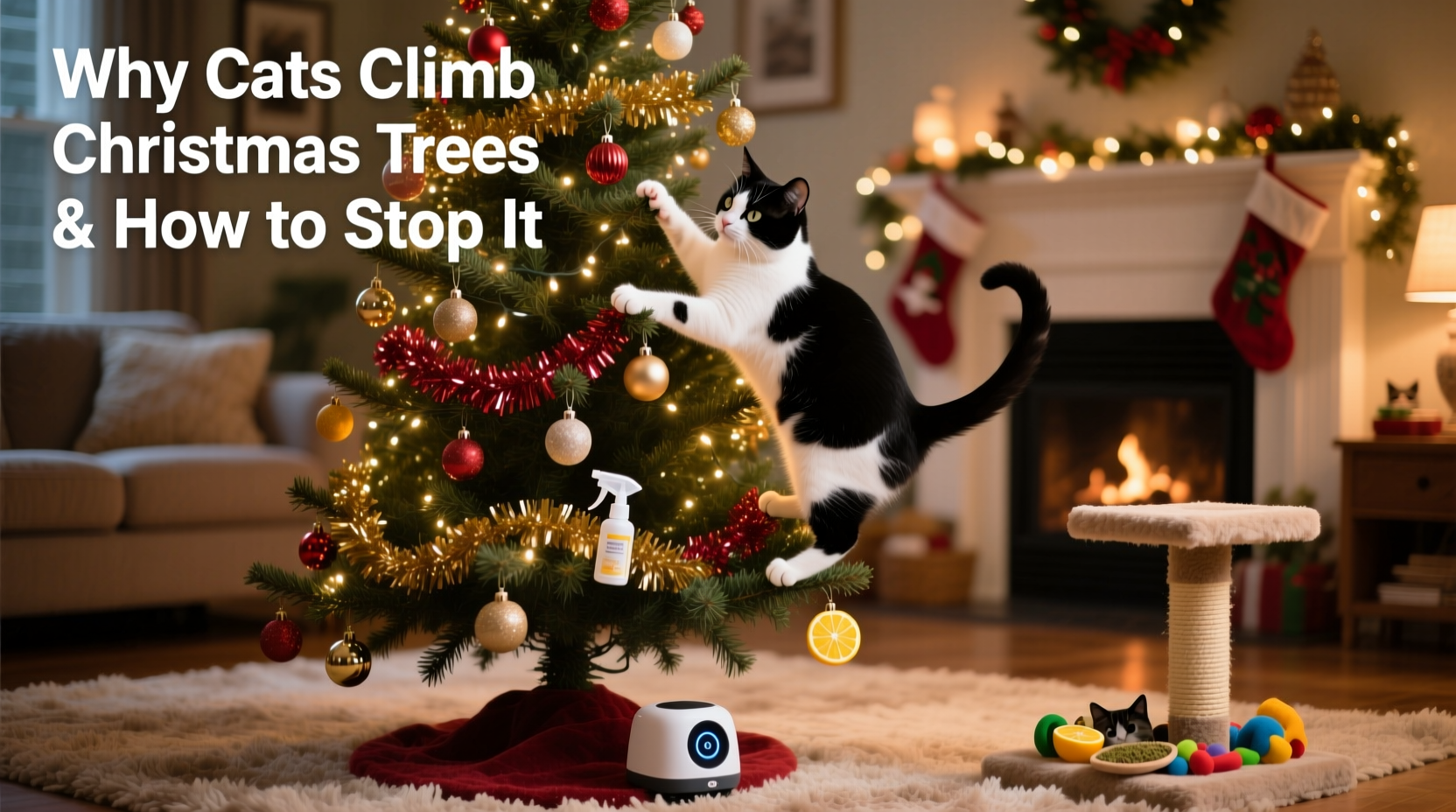
Cats are natural climbers. In the wild, climbing serves multiple survival purposes: escaping predators, surveying territory, and ambushing prey from above. Even domesticated cats retain these instincts. A Christmas tree, with its vertical structure, textured bark-like trunk (real or artificial), and dangling objects, mimics an ideal climbing target in a cat’s eyes.
The tree also becomes a sensory hotspot. Ornaments reflect light, tinsel sways in air currents, and scents from pine needles or nearby gifts stimulate a cat’s curiosity. For a curious feline, the tree isn’t just decoration—it’s an interactive playground.
“Cats view vertical space as essential real estate. A Christmas tree is essentially an uninvited climbing tower placed right in their living room.” — Dr. Sarah Langston, DVM, Feline Behavior Specialist
Additionally, cats use height to assert dominance and monitor their environment. By climbing the tree, your cat may be staking a claim on the most prominent new object in the home. This territorial behavior is especially common in multi-cat households, where status and visibility matter.
Why Deterrence Matters: Safety and Stability
While climbing might seem harmless, it poses real risks:
- Tree collapse: An unstable tree can fall, injuring your cat or damaging furniture.
- Ingestion hazards: Tinsel, ornament shards, pine needles, and electrical cords are toxic or physically dangerous if swallowed.
- Electrical dangers: Chewing on lights can lead to burns, shocks, or fire hazards.
- Stress for both pet and owner: Constant vigilance and cleanup increase holiday stress.
Prevention isn’t about suppressing natural behavior—it’s about redirecting it safely. The goal is to make the tree less appealing while offering better alternatives.
Effective Strategies to Deter Tree Climbing
Deterrence works best when layered—combining physical barriers, sensory repellents, and environmental enrichment. No single method is foolproof, but together, they significantly reduce climbing incidents.
1. Secure the Tree Physically
Start with structural stability. Anchor the tree to a wall or ceiling using fishing line, soft straps, or a commercial tree stabilizer. This prevents tipping even if your cat attempts to climb.
Place the tree in a corner or against a wall to limit access points. Avoid positioning it near furniture your cat could use as a launchpad, such as sofas or bookshelves.
2. Use Sensory Deterrents
Cats dislike certain textures and smells. These can be used around the base of the tree without harming your pet:
- Double-sided tape: Cats dislike sticky paws. Apply tape around the tree stand or skirt.
- Aluminum foil: Its crinkly texture and sound deter many cats. Line the floor beneath the tree.
- Citrus peels: Place orange or lemon peels around the base. Most cats avoid citrus scents.
- Bitter apple spray: A non-toxic deterrent sprayed on lower branches or the trunk.
3. Modify the Tree Setup
Adjust how you decorate to reduce temptation:
- Keep lower branches bare—no ornaments, tinsel, or lights within paw’s reach.
- Use lightweight or shatterproof ornaments higher up.
- Avoid dangling ribbons, tinsel, or string-like decor—these mimic prey and encourage batting and climbing.
- Ensure all electrical cords are concealed in cord covers or tucked behind furniture.
“Think like a cat when decorating. If it dangles, sparkles, or makes noise, it’s going to attract attention.” — Lisa Fisher, Certified Cat Behavior Consultant
4. Provide Competitive Alternatives
The most effective long-term solution is giving your cat a better option. Install a tall cat tree or shelving system nearby, ideally within sight of the Christmas tree. Equip it with:
- Perches at varying heights
- Scratching surfaces
- Toys, feathers, or dangling elements
- Familiar bedding or a worn shirt with your scent
Encourage use with treats, catnip, or interactive play sessions near the alternative structure. Over time, your cat may prefer their own “tree” over the holiday version.
Step-by-Step Guide: Cat-Proofing Your Christmas Tree
Follow this timeline to prepare your home before the tree goes up:
- Week 1: Assess your space. Choose a stable location away from jump-off points. Plan anchor points for securing the tree.
- Week 2: Set up alternatives. Install a cat tree or shelves. Begin encouraging your cat to use them with toys and rewards.
- Day of setup: Secure the tree immediately. Use anchors and place it against a wall. Cover the floor around the base with aluminum foil or double-sided tape.
- First 48 hours: Supervise closely. Redirect your cat if they approach the tree. Reward them for engaging with their own climbing structure.
- Ongoing: Maintain consistency. Reapply deterrents weekly. Rotate toys on the cat tree to keep it interesting. Gradually introduce safe decorations higher up as your cat loses interest.
Do’s and Don’ts: A Quick Reference Table
| Do | Don’t |
|---|---|
| Secure the tree to a wall or ceiling | Leave the tree unanchored |
| Use bitter sprays or citrus scents at the base | Use essential oils (many are toxic to cats) |
| Provide a tall, engaging cat tree nearby | Expect your cat to ignore the tree entirely |
| Decorate gradually, starting high | Hang fragile or dangling items within reach |
| Supervise initial interactions | Yell at or punish your cat for climbing |
Real Example: How the Bennett Family Reduced Tree Climbing
The Bennetts had a 3-year-old Bengal cat named Milo who treated their Christmas tree as his personal obstacle course. Two years in a row, the tree toppled, breaking heirloom ornaments and once causing a minor burn when Milo chewed a light cord.
For the third holiday season, they took a proactive approach. A week before setting up the tree, they installed a 6-foot-tall cat tree in the same room, complete with perches, sisal-wrapped posts, and a hanging feather toy. They sprinkled catnip on it daily and played with Milo there using a laser pointer.
When the real tree went up, they anchored it to the wall, wrapped the base in aluminum foil, and applied bitter apple spray to the lowest branches. They left the bottom two feet completely undecorated. Lights were secured with clips, and cords ran through a covered raceway along the wall.
Milo showed interest at first, sniffing and pawing at the foil. But when redirected to his cat tree—with treats and play—he quickly shifted focus. By day three, he was napping on the top perch of his own structure, overlooking the room. The Christmas tree remained intact throughout the season.
“We realized we weren’t trying to stop Milo from climbing,” said Sarah Bennett. “We just needed to give him a better reason to climb somewhere else.”
FAQ: Common Questions About Cats and Christmas Trees
Can I leave the tree up overnight if my cat is curious?
Only if it’s securely anchored and all hazards are removed. Consider using a baby gate to block access when unsupervised. Unattended climbing increases the risk of accidents.
Are fake trees safer than real ones?
Both have pros and cons. Artificial trees eliminate pine needle ingestion but often contain plastics and metals that are harmful if chewed. Real trees pose toxicity risks from sap and fertilizers, and standing water can harbor bacteria. Whichever you choose, secure it well and monitor your cat closely.
What if my cat is still obsessed with the tree despite deterrents?
Some cats are more persistent, especially high-energy breeds like Bengals or Siamese. In such cases, consider using a physical barrier like a freestanding pen or decorative screen around the tree during peak activity times. Alternatively, delay decorating until closer to Christmas Day to minimize exposure.
Conclusion: Harmony Over Holiday Havoc
Your cat climbing the Christmas tree isn’t a flaw in their character—it’s a sign of a healthy, instinct-driven animal responding to an intriguing addition to their world. Rather than fighting nature, work with it. By understanding the motivations behind the climb and applying thoughtful, compassionate strategies, you can protect your tree, keep your cat safe, and preserve the joy of the season.
Success doesn’t mean a perfectly untouched tree. It means fewer incidents, reduced stress, and a home where both traditions and pets thrive. Start early, stay consistent, and remember: a little prevention goes a long way in creating a peaceful, festive atmosphere for everyone—furry members included.




 浙公网安备
33010002000092号
浙公网安备
33010002000092号 浙B2-20120091-4
Comments
No comments yet. Why don't you start the discussion?