
Every year, as holiday decorations go up, many cat owners brace themselves for a familiar scene: their curious feline leaping into the Christmas tree, sending ornaments tumbling and branches swaying. While it’s easy to see this behavior as mischievous or destructive, it’s rarely about malice. Cats climb Christmas trees because they’re acting on deeply ingrained instincts—seeking safety, stimulation, and territory. Understanding these motivations is the first step toward finding humane solutions that keep both your tree—and your cat—safe and happy.
The Instinct Behind the Climb
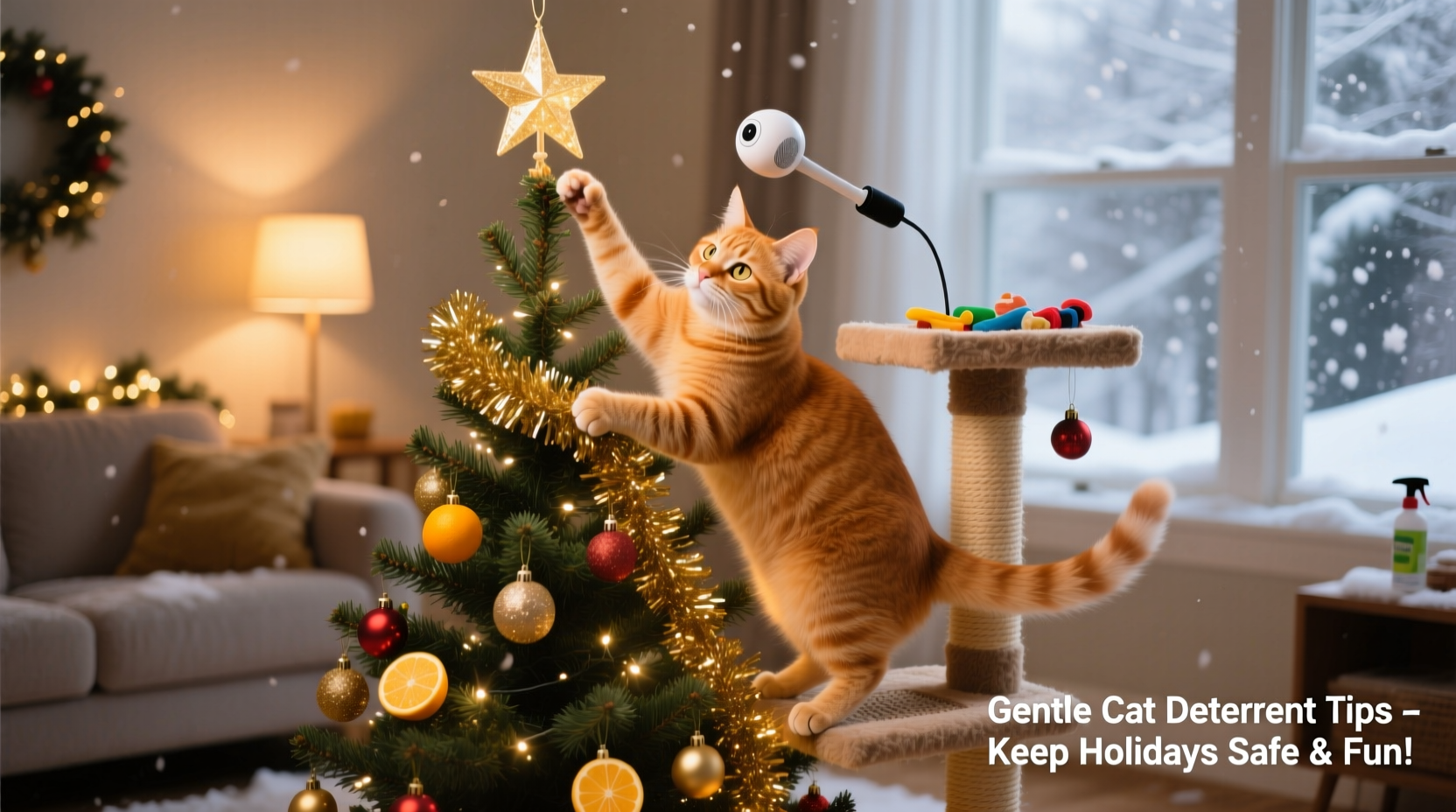
Cats are natural climbers. In the wild, climbing serves multiple survival purposes: escaping predators, surveying territory, and securing a safe resting spot. Even domesticated cats retain these instincts. A Christmas tree, with its vertical structure, textured bark-like trunk (real or artificial), dangling objects, and crinkling tinsel, resembles an irresistible jungle gym from a cat’s perspective.
Moreover, cats use height to monitor their environment. Elevated perches give them a sense of control and security. When you place a tall, decorated tree in your living room, your cat sees not just a festive centerpiece but a prime real estate opportunity—a new vantage point in their domain.
Additionally, the novelty factor plays a role. Cats are highly sensitive to changes in their environment. The sudden appearance of a large, fragrant (if real), glittering object naturally piques their curiosity. Ornaments that swing, lights that flicker, and ribbons that flutter mimic prey-like movement, triggering hunting behaviors.
“Cats don’t climb trees to annoy us—they do it because it fulfills deep-seated behavioral needs. Our job is to redirect those instincts, not suppress them.” — Dr. Lena Ruiz, Feline Behavior Specialist
Gentle Deterrence: Why Punishment Doesn’t Work
Reacting with frustration or punishment when a cat climbs the tree only creates fear and anxiety. Shouting, spraying water, or removing the cat abruptly can damage trust and increase stress, potentially leading to other behavioral issues like litter box avoidance or aggression.
Instead, focus on environmental management and positive redirection. The goal isn’t to stop your cat from climbing altogether—climbing is healthy—but to guide them toward appropriate outlets. This approach respects your cat’s nature while protecting your holiday decor.
Step-by-Step Guide to Cat-Safe Holiday Decorating
Preventing tree climbing starts before the first ornament is hung. With thoughtful planning, you can minimize temptation and create a harmonious holiday space for both pets and people.
- Secure the Tree Base
Use a sturdy stand and anchor the tree to a wall or ceiling using fishing line or a commercial tree stabilizer. This prevents tipping if your cat attempts to climb or bat at lower branches. - Keep Lower Branches Bare
Avoid placing ornaments, tinsel, or lights on the bottom third of the tree. These are most accessible and tempting to cats. Leave this zone clear or decorate only with unbreakable items. - Use Cat-Safe Ornaments
Choose lightweight, soft, or fabric-based decorations instead of glass, metal, or anything small enough to be swallowed. Avoid tinsel and ribbon entirely—they pose serious ingestion risks. - Control Access with Barriers
Place a baby gate or playpen panels around the tree. Alternatively, use a decorative curtain or mesh barrier that allows visibility but blocks access. Ensure it’s tall enough to prevent jumping over. - Power Cord Management
Conceal all electrical cords behind cord covers or along baseboards. Exposed cords are dangerous if chewed and can entangle playful paws. Consider using battery-operated lights for added safety.
Redirect, Don’t Restrict: Offer Better Alternatives
The most effective way to reduce tree climbing is to provide something even more appealing nearby. Cats will choose a well-designed cat tree over a holiday tree if it offers equal—or greater—value.
Position a tall cat tree or condo next to the Christmas tree, ideally with multiple levels, scratching surfaces, cozy hideaways, and hanging toys. Top it with a soft bed or perch so your cat can survey the room from their own elevated throne.
Encourage use by:
- Sprinkling catnip or silvervine on the new perch
- Placing treats or kibble at different levels to promote exploration
- Using wand toys to engage your cat in play near the cat tree
- Rotating toys weekly to maintain interest
Over time, your cat may begin to view their personal climbing structure as the preferred lookout post—especially if it’s consistently associated with positive experiences.
Smart Use of Scent and Texture Deterrents
Cats rely heavily on their sense of smell and touch. Strategic use of certain scents and textures can make the Christmas tree area less inviting—without causing harm.
Some cats dislike the smell of citrus, rosemary, or lavender. Place cotton balls soaked in a few drops of essential oil (kept out of reach) around the tree base. However, exercise caution: some essential oils are toxic to cats if ingested or inhaled in high concentrations. Always dilute properly and avoid direct contact.
A safer alternative is double-sided tape or aluminum foil placed around the tree skirt or stand. Most cats dislike the sticky or crinkly texture under their paws. Motion-activated air sprayers (like Ssscat) emit a harmless puff of air when triggered, startling the cat without physical contact. These devices teach avoidance through mild surprise rather than fear.
| Deterrent Method | Effectiveness | Safety Notes |
|---|---|---|
| Double-sided tape | High | Non-toxic, temporary; replace as needed |
| Aluminum foil | Moderate | Harmless but may be noisy; secure edges |
| Essential oils (citrus, rosemary) | Low–Moderate | Use sparingly; avoid direct exposure |
| Motion-activated air spray | High | Safe and humane; train gradually |
| Bitter apple spray | Moderate | Apply only to stand/base, not branches |
Mini Case Study: The Johnson Family’s Calm Christmas
The Johnsons had struggled for years with their tabby, Milo, who treated their Christmas tree like a personal playground. One year, after two trees toppled and several heirloom ornaments shattered, they decided to take a proactive approach.
Two weeks before decorating, they introduced a six-foot-tall cat tree beside the future tree location. They rubbed it with catnip, hung feather toys, and placed Milo’s favorite blanket on top. They also installed a freestanding pet gate around the perimeter where the tree would go.
When the tree went up, they used only fabric ornaments below four feet, kept lights off when unsupervised, and wrapped the base in double-sided tape-covered cardboard. They also set up a motion-activated air spray pointed at the trunk.
Milo investigated the tree on Day 1 and was startled by the air puff. He retreated to his own tower, which now carried his scent and felt familiar. By Day 3, he was sleeping on the top perch of his cat tree, watching the blinking lights from a safe distance. The tree remained intact throughout the season.
“We realized we weren’t trying to stop Milo from climbing—we were giving him a better option,” said Sarah Johnson. “Once he had his own kingdom, he didn’t need to invade ours.”
Checklist: Cat-Friendly Christmas Tree Setup
Follow this checklist before assembling your tree to ensure a peaceful holiday:
- ✅ Anchor the tree securely to a wall or ceiling
- ✅ Set up a tall, attractive cat tree nearby
- ✅ Remove or secure all hazardous decorations (tinsel, small ornaments, fragile items)
- ✅ Keep lower branches bare or minimally decorated
- ✅ Conceal or protect all electrical cords
- ✅ Use pet-safe deterrents (double-sided tape, foil, air spray)
- ✅ Install a physical barrier if needed (gate, mesh)
- ✅ Supervise initial interactions and redirect play
- ✅ Rotate toys and reward use of the cat tree
- ✅ Be patient—adjust strategies as needed
Frequently Asked Questions
Is it cruel to stop my cat from climbing the Christmas tree?
No—when done humanely, preventing tree climbing protects both your cat and your home. The key is offering acceptable alternatives. Climbing itself isn’t the issue; unsupervised access to a fragile, potentially dangerous object is. Redirecting your cat to a safe climbing structure supports their well-being.
What if my cat only climbs the tree when I’m not home?
This suggests your cat is drawn to the privacy or lack of supervision. Consider keeping the tree room closed when you’re away, or install a motion-activated deterrent. You might also try turning off the lights when unattended—many cats lose interest without the visual stimulus. Providing enrichment (puzzle feeders, window perches) elsewhere can also reduce boredom-related climbing.
Can I train my cat not to climb the tree permanently?
While you can’t erase instinct, you can shape behavior over time. Consistency is crucial. If your cat learns that the tree leads to uninteresting textures or mild consequences (like an air puff), while their own perch brings rewards, they’ll eventually prefer the latter. However, expect occasional lapses—especially during major environmental changes.
Conclusion: Harmony Over Holiday Havoc
Your cat climbing the Christmas tree isn’t a sign of defiance—it’s a signal of unmet needs. By understanding the instincts driving the behavior, you can respond with empathy and strategy rather than frustration. The goal isn’t a perfect, untouched tree, but a home where both traditions and pets thrive together.
With secure anchoring, smart decoration choices, and compelling alternatives, you can enjoy the holidays without sacrificing your peace of mind—or your cat’s happiness. This season, let your response be one of preparation, not reaction. Your efforts won’t just protect a tree—they’ll strengthen the bond between you and your curious companion.




 浙公网安备
33010002000092号
浙公网安备
33010002000092号 浙B2-20120091-4
Comments
No comments yet. Why don't you start the discussion?