
Every year, millions of households set up a beautifully decorated Christmas tree—only to find it partially dismantled by morning, thanks to a curious feline companion. If you’ve ever woken up to a floor littered with broken baubles and a smug-looking cat perched among the branches, you’re not alone. Cats don’t destroy Christmas trees out of malice; they act on instinct, curiosity, and environmental cues. Understanding the root causes behind this behavior is the first step toward creating a holiday environment that’s enjoyable for both pets and people.
This article explores the behavioral science behind why cats target Christmas trees, identifies common triggers, and offers practical, evidence-based strategies to minimize damage—without compromising your cat’s well-being or your festive spirit.
The Instinctual Drive Behind Tree Destruction
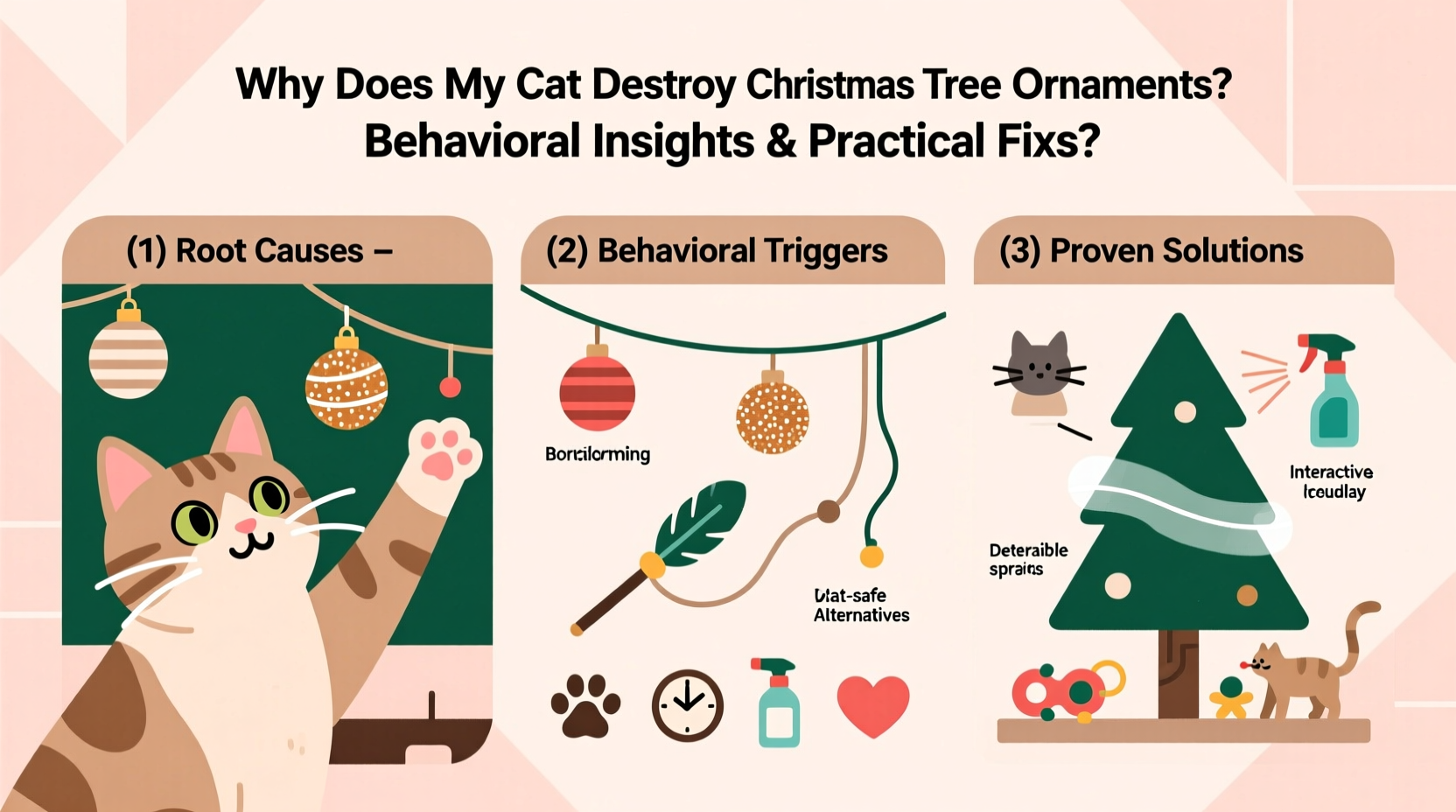
Cats are natural predators with deeply ingrained hunting instincts. From swatting at dangling objects to pouncing on movement, their behaviors are rooted in survival mechanisms developed over thousands of years. A Christmas tree, with its shimmering ornaments, twinkling lights, and dangling tinsel, becomes an irresistible sensory playground.
Ornaments that dangle, reflect light, or make soft jingling noises mimic prey-like stimuli. The motion—even slight sway from air currents—triggers a cat’s predatory sequence: orient, stalk, chase, pounce, and bat. What seems like destruction to humans is, to a cat, a form of interactive play and mental stimulation.
In multi-cat homes, competition can amplify this behavior. One cat may initiate interaction with the tree, prompting others to investigate or challenge ownership of the “prey.” Even indoor-only cats, who’ve never hunted live animals, retain these instincts. Without adequate outlets, they redirect their energy toward whatever captures their attention—often the most fragile decorations in the house.
Environmental Triggers That Encourage Tree Interaction
Beyond instinct, several environmental factors increase the likelihood of tree tampering:
- Novelty: The sudden appearance of a large, unfamiliar object in a commonly used space triggers investigative behavior.
- Scent: Real trees emit strong pine odors that can be stimulating—or overwhelming—for sensitive felines.
- Texture: Tinsel, ribbons, and netting resemble strings and feathers, which many cats find impossible to resist.
- Vertical Space: Cats value high vantage points. A Christmas tree essentially becomes a new climbing structure overnight.
A study published in *Applied Animal Behaviour Science* found that cats show increased interest in novel objects during the first 72 hours of introduction. This explains why tree incidents often peak in the first few days after setup. The combination of visual novelty, scent, and texture creates a perfect storm of feline fascination.
“Cats don’t misbehave—they behave according to their nature. When we label it as ‘destruction,’ we miss the opportunity to understand and redirect.” — Dr. Sarah Ellis, Feline Behavior Researcher, University of Lincoln
Proven Fixes: How to Protect Your Tree (and Your Cat)
Preventing ornament destruction isn’t about suppressing your cat’s instincts—it’s about managing the environment and providing alternatives. The goal is coexistence, not conflict.
1. Choose the Right Location
Place the tree in a room with limited access or install a baby gate to restrict entry when unsupervised. Avoid positioning it near furniture that cats can use as launch pads. A corner location with two walls supporting stability reduces tipping risk.
2. Secure the Tree Base
Even a playful bat can topple an unstable tree. Use a sturdy stand and anchor the trunk to a wall using fishing line or a discreet bracket. For freestanding trees, place heavy weights (like sandbags) inside the base.
3. Modify the Decorations
Reserve lower branches for safer, cat-friendly items. Save delicate glass ornaments for the upper third of the tree. Consider using:
- Paper chains or felt ornaments
- Wooden figurines
- Ornaments made from cork or fabric
Avoid tinsel entirely—it poses a serious ingestion hazard. The ASPCA lists tinsel as a top toxic threat during the holidays due to its potential to cause intestinal blockages.
4. Deterrents That Work (Without Stressing Your Cat)
Some deterrents rely on aversion, but harsh methods (like citrus sprays or double-sided tape) can create anxiety. Instead, focus on positive redirection:
- Use motion-activated air sprayers (like Ssscat) to gently startle without harm.
- Place aluminum foil or crinkly plastic under the tree skirt—many cats dislike the texture.
- Apply pet-safe bitter sprays to the lower trunk (avoid real trees if sap is affected).
Never use punishment. It damages trust and increases stress, potentially leading to other behavioral issues like inappropriate elimination.
Step-by-Step Guide: Cat-Proofing Your Christmas Tree
Follow this timeline to prepare your home and cat for a safer holiday season:
- Week 1: Pre-Setup Preparation
Create a plan for tree placement, gather secure stands and anchors, and purchase cat-safe decorations. - Day of Setup: Supervised Introduction
Assemble the tree while your cat is in another room. Once secured, allow brief, supervised visits to reduce novelty-driven investigation. - Days 2–3: Monitor and Redirect
Observe your cat’s behavior. If they approach the tree, gently redirect to a toy or scratching post. Reward calm behavior with treats. - Ongoing: Provide Alternatives
Set up a nearby “cat tree” with toys, perches, and a cozy bed. Rotate puzzle feeders daily to maintain engagement. - Daily: Check Stability and Safety
Ensure lights aren’t frayed, water is covered (to prevent ingestion), and no hazardous materials are within reach.
Case Study: The Thompson Family’s Tinsel Troubles
The Thompsons adopted Luna, a young Bengal mix, six months before their first holiday together. Excited to include her in traditions, they set up a full-sized tree in their living room. Within hours, Luna had knocked down three ornaments and chewed through a strand of tinsel.
After a vet visit confirmed mild gastrointestinal upset (but no blockage), they consulted a certified cat behaviorist. The solution wasn’t restriction—but enrichment. They moved the tree to a corner, anchored it securely, and replaced lower ornaments with felt stars. They also installed a cat shelf above the sofa, stocked with rotating toys and a window perch overlooking bird feeders.
Within two days, Luna lost interest in the tree. By Christmas Eve, she was sleeping on the sofa, ignoring the decorations entirely. “We realized she wasn’t being destructive,” said owner Maria Thompson. “She just needed something more engaging than sparkly balls.”
Do’s and Don’ts: A Quick Reference Table
| Do | Don’t |
|---|---|
| Anchor the tree to the wall | Leave the tree unsecured |
| Use battery-operated lights | Use frayed or overheating cords |
| Keep water reservoir covered | Allow access to tree water (may contain preservatives) |
| Offer alternative climbing structures | Punish your cat for approaching the tree |
| Rotate toys daily to reduce boredom | Leave tinsel or ribbons within reach |
Frequently Asked Questions
Can I train my cat to leave the Christmas tree alone?
Yes, but not through punishment. Training involves consistent redirection and positive reinforcement. When your cat approaches the tree, call them away and reward compliance with a treat or play session. Over time, they’ll learn that staying away leads to better outcomes.
Are artificial trees safer than real ones for cats?
Artificial trees eliminate risks like sap and pesticides, but some low-quality models contain PVC or lead coatings. Look for non-toxic, flame-retardant labels. Real trees pose ingestion risks from needles and water additives, so supervision is key regardless of type.
What should I do if my cat eats tinsel or an ornament?
Contact your veterinarian immediately. Ingested tinsel can cause linear foreign body obstructions, requiring surgery. Even small shards of glass or metal can damage internal tissues. Do not induce vomiting unless directed by a professional.
Conclusion: Harmony Over Holiday Havoc
Your cat’s interaction with the Christmas tree isn’t defiance—it’s communication. They’re responding to a sudden change in their environment with the tools evolution gave them. Rather than viewing this as a problem to eliminate, see it as an opportunity to deepen your understanding of your pet’s needs.
By combining environmental management, behavioral insight, and compassionate alternatives, you can enjoy a festive season that respects both tradition and your cat’s natural instincts. A little preparation goes a long way in preventing stress—for you and your feline family member.




 浙公网安备
33010002000092号
浙公网安备
33010002000092号 浙B2-20120091-4
Comments
No comments yet. Why don't you start the discussion?